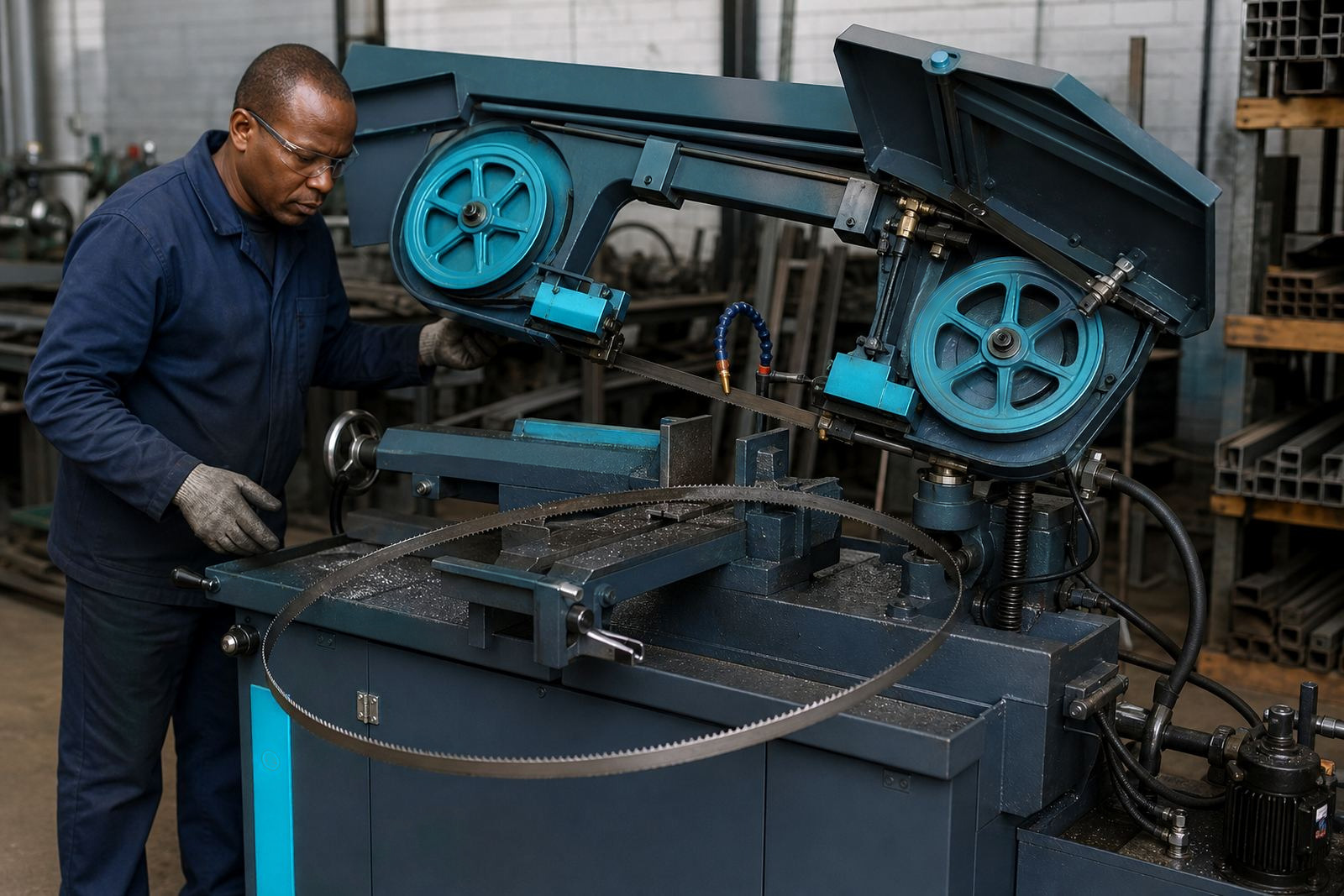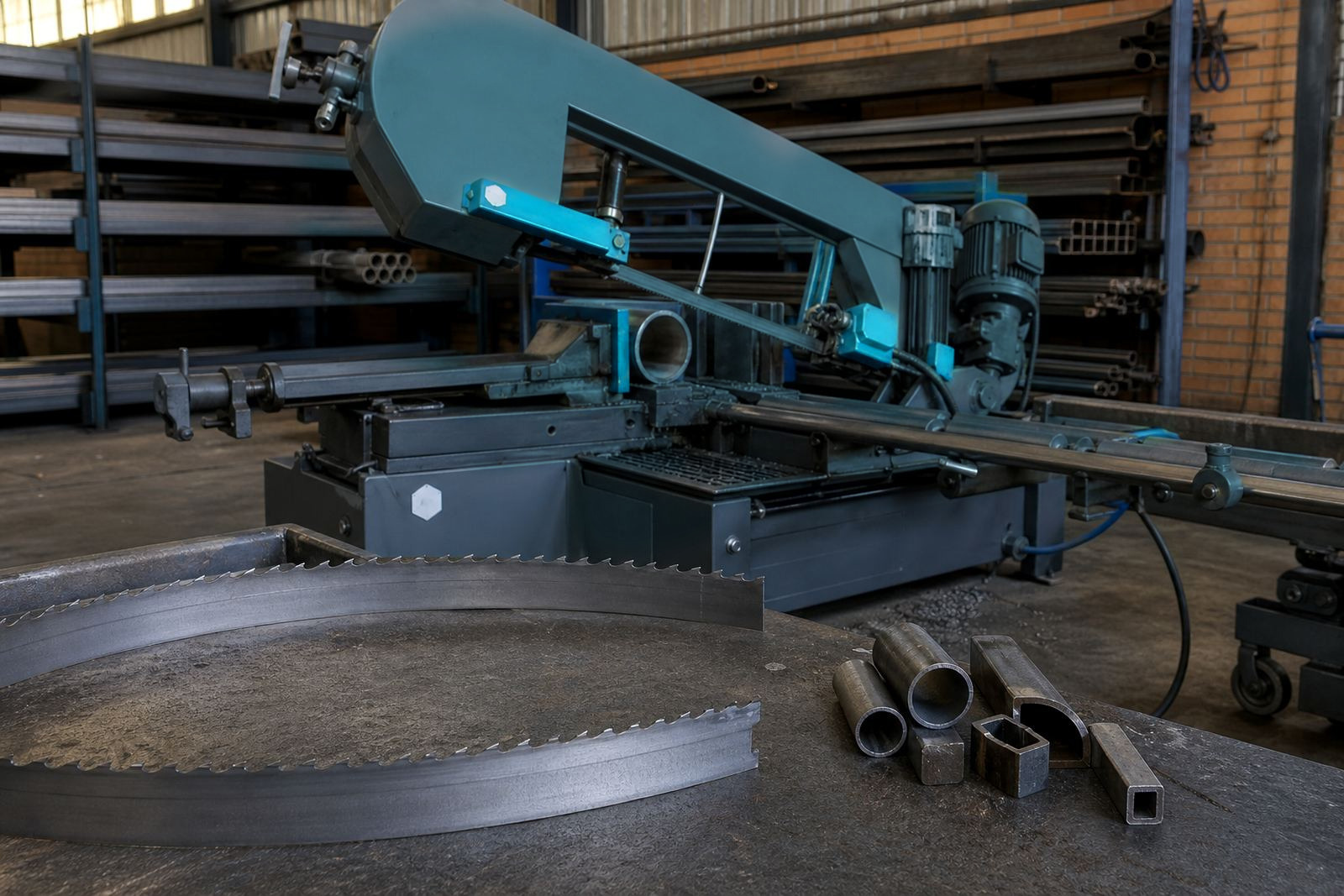
What bi-metal means in plain workshop terms
A bi-metal blade is built from two metals joined into one working strip. The teeth are formed from a harder steel, often a high-speed type used for wear resistance, while the backing carries the load and flexes without snapping easily.
That mix is useful on bandsaws and hacksaws because the blade can keep a sharp cutting edge and still cope with the bending, tension and vibration that come with repeated use. In practice it suits workshops that cut tube, solid bar, plate edges and mixed steel stock through the week.
Where bi-metal blades earn their place
Bi-metal bandsaw blades are commonly used on mild steel, structural sections, tool steel, stainless steel and general fabrication work. They are also a steady option for manual saws when the operator needs a blade that stays usable for longer than a plain carbon blade.
For an Alberton jobbing shop, that might mean one saw handling flat bar in the morning and pipe later on, with fewer blade changes between materials. The same logic holds in Vereeniging, Durban or Pretoria where mixed orders are normal and the steel rack never looks the same twice.
- Sectional steel and angle iron
- Solid bar and round bar
- Stainless grades that need heat control
- General fabrication cuts on mixed thicknesses
- Workshop stock that is not always the same size
Tooth pitch, set and chip control
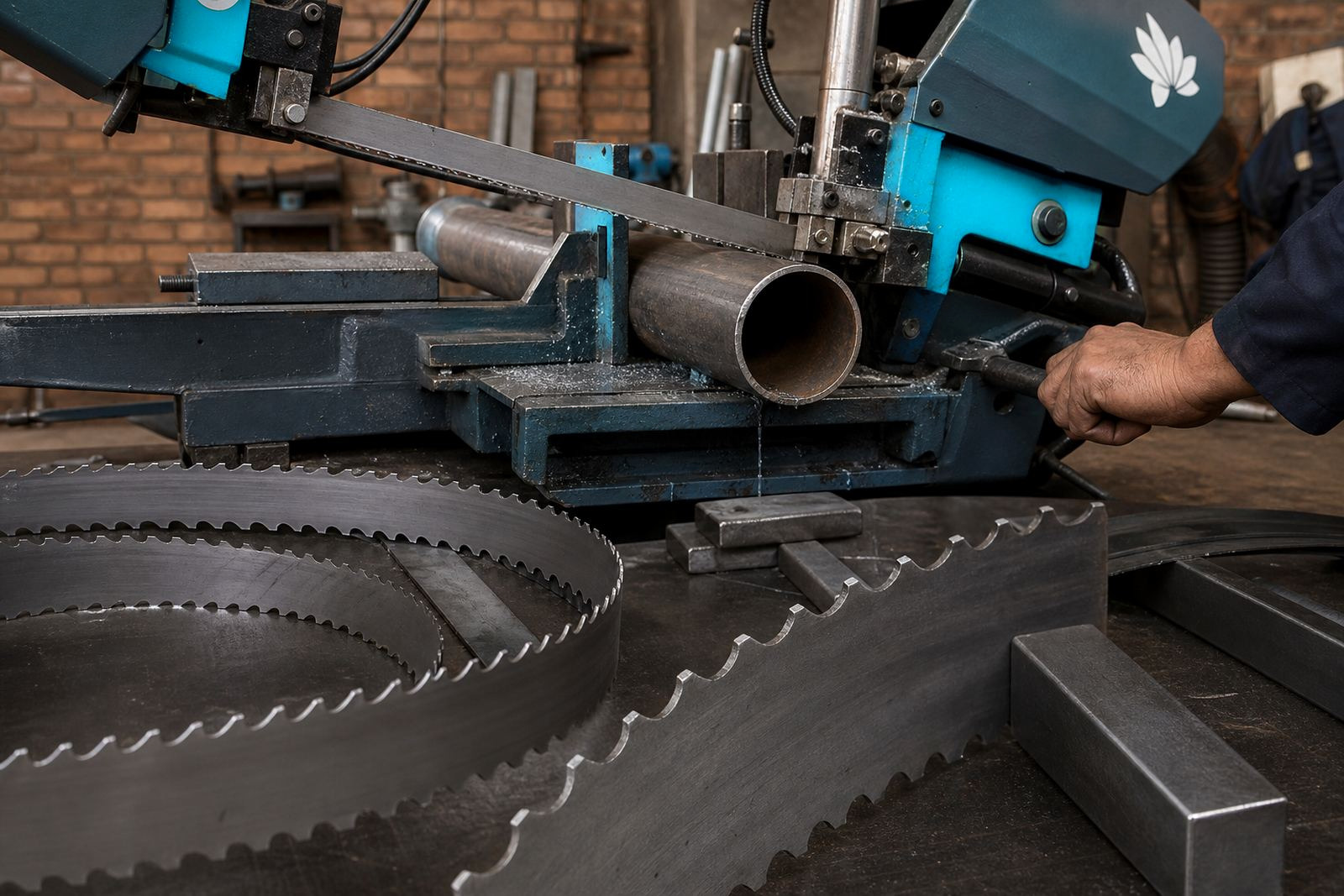
Tooth pitch is the spacing of the teeth, often shown as TPI, meaning teeth per inch. A finer pitch suits thinner material and keeps more teeth in contact with the work. A coarser pitch clears chips better on larger sections and helps stop tooth stripping.
Variable pitch blades are useful on machines that see a lot of mixed work because the changing tooth spacing breaks up chatter and noise. The tooth set, the sideways offset of the teeth, creates the cut width and gives the blade room to clear swarf.
- Thin wall section usually needs a finer pitch
- Solid bar often needs a coarser pitch
- Variable pitch helps reduce vibration on mixed jobs
- Poor chip clearance can leave a hot, ragged cut
Blade width, thickness and machine fit
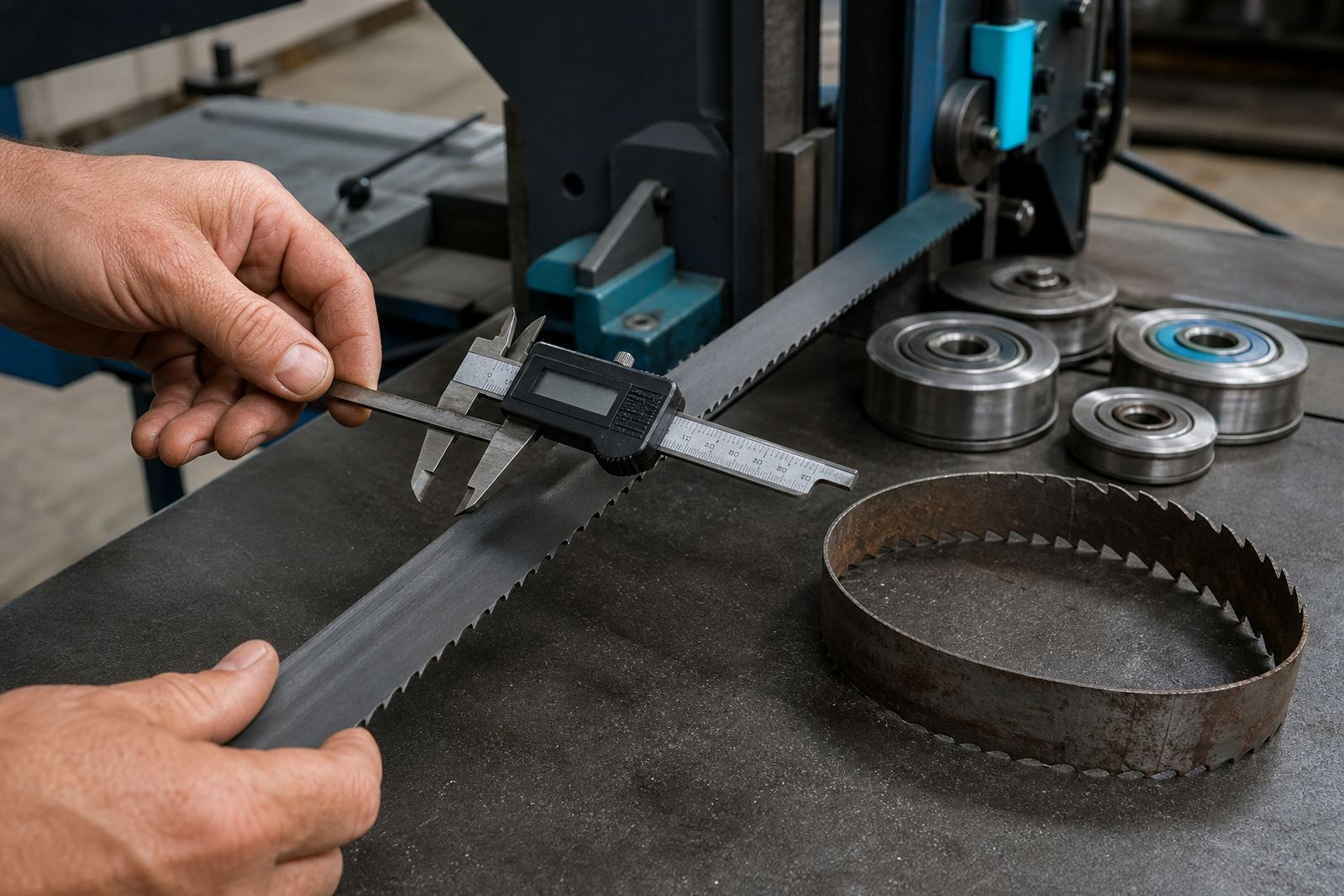
Blade width and thickness affect how the blade tracks and how tightly it can turn around guides and wheels. Wider blades suit straighter cuts and heavier work. Narrower blades are easier to steer through tighter curves or smaller machines.
Matching the blade to the saw frame needs careful choice. The wheel diameter, guide clearance and machine tension all need to line up, or the blade will wander, overheat or crack at the weld. Our machine fit check service is used for this kind of work, especially where older saws still earn their keep in smaller Gauteng and coastal workshops.
- Wider blades generally suit straight, heavier cuts
- Narrower blades help on smaller radii and lighter saws
- Thickness influences blade stability under tension
- Wheel size and guide setup must suit the blade type
Run-in, feed speed and coolant need careful attention
A new bi-metal blade should be run in with lighter feed at first so the tooth edges settle before full production cutting. Skipping that step can shorten blade life and leave a rough start to the cut cycle.
Feed speed has to match the material, tooth pitch and machine power. Push too hard and the teeth rub, heat builds, and the set is lost earlier than it should be. Too little feed can polish the teeth instead of cutting cleanly. Coolant helps carry away heat, flush out chips and keep the cut area stable on longer runs and on dense material.
In humid Durban conditions, coolant care becomes part of the normal routine. In dry inland shops, heat still takes its toll, and a hot blade is never a happy blade.
A practical case from Alrode to the coast
A fabrication team in Alrode may need one blade for angle iron, another for 50 mm solid bar and a third for stainless tube. The sensible answer is a matched blade plan, with the right width, tooth form and cutting speed for each stock type.
Starter kits and stock standardisation help there. A workshop can keep a small number of proven blade types, label them clearly and reduce the pile of mixed offcuts and worn blades at the end of the week. MoreCut Saws also supports weld-to-length supply, which is useful when a machine needs a specific loop size and an off-the-shelf strip will not fit.
- Standardise the few sizes your saws use most often
- Keep a note of the materials each blade handles best
- Record blade failures so the pattern is easier to spot
- Check length, pitch and width before fitting the next blade
Carbon steel or bi-metal, and what the choice means
Carbon steel blades still have a place. They are often used on lighter work, manual saws and simpler cutting tasks on a budget, where the material is not too hard. Bi-metal blades cost more to buy, but they usually last longer and take more punishment on mixed steel work.
The decision comes down to the material, the machine and the volume of cutting. If a workshop in Johannesburg Supply is cutting structural steel every day, bi-metal is often the practical call. If a smaller shop in Boksburg is doing occasional light sections and hand cuts, a carbon blade may still be the right tool for that job.
The blade should match the metal, the machine and the cut that needs to be made.