Portable saws ask more from the blade than people expect
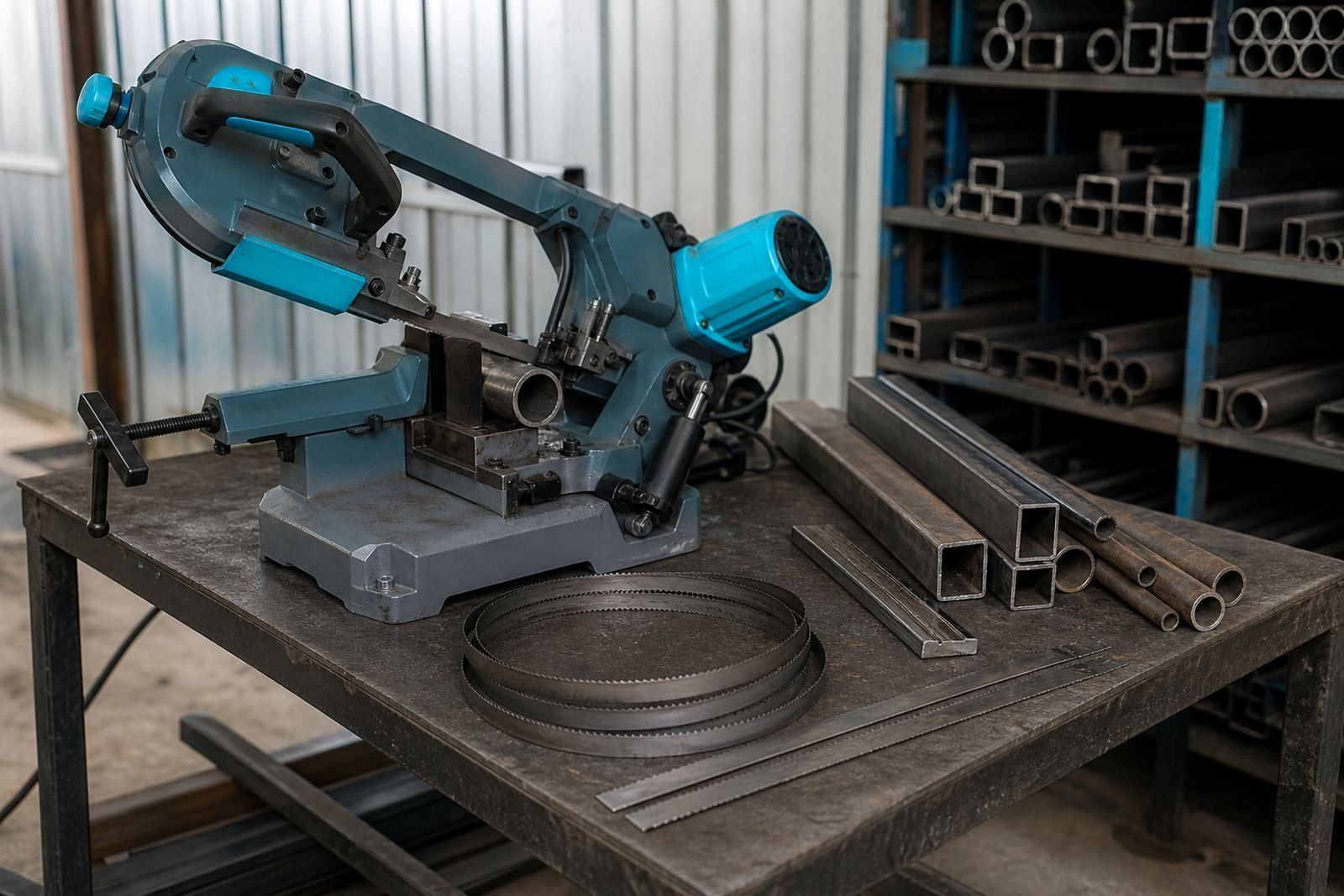
A portable saw usually works with tighter control than a fixed machine, but it also sees more variation in pressure, angle and workpiece support. Choose the right blade for cleaner cuts and better results. A thin wall tube, a solid bar and a bundle of sections do not ask the same thing from the teeth or the body of the blade.
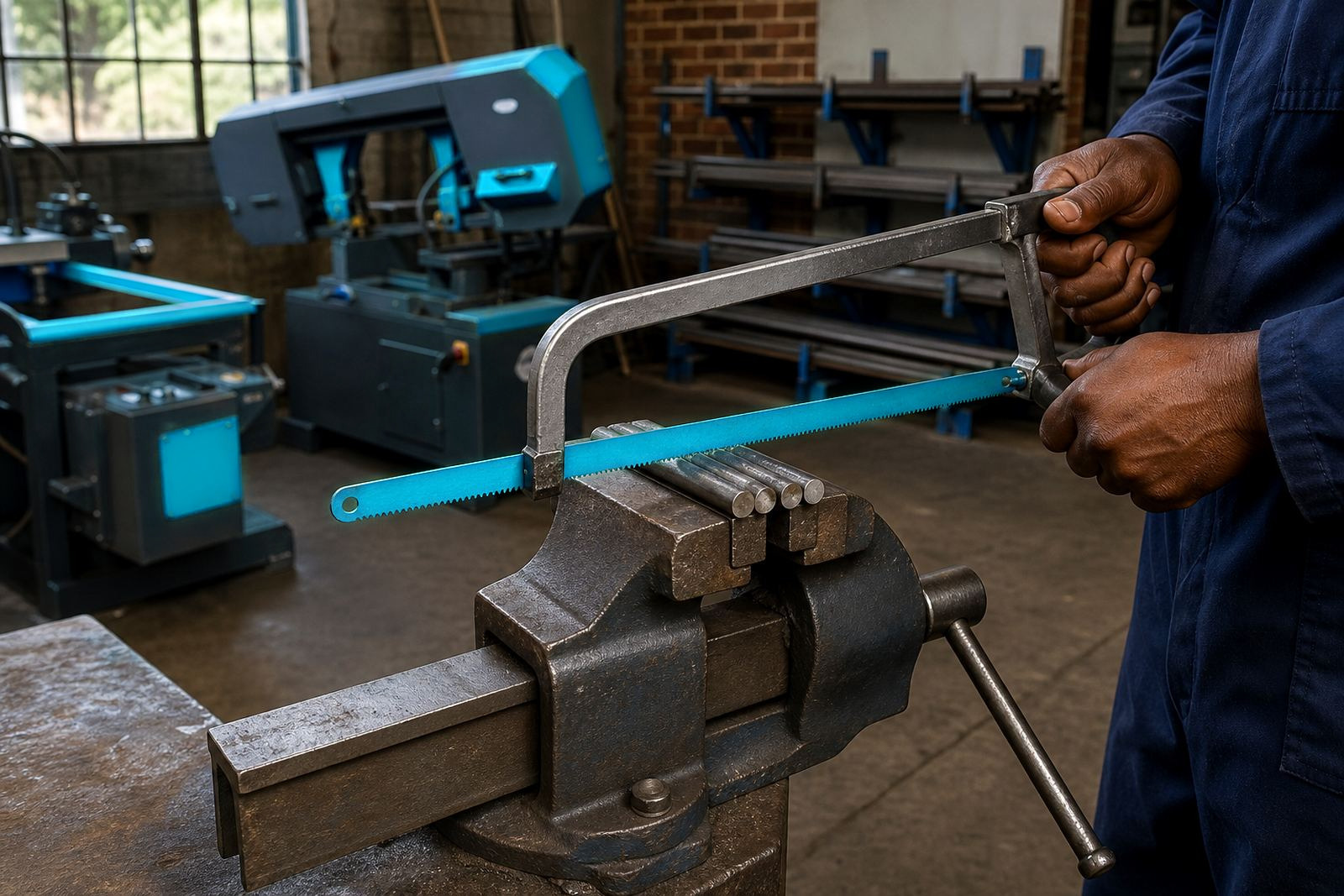
For mild steel and many general metalwork jobs, bi-metal blades are the usual first choice because they hold an edge well and tolerate repeated cutting. Carbon steel blades still have a place for lighter duties and manual hacksaws, especially where the material is not too hard and the operator wants a cleaner feel at low cost. Choose the blade that suits the material and the machine stroke.
Portable saws often show problems faster than workshop saws. If the blade is too fine for the section, the teeth load up and heat builds. If it is too coarse, the cut can snag and leave a rough face. Thin sections need enough teeth in the cut, and heavier bars need a steadier feed and a tooth form that clears chips properly.
Tooth pitch, width and thickness all work together
Tooth pitch is usually discussed as TPI, or teeth per inch. Higher TPI suits thinner material because several teeth stay in the cut at once. Lower TPI suits thicker sections and solids because the gullets have room to clear swarf. Variable pitch blades help on mixed bundles or sections that change shape through the cut, since the varying tooth spacing can reduce vibration and noise.
Blade width also changes how the saw behaves. A narrower blade turns more easily around compact profiles and can suit portable saws that need a light touch. Open cuts and heavier work need a blade that tracks straight, and the machine guides must be in good order. A wider blade does that. A thicker blade can feel more stable, while a thinner one may suit a gentler machine, provided the setup is sound.
- Thin wall tube often needs finer TPI and careful feed.
- Solid bar usually takes a coarser pitch with steadier pressure.
- Mixed offcuts are often easier with variable pitch.
- Curved or awkward clamping can favour a narrower blade.
We check the set too. The tooth set is the slight offset that creates a kerf wide enough for the body of the blade to pass through. Too little set can bind, while too much can leave a rougher cut and extra wear. For portable work, the balance between set, pitch and blade width is often what separates a smooth cut from a tiring one.
Run-in, feed and speed are part of blade life
Bi-metal teeth need a short run-in on a new blade. The first cuts should be lighter so the edge can settle before full working load. People often skip this part and then wonder why a blade that should have lasted longer starts to chatter or lose teeth early. A gentle start is part of the blade’s working life.
Feed speed is set at the same time. If the operator pushes too hard, the teeth rub instead of cut and heat rises fast. If the feed is too slow, the teeth can polish the work instead of biting properly. Portable saws are especially sensitive because the machine is usually hand guided, so pressure changes from one cut to the next. A steady rhythm, even on a rough site, makes a real difference.
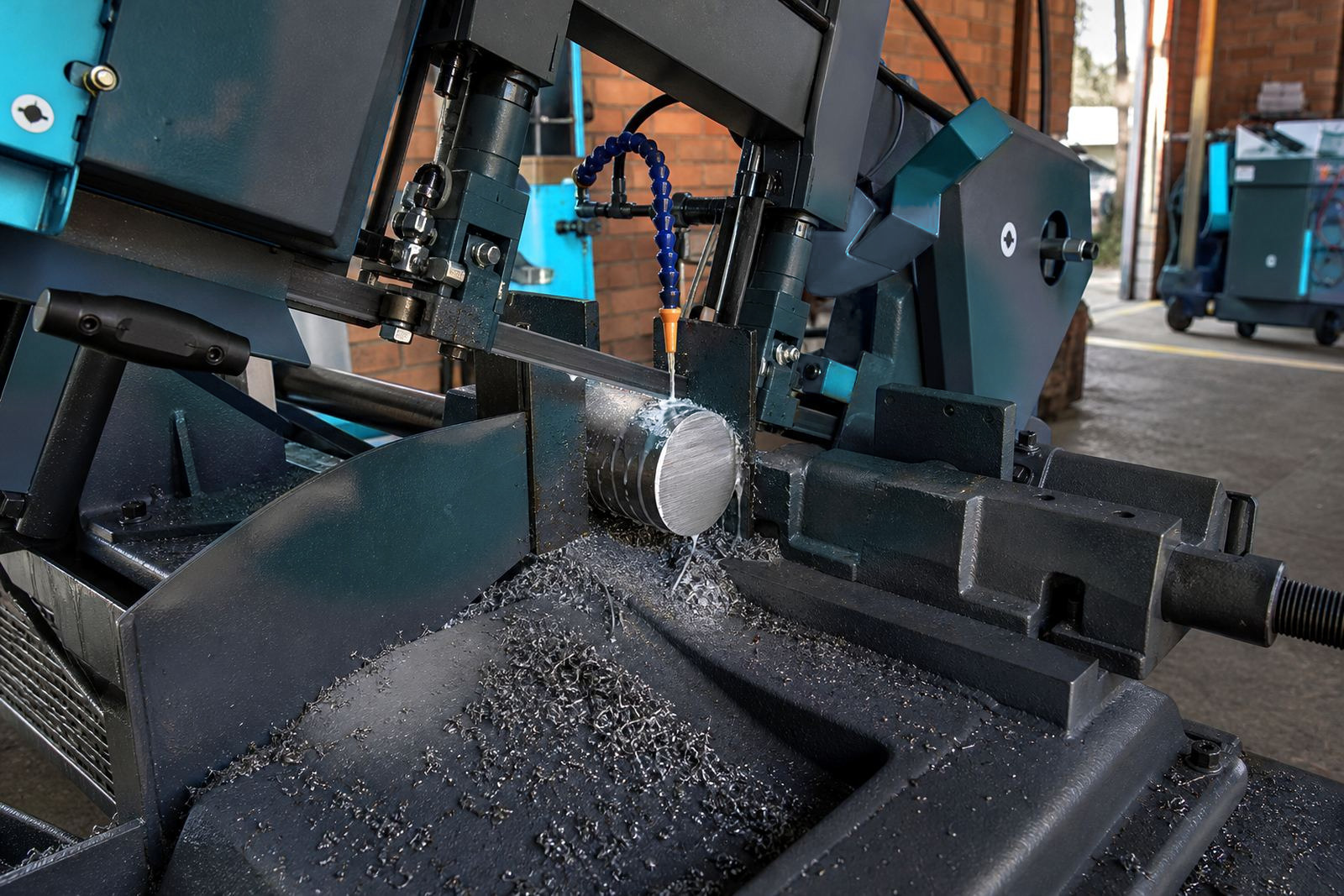
Blade speed on the machine should match the material and the blade type. Harder steels need a slower cutting action than mild steel. Coolant or cutting fluid helps carry heat away and flush chips, especially on stainless sections and thicker wall material. Where coolant is used, it needs to reach the cutting zone properly and wet the blade where it is cutting.
A small workshop in Alberton with mixed cuts
A jobbing workshop in Alberton often sees a mix of tube, flat bar and solid stock in one morning. A portable saw used at the bench and on site may cut gate frames one hour, then brackets and repair sections the next. In that setting, a single blade choice can be too blunt an answer. The team usually gets better results by matching pitch and width to the most common material, then keeping a second blade ready for the odd heavier cut.
Starter kits and blade selection help become practical there. A kit for a portable saw can include a useful spread of TPI options so the workshop does not have to force one blade to do every task. If the blade is not tracking or the cut starts drifting, a machine fit check covers the saw as well as the blade. Guide wear, tension, clamping and even the way the work is held can all affect the result.
- Keep one blade for general section work.
- Set aside a finer blade for thinner wall material.
- Use a coarser blade for solid stock and heavier bars.
- Check whether the saw is suited to the blade width chosen.
In a busy Alrode bay, that kind of separation saves time and reduces wasted blades. It also makes stock standardisation easier, because the team knows which blade belongs on which machine instead of guessing each time a job changes.
Weld-to-length service when the blade has to fit the job
Portable saw blades are often bought in a range of lengths to match the machine exactly. Some workshops need weld-to-length service so the blade matches the machine exactly. A correct length keeps tension where it should be and avoids working with a blade that sits too loose or too tight. Portable and manual saws show fit problems quickly in the cut.
Length verification is worth doing before the blade is welded or fitted. Even a small error can change tracking and tension, then the cut starts wandering or the blade runs hotter than expected. For workshops that carry several hand-held or portable units, keeping the blade lengths recorded helps with ordering and reduces mix-ups between machines.
Blade failure review also has a place here. If teeth strip, the blade twists or the break looks uneven, the cause may be feed, speed, clamping, chip clearance or the wrong pitch for the section. The break pattern tells a story and it usually saves time to read it properly before fitting the next blade.
Choosing for Johannesburg, Durban or Cape Town is not the same job
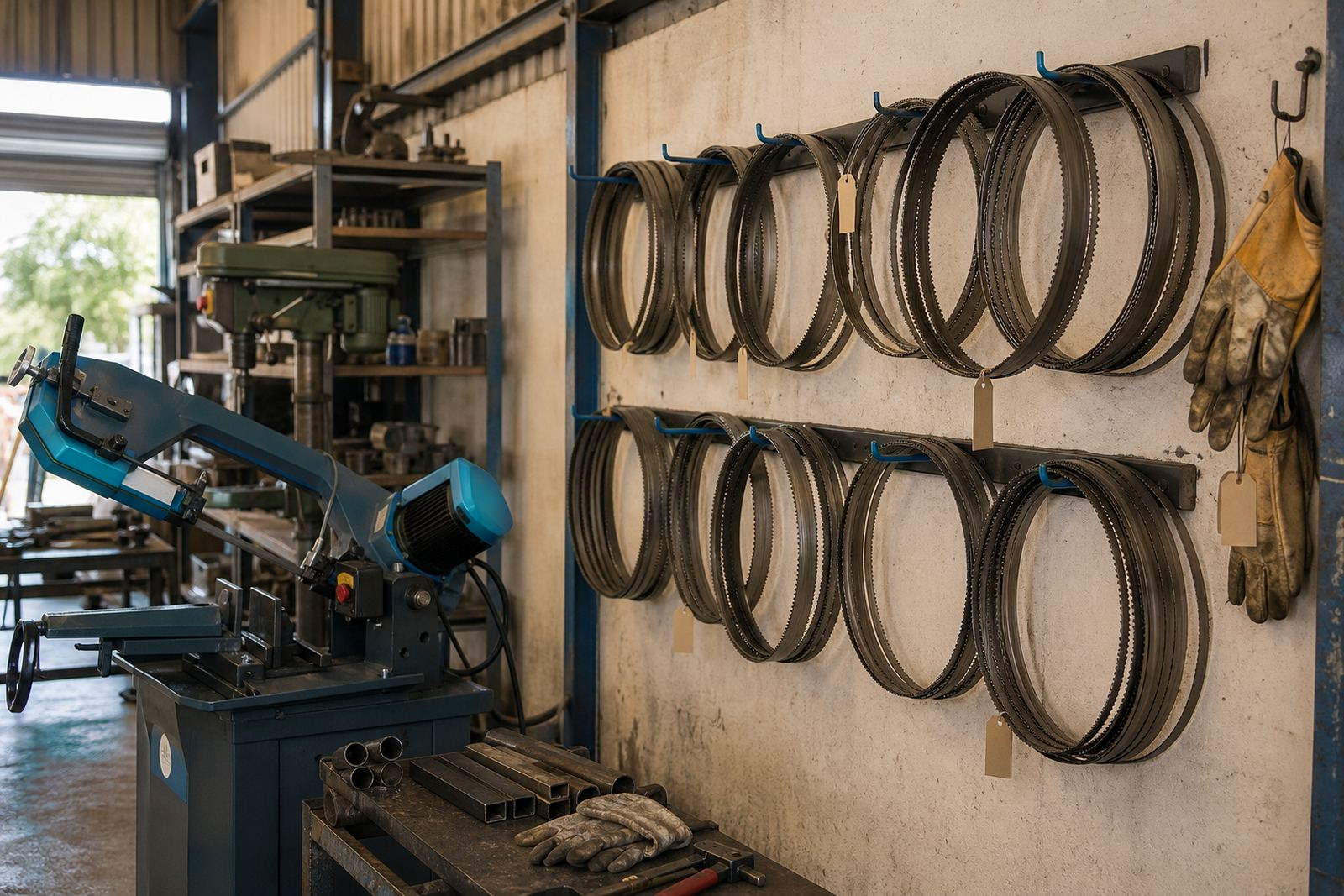
Portable cutting in Johannesburg workshops can lean toward mixed fabrication work, repair jobs and site visits, while coastal work in Durban or Cape Town often has to deal with humidity and storage conditions as well. Moisture does not help a carbon blade sitting in a drawer, and it can affect how quickly teeth spot corrosion if the stock is handled carelessly. People often overlook how much packaging and storage count.
For coastal branches or site teams, coolant checks and dry storage become part of normal blade care. A blade that looks fine on the rack can still behave badly if it has picked up surface rust or been bent in transit. Keeping portable saw blades straight, clean and correctly labelled makes day-to-day work easier for the operator and the store room.
When the workshop is spread across Johannesburg, Vereeniging, Pretoria, Durban or Cape Town, standardising the common blade types helps avoid odd leftovers and mismatched stock. That is often more useful than holding a pile of random lengths and pitches that nobody can identify under pressure.