Feed rate is the hand on the job
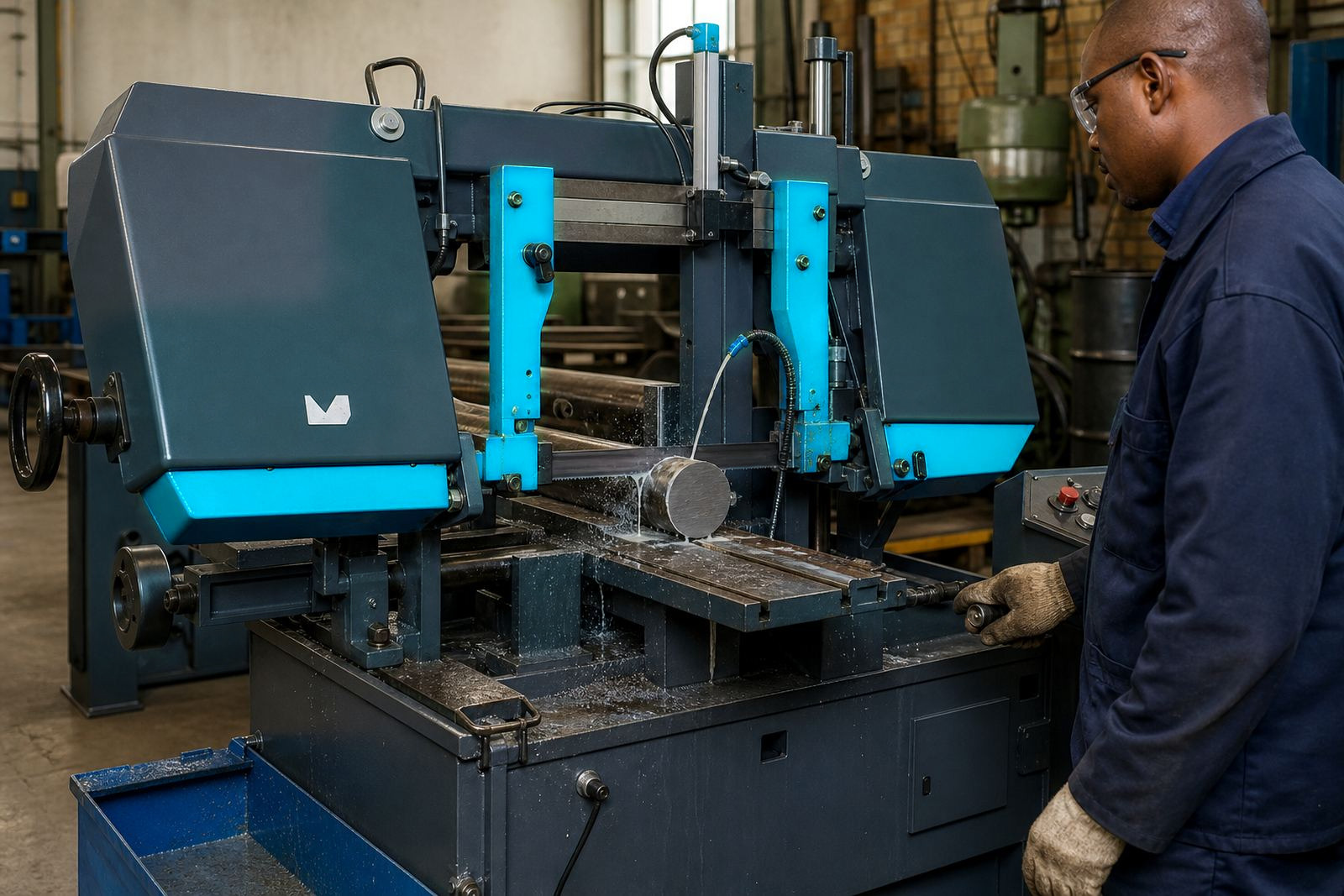
Feed rate is the pace at which the blade moves into the work. Too much feed pushes the teeth into the material before they can clear the chip, and that is where chipped teeth, wandering cuts and a hot blade start to show. Too little feed can be just as awkward, because the teeth rub instead of cutting and the edge loses bite.
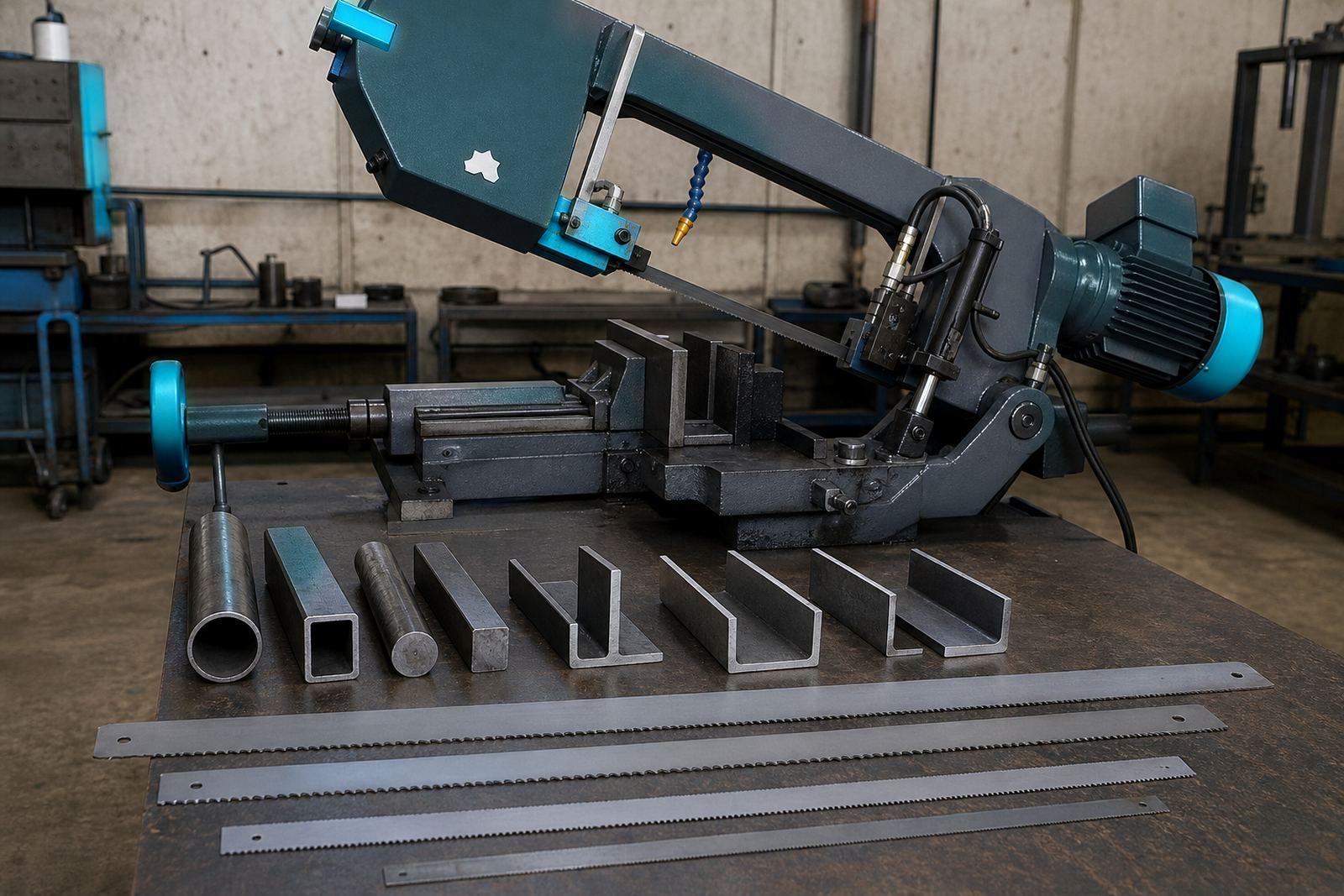
For a bandsaw or a hacksaw, the setting must match the material and the tooth pitch. Mild steel, stainless, hollow section and solid bar all load the teeth in different ways. A thin wall tube needs a lighter touch than a solid round bar of the same width, and a fine pitch blade behaves differently from a coarse one.
What tooth loading looks like in real work
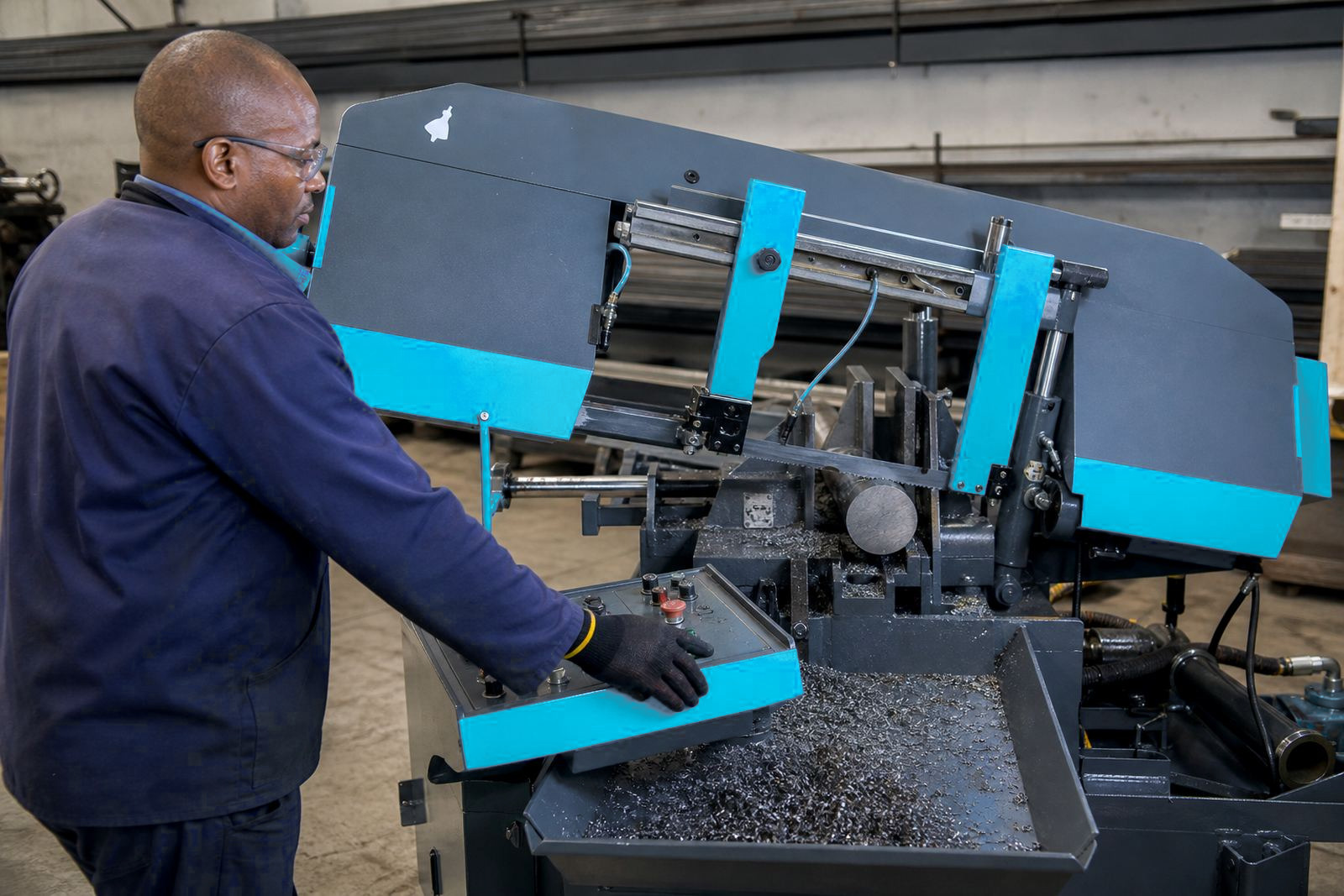
Tooth loading happens when chips pack into the gullets faster than they can clear. The blade starts to labour, the cut can squeal, and the motor may sound strained. If the feed is eased off at once, the blade often settles down. If it keeps pushing, the teeth can round off or strip in sections.
- Bright, fine chips usually point to a healthier cut.
- Blue or burnt chips suggest heat and excess load.
- Dusty swarf often means the teeth are rubbing more than cutting.
- Chatter marks can show that feed and blade speed are not balanced.
A workshop in Alberton cutting mixed mild steel stock may see all four signs in one morning if the blade is being used on different jobs without resetting the feed. Make small changes, especially where the same saw handles both short offcuts and full lengths.
Blade pitch and feed must work together
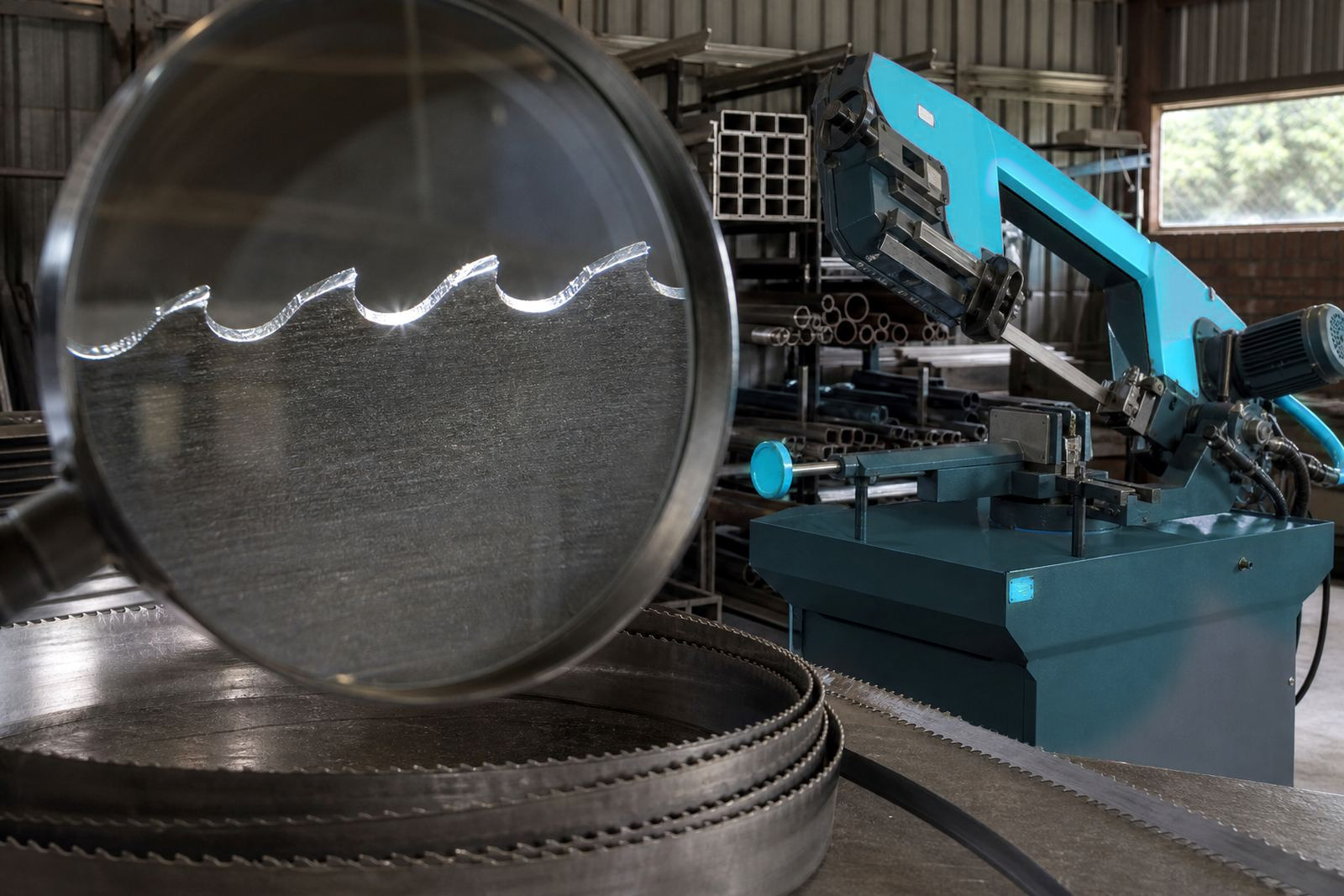
Tooth pitch, measured in TPI, decides how many teeth meet the metal over a given length. Fine pitch suits thin sections and small diameters, while coarse pitch clears chips better in thicker material. On mixed sections and awkward shapes, variable pitch blades reduce vibration.
Feed rate and pitch cannot be treated as separate settings. If the pitch is too fine for the section, the gullets fill and the blade starts to smear the cut. If the pitch is too coarse, the teeth may grab too hard and leave a rough edge. Steady blade engagement gives enough bite to form chips without hammering the tooth line.
- Thin wall tube usually needs finer pitch and a lighter feed.
- Solid bar accepts more feed if the pitch matches the diameter.
- Stainless benefits from controlled pressure and stable coolant.
- Variable pitch can calm vibration on irregular profiles.
Run-in is where the blade earns its edge
New bi-metal M42 and carbon steel blades both need a sensible run-in. A fresh edge is keen, but the tips are also the most vulnerable part of the tooth. If the feed starts too hard, the sharp edge can chip before it settles into a working pattern. A lighter opening pass helps round the high points and gives the set a chance to bed in.
Starter kits need a run-in as well, because the first few cuts teach the operator how the blade behaves in that machine. In a Johannesburg workshop, a new blade fitted to a manual saw may behave differently on short, interrupted cuts than it does on long production lengths. That is normal, and it is why the first cuts are worth watching closely.
Coolant, set and blade width all pull in the same direction
Coolant controls heat and helps carry chips out of the cut and keeps the tooth face from glazing over. On some jobs a light flood is enough, while heavier section work calls for better chip wash and a cleaner cutting path. If coolant is weak or poorly aimed, the blade can heat up even when the feed seems reasonable.
Blade width and thickness also shape feed behaviour. Heavier material suits a wider blade for straighter tracking, while a narrower blade handles tighter curves and smaller machines. Thickness affects stiffness and cut resistance. The set on the teeth has to suit the job too, because too much set can widen the kerf and increase drag, while too little can make the cut bind.
- Check coolant delivery before chasing the feed setting.
- Match blade width to the saw and the material form.
- Keep the set even so the cut does not pinch.
- Use the right blade thickness for the machine tension and load.
A Durban job, and what changed the cut
A Durban fabricator cutting structural offcuts in humid coastal conditions might think rust is the main issue, but the feed rate can do more harm than the surface stain. If a blade bites too hard into a section with scale on the outside and softer steel underneath, the first teeth take a shock load. The result can be broken teeth near the entry side and a rough exit face.
When the feed was reduced slightly, the cut steadied. A better pitch match and a check on coolant flow helped as well. The machine needed a more measured hand on the pressure and a blade that suited the section size.
A useful habit for workshops that cut mixed stock
Mixed stock invites mixed settings, and that is where many blades lose life early. A workshop that handles tube, flat bar and solid rounds can keep a small cutting log beside the saw. It can stay informal. Material, blade pitch, feed feel and finish often show the pattern quickly.
- Record the material and section size after each change.
- Note whether the blade ran hot, smooth or noisy.
- Watch for chipped teeth at the first few passes.
- Keep a standard setting for common jobs, then adjust from there.
That approach helps teams in Pretoria, Cape Town and Vereeniging keep their saw work more consistent, especially when several operators share one machine. Feed rate controls how the blade cuts through the job without fighting it.