What the wheel brush clears before it turns into trouble
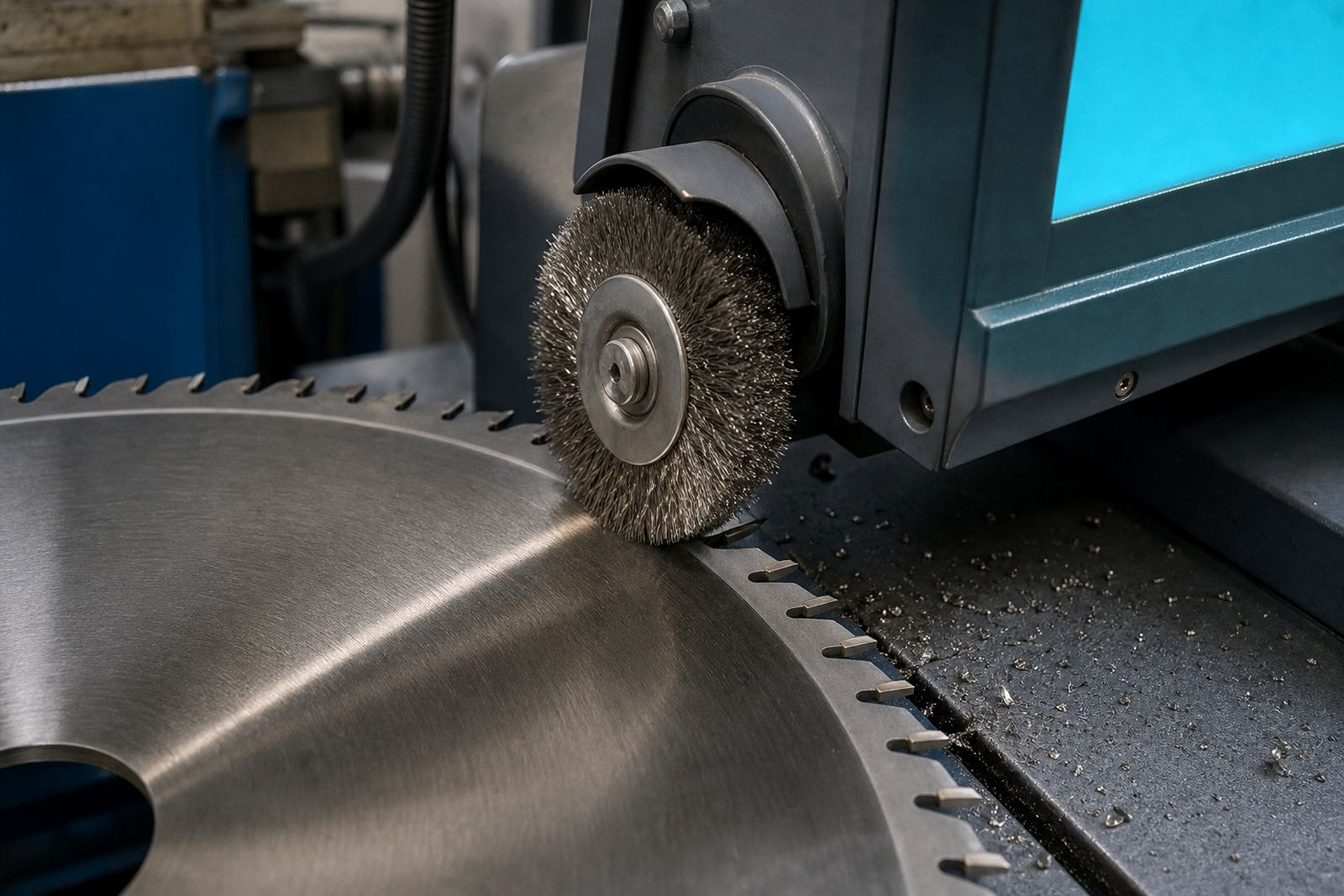
On a bandsaw, the wheel brush sits in a quiet spot and keeps moving debris away from the wheel face and blade path. Mild steel, stainless, solid bar and tube all need the same care, because chips can be dragged around the wheel or pressed into the gullets. A brush that is doing its job helps the blade travel cleanly, without a gritty layer rubbing where it should not.
In many workshops, the first sign of poor cleaning is a saw that starts sounding rough, leaves a less even finish or drifts a little as the cut goes on. Chips around the wheel can also interfere with the set on the teeth, and that changes how the blade clears the kerf.
Blade life depends on the blade itself and more factors
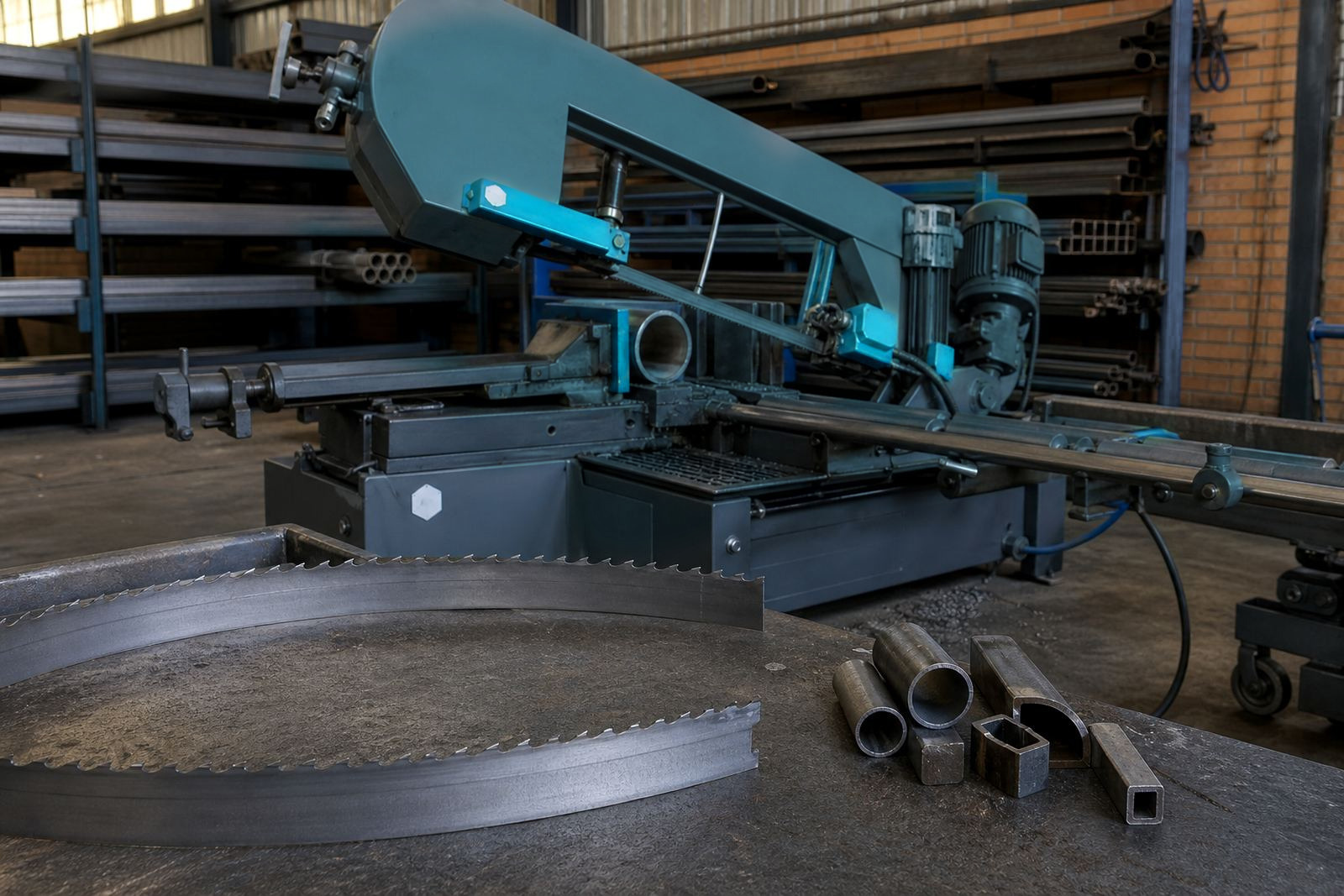
People often start with tooth pitch, blade width or blade material, and those choices do count. A bi-metal blade with a suitable tooth pitch can handle mixed work well, while a carbon steel blade may suit lighter duty or manual saw use. Yet even a sound blade will struggle if chips keep circulating around the wheels and back into the cut.
Heat is the other issue. Packed swarf traps heat against the blade and wheel, and heat changes how a blade behaves over the cut. If coolant is part of the setup, the brush supports that cooling by keeping surfaces clearer, so the fluid can reach the cut instead of riding over a layer of grit.
- Cleaner wheels help the blade track with less rubbing
- Open gullets move chips out of the cut more easily
- Less packed swarf means less heat at the tooth line
- A cleaner surface helps the blade keep its set for longer
Signs the brush is not doing enough work
A brush may be fitted, but not set correctly. When that happens, chips stay on the wheel face or cling to the blade after a cut. You may see fine curls building at the side covers, or notice material dust sitting where only a light film should be.
Watch for these workshop clues: a blade that begins to wander on longer cuts, teeth that look dull before their time, or a wheel face that feels rough to the hand. In Alrode and nearby industrial areas, this often shows up on mixed batches where one cut is dry and the next uses coolant, with swarf changing shape as the material changes.
- Repeated chip lines on the wheel face
- Warm blade return after a short cut
- Uneven tooth wear across the blade width
- Noise that gets harsher as the cut continues
Setting the brush to suit width, pitch and feed
Brush pressure should suit the blade and the job. A wide blade with a coarser tooth pitch carries chips differently from a narrow blade with a fine pitch, so the brush’s contact point and reach are important. Too little pressure leaves debris behind. Too much pressure can wear the brush, rub the blade harder than needed, or push the wrong way across the wheel surface.
Feed speed is set next. If the feed is too high for the material, chips become long and stringy and the brush has more to clear. If the feed is too low, chips can become fine and dusty, and that dust sticks in corners and around the wheels. Balance is more important than force.
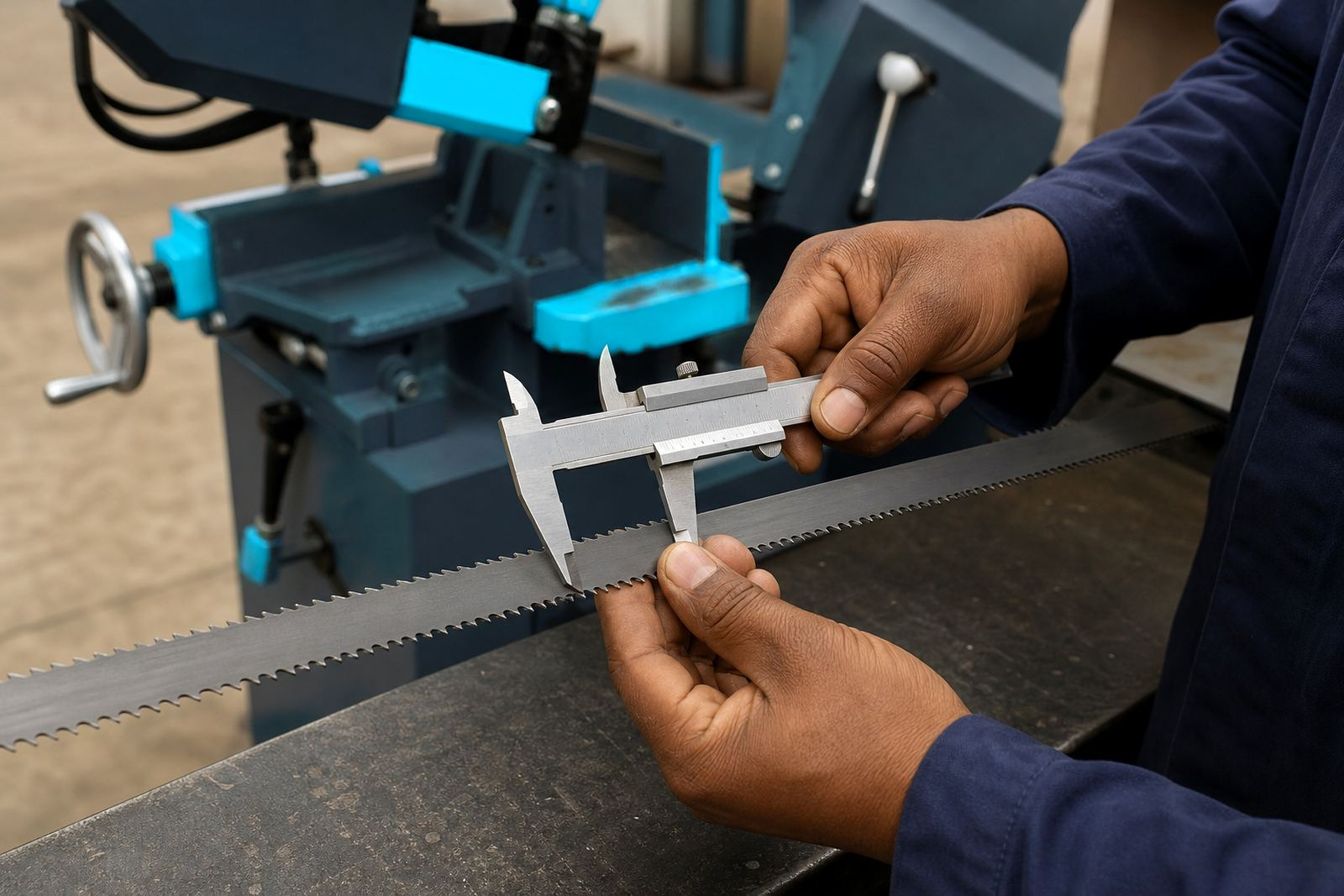
For weld-to-length work, the blade also needs to be checked after joining. A good weld should pass cleanly through the wheels, while the brush helps remove any fine burr left near the joint before it starts cutting product.
A practical workshop sequence that keeps the saw cleaner
Good blade life usually comes from a chain of small checks. A wheel brush fits into that chain with simple, repeatable attention. Before a shift starts, the blade path should be clear, the brush should touch the right part of the wheel and the coolant lines or flow should not be loading up with swarf.
For a manual saw or a small fabrication bay, this sequence usually works well:
- Clear loose chips from the wheel covers and table area
- Check that the brush reaches the wheel face, not just the edge
- Look at the blade gullets for packed debris
- Match feed and speed to the material in the next cut
- Confirm coolant is reaching the cut line if the job uses it
That small routine keeps the saw tracking properly. A workshop can move between hollow sections, solid bar and structural steel in the same morning, which is common for maintenance teams around Johannesburg and Vereeniging.
Local example from an Alrode fabrication floor
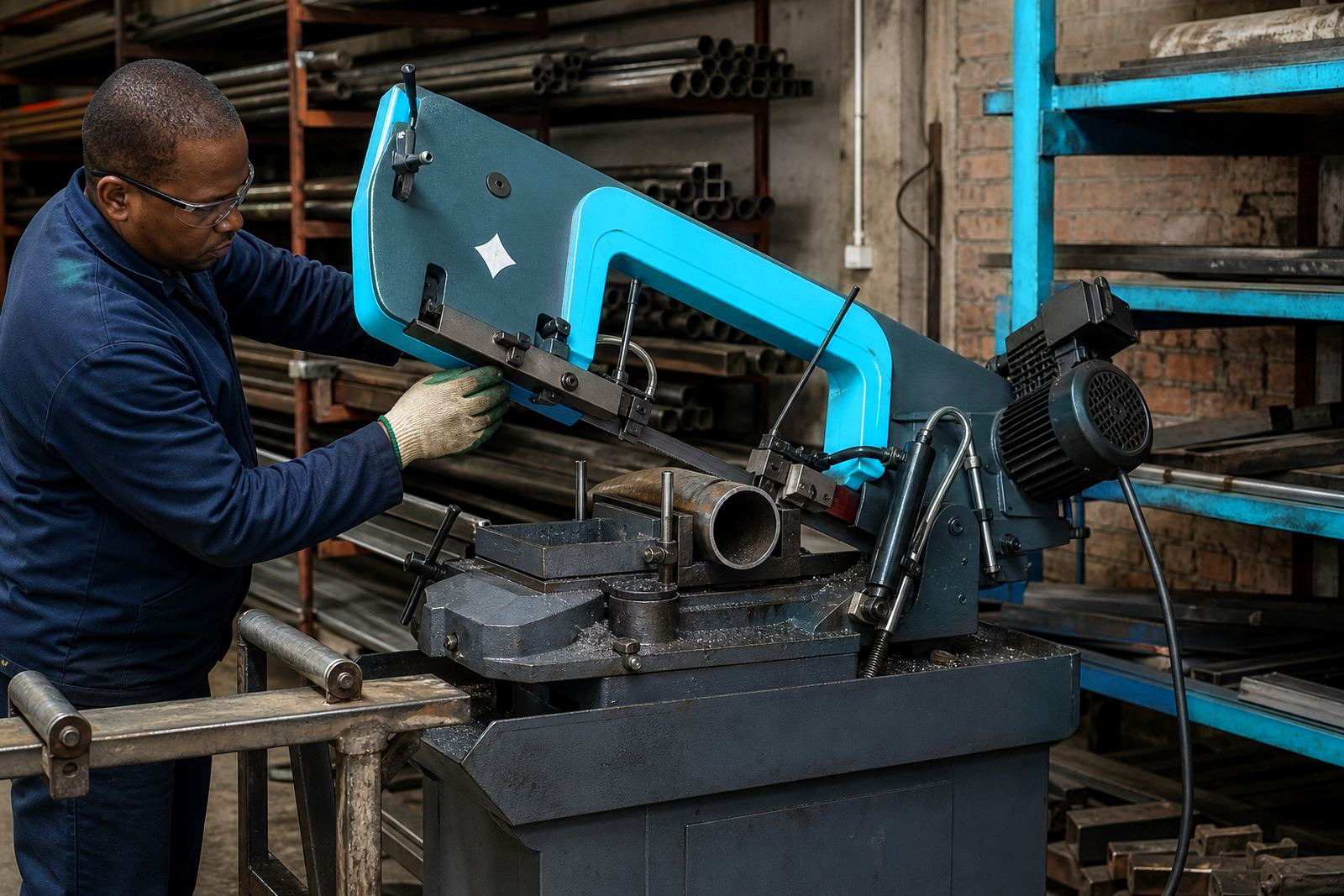
In a busy Alrode workshop, a team cutting mild steel tube and flat bar noticed the same blade losing its edge sooner than expected. The blade choice itself was sound, but chips were building up around the drive wheel and returning into the cut. After the brush position was corrected and the crew tightened their run-in habit on fresh blades, the saw ran cleaner and the cut face improved. The change is subtle. The debris just stopped getting a free ride.
Work like this comes up in Gauteng as well as further afield. A workshop in Pretoria may use a different blade width for a lighter frame saw, while a Durban bay may need extra attention because humidity and coolant residue can hold fine swarf in place. In both cases, the wheel brush supports the same basic result: a cleaner path for the blade and fewer reasons for wear to build early.
When blade failure points back to chip control
Not every failure starts at the teeth. Sometimes the blade is blamed when the real cause is chip packing, poor wheel cleaning or a brush that is worn flat. If the blade is failing in the same place on repeated jobs, the machine fit and wheel condition should be checked before changing to a different pitch or thickness.
Our blade failure review and machine fit check look at the full picture, including tooth pitch selection, blade width, set, run-in and coolant checks. For workshops that cut across different materials, that wider view saves time and avoids treating one symptom while the cause keeps sitting in the wheel area.
Wheel brushes do not get the attention that blades do, yet they protect the parts that carry the blade through the cut. In practice that means less grit in the wrong place, steadier tracking and a better chance of getting full life from the blade you already fitted.