Start with the metal, not the blade rack
For mild steel, stainless, aluminium and thin wall tube, the blade choice changes quickly. A blade that feels fine on flat bar can chatter on a narrow tube, and a coarse pitch that clears chips on thicker stock can snag on a small section. The first check is the job in front of you, then the thickness and shape of the metal.
On a real workshop bench in Alberton, a fitter cutting small angle iron will not use the same blade as a team trimming solid round bar. Hacksaw work still rewards patience. If the tooth pitch is wrong, the blade can load up, wander, or leave a rough edge that needs extra dressing.
- Thin wall tube usually suits a finer pitch.
- Medium section steel often needs a middle pitch.
- Thicker solid material can take a coarser pitch.
- Harder metals need steadier feed and more care.
Tooth pitch decides how the cut behaves
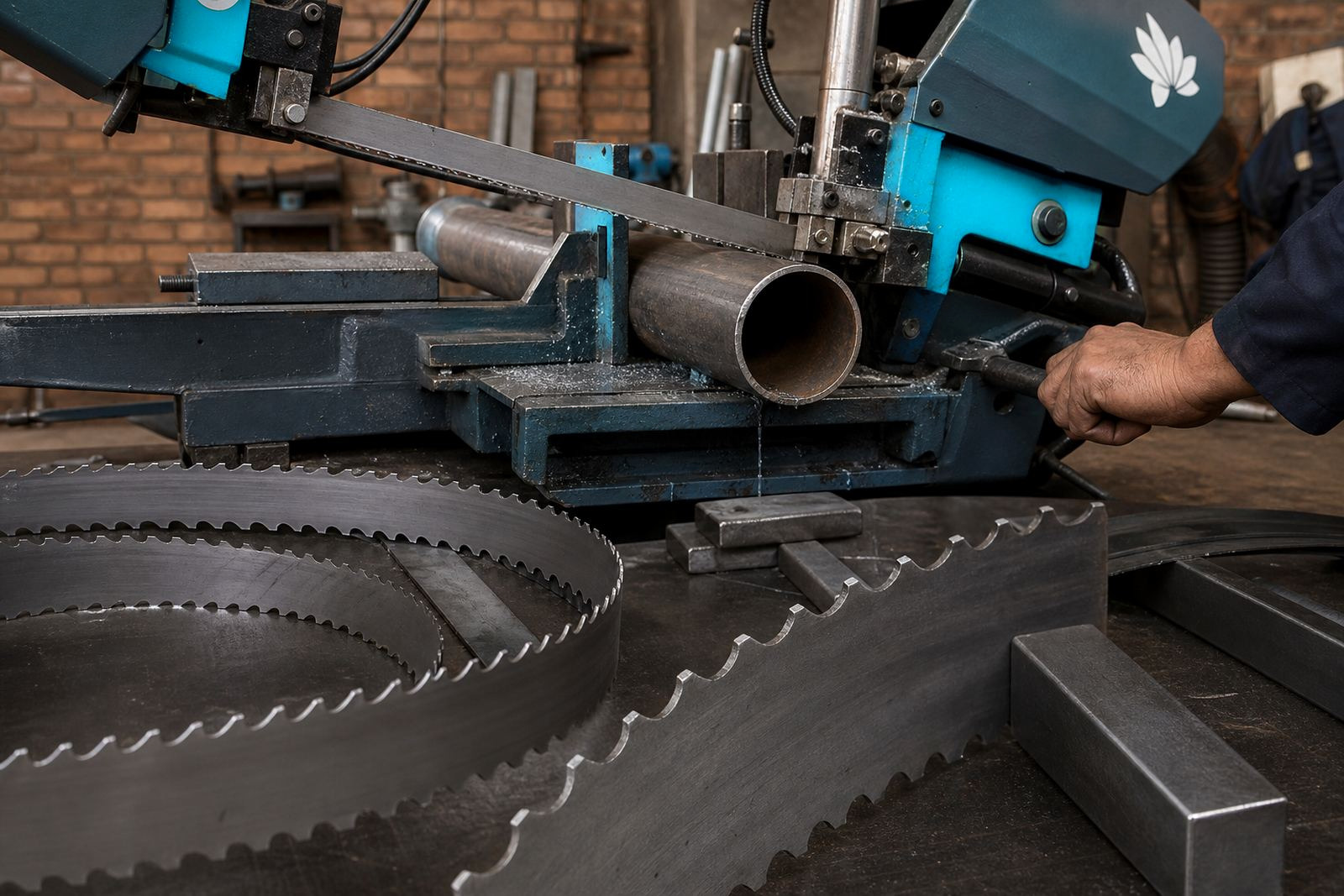
Get the tooth pitch, counted in teeth per inch (TPI), right before anything else. More teeth per inch mean a smoother cut on thinner material. Fewer teeth per inch clear chips better on thicker stock. Variable pitch blades help reduce vibration on some jobs, especially when the cross section changes through the cut.
A general guide is to keep several teeth in the cut at once. If only one or two teeth bite, the blade can snag. If too many teeth are packed into the material, the gullets fill and the cut starts to rub. Rubbing builds heat and wears the blade down sooner.
- Fine pitch: useful for thin sheet and light tube.
- Medium pitch: a common choice for general workshop steel.
- Coarse pitch: better for heavier sections and fast stock removal.
- Variable pitch: helps control vibration on mixed sections.
Width, thickness and set change control
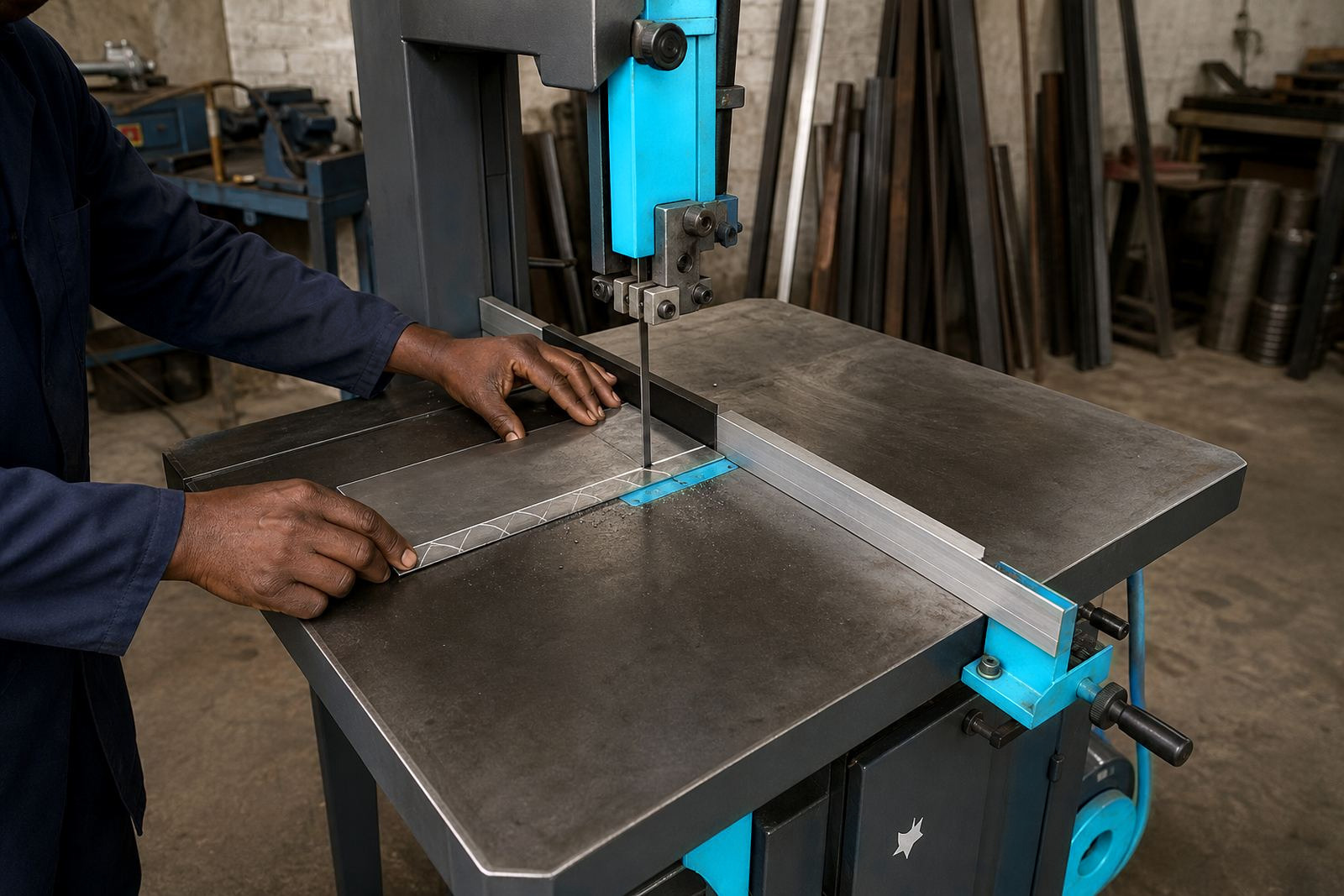
Match the blade width and thickness to the pitch. A wider blade stays straighter in a cut and resists twisting when the operator pushes into harder material. A thinner blade can suit lighter manual saw work, but it may flex more if the stroke is uneven or the vice grip is poor.
We also check the set on the teeth. Enough set stops the blade from binding, but too much can leave a wider kerf and extra drag. On manual saws, a steady stroke and full contact with the vice help the blade stay true. If the blade wanders, the problem is often the fit, the feed, or a mismatch between blade and section size.
In workshops in Durban or Cape Town, salt air and humid storage can also affect blades. A blade that has sat open in damp conditions may show rust spots or lose its clean cutting feel before it even goes into the frame.
Bi-metal and carbon steel suit different work habits
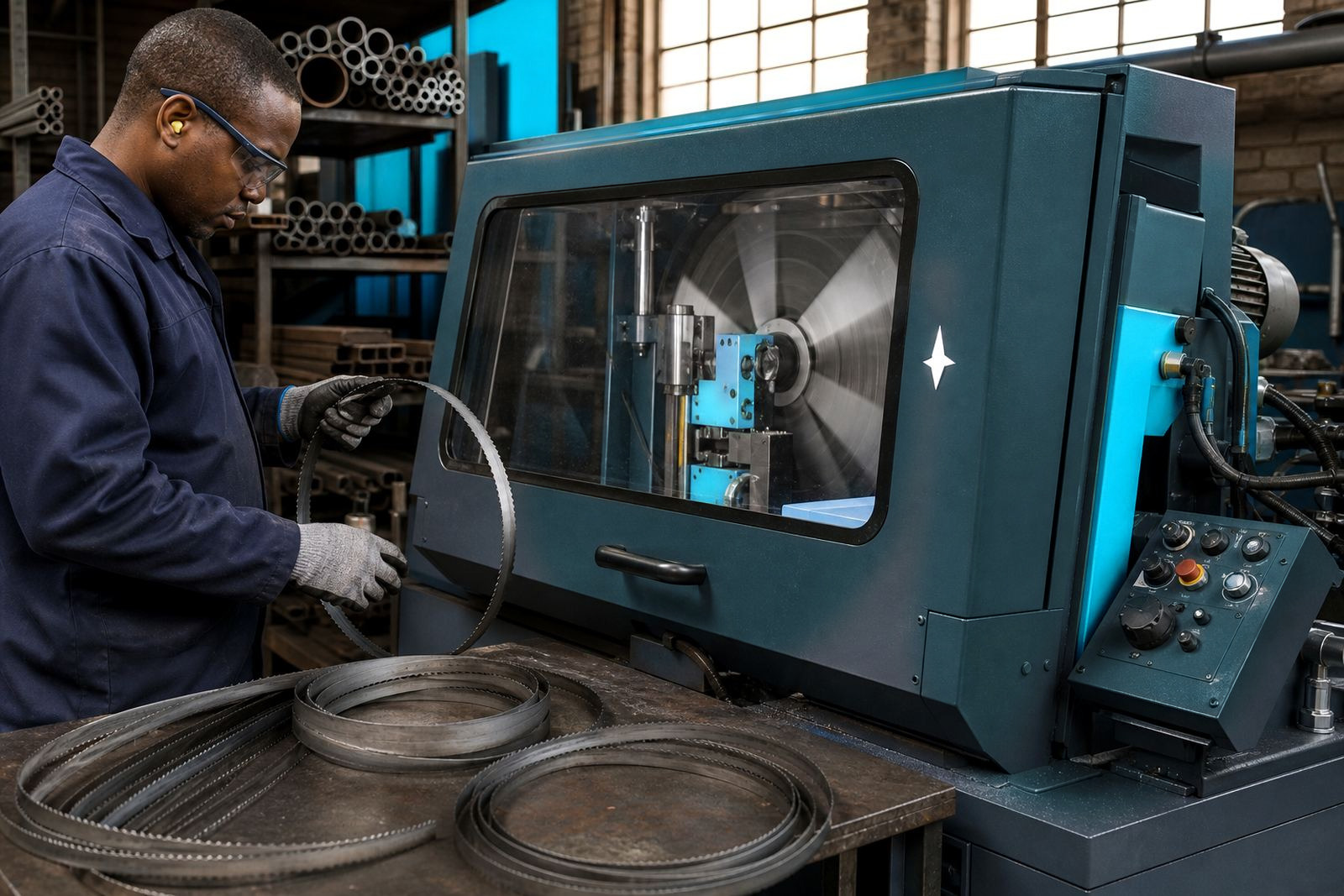
Bi-metal blades are usually the better all-round choice where the job changes through the week. The tooth edge handles tougher work, while the backing gives the blade flexibility. Carbon steel blades still have a place on lighter manual sawing, softer material and shorter runs where the material is predictable.
For a fitter cutting mixed offcuts and small maintenance pieces, bi-metal can be the easier daily choice. For occasional hand work on softer stock, a carbon steel blade may be practical. The wrong answer is to treat every blade as general purpose. The material, the thickness and the cut length all influence what lasts and what bites properly.
- Bi-metal suits mixed workshop use and tougher materials.
- Carbon steel suits lighter, simpler manual work.
- Heavier sections often benefit from a stronger tooth edge.
- Short clean cuts still need the right pitch and feed.
Run-in, feed and coolant are part of blade choice
New blades need a short run-in. The first cuts should be lighter so the teeth settle before full pressure is used. A hard push too early can chip the tooth edge and shorten the working life of the blade. Set the feed speed as well. If the operator forces the stroke, the cut heats up and the teeth wear unevenly.
Coolant is worth checking on powered saws where the blade runs longer and the metal gets warm. A proper fluid helps flush swarf and reduce friction, especially on stainless or heavier sections. On manual saw support, the same principle still applies in smaller steps: keep the blade clean, clear chips often, and do not let the cut drag.
Blade failure is often a clue rather than an accident. Cracked teeth, shiny bands on the blade, or a cut that starts drifting can point to poor feed, incorrect pitch, or a machine fit issue.
A Johannesburg example from a busy maintenance bench
A maintenance team in Johannesburg may need to trim mild steel tube in the morning and cut flat bar later the same day. One blade suits both jobs differently. A finer pitch may clean up the tube neatly, but it can struggle on thicker bar. A coarser blade can move through the bar, yet leave a rougher edge on the thinner section.
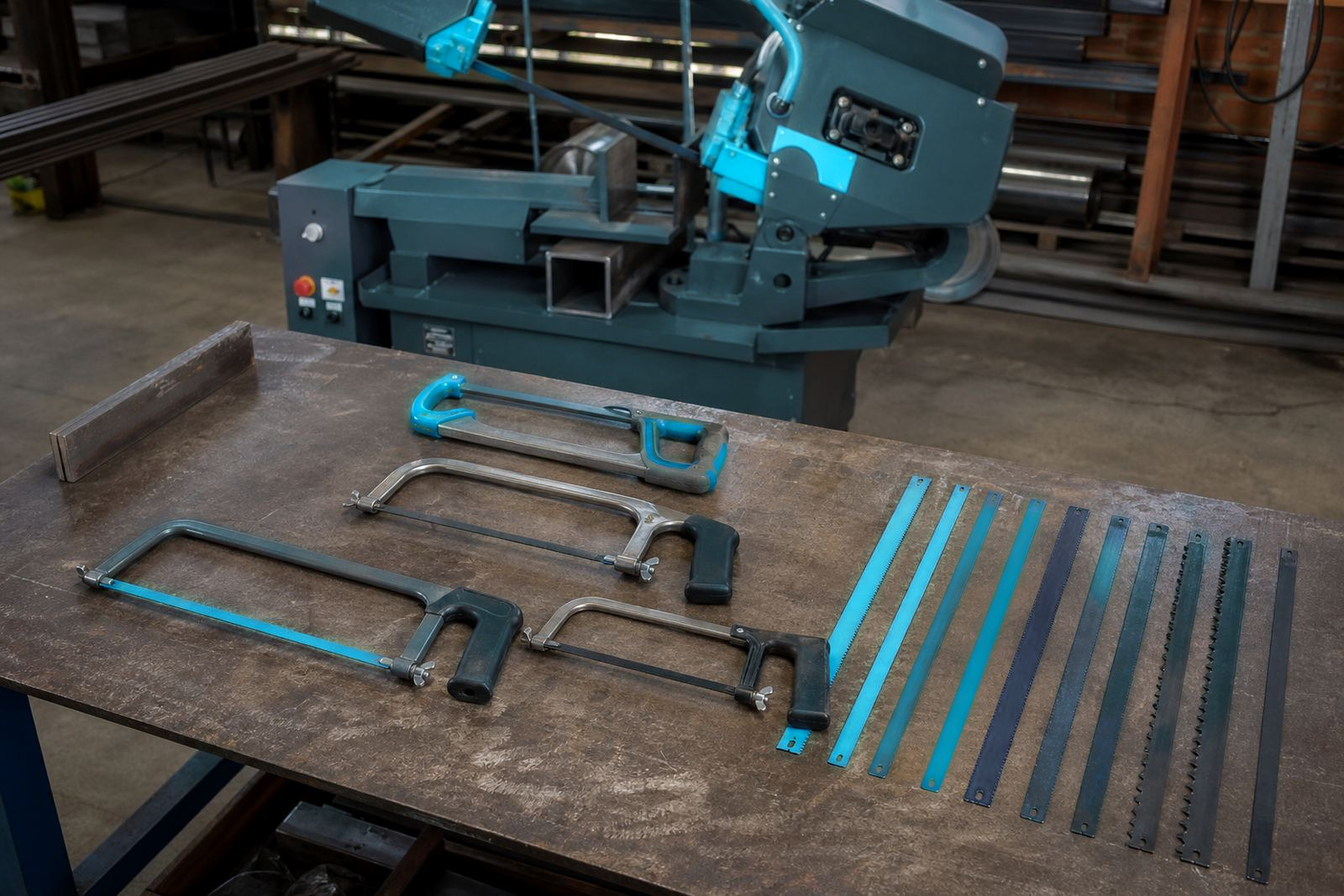
Starter kits and stock standardisation help there. A small set of blades, sorted by pitch and material, keeps the bench from filling with mixed lengths and wrong matches. For larger workshops, blade welding to length and length verification also save time when frames and saws vary across sites in Alberton, Germiston or Boksburg.
Our team works with manual saw support, machine fit checks and tooth pitch selection, so the blade matches the cutting task instead of forcing the task to fit the blade.
A quick buying habit that keeps the bench in order
When ordering or planning stock, keep the question practical: what material is being cut, how thick is it, and how clean does the edge need to be. That short habit gives better results than chasing a blade by name alone. Workshops needing weld-to-length service, length verification or a cleaner standard across several branches can use our support.
- Identify the metal and its thickness.
- Check whether the cut is manual or machine driven.
- Match TPI to section size and cutting speed.
- Allow for blade width, set and cooling needs.
- Keep a spare blade choice for thin, medium and heavier stock.
Across South Africa, from Vereeniging to Pretoria and Cape Town, a sensible blade choice saves effort on the saw and leaves less rework at the bench. If the cut is noisy, rough or drifting, the answer is usually in the fit, the pitch or the feed, not in forcing the same blade harder.