What a wavy set changes at the cut face
A wavy set puts a repeating side displacement across the teeth instead of a straight alternation left and right. On thin material that small pattern helps, because a full alternate set can grab harder than the job needs and leave the operator fighting the saw. With a wavy set the kerf is still wide enough to clear the body of the blade, but the cutting edge feels less aggressive on short contact lengths.
That is useful on manual hacksaw work, light bench sawing, and bandsaw tasks where the operator is feeding by hand rather than pushing a machine through a fixed cycle. A coarse tooth form settles properly only when the material wall thickness is sufficient. The aim is steadier engagement during the cut.
Thin sections, light tube, and awkward offcuts
Wavy set blades earn their place on thin tube, flat bar, angle iron, and narrow section stock where the saw teeth have only a short time in the cut. A blade with too much set can chatter and leave a rough edge, while one with too little can bind as the kerf closes behind the teeth. The middle ground is often a better fit for manual sawing and smaller bandsaw frames.
- Use finer tooth pitch on light wall tube and thinner plate.
- Move to a medium pitch when the section gets heavier and the wall opens up.
- Check blade width against the smallest radius or guide clearance on the machine.
- Keep the blade thickness suitable for the saw body and the material size.
In practice, a workshop cutting short lengths for hand fitting often gets more value from control than from raw cutting rate. A wavy set can make the blade feel less jumpy through the first contact and through the exit.
Choosing tooth pitch, width, and thickness together
Tooth pitch and set should never be treated as separate questions. If the pitch is too coarse for thin material, the teeth strike unevenly and the cut can snatch. If the pitch is too fine for the stock, the gullets pack with chips and the blade starts to rub. The right answer depends on the section size, wall thickness, and whether the saw is hand fed or mechanically guided.
Width is the next check. A narrower blade turns more easily on manual work and tighter profiles, while a wider blade tracks straighter on longer cuts and heavier frames. Thickness adds body and support, but it must still suit the machine wheels, guides, and tension range.
- Finer TPI suits thin tube, light bar, and delicate manual jobs.
- Variable pitch helps interrupt chatter on mixed or uneven sections.
- Wider blades suit straighter runs and firmer machine control.
- Narrower blades suit tighter manoeuvring and lighter saw frames.
Run-in, feed pressure, and coolant habits that protect the edge
Even a good blade will fail early if it is driven too hard at the start. A proper run-in lets the tooth points settle before the blade sees full feed. Bi-metal M42 teeth need it, and carbon steel blades need it too, because the set can wear away faster if the first cuts are rushed. A careful start leaves the cutting edge cleaner and the body less stressed.
Feed speed should match the material and the tooth form. On thinner material, too much pressure creates burrs and short tooth life. Too little pressure makes the blade polish the work instead of cutting it. Longer band cuts and harder steels need coolant, because heat builds quickly at the tooth line.
- Start with lighter feed on the first few cuts.
- Keep chips clearing from the gullets, not packing in the kerf.
- Use coolant if the machine and job require it
- Listen for squeal, which often points to rubbing or wrong feed.
Manual sawing on job sites and in small workshops
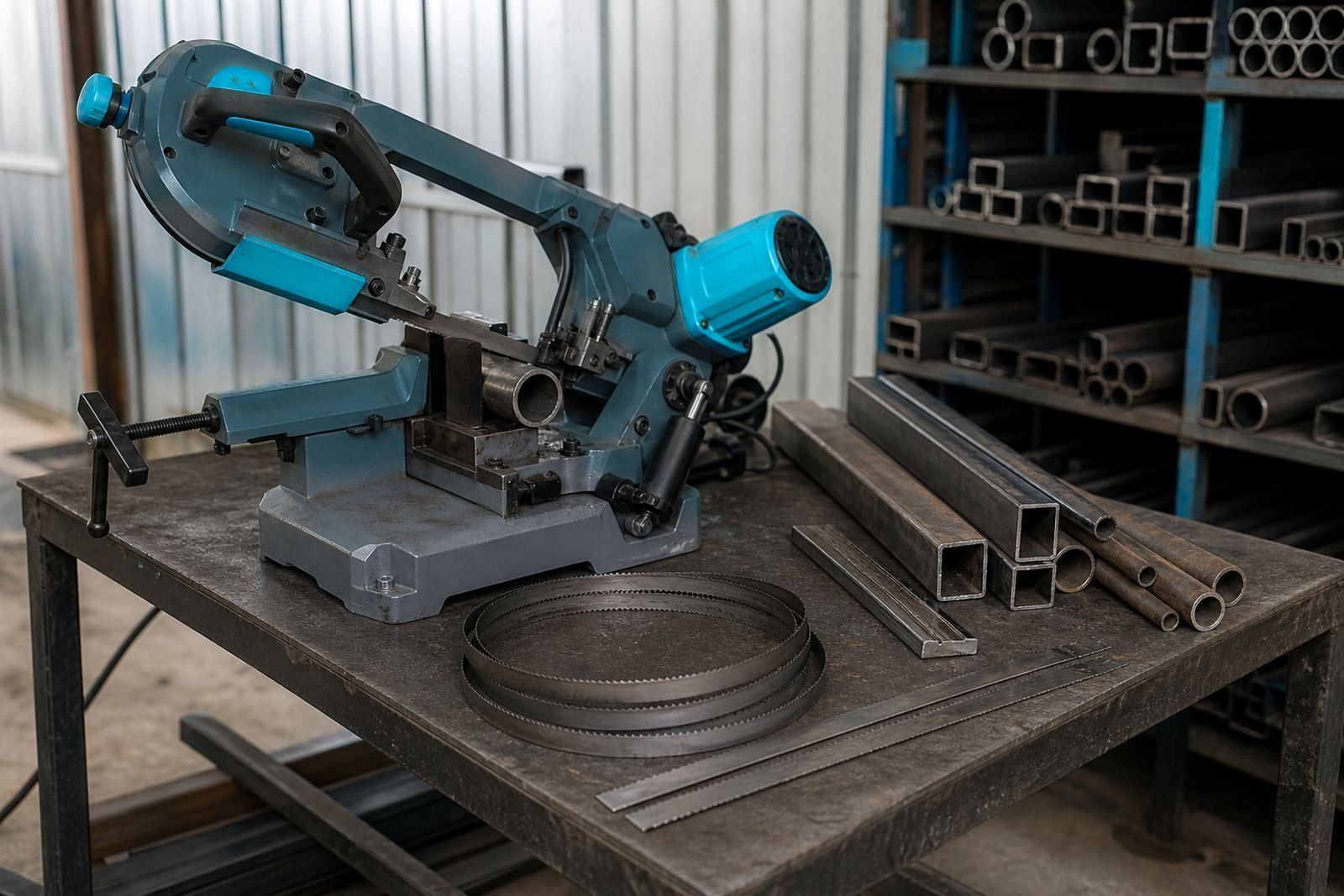
Manual sawing places a different demand on the blade, because hand pressure changes from stroke to stroke. A wavy set helps the blade stay usable when the operator cannot hold a perfectly even feed. A practical option for fitting jobs, repair work, and small batches, it lets a workshop cut a few pieces, check the fit, then cut more.
In Alberton and the surrounding industrial areas, we often see this on maintenance benches and fabrication floors where a bandsaw or hacksaw is used for mixed stock through the day. A blade that is too aggressive can punish the operator and the material. One that is matched properly to the pitch, width, and set gives a steadier stroke and less wasted stock.
For manual work, a short blade note should cover the stock size, material type, and the saw frame or machine opening. Those details shape the final choice more than the job name alone.
Weld-to-length work, starter kits, and keeping one standard across the shop
Many workshops prefer to keep a small set of lengths and pitches that cover most work instead of guessing on each order. Weld-to-length service suits the machine, so the blade can be supplied to fit. Starter kits can also help new stores or new lines of work, especially where the team needs a sensible spread across thin section, general steel, and heavier bar.
Standardising stock keeps several branches or benches cutting the same materials. A consistent blade width, tooth pitch, and run-in habit makes the results easier to repeat and the wear pattern easier to read. If a blade starts to fail early, a blade failure review and machine fit check can show whether the issue sits with the feed, the guide alignment, or the material mix.
- Keep the common lengths listed for each saw frame.
- Match the pitch to the lightest and heaviest job in the batch.
- Use length verification before dispatching blade sets.
- Review tooth wear after mixed material runs.
A local cut story from Alberton to Cape Town
A metalwork shop in the Alrode area was cutting small sections for hand assembly and found that the blade was biting too sharply on thin wall tube. The operator was feeding by feel, the cuts were noisy, and the edges needed extra clean-up. A move to a more suitable wavy set, finer tooth pitch, and a narrower blade changed the feel of the cut without forcing a larger machine setting.
The same sort of job shows up in Johannesburg, Vereeniging, Pretoria, Durban and Cape Town, because light fabrication does not stay in one town. A blade that behaves well on one bench may misbehave on another if the section size, feed pressure, or coolant use changes. The practical answer is to match the set to the work, then keep the notes clear for the next batch.
Wavy set notes are most important there. They keep thin material from turning into a guessing game, and they give manual sawing a better chance of staying controlled.