Check the cut face first before looking at the saw frame
Before changing the machine, look closely at the cut itself. A cut that starts straight and then wanders often points to blade set, feed pressure, or a blade working outside its proper range for that section. If the face shows polished rub marks on one side, the blade may be skating rather than cutting cleanly.
On mild steel, stainless, tube and solid bar, the same saw can behave very differently. A blade that handles 50 mm tube neatly may struggle on a thick 100 mm bar if the tooth pitch is too coarse or the feed is too heavy. Here, practical blade selection counts for more than guesswork.
- Check whether the cut drifts from the first few millimetres or only later.
- Look for taper, chatter marks, burrs and heat tint.
- Note if the blade grabs at one corner or stays steady then pulls away.
Blade width, thickness and set do the steering
Blade width affects how well the saw tracks through the job. Narrow blades can take tighter radii and cut smaller sections, but they are easier to twist out of line on heavier stock. Wider blades track better on straight cuts, especially when the machine is in good condition and the guides are set correctly.
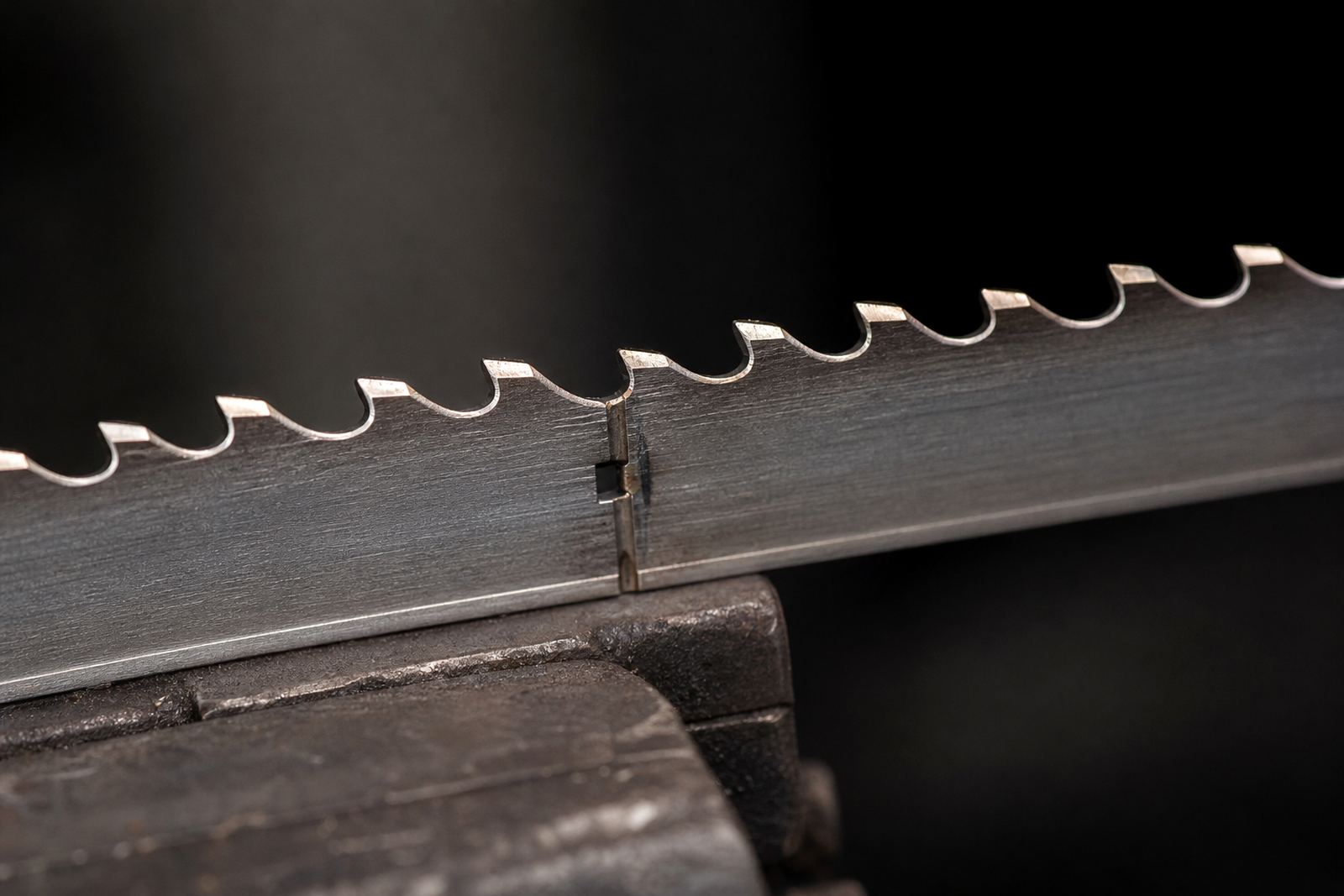
Blade thickness is the next check. A thin blade can be useful on lighter machines, yet it can flex if the feed is too aggressive or the stock is badly clamped. The tooth set must be even from side to side, otherwise the blade will wander and leave an uneven face. If the blade was welded to length, the weld needs to be smooth and true, with no hard spot that catches as it enters the cut.
- Use a width suited to the job and machine guide spacing.
- Confirm the blade tracks centrally in the guides.
- Check for twist, kink or weld high spots before starting.
Tooth pitch and material need to match the load
Tooth pitch is one of the first things to check when a cut goes crooked. Too few teeth in the cut and the blade snatches. Too many teeth and the gullets clog, which heats the blade and pushes it off line. Variable pitch blades help on mixed section work because they spread the bite more evenly and reduce vibration.
Bi-metal M42 blades are often used for tougher work because they hold an edge well on steel sections and can tolerate more demanding jobs. Carbon steel blades suit lighter use and manual saws. They need the right feed speed and care during run-in. The right tooth pitch, whether fixed or variable, should suit the thickness of the material and the cross section being cut.
- Small solid sections usually need a finer pitch than heavy bar.
- Thin-wall tube needs enough teeth in contact to avoid snagging.
- Mixed bundles often cut better with variable pitch.
Feed, speed and coolant leave clues on the cut
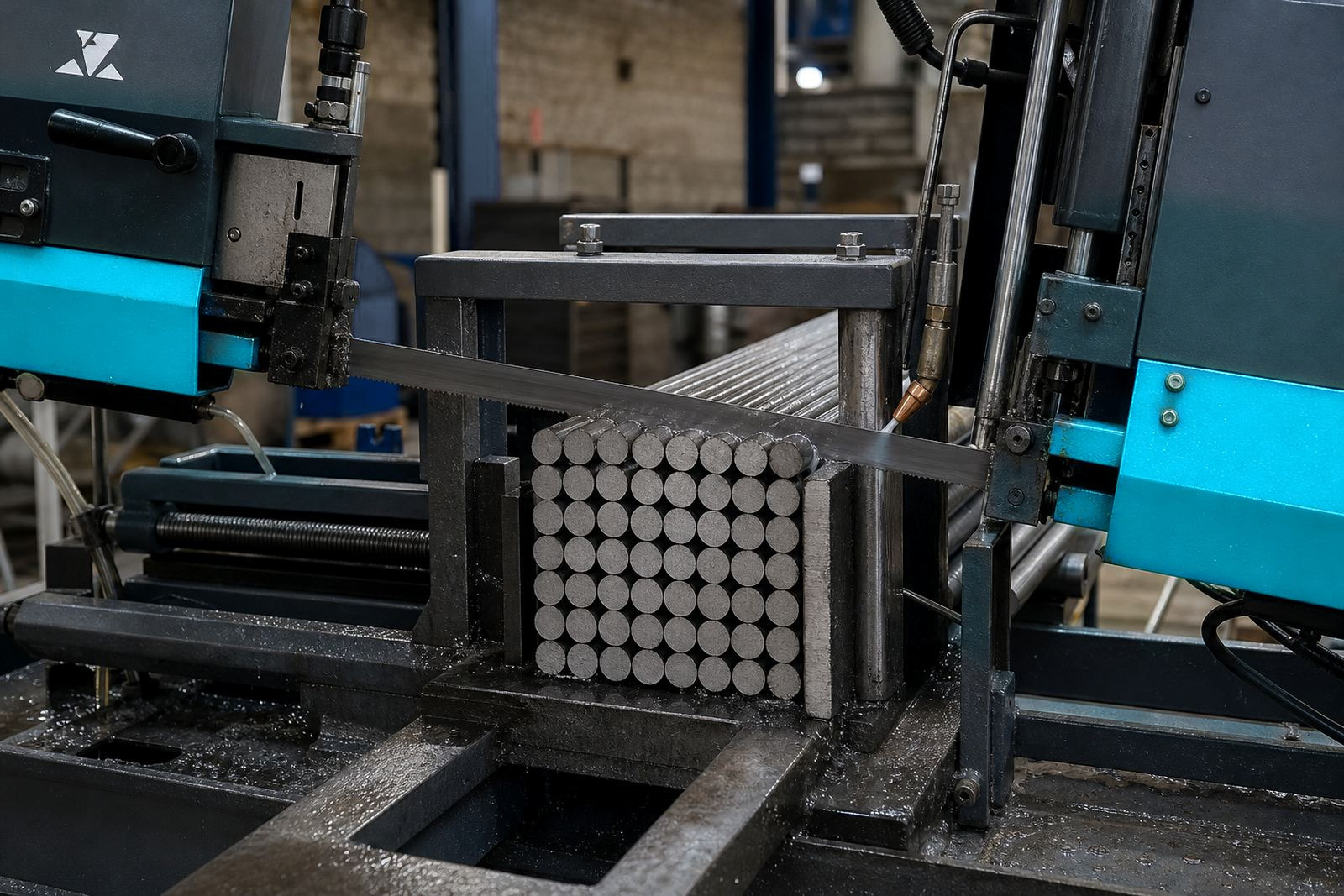
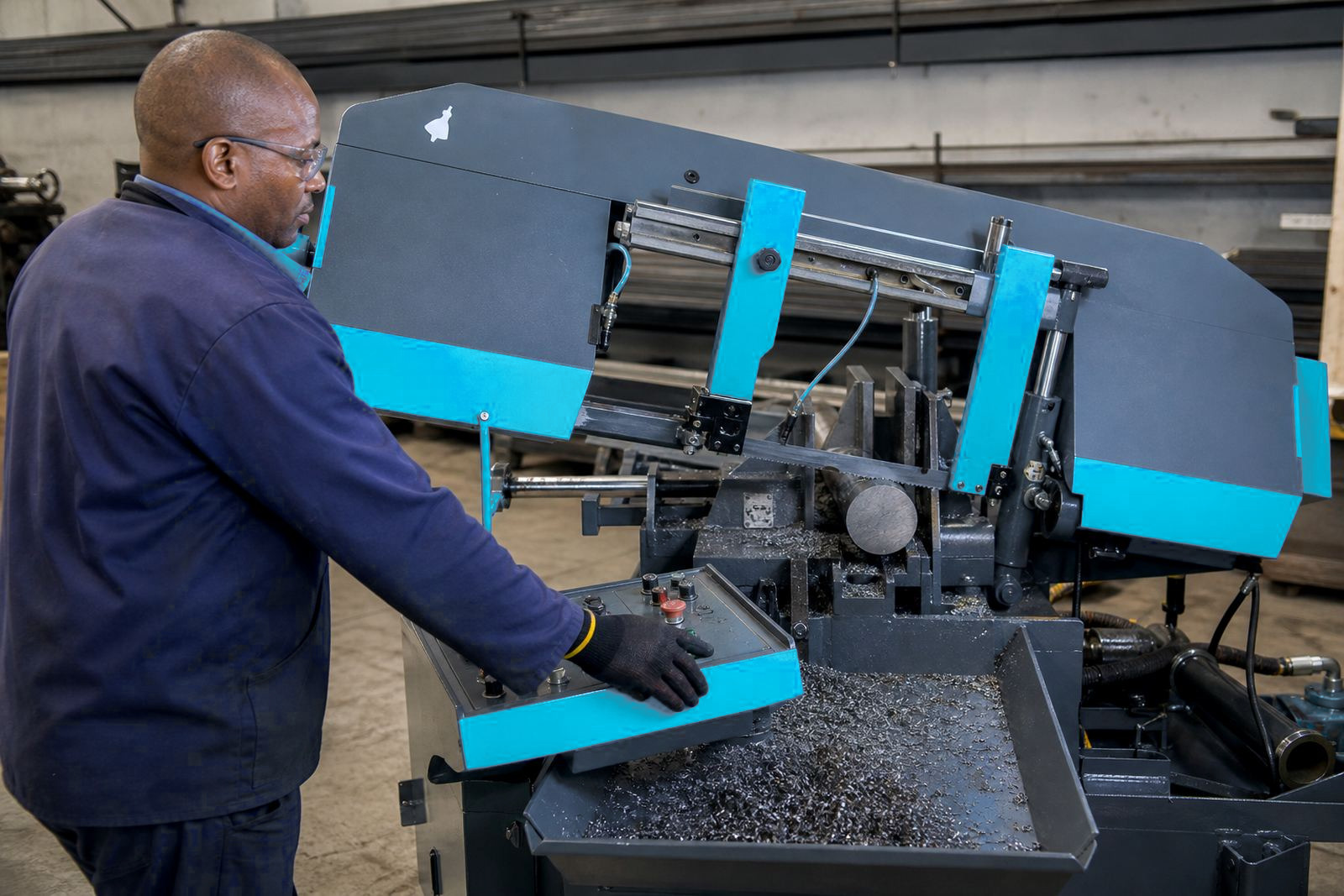
Many crooked cuts begin with the operator pushing too hard. A saw that is fed too fast can deflect the blade and leave a cut that leans or bows. If the feed is too light, the teeth skim instead of cutting, which can glaze the edge and make the blade drift. The correct pace should sound steady and even.
Metalwork needs regular coolant checks. Dry cutting can overheat the teeth, especially on stainless and thicker mild steel sections. Heat changes blade behaviour, increases wear and can pull the cut off square. If the saw uses coolant, the flow should reach the tooth line cleanly and not pool away from the work.
- Watch for blueing, smoke or a sharp burning smell.
- Keep the feed steady rather than forcing the blade through.
- Confirm coolant reaches the cutting zone on both sides.
Run-in and the first few cuts set the tone
A proper run-in helps a new blade settle in. If it is pushed hard from the first cut, the tooth tips can chip early and the edge will never settle. A short run-in on easier material lets the teeth wear in evenly and gives a better finish on later work. This is especially important on bi-metal blades used for mixed workshop jobs.
Blades that have not been run in properly often show uneven wear at the corners. That wear can make the blade start straight then pull away halfway through the section. In workshops around Alberton and Germiston, that pattern often shows up on repeated cuts of small box section, where operators think the machine is at fault when the blade simply needs better start-up care.
- Use lighter pressure on the first cuts of a new blade.
- Inspect the tooth tips after the first few pieces.
- Reset feed only after the blade has settled into the cut.
A Pretoria workshop example from the shop floor
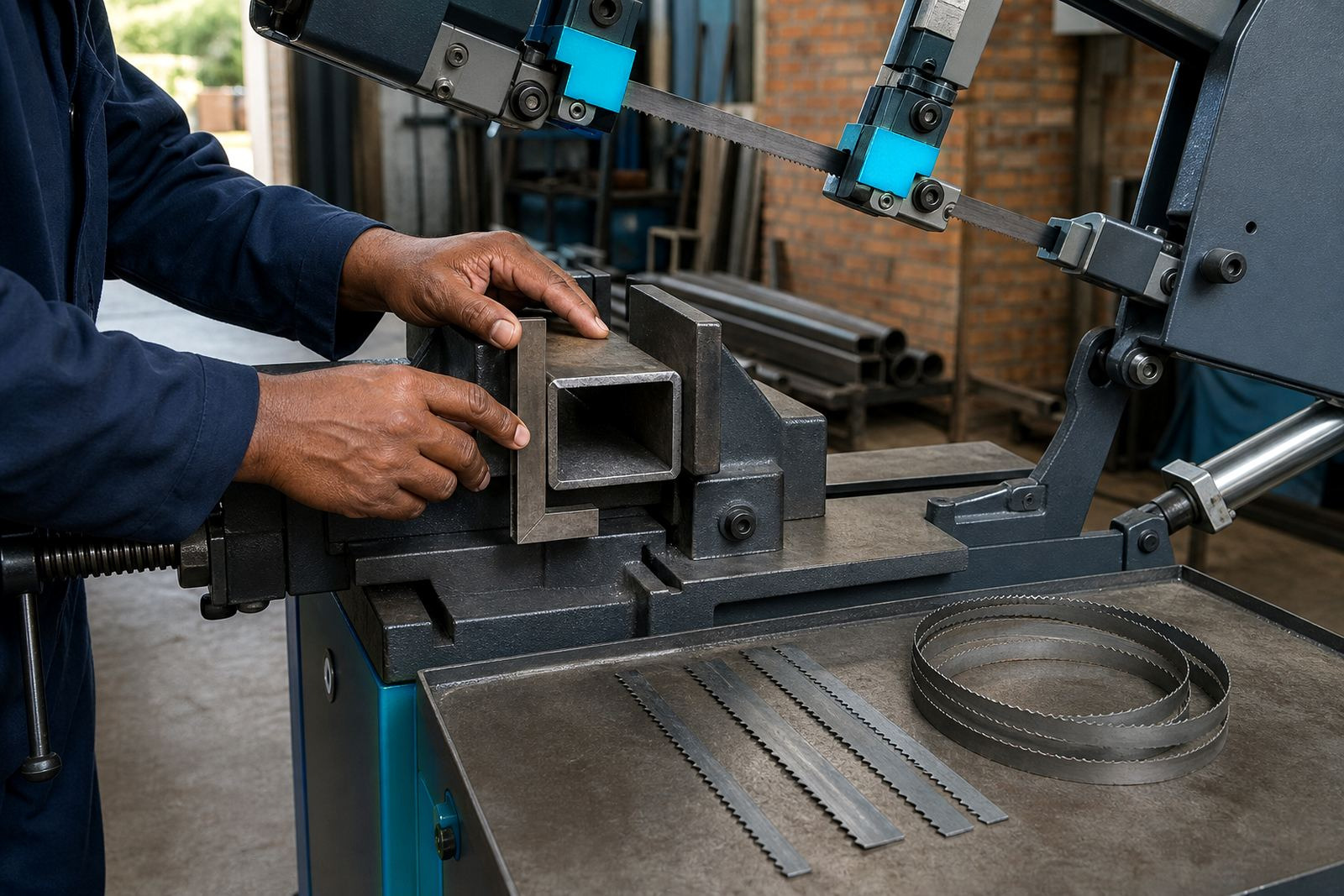
A fabrication team near Pretoria brought in a manual saw that was leaving one side of the cut square and the other slightly tapered. The blade looked fine at a glance, but the tooth pitch was too coarse for the small rectangular tube they were cutting. The blade was also too narrow for the guide setup, so it twisted whenever the operator increased feed.
After checking the machine fit, the team moved to a better width, tightened the guide setting and changed the pitch to suit the material. They also reduced feed and checked coolant coverage. The next set of cuts tracked cleanly and the faces were much easier to prepare for welding. That sort of fix is ordinary in a busy bay, but it depends on looking at the whole setup and the blade.
Across Johannesburg, Vereeniging, Durban and Cape Town, the same logic applies: match the blade to the machine, the material and the way the saw is actually used.