The break usually starts before the snap
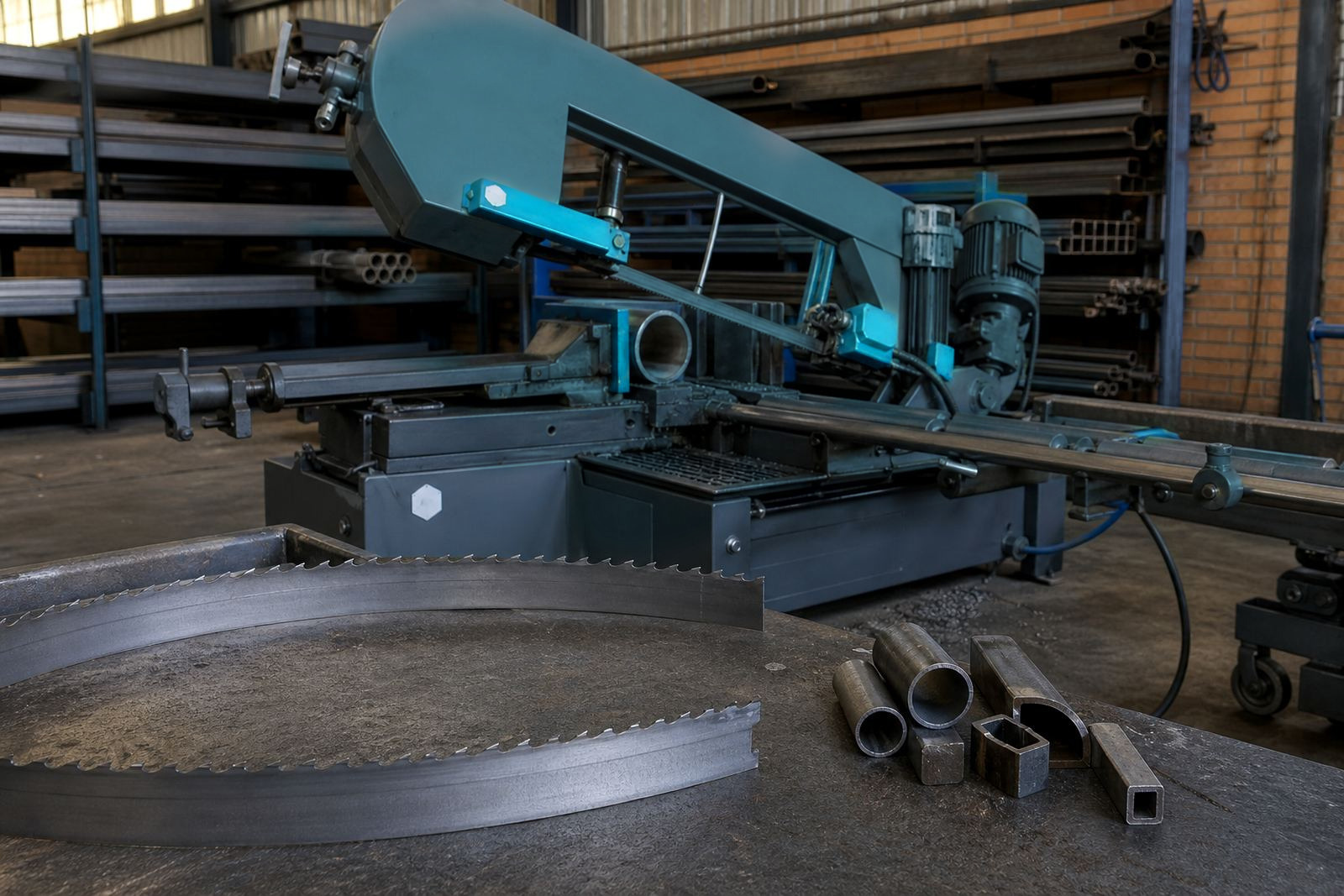
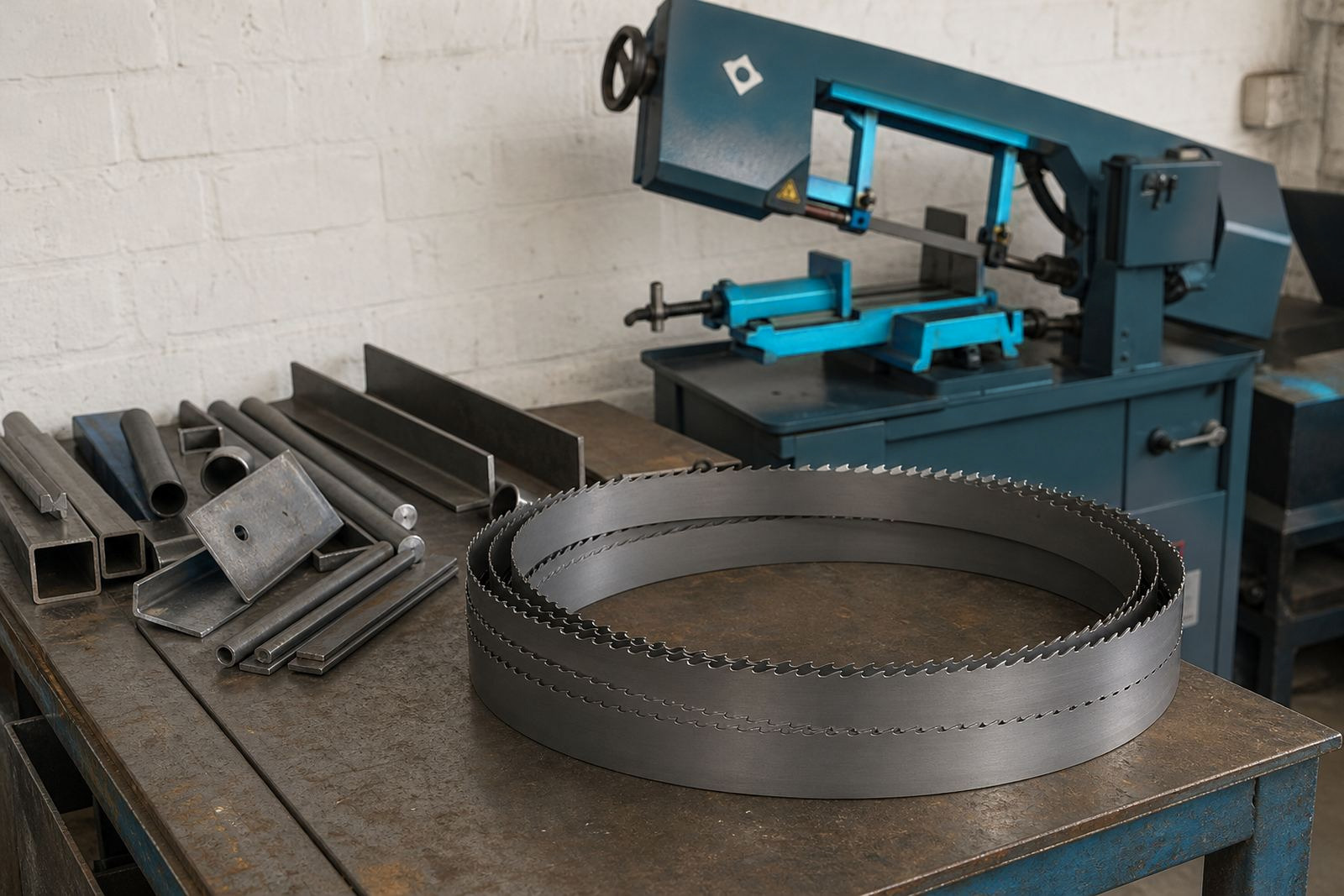
A blade does not often fail at the exact moment the crack shows. Most breakages begin with a bend, a loose weld, a wrong tooth count or a feed setting that is too heavy for the section being cut. Once the blade is forced to work outside its range, the teeth lose set, the back starts to fatigue and the strip can fail near the weld or in the cut.
On metalwork jobs, the first place to look is the cut material. Solid bar, thin wall tube, bundle cuts and mixed stock all place different loads on the blade. A blade that runs well on mild steel bar may struggle on stainless, tool steel or a bundle with uneven clamping. Many crews underestimate how much that difference counts.
Tooth pitch that matches the section
Blade breakage often comes from the wrong tooth pitch for the job. A coarse tooth count can grab on thin sections, while a fine pitch can pack the gullets on thick stock and force the blade to rub. Variable pitch blades help on mixed profiles because they spread the cutting load more evenly and reduce vibration.
- Use finer TPI for thin wall material and lighter sections.
- Use coarser TPI for heavier solids and larger cross-sections.
- Keep at least a few teeth in the cut at all times.
- For mixed bundles, choose a pitch that suits the thinnest wall in the pack.
If the blade is leaving sharp chatter marks, snagging at entry or breaking near the tooth line, the pitch is usually worth checking before anything else. A correct pitch can save a blade that would otherwise fail after a few cuts.
Width, thickness and the bend the blade can live with
Blade width and thickness decide how well the blade tracks and how tightly it can turn. A wider blade gives better straight-line stability but resists tight curves and poor guides. A thinner blade can pass through smaller radii, yet it may flex too much if the machine feed is heavy or the guides are worn.
For workshops in Johannesburg, Vereeniging and Germiston, breakage often shows up after the same machine has been used for both straight cutting and awkward mitres. The blade is then expected to do two jobs at once. If the machine, guides and material type do not suit the same blade, the back of the strip takes a beating and the weld can become the weak point.
Feed pressure, speed and the signs a cut is being forced
Too much feed pressure is a common cause of blade failure. The teeth stop slicing and start ploughing. Heat rises, the chip forms badly and the blade can twist in the cut. Too little feed is also a problem because the teeth rub instead of cutting, which overheats the edge and softens the set.
- Watch the chip. Fine dust usually points to rubbing instead of cutting.
- Look at the sound. A steady cut sounds different from a strained one.
- Check whether the chips are curled and even, not blue or burnt.
- Match speed to the metal, especially on stainless and hardened stock.
Plan a run-in as well. A new bi-metal blade needs a gentle start so the tooth tips can settle before full loading. Skipping run-in can shorten blade life sharply, especially on a machine that is already a bit rough on guides or drive tension.
Coolant, chip clearing and heat at the cut line
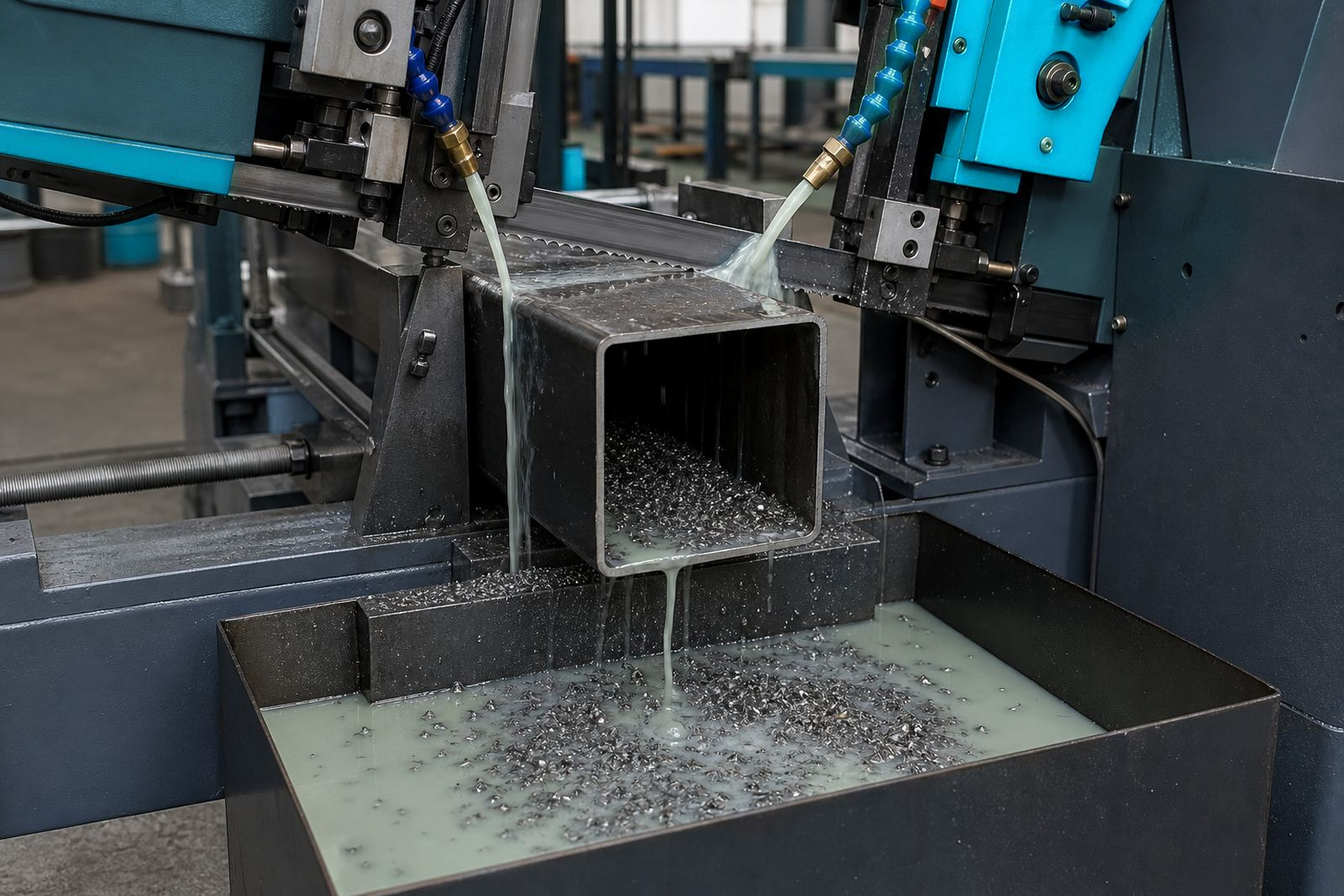
Heat is a quiet cause of breakage. Without enough coolant, the blade runs dry, the gullets clog and the tooth tips lose their edge. On carbon steel blades especially, overheating can strip life off the cutting edge quickly. Bi-metal M42 blades handle heat better, but they still need proper cooling and chip clearing.
Coolant checks should include flow, concentration and where the liquid actually lands. If the stream misses the cut, or swarf piles up in the kerf, the blade works harder than it should. In coastal areas such as Durban and Cape Town, extra care with storage and coolant condition also helps where humidity can affect stock and machine cleanliness.
Welds, guides and machine fit are worth a close look
A poor weld can fail long before the teeth are worn out. If the weld has a hard spot, a crooked line or a visible pinch, the blade may crack at that point once the machine starts pulling through thicker work. Weld-to-length service and length verification suit workshops running several machines.
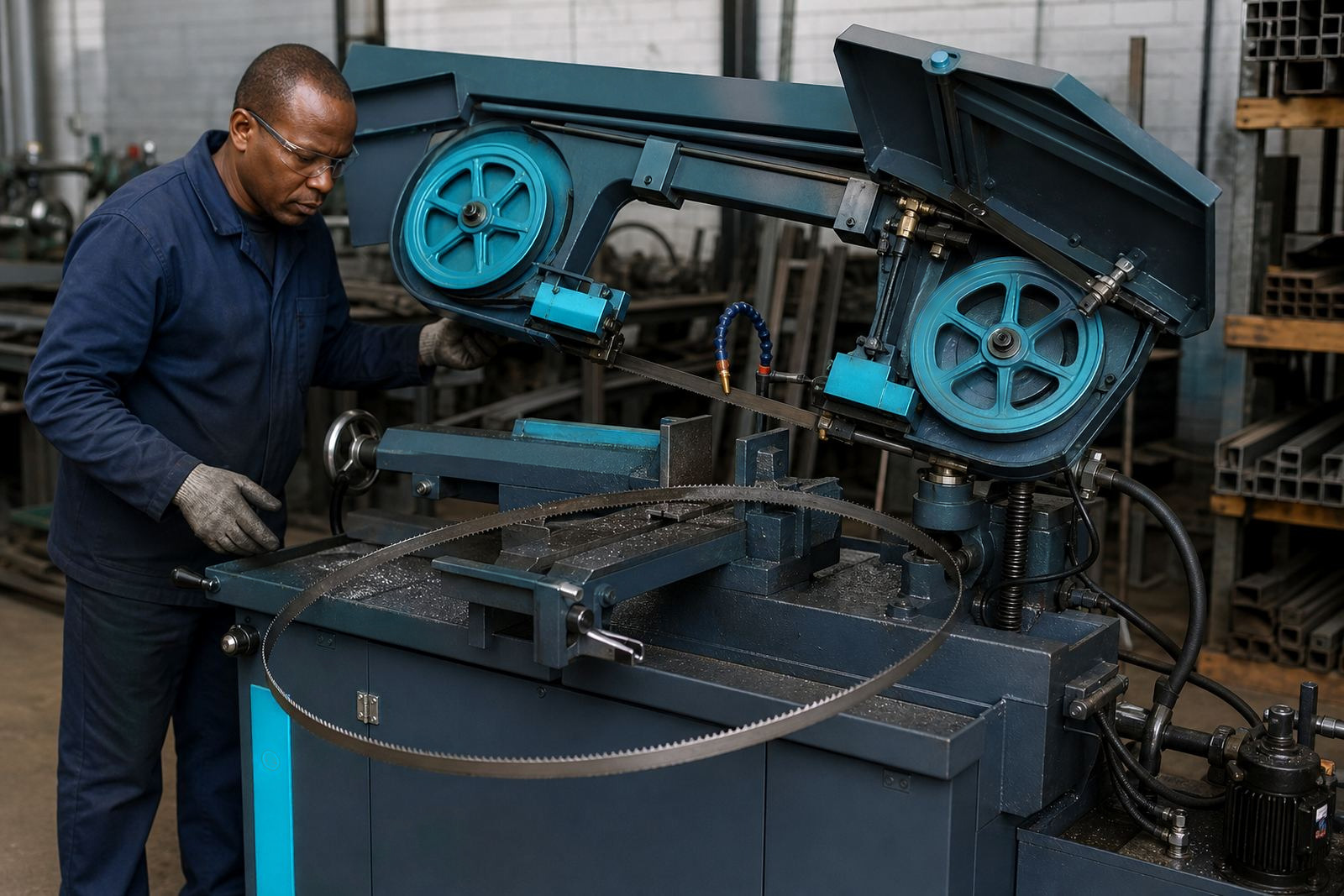
Guide alignment and wheel condition should be checked with the blade fitted and under normal tension. Worn bearings, chipped tyres or guides set too tight can mark the back of the blade and start fatigue. A blade that tracks off-centre may also rub one guide more than the other, which leads to early failure.
- Inspect the weld for straightness and a smooth finish.
- Check guide pressure and wheel tracking before loading a new blade.
- Confirm the blade length against the machine specification.
- Look for cracks near the back edge and around the weld zone.
Where manual saws are still in use, the same checks apply, though the failure pattern often shows up faster because the operator has more direct control over feed and alignment.
A local workshop example and the first checks to make
A fabrication shop in Alrode was cutting mixed mild steel sections and short bundles on a machine that had recently changed over from a wide blade to a thinner one. Breakages kept happening near the weld. The issue came from several causes. The pitch was a little fine for the thicker sections, the feed was too strong for the new blade, and the coolant nozzle was missing the cut line by a wide margin.
Once the blade width was matched to the machine, the pitch was adjusted and the coolant aimed properly, the breakage pattern changed. The shop needed a better match between blade and job. That same pattern shows up in Pretoria, Boksburg and Vereeniging where one machine is asked to handle several stock types in the same week.
If blade breakage keeps returning, start with these checks in order: material type, tooth pitch, blade width, feed, speed, coolant, weld quality and guide alignment. That sequence usually exposes the cause before the next blade is lost.