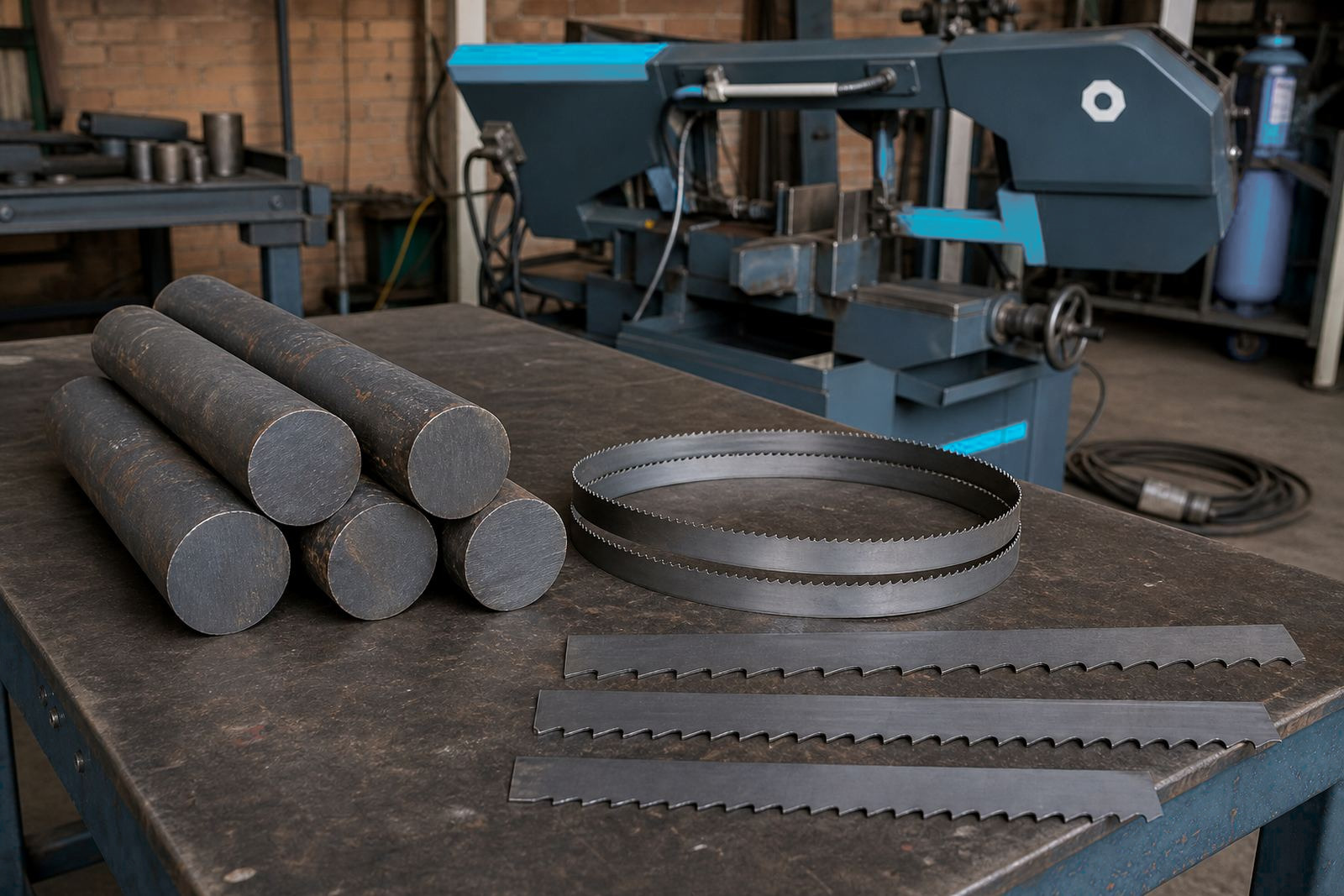
When the wall is light, the blade needs restraint
Thin wall stock puts the cut edge close to the tooth gullet, so the blade has less material to carry heat away. Tooth pitch, set and feed speed do more for the cut than brute force. A fine pitch bandsaw blade, or a fine tooth hacksaw blade on manual work, gives the teeth more contact points and helps stop snagging on hollow section, thin pipe and light channel.
For this kind of work we look at the wall thickness first, then the outside size and the machine feed. The right blade keeps the teeth engaged while cutting through the job without ripping the wall open or leaving a ragged edge. On mixed sizes the choice changes quickly, because a blade that works on 2 mm wall tube may behave very differently on 6 mm tube with the same outside diameter.
Plan a run-in as well. Fresh teeth need a lighter first pass so the set can settle and the edge does not chip early. On thin wall stock, a rushed start often shows up as smeared teeth, squeal or a cut that wanders as soon as the wall flexes.
Blade pitch and width that suit thinner wall material
Fine pitch is the main starting point. For light wall tube and section, many jobs sit in the finer TPI range so the blade always has several teeth in the cut. Variable pitch can help when the stock comes in different diameters or when the same blade has to cover a few wall thicknesses in one batch.
Blade width also changes the result. Larger machines and firmer clamping suit a wider blade that tracks straighter, while a narrower blade can suit smaller machines or tighter radii. We also look at blade stock thickness, because a heavier blade can resist twist better but may need a more careful feed on a light frame. Pick a blade that stays calm in the cut.
- Fine TPI for thin wall tube, light pipe and small section
- Variable pitch when stock size changes across the batch
- Narrower widths for compact machines and tighter guidance
- Wider blades where the saw frame and guides can carry them
- Light feed at first, then a steady cutting pressure
Machine set-up on real workshop floors
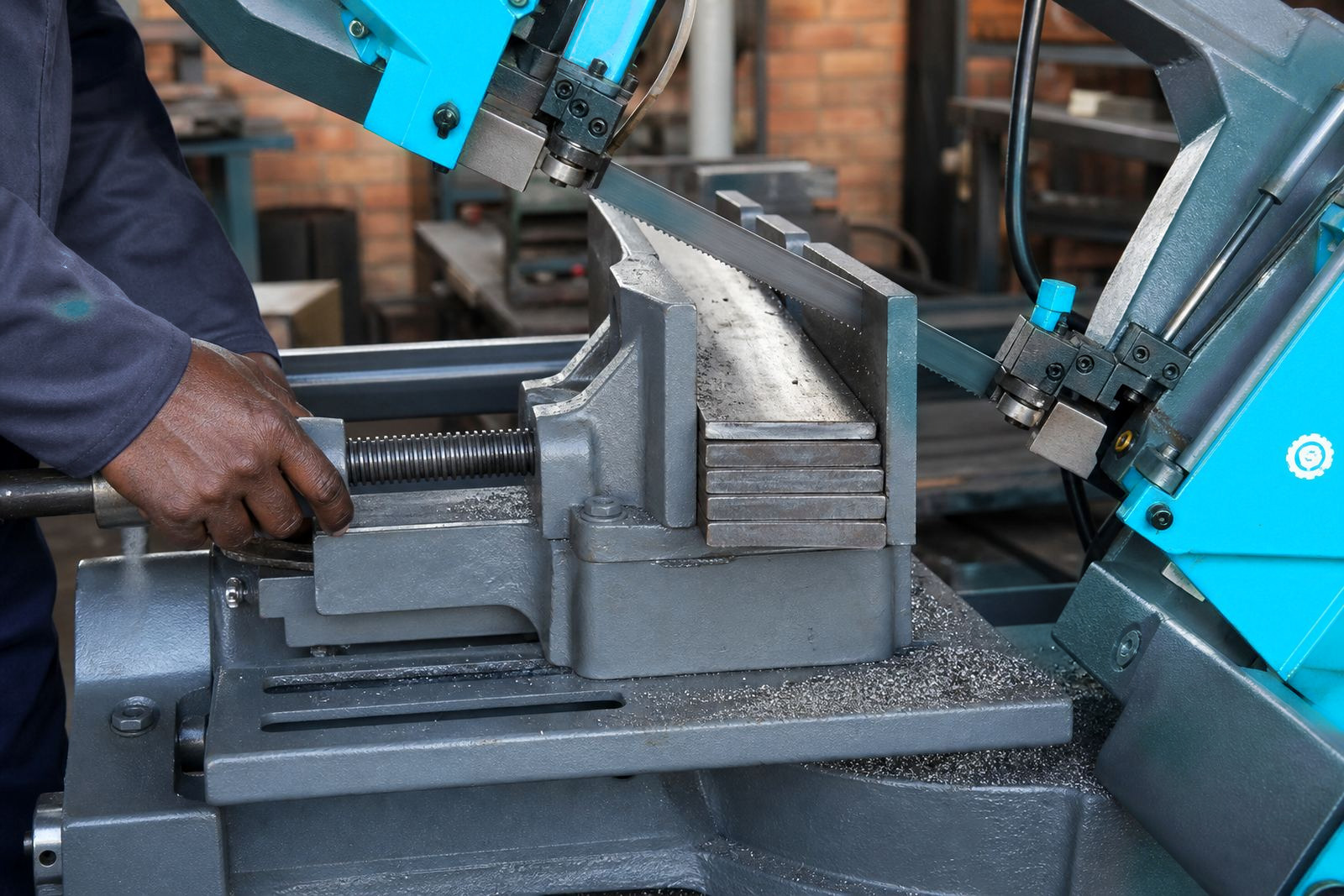
Thin wall stock often arrives at the saw in bundles, with short offcuts, mixed lengths and a few bent pieces mixed in. The saw only behaves well when the clamp is square and the stock sits firmly against the vice jaw. If the wall can move during the cut, the teeth start to skate, then bite too hard on one side.
We look at the machine fit as part of the blade choice. Guide blocks or bearings need to hold the blade true, and the blade path must suit the width being used. On manual saws the operator’s hand feed makes a big difference, while on powered frames the feed cylinder or pressure setting needs checking against the wall thickness. Too much pressure on thin wall stock can crush the leading edge before the teeth finish the cut.
- Clamp the work so it cannot lift or rotate
- Check guide condition before loading a fine blade
- Keep the blade tracking central on the wheels and guides
- Match feed pressure to wall thickness and outside size
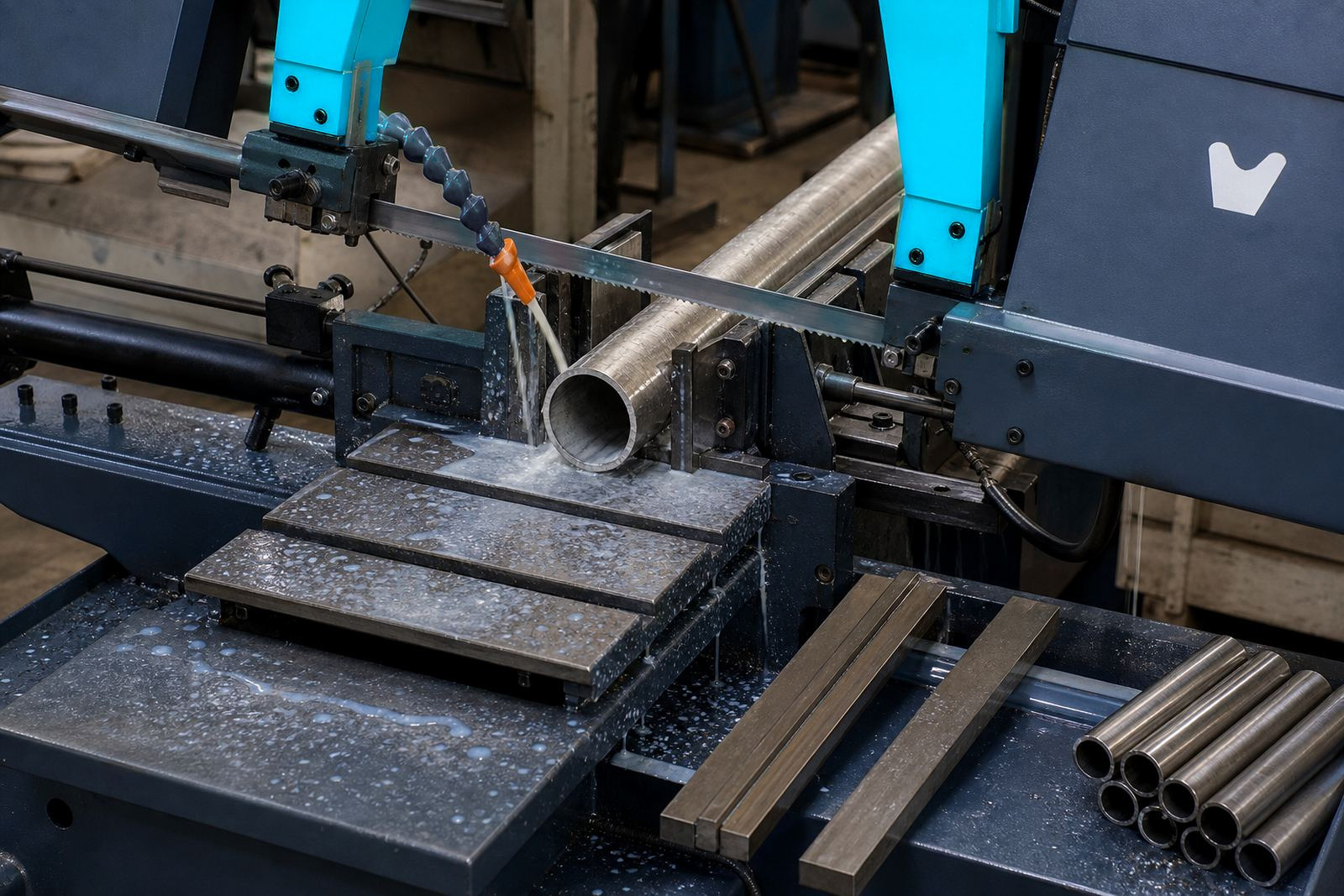
- Use coolant where the machine and material call for it
Common mistakes that shorten blade life
The most common problem is using a coarse blade because it feels faster on paper. On thin wall stock that usually causes tooth hook-up, broken tips and a rough exit edge. Another mistake is pushing too hard when the cut starts, especially on thin round tube where the wall can flex and bounce back at the blade.
Check coolant on higher volume work, and check it more often when the same blade runs through many short cuts. Heat builds quickly on thin sections, then the tooth edges lose their bite. If the blade is not running true or the set is uneven, the cut line wanders and the operator starts forcing the machine to keep it straight. That usually makes the problem worse.
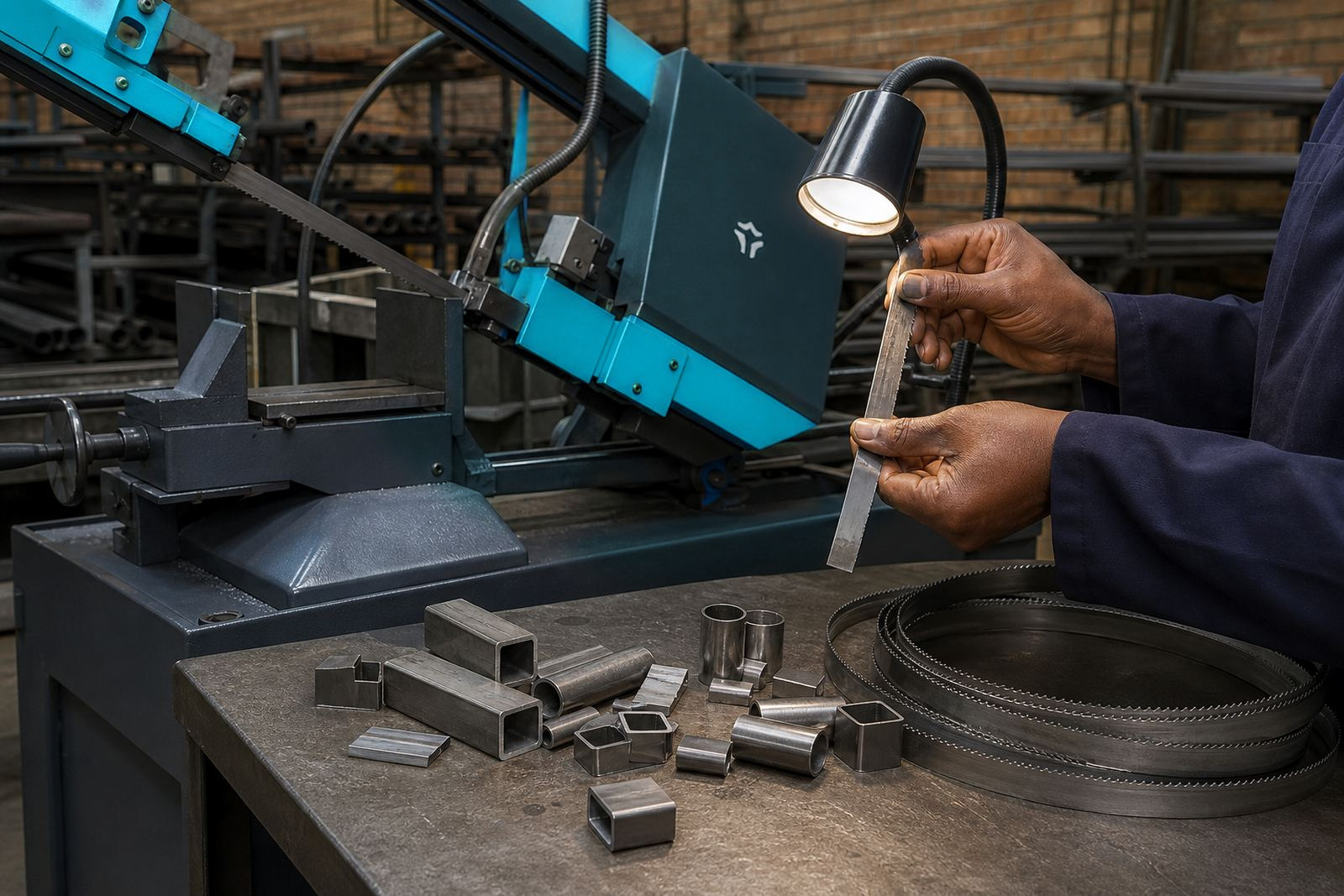
Blade failure review helps when the same issue keeps returning. We look at the tooth pattern, fracture marks, chip colour and whether the damage shows on one side of the blade more than the other. That tells us if the issue is pitch, feed, guide wear, or a handling problem at the loading end.
Starter kits and standard sizes for small batches
Many workshops need a sensible starter set that covers the common thin wall sizes without filling the store room. For this, we plan around the saw model, the usual wall thickness and the normal stock profile. A small kit can include a fine blade for light section, a second blade for slightly heavier material, and a backup length for urgent changeovers.
Stock standardisation helps too. If your team runs the same couple of pitches across the workshop, it is easier to keep the cut quality steady and easier to train new operators. Weld-to-length service is useful where the machine takes a long loop or where the blade length is not a shelf size. Length verification checks the fit before the blade goes into service.
- Starter kit planning for mixed light section work
- Weld-to-length for saws that need a specific blade loop
- Length verification before fitting a fresh blade
- Stock standardisation for teams using more than one saw
Budget notes for thin wall cutting work
Budget depends on blade material, length, width and whether the blade is welded for a specific machine. Carbon steel blades suit lighter duty and lower cost buying, while bi-metal blades handle more repeated use and tougher mixed work. A smaller manual saw kit can sit in a modest Rand range, while larger welded blades for production frames move higher depending on width and length.
As a practical guide, thin wall jobs usually spend less on each blade than heavy section cutting, but they can waste more money through the wrong specification. A blade that chips early or leaves poor finish gets replaced too soon, and that cost builds fast across a workshop. The better spend matches the saw, the stock and the operator's feed style.
For workshops across Johannesburg, Pretoria, Vereeniging, Durban and Cape Town, the right thin wall setup usually starts with a conversation about the stock pattern, machine type and how often the job changes. Pitch, width and coolant choice start to make sense there.