Where square billets make the cut behave differently
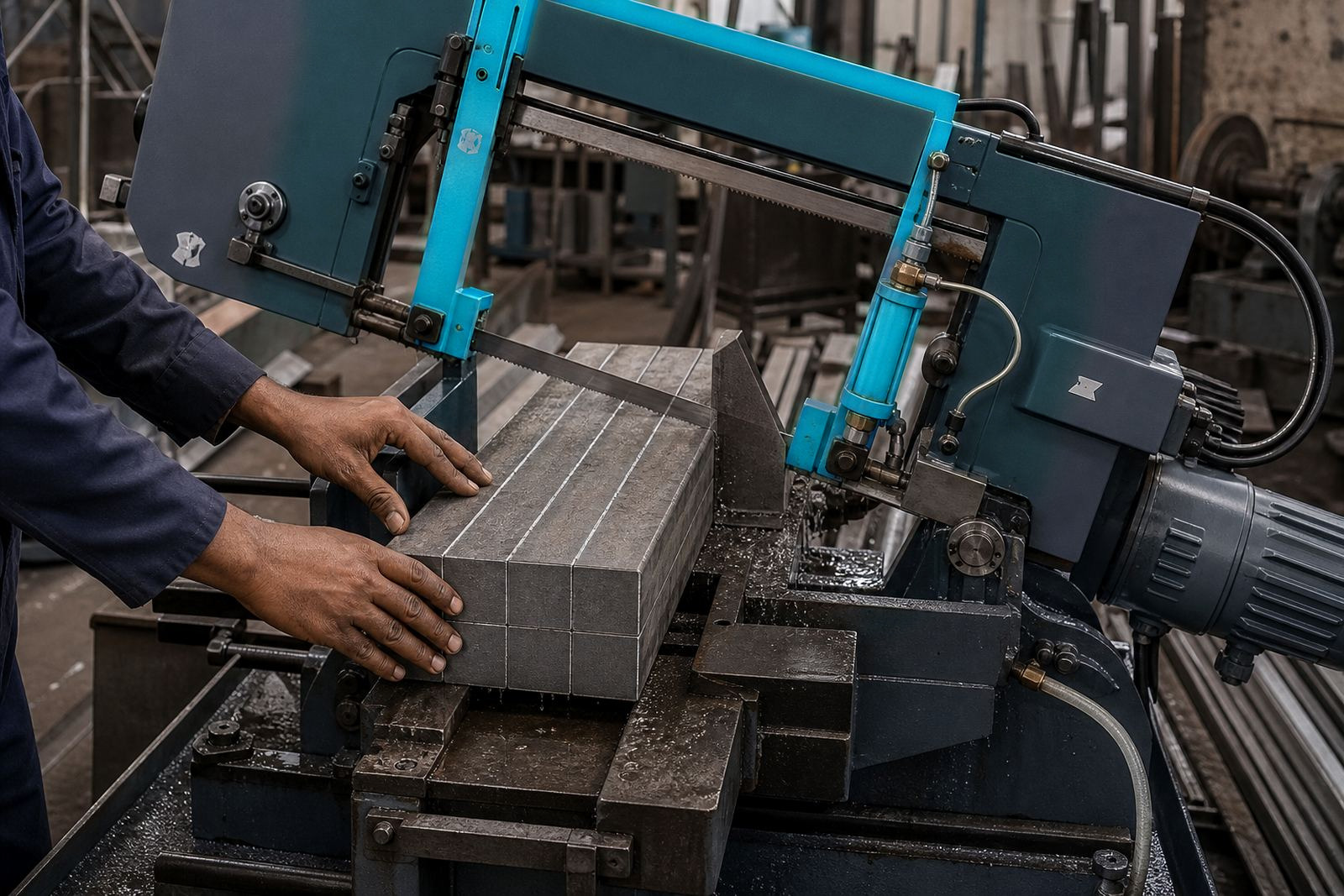
Square stock puts more teeth into the cut at the corners and fewer across the flat faces, so the blade sees a changing load all the way through the section. Tooth pitch, set and blade body are key, because a pattern that works on round bar can chatter or rub on a solid square billet.
In practice, the cut starts with two corners and a narrow entry line, then the load climbs as the blade reaches the full width of the face. On thicker sections, poor feed or the wrong pitch leaves bright rubbing marks, tooth rounding and a curved cut path that wastes material.
- Square billets in mild steel often suit a finer pitch than heavy section plate.
- Bi-metal blades handle mixed workshop use better than plain carbon in most metal jobs.
- Very coarse pitch can grab on a small square section and chip the set.
Blade choices that suit the material and the saw
For square billets, blade width and thickness need to match the saw frame, the vice grip and the section size. Larger stock tracks straighter with a wider blade, while smaller manual saws or older machines with less wheel support can work better with a narrower blade.
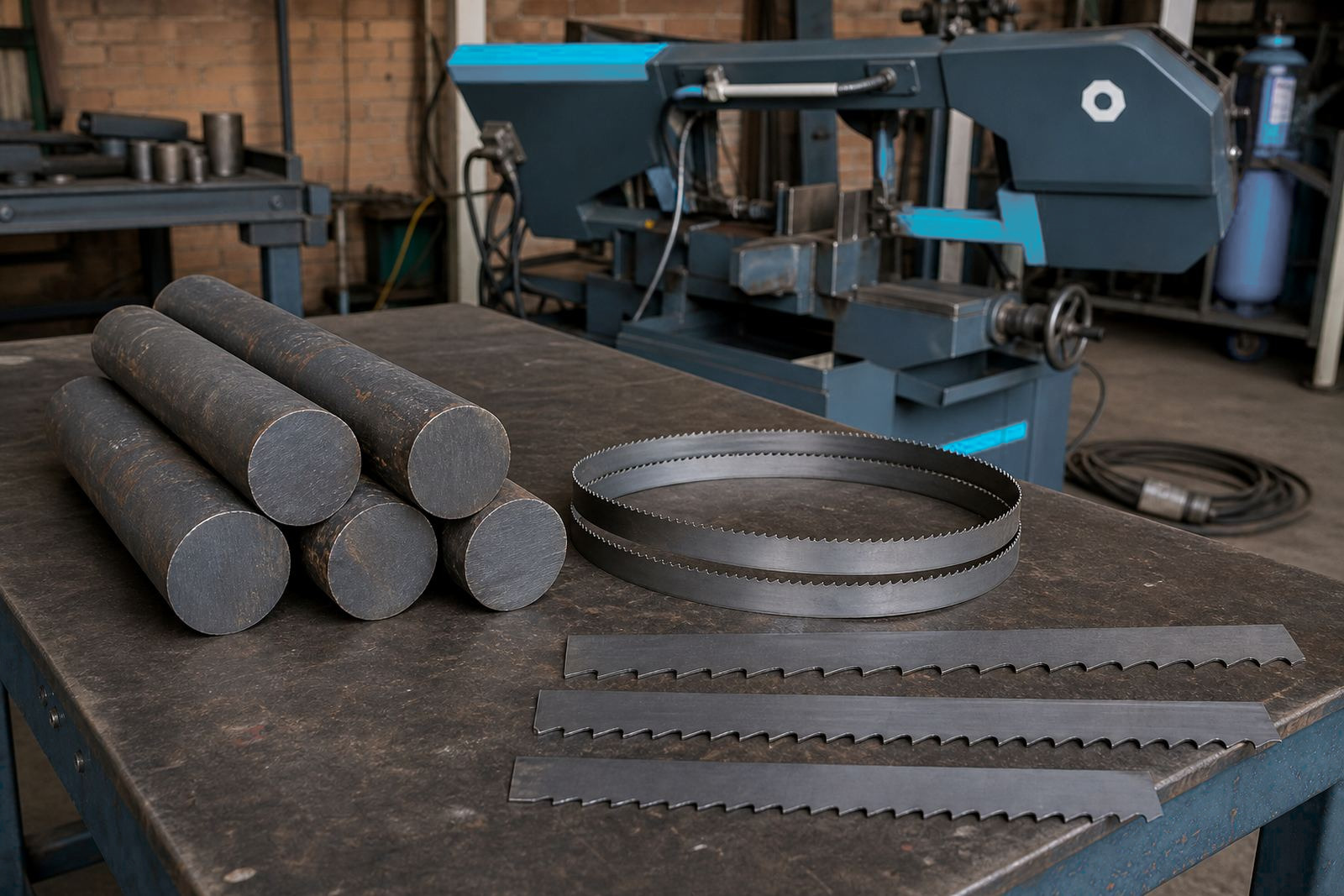
Bi-metal M42 style blades are commonly used where the workshop sees repeated cutting through structural offcuts, solid bar and mild steel billets. Carbon steel blades still have a place on lighter manual work and softer materials, but they need cleaner handling and tend to wear faster on demanding cuts.
- Variable pitch helps when the stock size changes through the job list.
- Tooth pitch is usually matched to wall thickness or solid section depth, with enough clearance for chip flow, especially on hot cuts.
- Set and tooth form need enough clearance for chip flow, especially on hot cuts.
Planning the cut line before the first stroke
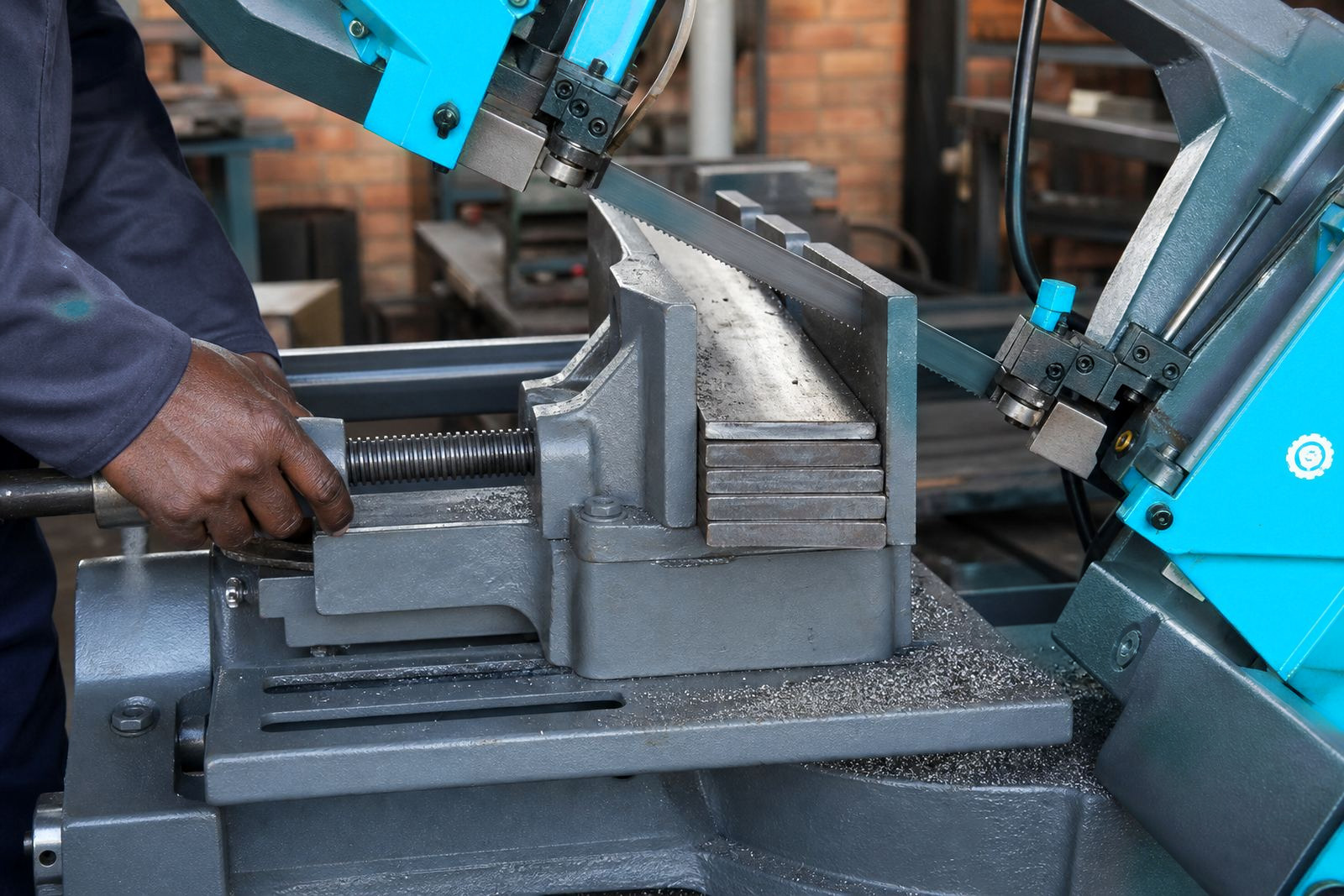
Square billets need a steady layout and a secure grip. If the vice leaves the piece slightly skew, the blade sees one corner first and the teeth work harder on one side, which can bend the cut or leave a tapered end.
For production work, it helps to standardise the shortest and longest billet lengths, then keep the same pitch and width where possible. Planning stock on the saw bench is easier, and it cuts stops for changeovers and blade checks.
- Use length verification before repeat batches so offcuts do not creep out of tolerance.
- Keep the billet seated flat, with clamps clean and free of scale.
- On grouped jobs, sort material grades before the saw starts cutting.
Feed, speed and coolant for solid section work
Solid square stock needs a controlled feed instead of force. If the saw is pushed too hard, the teeth lose their bite and the blade starts to skate on the face, then heat builds and the gullets pack with chips. A slower, steady feed gives the blade time to clear material and stay on line.
Coolant helps on larger sections and on repeated cutting where the blade stays in the cut for longer. On manual saws, even simple flood or brush application can reduce heat and improve tooth life, while dry cutting on dense stock usually shortens the blade life and roughens the finish.
Give it a run-in as well. A new blade needs a lighter first pass so the tooth tips can seat properly, especially on hard corners and oxidised stock. After that, feed speed can rise to the normal working setting for the material.
Common errors that chew through blades and time
Most square-billet trouble starts with a blade that is too coarse, too narrow for the section, or already tired from another job. The second trouble point is poor operator habit, usually too much feed, too little coolant, or a vice that lets the billet move when the cut reaches the last corner.
When a workshop calls for blade failure review, the signs are often plain: chipped teeth on one side, a wavy cut face, blue staining from heat or a blade that wanders as soon as the section gets wider. Those clues tell you whether the problem came from pitch, speed, machine fit or handling.
- Do not mix very small and very large square sections on one blade without checking pitch first.
- Do not ignore the first signs of vibration, because the set can collapse fast.
- Do not keep cutting after the chip colour changes from bright to dusty and hot.
What you can usually expect to pay in rand
Budget depends on blade type, length, width and whether the job needs a welded-to-length supply or a starter kit for a new saw bench. For smaller manual work, a plain carbon blade and basic support often sits at the lower end, while bi-metal blades for heavier square billets land higher because the teeth and body are built for longer service.
As a working guide, many shops plan for a quoted price for lighter blades and entry packs, around R600 to a quoted price for stronger bi-metal bandsaw blades, and more where wider stock, special lengths or multiple blades are needed. Weld-to-length work, length verification and machine fit checks can change that picture, especially when the workshop wants one standard across several saws. Ask for a quote
For teams in Johannesburg, Pretoria, Vereeniging, Durban, Cape Town and the East Rand, stock standardisation can trim the number of blade sizes kept on hand and make ordering far less messy.