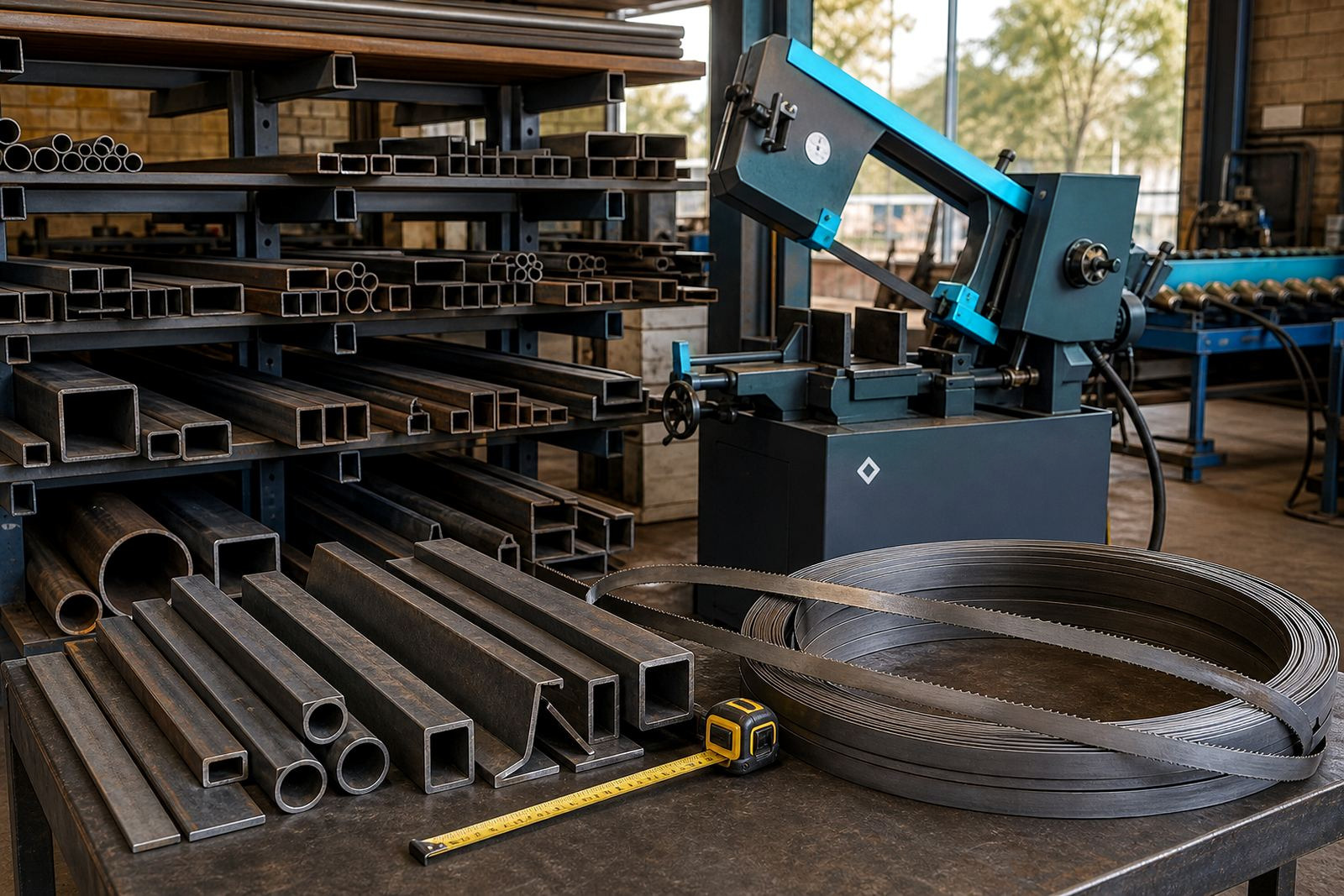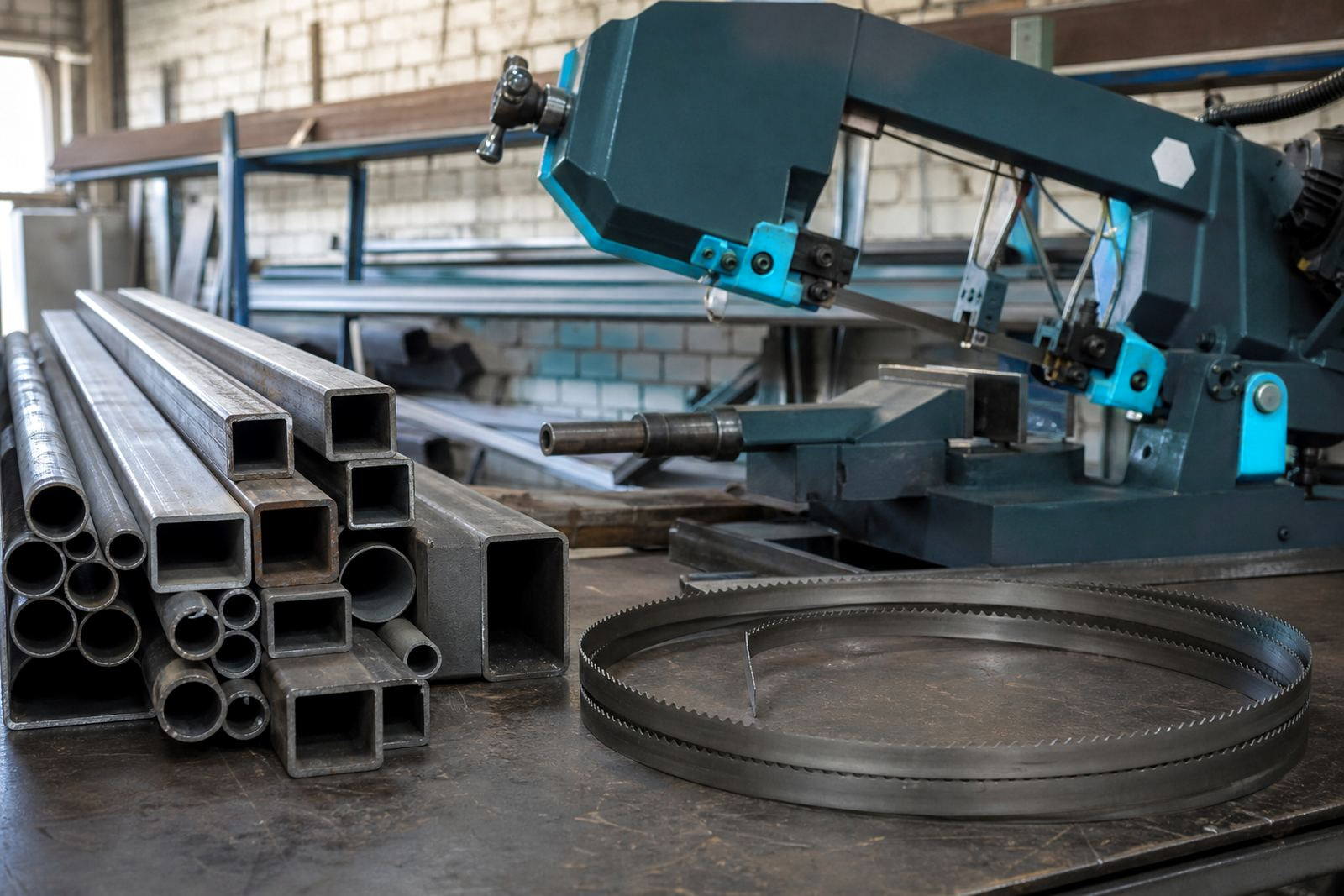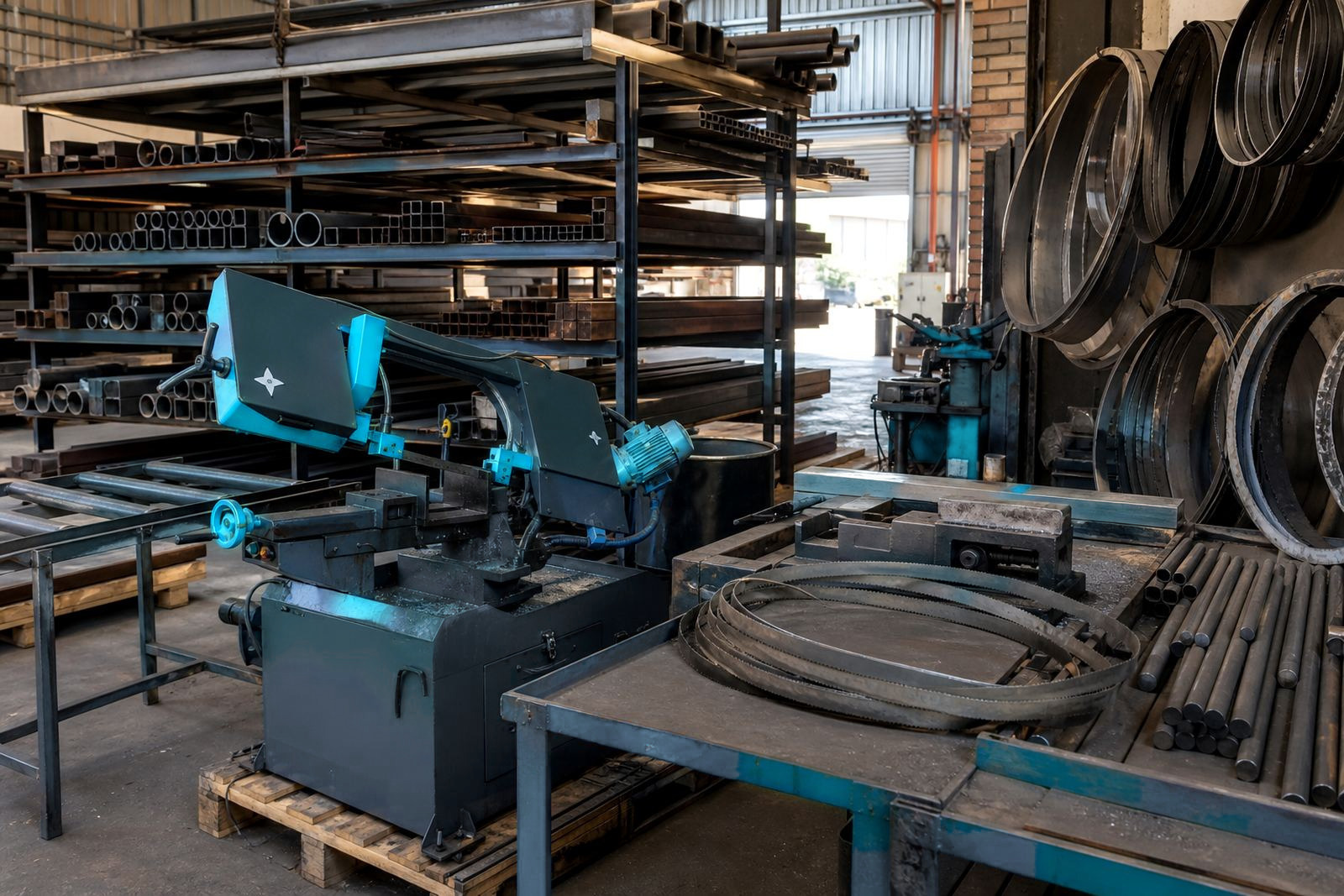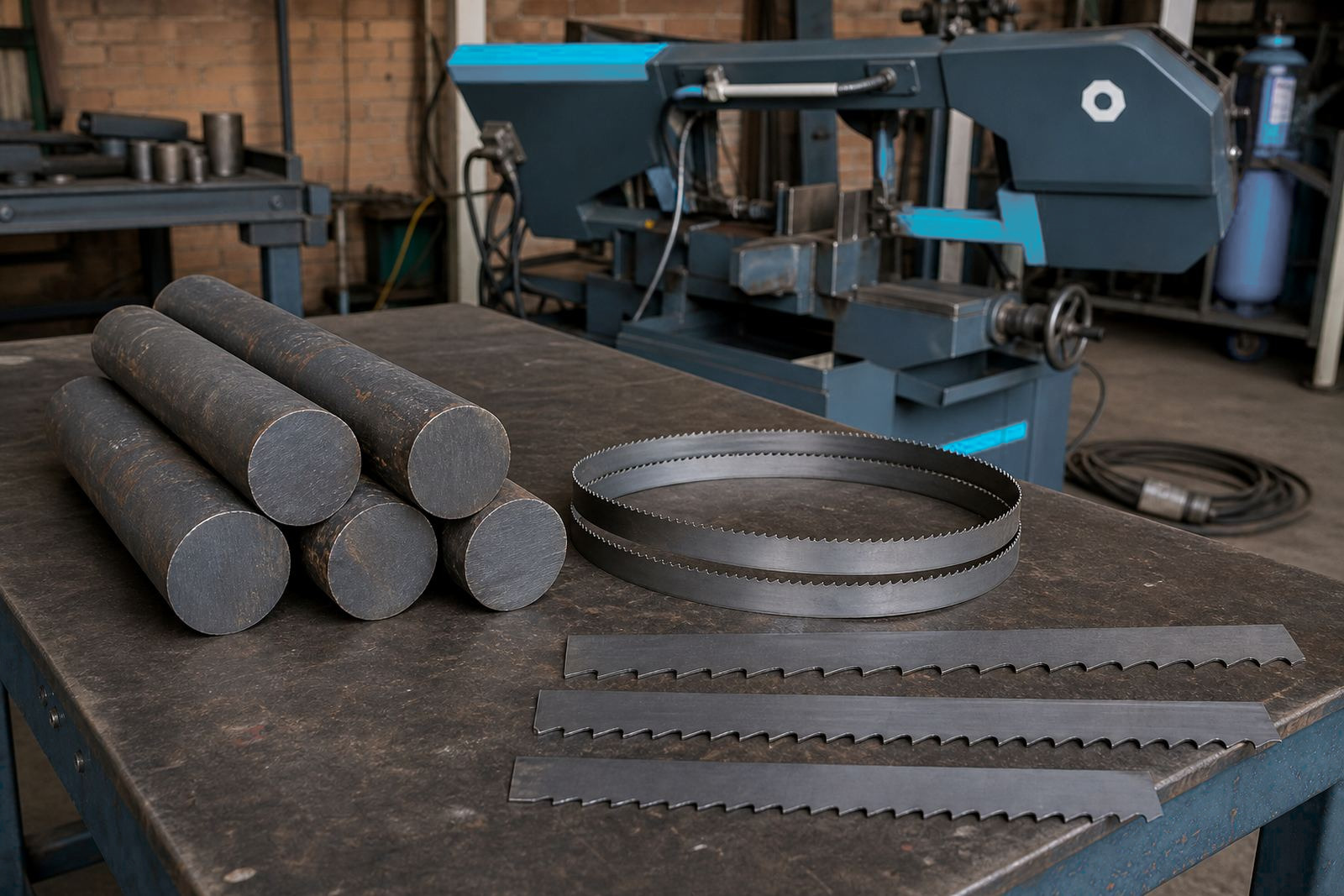
Tool steel brings hard edges, mixed sections and short cuts
Tool steel stock can be awkward before the cut even starts. The section may be hard on the outside, thicker than expected, or supplied in bars that need clean trimming before machining, hardening or fitting. Blade choice is key there. A blade that works well on mild steel can burn teeth, wander off line or leave a rough finish on tougher tool steel.
For this work, the usual starting point is a bi-metal blade with a hardened tooth edge, often M42 grade for better wear resistance. Carbon steel blades still have a place on lighter manual saw work and smaller sections, but they need kinder feed and more careful supervision. Tooth pitch, blade width and blade thickness all affect how the blade enters the cut and clears chips.
Picking the blade grade for the cut and the machine
Alrode workshops often handle tool steel on horizontal bandsaws, vertical bandsaws and manual hacksaws. Some jobs need a narrow blade for shaped cuts or mixed bundles, while straight section cuts suit a wider blade with better tracking. Tooth pitch is a big part of the decision. Fine pitch works on small solid sections and thin wall material, while a coarser pitch clears chips better on heavier stock. Variable pitch can help reduce vibration on long cuts and mixed profiles.
We also look at set, tooth form and blade thickness. Too much set can increase heat and chatter, while too little can make the blade rub. A thicker blade may track better on a larger machine, but the machine must match the blade tension and wheel condition. In practice, the best choice suits the material hardness, section size and saw setup, as well as the stock on the shelf.
- Bi-metal M42 for general tool steel work and longer blade life
- Carbon steel for manual saws and lighter duty cutting
- Fine TPI for small solids and thin sections
- Variable pitch for mixed loads and reduced vibration
- Wider blades for straighter cuts on suitable machines
How the workshop layout affects blade life
Blade failure on tool steel often starts with poor handling or bad material. If a saw is not square to the stock, the blade loads one side first and the teeth wear unevenly. A short piece clamped badly can twist as the cut opens. Wandering cuts, broken teeth and heat marks on the bar can result.
Good planning starts with the machine fit check and length verification. If the blade length is wrong by even a small margin, tension and tracking suffer. Welded loops for bandsaws and replacement blades for hacksaws need this where the frame has little tolerance. Run-in guidance helps the first cuts settle the teeth, then feed and speed can be increased carefully. Coolant checks are worth doing too, especially where the blade is taking long cuts through harder stock and chip carry-out becomes an issue.
- Check blade length against the saw frame before fitting
- Keep guides clean and square to the cut line
- Use the feed pressure the machine can hold steadily
- Let coolant reach the tooth line, not just the side of the blade
- Inspect chips, they tell you when pitch or speed is off
Starter kits and standard lengths for busy stores
For workshops that cut tool steel often, starter kits save time when the same machines handle different bar sizes through the week. A kit may include a few common pitches, one or two blade widths, and a mix of bi-metal and carbon blades for manual support work. Sawing stays easier when the next job differs from the last one.
Stock standardisation helps as well. If the store keeps a small number of proven blade sizes instead of many odd lengths, fitting and reordering stay cleaner. Weld-to-length service is useful where a machine needs a specific loop or where the standard size is not on hand. For tool steel, that service is often paired with a blade failure review so the next set is not chosen on guesswork.
Typical cost bands for tool steel jobs
Budget usually depends on blade grade, tooth pitch, width and whether the blade is welded to length. Manual hacksaw blades sit at the lower end, while bi-metal bandsaw blades with special pitch or wider sections move the cost up. Tool steel work also tends to use up blades faster when the machine setup is out of line, so the real cost includes cut quality and service life as well as the blade price.
As a rough working range, small manual blades may start from a few hundred Rand, standard bandsaw blades often sit in the mid hundreds to low thousands, and wider bi-metal loops for regular production cutting can move higher depending on length and specification. The useful question is what the blade does to the cut edge, machine time and scrap rate on the job.
Tool steel blades sent from Alrode to Gauteng, Durban and Cape Town
From our Alrode, Alberton base, we support workshops across Johannesburg, Vereeniging, Pretoria, Durban and Cape Town, including Germiston and Boksburg supply areas. Our team helps you choose the right blade, set the right tooth pitch and run the blade in properly. For tool steel, those details make a real difference because the same blade can behave very differently on a small bar, a thick block or a harder pre-machined section.
If you need a practical starting point, the usual brief is the material grade if known, section size, saw type, and whether the cut is straight, bundled or repeated.