Round bar asks more from the first cut
Solid rounds do not break chips the same way as hollow section or angle. The blade stays in contact longer, the chip load builds faster and a poor match shows up as chatter, tooth stripping or a cut that wanders off line. On mild steel round bar the job may look ordinary, but once the diameter grows or the material hardens, pick the blade for the stock rather than the machine label.
For this use-case, the starting point is diameter, wall thickness is not the question, and tooth pitch becomes the main control for chip evacuation. A fine pitch can fill with swarf on larger rounds. A coarse pitch can hook too hard on smaller diameters. Variable pitch helps when a workshop cuts mixed sizes through the day, because the tooth spacing reduces rhythmic vibration and keeps the cut steadier on solid stock.
We look at the stock shape, the machine set-up and the finish needed. A clean sawn face for further turning and a rough preparation cut for fabrication each call for the right blade width, tooth form and run in.
How the workshop set-up changes the blade choice
Solid round stock is often cut on horizontal bandsaws, manual saws and older workshop machines that still do useful work every week. The blade has to fit the machine length, the guides and the wheel condition before tooth selection even starts. A blade that is too narrow for the guide system can drift. A blade that is too wide for the machine's frame can put extra strain on the weld and the wheels.
We normally ask how the material is clamped and how the operator feeds the saw. A vice with poor grip lets the bar chatter. A feed setting that is too aggressive can overload the teeth on the first contact, especially on larger solid rounds where the blade sees a full cross section from the start. Carbon steel round stock needs the right surface condition too. Scale, rust and heavy oxidation will change how the teeth enter the cut.
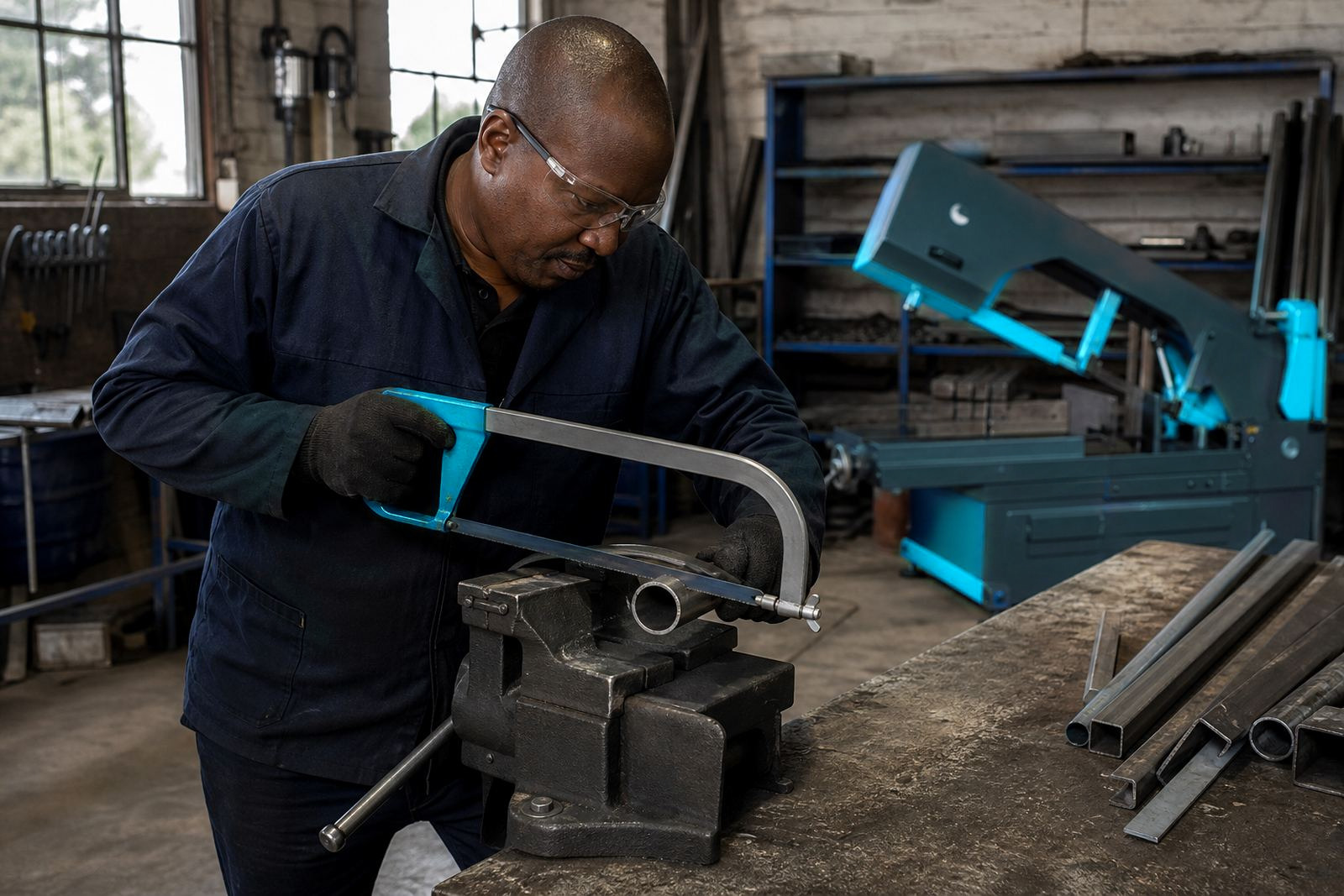
For manual saw support, the basic discipline is simple: keep the blade tracking correctly, keep the guides snug and do not force the cut when the chips change colour or the sound turns harsh. That sound often tells a better story than the metre scale on the machine.
Tooth pitch, width and thickness on solid rounds
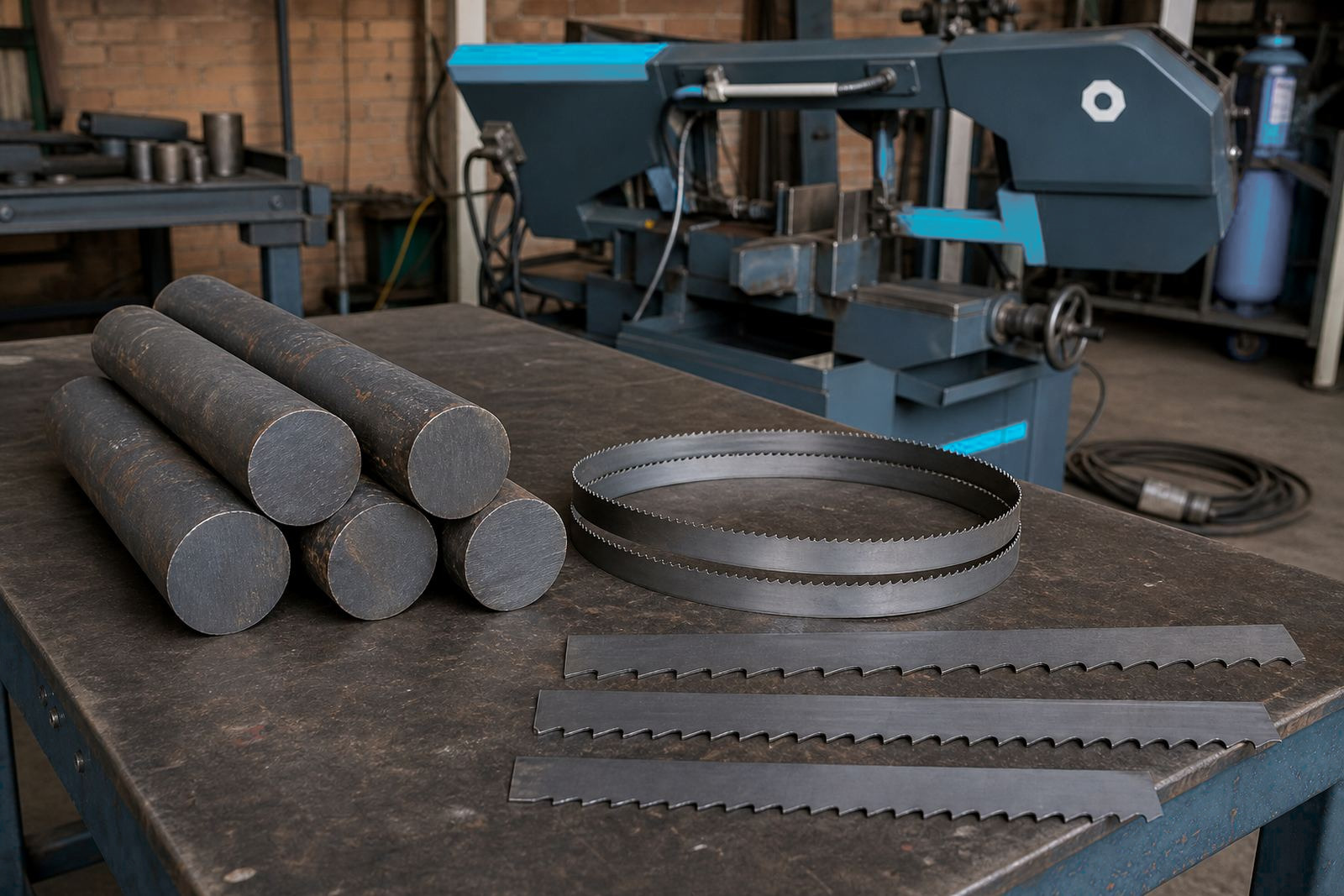
Tooth pitch is where most solid round jobs are won or lost. On smaller diameters, a finer pitch gives more teeth in contact and a smoother entry. On bigger rounds, too many teeth in the cut can pack the gullets and heat the blade. For carbon steel and mixed mild steel, a bi-metal M42 blade is often the practical choice when the workshop wants longer life and steadier cutting across repeated batches. For lighter duty work or less demanding material, carbon steel blades still have a place, especially where the cut volume is modest.
Blade width and thickness also shape the result. A wider blade holds a straighter line on larger diameters and resists twist better. A thinner blade can suit lighter machines or smaller stock that needs flexibility rather than force through the cut. The tooth set should clear the kerf cleanly, but too much set on a round bar job can leave a rougher finish and increase vibration. Too little set can make the blade rub, heat up and lose life early.
Run-in is part of the same picture. A new blade should not be driven at full feed from the first cut. The tooth tips need a controlled start so the cutting edges wear evenly. Once the blade has settled, feed and speed can be brought up to match the material and the machine.
Coolant, feed and speed around the cut face
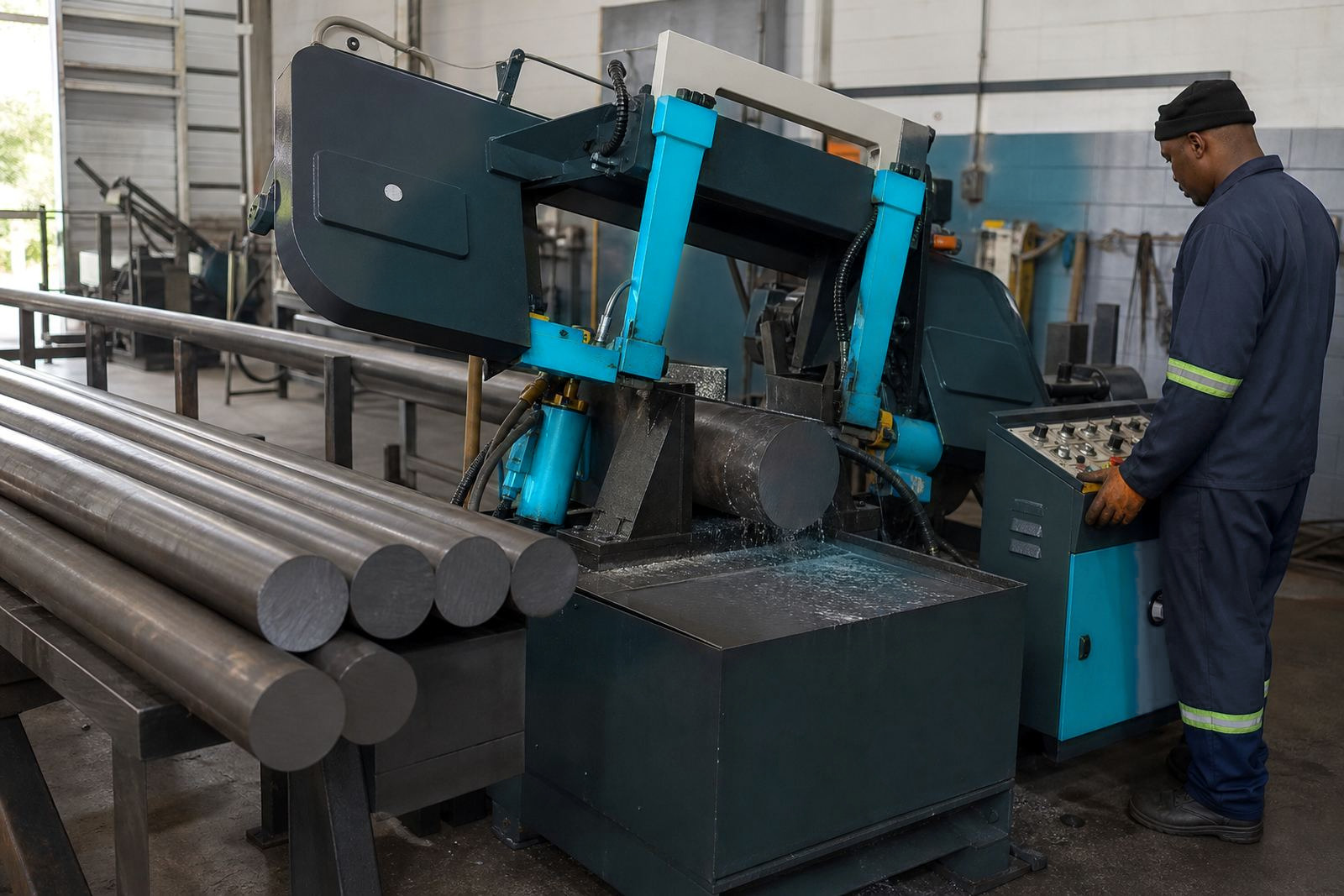
Solid round stock builds heat quickly because the blade stays loaded for longer. Coolant helps carry heat away, flush swarf and protect the tooth edge. On dry cuts, the operator has to be more careful with feed and pauses, because heat climbs fast at the tooth line. On machines with coolant, the flow should reach the cut properly rather than splashing around the vice and missing the teeth.
Feed speed advice starts with the sound of the machine and the shape of the chip. A healthy cut gives a steady, curled chip and a controlled sound. If the blade chatters, the feed may be too light for the tooth pitch. If the motor labours and the chips pack, the feed is too heavy or the pitch is too fine for the diameter. The best setting is the one that keeps the blade engaged without forcing it.
For workshops that cut a lot of round bar, a consistent operating routine works better than a guess. The same size and material should not get a fresh setup each time if the earlier cut was working well. The notes on feed, coolant and pitch should stay with the machine for the team to use.
Starter kits and stock planning for mixed diameters
Starter kit planning helps a workshop cover the common round sizes without tying up money in the wrong blade counts. A practical kit usually includes one or two pitches for light and medium diameters, plus a stronger option for heavy round stock. If a site cuts both mild steel and harder grades, the blade mix should reflect that split. It is better to carry a sensible set of lengths and pitches than to keep stopping work because one blade has been pushed beyond its comfort zone.
Stock standardisation also helps. When the same machine runs the same blade family often enough, the team starts to recognise the cut sound, the chip form and the wear pattern. That makes failures easier to trace. If a blade breaks early, the issue may sit in the vice, the guides, the run-in or the machine fit, as well as the teeth.
For workshops in Johannesburg, Pretoria, Durban, Cape Town, Vereeniging and Germiston, the practical question is which blade will cut round stock with fewer stoppages, cleaner chips and less waste on the floor.
Typical budgets for solid round stock work
Budgets vary by blade type, length, tooth pattern and whether a weld-to-length service is needed. Carbon steel blades sit at the lower end of the scale, while bi-metal blades cost more but usually last longer on repeated metal cutting. A starter kit for solid round work may start in the low hundreds of Rand for simpler manual saw use and move into the higher hundreds or low thousands when the kit includes multiple lengths, pitches and machine-specific fitting. Larger workshop blades, or sets built for more demanding diameters, can move higher again depending on size and count.
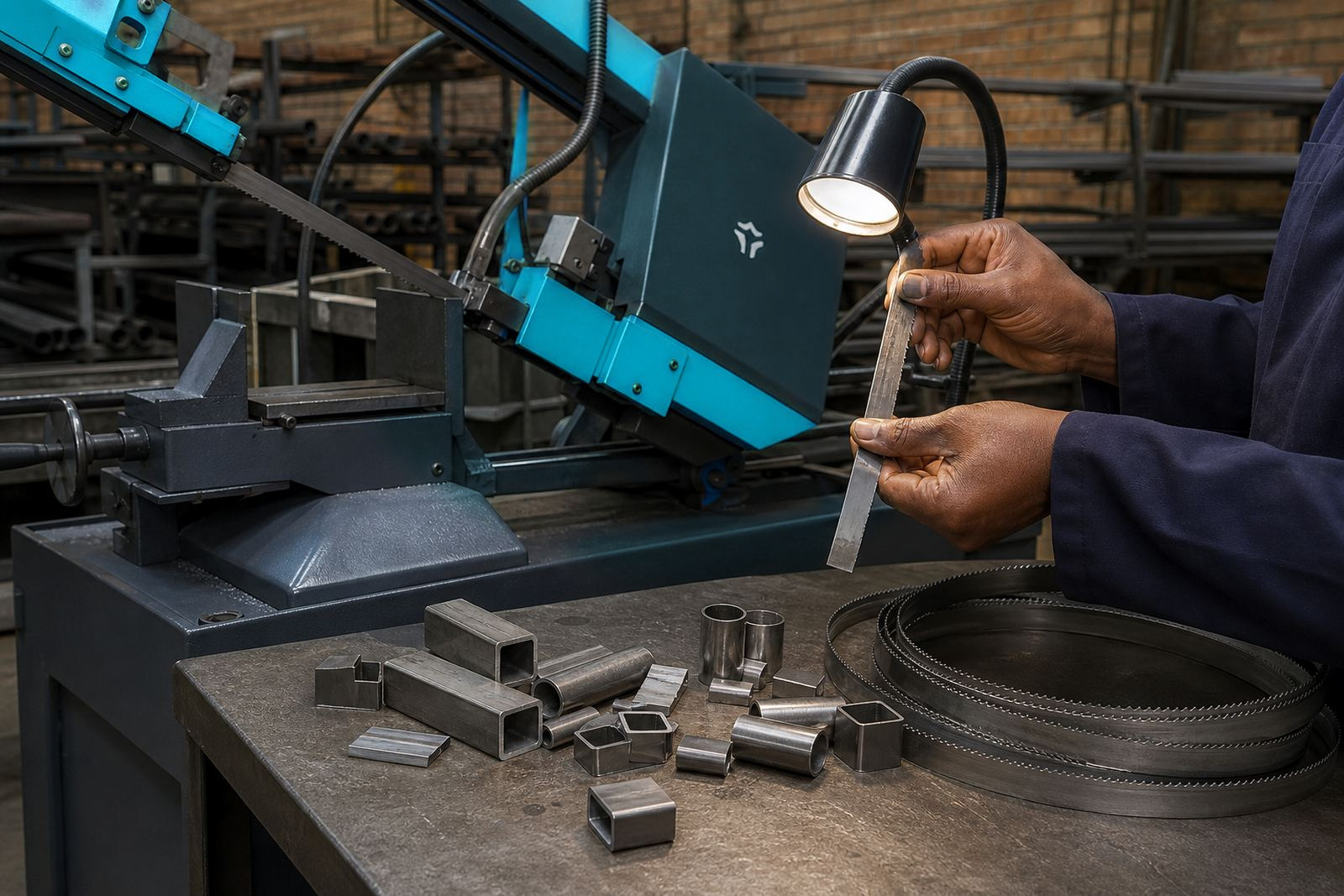
Blade price is one budget question. A blade that cuts poorly can waste stock, burn teeth and slow a job that should have moved smoothly. If the wrong pitch eats a bar before the cut is done, the extra cost shows up in scrap and machine time. Length verification, machine fit checks and blade failure review help reduce that hidden spend.
For Alrode and the wider South African workshop network, the best value usually comes from matching the blade to the cut instead of buying one type for every round bar job. That approach keeps the spend grounded and the cutting more predictable.