Workshop jobs that still reach for a hacksaw
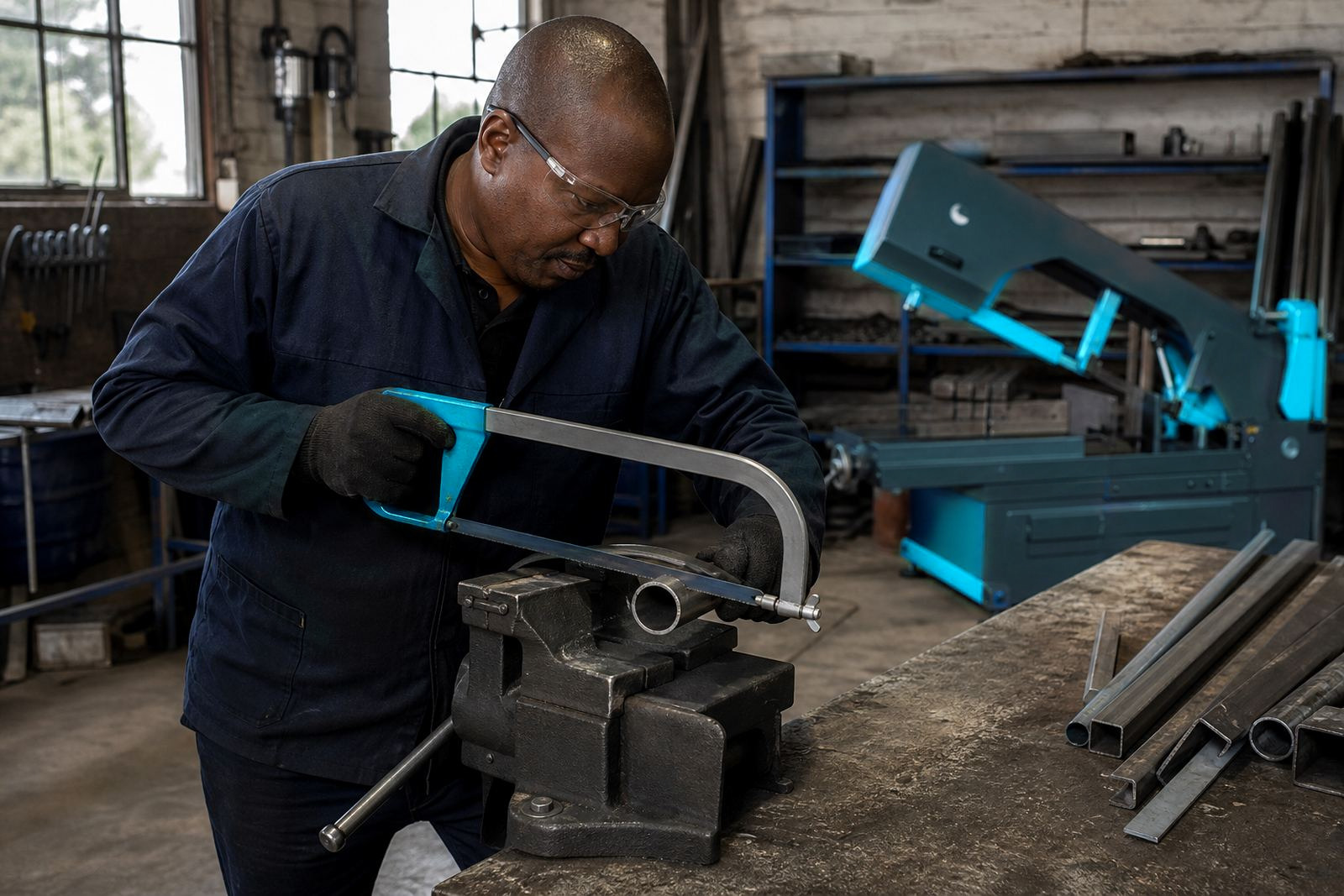
Manual cutting is still part of the day in many workshops. A hacksaw comes out for seized bolts, small pipe cuts, angle trimming, bracket work and the quick repair that would take longer to move onto a powered saw. The blade has to match the material, the wall thickness and the finish you can live with.
For thin wall tube and light section, a finer tooth pitch gives better tooth contact and reduces snagging. Heavier mild steel needs more tooth gullets so the blade clears chips properly. If the wrong blade goes onto the frame, the cut starts wandering, teeth strip early, and the operator starts pushing harder than the blade can manage.
- Use a finer TPI for thin wall material and small diameter stock
- Use a coarser TPI for thicker mild steel and solid bar
- Check the blade tension before every run
- Keep the stroke straight, not forced
Blade choices that suit mixed maintenance work
Most manual cutting benches need more than one blade type. Carbon steel blades are useful for lighter duty work, short runs and lower cost stock control. Bi-metal blades, including M42 grade where required, hold up better on harder material and repeated use. The choice depends on the material mix, how often the saw is used, and whether the team wants longer life or lower upfront cost.
Width is the next check. A narrower blade can suit tighter hand control and awkward access, while a wider blade tracks better on straight work and resists twisting. Thickness changes stiffness and feel. The set on the teeth, meaning how they are offset for chip clearance, affects the cut finish and the effort needed from the operator.
- Carbon steel for lighter maintenance and budget control
- Bi-metal for tougher steels and heavier repeat use
- Match blade width to the frame and the cut shape
- Check tooth set for a clean finish on visible pieces
Layout for a bench that stays orderly
A busy maintenance area works better when blades are labelled by size, TPI and material use. Keep the common lengths near the saw frame, and separate general purpose blades from stainless or harder grade stock. That reduces mix ups when a shift changes hands or a small job lands on the bench between bigger tasks.
Starter kits help when a workshop wants a practical spread of blades rather than one box of the same cut. A good kit can cover fine pitch work, general mild steel, and a tougher blade for harder material. If the team also uses a powered saw, blade planning should cover both manual and machine cut needs so stock does not sit idle in the wrong size.
- Mark blade lengths clearly before they go into storage
- Keep new blades away from used ones
- Group by material class and length
- Store dry, especially where coastal humidity reaches the workshop
Run-in, feed and the cut that lasts
Even a sound blade can fail too soon when the cut is rushed. A run-in period helps the teeth settle before full pressure is applied. Start with a lighter feed, let the blade make a clean track, then increase pressure once the cut is stable. On metal that work hardens, too much force can heat the teeth and shorten blade life fast.
Where a machine cut or wet cut process is used, coolant should be checked. The right fluid helps keep the tooth edge cooler and supports chip removal. Manual jobs need clean cutting technique above all. Let the blade do the work, keep the stroke even, and avoid side loading the frame.
We also verify length when welded-to-length blades are ordered. A blade that is even a little off length can sit badly in the frame, which affects tracking and tension. That small error can turn into poor cutting and early breakage.
Common mistakes on small cutting jobs
Many blade problems come from a mismatch between the blade and the material. A coarse blade used on thin stock will chatter and hook. A fine blade used on thick bar loads the teeth too hard. The wrong blade width can also create tracking issues, especially where the frame is older or the work is done by hand more than by guide.
Another issue is treating every job the same. Stainless, mild steel, springy offcuts and mixed scrap all behave differently. If the cut starts dragging, often the tooth pitch, blade condition or fit needs to be reviewed first.
- Wrong TPI for wall thickness
- Poor blade tension on the frame
- Using one blade for every material
- Ignoring blade wear until the cut wanders
- Skipping fit checks on older saws
Budget ranges for a practical blade plan
For small workshops, blade spend usually makes more sense when it is planned by use instead of being bought piece by piece. Carbon steel blades sit at the lower end of the range, while bi-metal blades cost more but can suit heavier use and more difficult material. Weld-to-length service helps when the frame uses a size that is not stocked in ready-made packs.
A modest manual cutting setup may cover a few spare blades, one starter kit and a small stock of the common lengths. A more active maintenance room may need a broader spread, especially if the work includes repair jobs, installation work and fitting across different materials. In rand terms, the budget can move from a few hundred Rand for basic blade cover to several thousand Rand where multiple sizes, grades and fit checks are needed.
MoreCut Saws supports workshops across Alrode, Alberton and further out through Johannesburg, Pretoria, Vereeniging, Durban and Cape Town. We look for a cleaner match between the job on the bench and the blade in the frame, without excess stock.