Stainless jobs need a calmer cut
Stainless steel can harden at the surface if the blade rubs instead of cutting. A bright mark appears on the cut face, heat builds around the tooth line and the blade feels tired long before its time. In Alrode and across Alberton, workshop teams often see it first on tube, flat bar and solid rounds that need a clean finish for fabrication or welding.
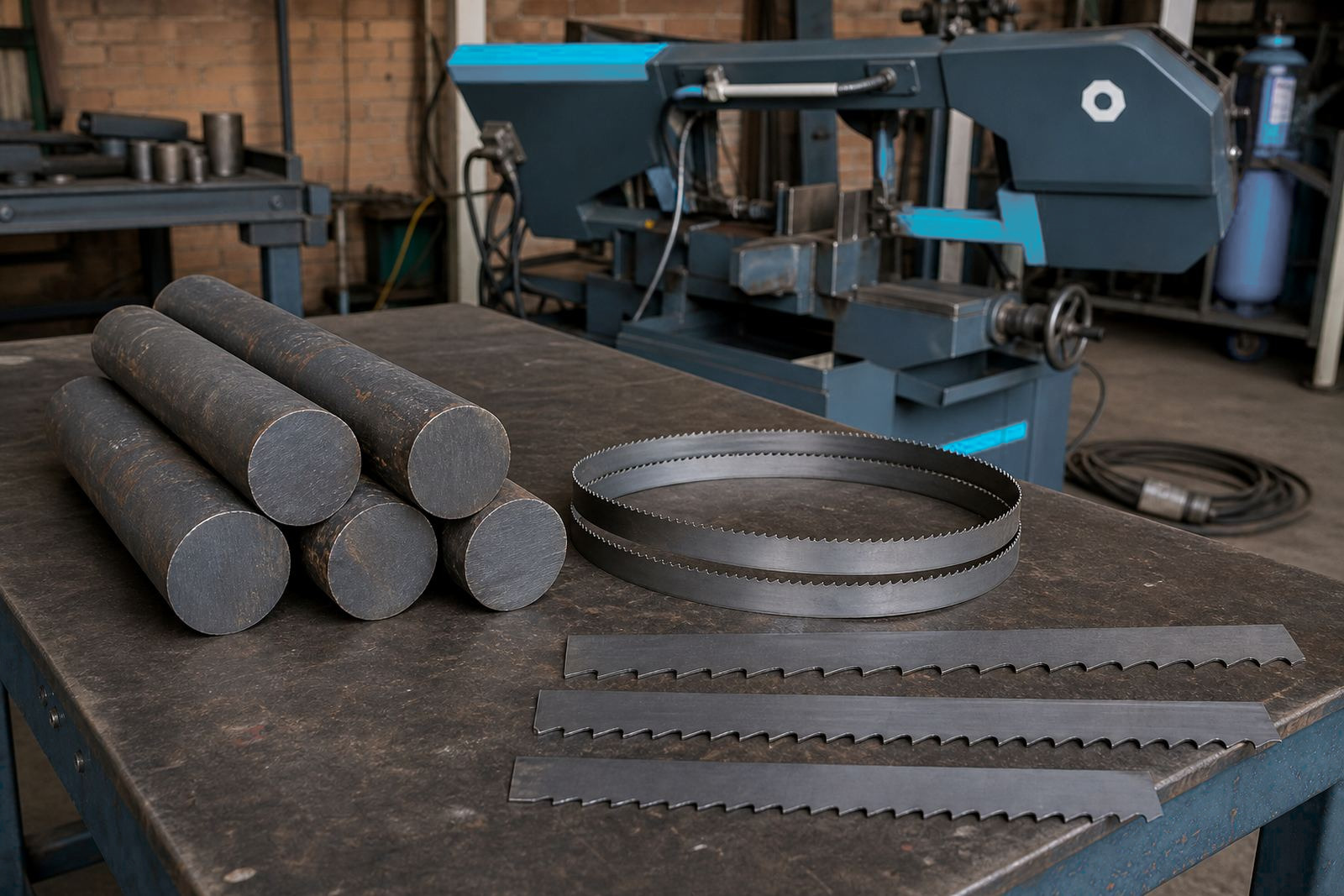
For this material, the first question is blade type and control. A bi-metal blade with a hard tooth edge is often the starting point for mixed stainless work, while carbon steel blades suit lighter manual saw duty and short runs where the machine and feed are kept gentle. Tooth pitch is the next check, because a coarse pitch can snag on thin wall tube and a fine pitch can pack chips on thicker sections.
Picking tooth pitch, width and set
The right blade starts with the smallest section you expect to cut and the thickest one that still appears in the same batch. Variable pitch helps reduce vibration on stainless, especially where the machine is older or the bundle is not perfectly clamped. Wider blades track straighter on larger machines, while narrower blades help on manual saw frames and tighter guides.
- Thin wall tube: finer TPI, steady feed and a light hand on pressure.
- Medium solid bar: medium pitch with a stable set and clean chip clearance.
- Large sections: variable pitch, wider blade and slower surface speed.
- Mixed work: choose the pitch for the lightest piece, then keep the feed controlled.
Blade thickness and tooth set are part of the same picture. Too much set can leave a rough edge and waste material, while too little set can trap the blade in a hot cut. On stainless, a well prepared tooth line usually does better than pushing the machine harder.
Machine layout that keeps heat down
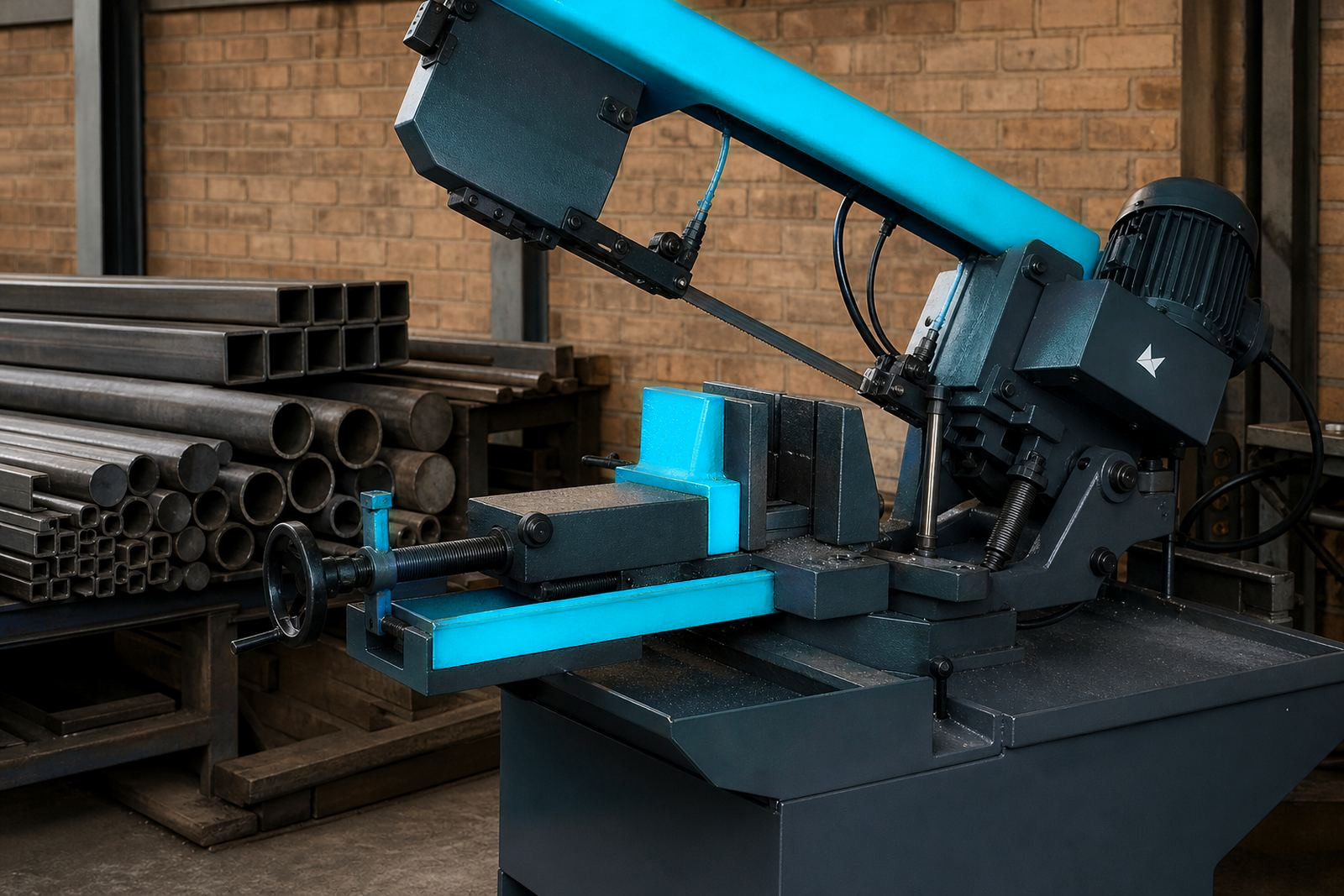
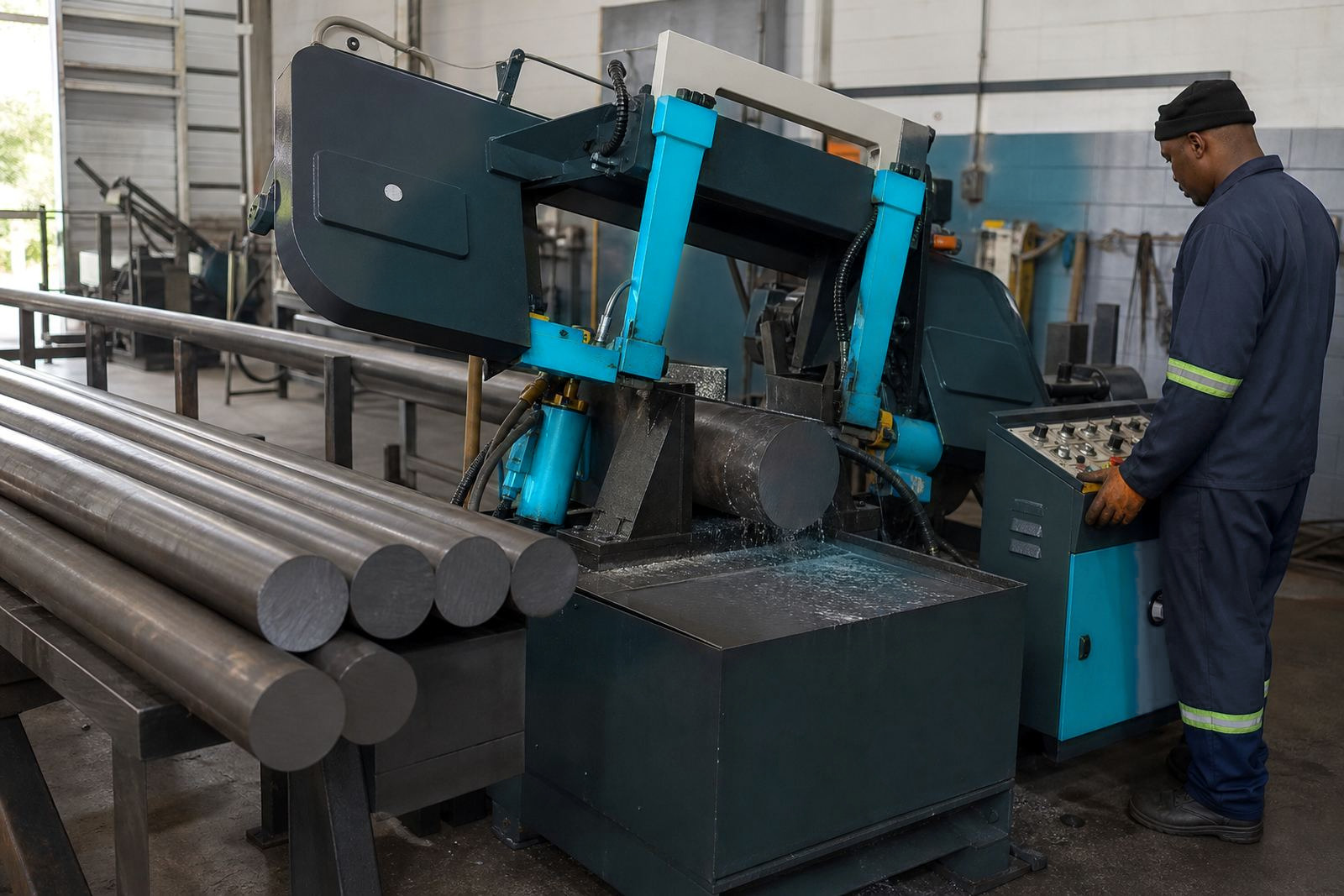
Most stainless jobs are cut on horizontal bandsaws, vertical bandsaws or manual saws fitted with guide rollers and a vice that actually holds the work square. The machine should be checked for blade tracking, wheel condition and guide clearance before a long batch starts. If the guides are open too far, the blade wanders. If they are tight, heat climbs and the cut drifts.
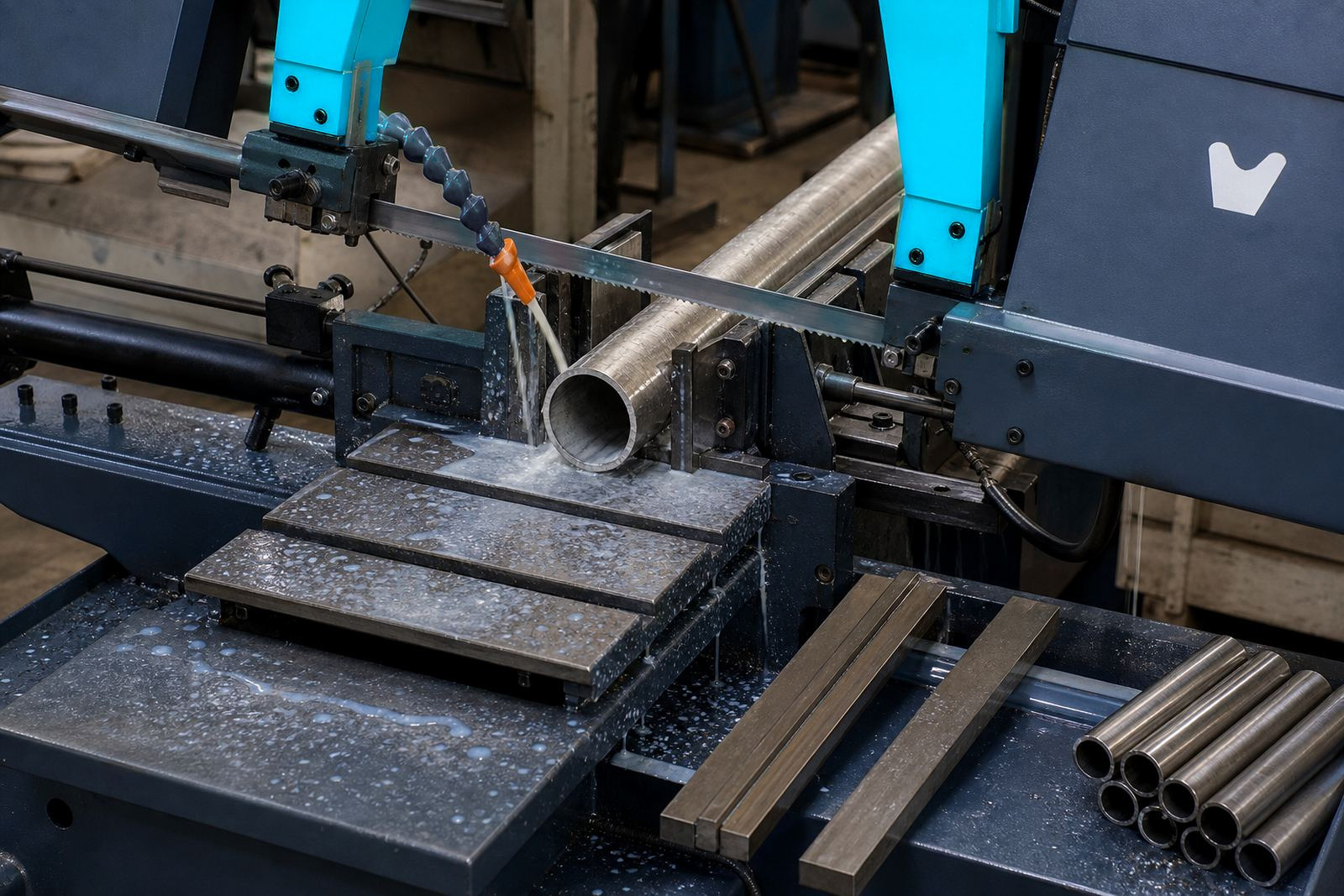
Coolant helps a great deal on stainless for blade life, chip wash and surface finish. A weak coolant mix or blocked nozzle can leave the teeth dry at the point of contact. Feed speed also needs attention. Too fast, and the teeth stall. Too slow, and the blade rubs. The sweet spot is usually where the chips come off as small curls instead of dust or long, blue strands.
In Durban, where humidity and storage conditions can affect stock, sealed packs and dry racking help keep blades in usable condition. In Cape Town and Pretoria, some workshops keep separate stainless blades so carbon contamination from other jobs does not carry across the rack.
Common mistakes on stainless batches
Stainless steel is unforgiving when the setup is rushed. A fresh blade can fail early if the operator skips run-in, clamps the work loosely or runs a coarse pitch on small tube. Another common slip is using one setting for every section in the bundle. A blade that suits 80 mm solid bar may be far too aggressive for 1.6 mm tube.
- Running too dry and letting the tooth line overheat.
- Using the wrong TPI for mixed thicknesses in one batch.
- Forcing feed when the blade needs a slower bite.
- Ignoring chip colour, sound and finish on the first cuts.
- Leaving burrs untrimmed, then blaming the blade for poor finish.
Run-in guidance applies here. A new blade should be eased into work so the tooth edge beds in before full feed is used. That small habit often saves money, because a blade that has been treated well from the first cut usually keeps a straighter line and a cleaner tooth pattern.
Starter kits and weld-to-length support
For workshops that cut stainless on a weekly basis, starter kits help set up the first batch without guessing. A kit can combine the blade type, pitch range and width most likely to suit the machines on site, plus spare lengths for quick swaps. Weld-to-length service is useful when a workshop uses older saw frames or a special band length that is not sitting on the shelf.
Blade selection help can also include length verification, machine fit check and failure review. If a blade is breaking at the weld, leaving a poor cut face or stripping teeth at the same point, the cause is often in the guide setup, feed pressure or size match rather than the steel itself.
For stainless work, many buyers in Johannesburg, Vereeniging, Germiston and Boksburg keep a dedicated line of blades and a second line for general steel. That makes stock easier to standardise and cuts down on wrong issue from the rack.
What the Rand usually covers
Budget levels depend on blade type, length and how many sizes the workshop wants to keep on hand. Carbon steel blades are the lowest entry point for light manual work, while bi-metal stainless options cost more because they carry better tooth life and heat handling. A single replacement blade for a manual saw may sit in the low hundreds of Rand, while longer bi-metal bandsaw blades for production cutting can move into the higher hundreds or low thousands, depending on width and length.
For planning, it helps to separate the blade cost from the cost of poor cut control. A blade that matches the stainless batch, runs at the right speed and receives coolant properly will usually give a better return than a cheaper blade that forces rework. Workshops in Alberton Supply, Pretoria Supply and Durban Supply often ask for a standard line, then keep a few specialised pitches for thin wall and heavy section work.
Manual saw support is useful when the team still cuts odd lengths by hand. The same rules apply: sharp teeth, correct pitch, sensible feed and enough coolant or cutting fluid to stop the blade from glazing over.