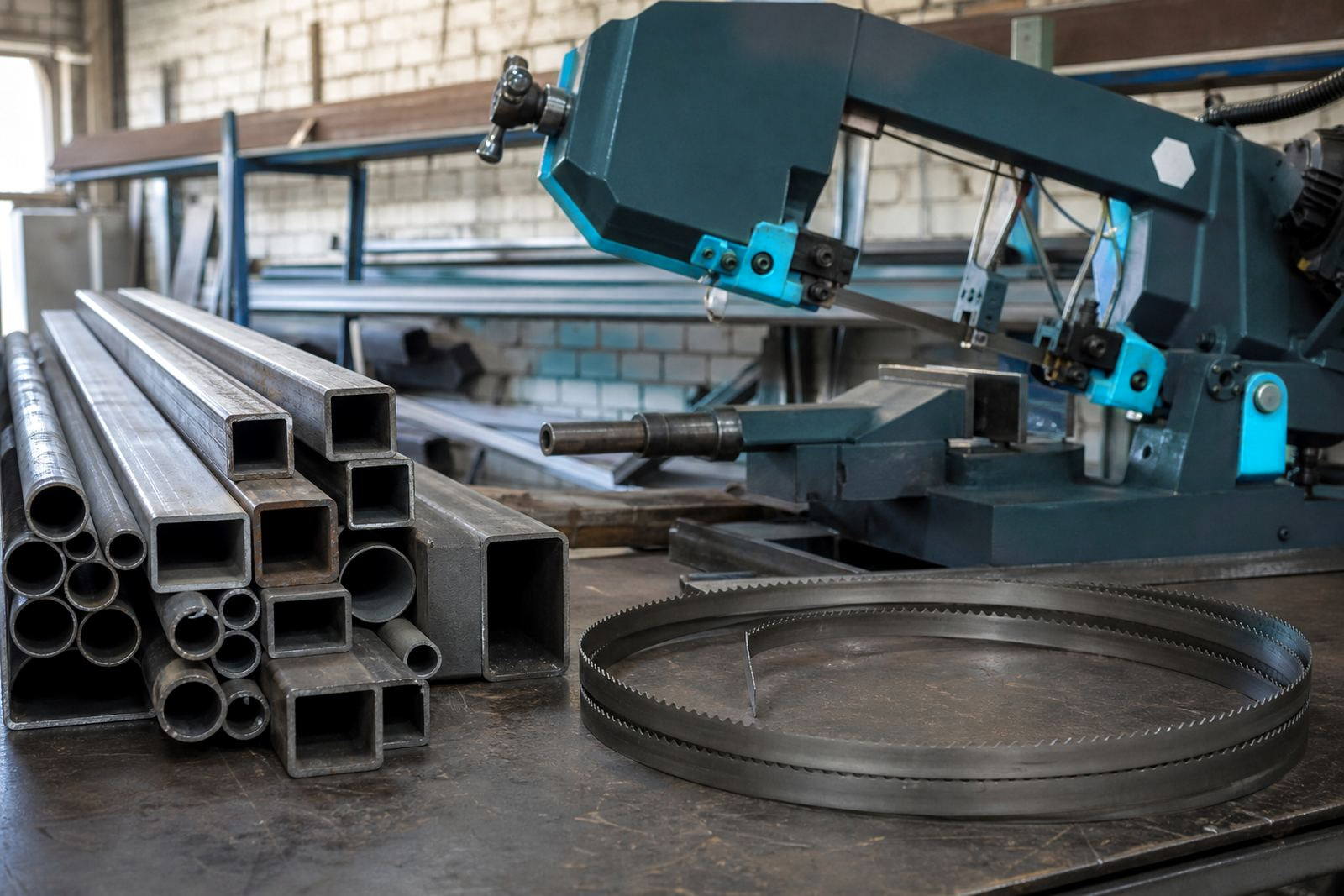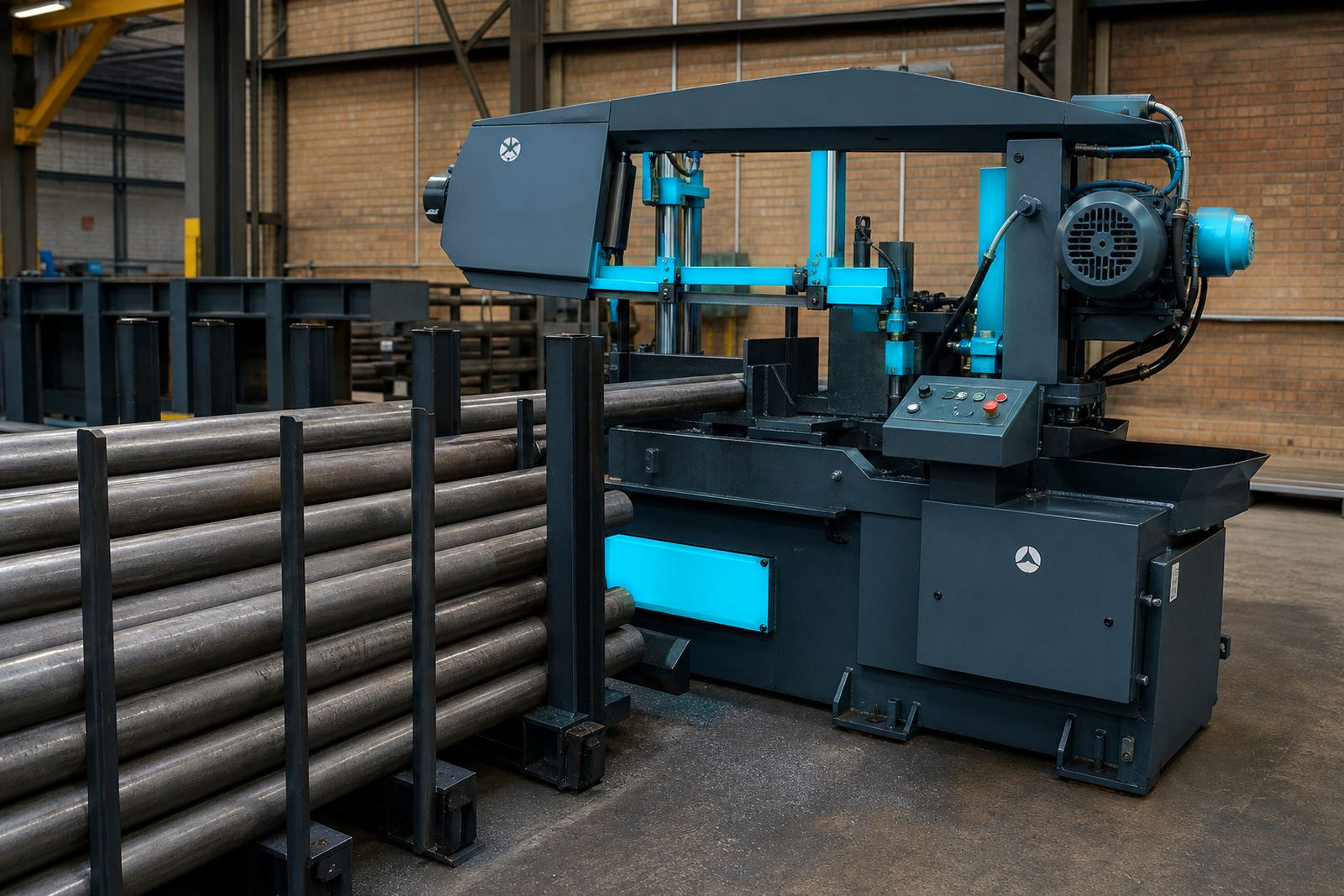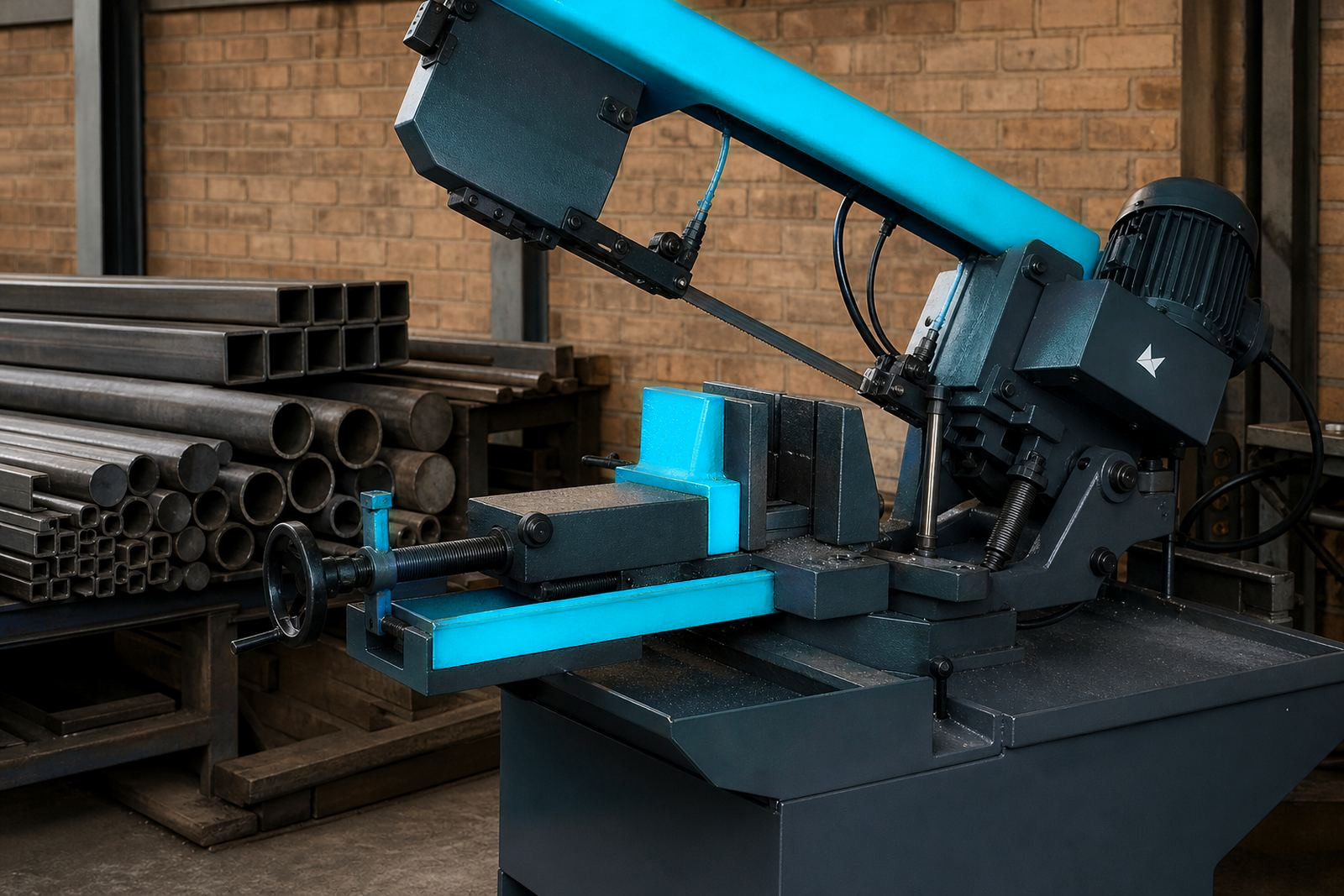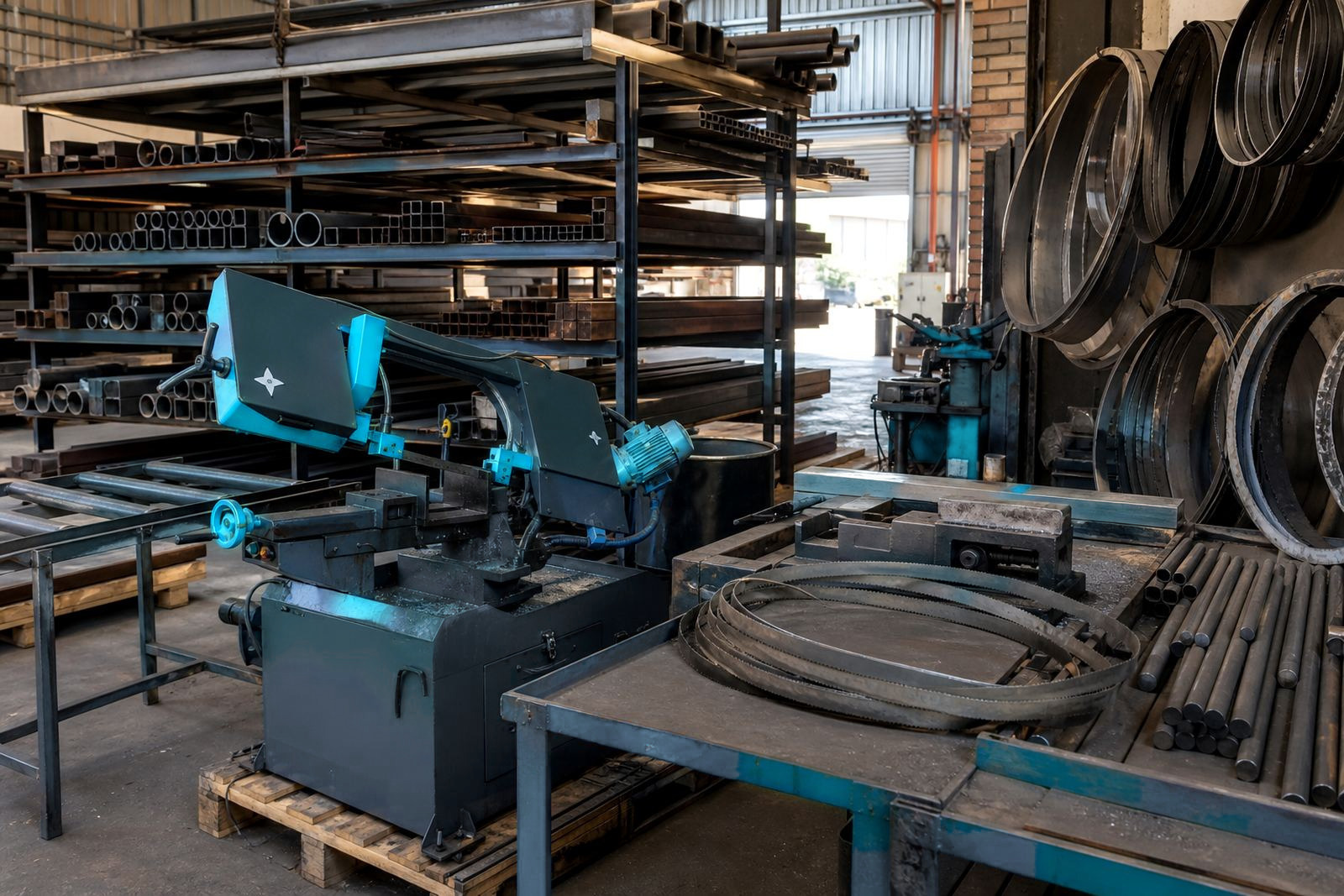
When one workshop cuts too many shapes
Mixed stock jobs usually mean a workshop moves between mild steel bar, structural section, pipe, angle, flat bar and the odd harder material in the same week. A blade that handles one job well can struggle on the next if tooth pitch, blade width and thickness are left to guesswork. In Alrode and across Johannesburg, Pretoria, Vereeniging, Durban and Cape Town, that mix is common in maintenance bays, fabrication shops and smaller production rooms.
Build a small, sensible blade plan that suits the machine, the cut list and the way the team actually works. That usually means matching pitch to the lightest and heaviest sections on hand, then deciding where a general purpose blade can carry the load and where a second blade makes more sense.
The blade mix that usually earns its keep
For mixed stock, bi-metal blades with a hard tooth edge are often the first choice because they cope better with varying hardness and interrupted cuts. Carbon steel blades still have a place on lighter manual saw work, softer section, and short runs on a tight budget. On the tooth side, variable pitch can reduce chatter on uneven cross sections, while a fixed TPI blade can still suit shops that cut a narrower range of sizes.
- Bi-metal blades for general mixed metal work, especially where hard spots or scale show up.
- Carbon steel blades for lighter duty, smaller saws and lower cost starter sets.
- Variable pitch where solid and hollow sections are both common.
- Wider blades for straighter tracking on larger machines, narrower blades for tighter radius work or manual saws.
- Thickness that matches the machine guides and the cut load, plus the biggest piece on the floor.
We check the set as well. Too much set can wander on thin wall material, while too little set can make a blade rub and heat up. Run-in is worth doing carefully on a fresh blade, because a brief controlled start often saves the teeth from early damage. Feed and speed need to match the material, and coolant checks are needed when a saw runs long shifts or cuts dense sections back to back.
How to lay out a mixed stock blade plan
A practical mixed stock plan starts with the material list. Not every size needs its own blade, but the range should be grouped into sensible bands. Shops that hold both hollow section and solid bar often do better with one general purpose blade for day-to-day work and a second blade for heavier sections or harder material. Our team looks at machine fit, wheel size, guide condition and whether the saw is manual or powered before suggesting a pitch and width.
Length verification catches more problems than many teams expect. If the blade is too long, tracking can suffer and tension becomes inconsistent. Too short, and the machine never settles properly. Weld-to-length service helps when a workshop needs a blade matched to a particular saw instead of a near enough off-the-shelf size. For shops with several saws, stock standardisation can reduce confusion and make blade changes less hectic.
- Group materials by wall thickness and solid section size.
- Keep one common blade spec where the cut list allows it.
- Mark blade widths and pitches clearly in the store room.
- Separate manual saw stock from powered saw stock.
- Review guide wear before blaming the blade.
Common mistakes that waste blades and time
Mixed stock cutting falls apart when teams try to stretch one blade beyond its range. A very fine pitch on thick solids packs swarf into the gullets and overheats the teeth. A coarse pitch on thin wall tube can strip teeth or leave a rough edge. The wrong blade width can also cause issues, especially where a narrow frame is asked to do work meant for a wider machine. Feed speed that is too eager can bend teeth, while a timid feed can polish them blunt.
Another common issue is skipping the check on coolant delivery. On long runs, especially with stainless or heavy mild steel bundles, poor coolant flow lets heat build up fast. That shows up as blue teeth, short life and a cut that begins to drift. Blade failure review helps separate operator habit from material problem, and it is often the quickest way to stop a repeat failure. A dull blade on mixed stock can look acceptable for a few cuts, then suddenly start working hard and throwing off the whole shift.
Starter kits and standard packs for mixed stock
Starter kits suit workshops that are building a new saw room or tightening up an old one. For mixed stock, a good kit usually includes a handful of blade options rather than a large pile of one size. That gives the team room to handle common wall thicknesses, a few solid bars and at least one awkward section without forcing a bad blade choice.
Budget depends on blade type, size and whether the blade is welded to length for a specific machine. Carbon steel blades sit at the lower end, while bi-metal blades cost more and usually suit the main production work. As a broad working range, a small mixed stock starter kit is quoted per job, while a more complete workshop pack is quoted per job depending on the saw count and the blade mix. Larger workshops with several machines, wider blades and more specialised pitches can sit above that. Those figures shift with dimensions, weld requirements and how much standardisation the shop wants. Ask for a quote
What the workshop team usually needs on the floor
In practice, mixed stock support is about keeping the saw room predictable. The person loading material needs to know which blade goes where, what pitch is on the machine, and whether the next bundle is thin wall tube or solid round. A short machine fit check can save a long frustration later, especially where old guides, tired bearings or worn vice jaws are hiding in plain sight.
From Alrode, Alberton, MoreCut Saws supports workshops across South Africa, and the usual request is for a small plan that fits the actual mix. That includes help choosing tooth pitch, blade width guidance, run-in guidance, feed speed advice, coolant checks and support for manual saws when the job list swings between light and heavy work.
- Keep one person responsible for blade records.
- Store spare blades flat, dry and clearly labelled.
- Check the next week’s cut list before the current blade is gone.
- Log failures by material for accurate tracking.
That habit keeps mixed stock work steadier, and it makes the next blade choice easier when the cut list changes midweek.