When the cross-section gets serious
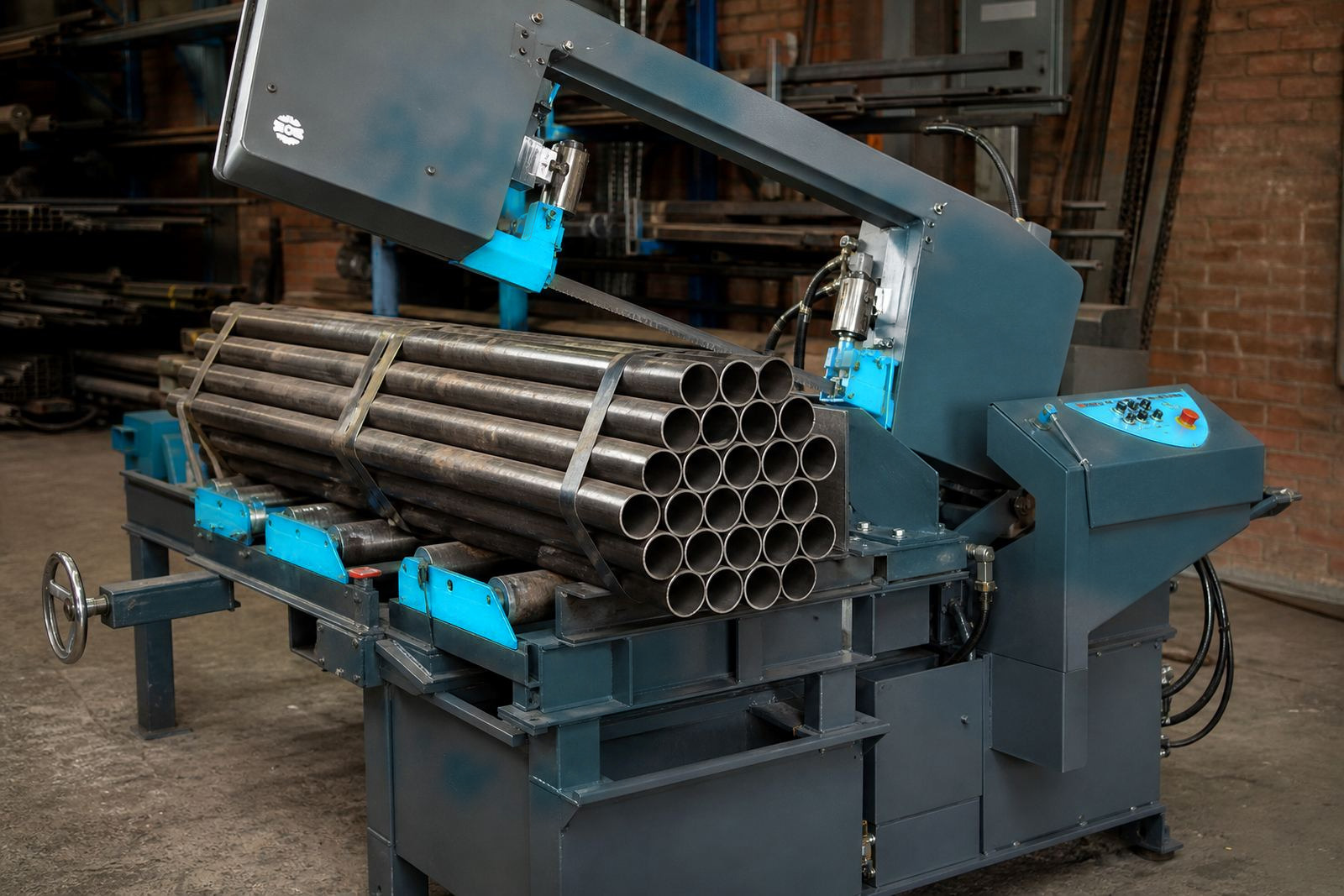
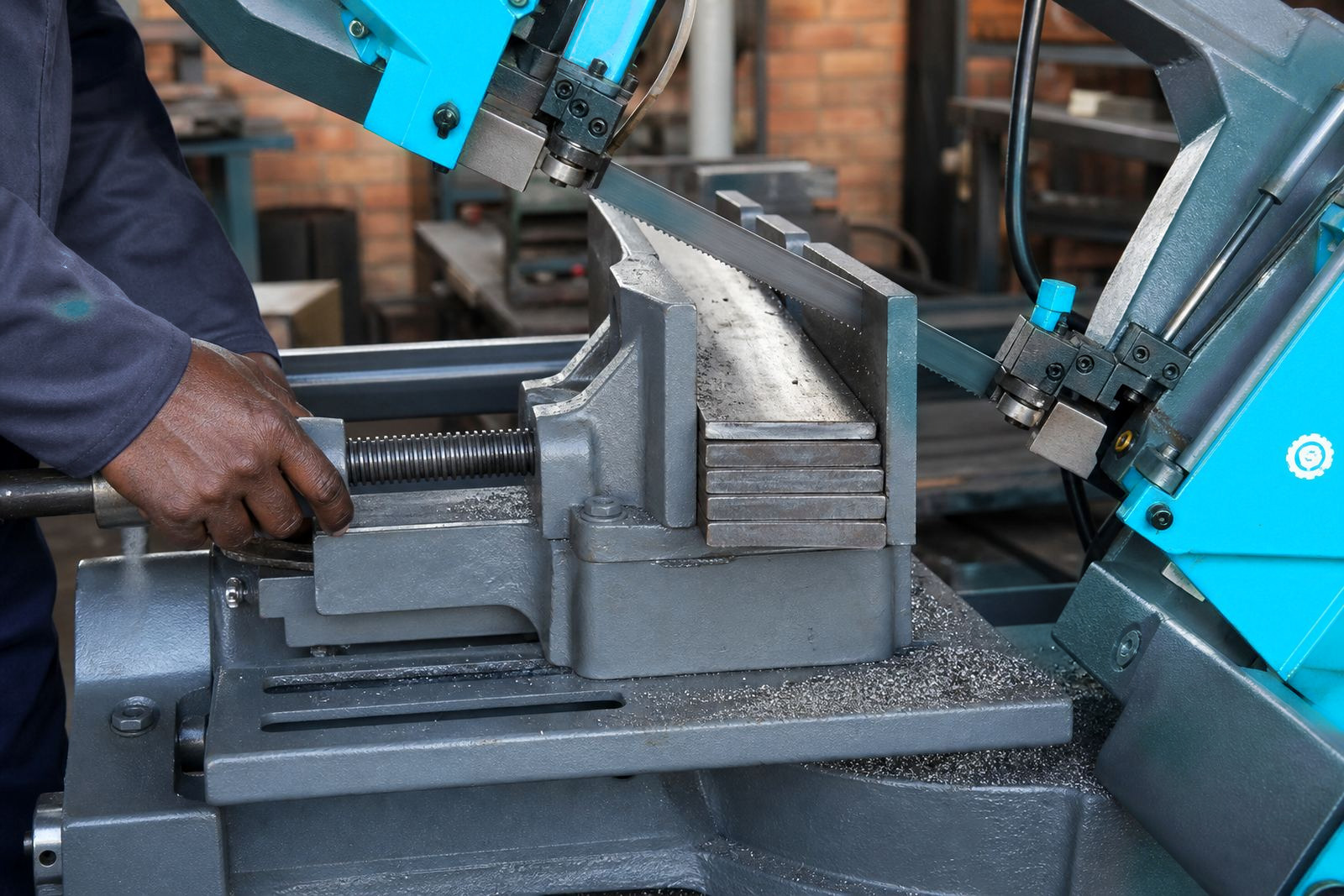
Large bars, blocks and thick-walled sections put a heavier chip load onto the teeth, especially when the material is hard, gummy or uneven through the section. A blade that works well on lighter work can start to wander, rub, or shed teeth too early when the cut face is deep and the feed is pushed too hard.
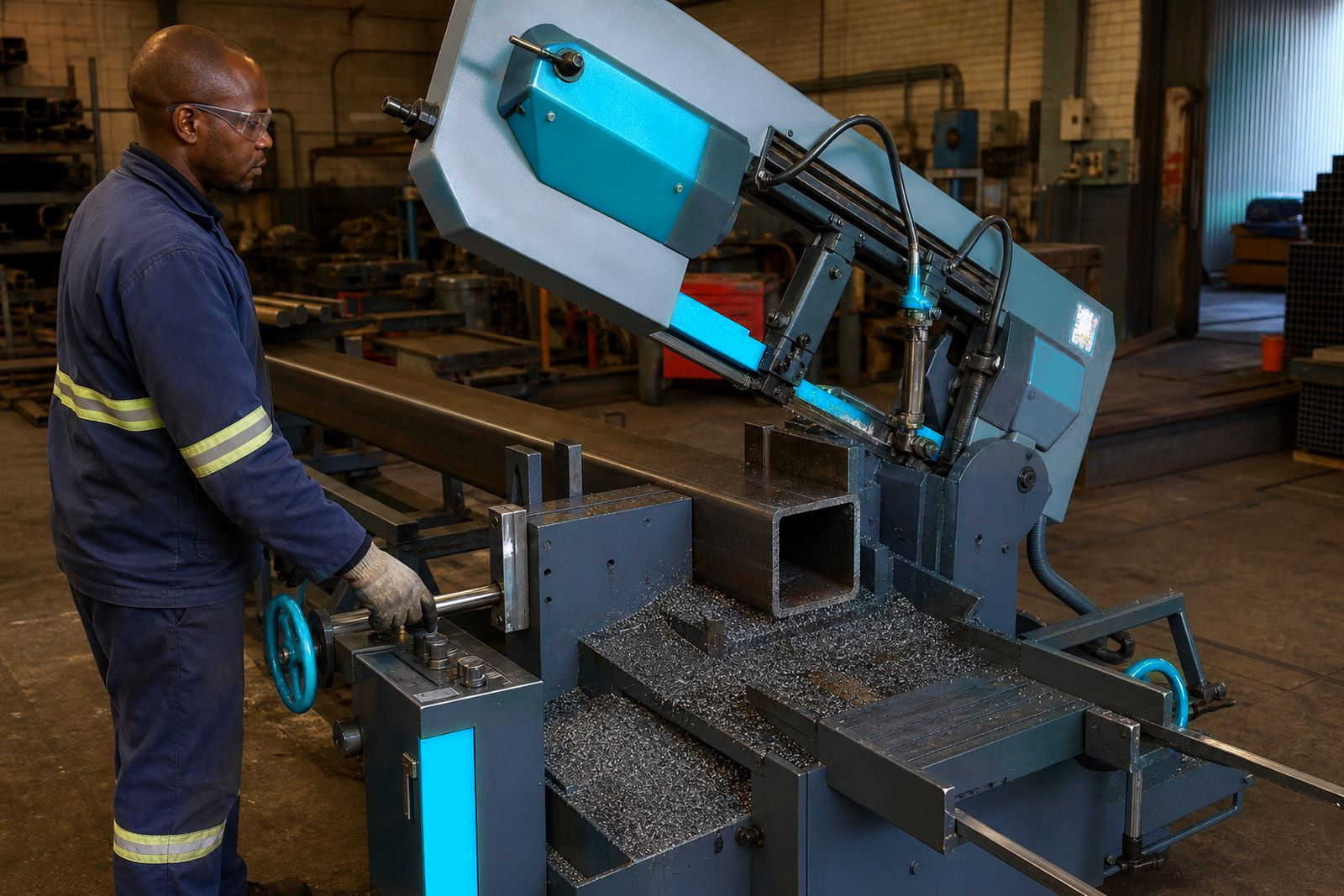
In Alrode and around Gauteng we often see thick section work on manual and semi-automatic bandsaws, plus hacksaws on older workshop lines. The job usually needs a fuller tooth body, a pitch that clears chip volume properly and a cut rate that lets the blade keep its set and track cleanly through the material.
Blade build that suits heavy chip formation
For thick sections, bi-metal M42 blades are often the sensible starting point where steel grades vary and the job mixes hard skin with a more workable core. Carbon steel blades still have a place on lighter duty manual machines and softer material, but they need a gentler feed and more careful use.
Blade width and thickness are chosen with the tooth material. Wider blades help stability on straight cuts, while thinner blades can reduce cutting load on smaller machines. Tooth pitch should match the cross-section, with variable pitch useful where vibration is a problem or the material is not uniform. On heavy sections the wrong TPI can leave the gullets too small, which builds heat and chips fast.
- Use a wider blade where the machine and guides can carry it.
- Match the pitch to the deepest part of the cut instead of the face width.
- Keep blade thickness within the machine's guide and wheel limits.
- Check tooth set if the blade starts to pinch or leave a polished cut.
Feed, speed and run-in on deep cuts
Thick-section work rewards steady feed more than force. If the feed is too slow, the teeth rub and the blade heats up. If it is too aggressive, the gullets fill before they clear and the cut face starts to tear. That balance changes with material grade, bundle size, scale and whether the section is solid or hollow.
A new blade needs a run-in. A short bedding period with lighter feed helps the teeth settle before full load. Coolant should reach the teeth and the cut zone evenly, because thick sections hold heat longer than thin stock. Where the machine has no reliable coolant delivery, the blade wears sooner and chip welding becomes a real problem.
- Start with a lighter feed on the first few cuts.
- Keep coolant directed at the tooth entry point.
- Reduce speed if the chip comes off blue or dust-like.
- Watch for a sharp change in sound, it often means the cut has gone off balance.
Layout planning for workshops that cut heavy stock
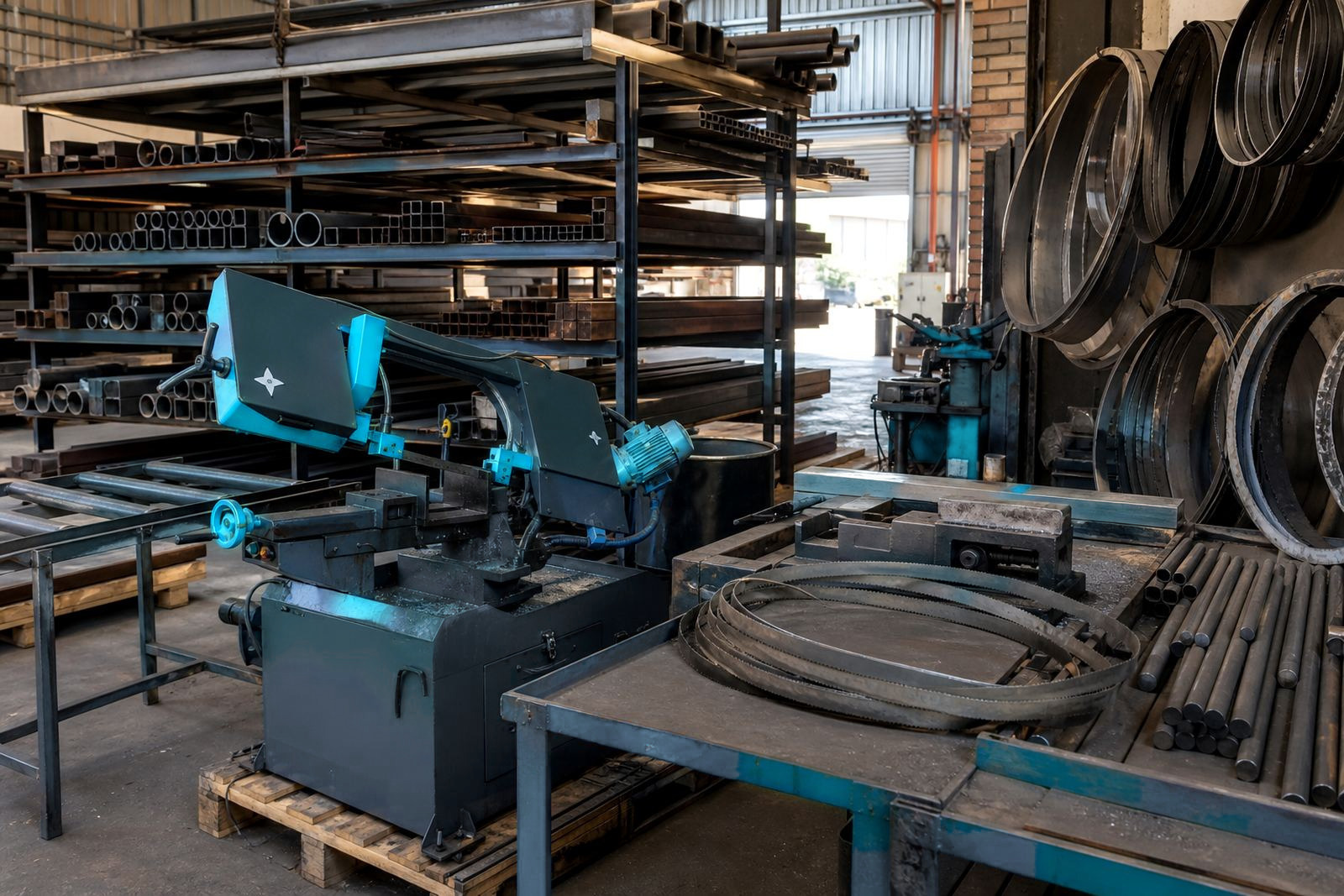
Thick sections take more bench space, more handling room and clearer stock control. A workshop in Vereeniging handling structural offcuts may need long infeed and outfeed support, while a Pretoria machine shop cutting round bar may need a tighter layout with marked lengths and a proper blade storage point. Blade length verification helps before welding to length, because a small error at the join can show up as tracking trouble on the saw.
Starter kits work well for teams that want a sensible range rather than a shelf full of mismatched blades. For repeated jobs, stock standardisation keeps tooth pitch, width and thickness consistent across the machines. That helps operators know what to fit for thicker cross-sections without guessing from one shift to the next.
Common faults on thick-section jobs
Common mistakes stand out quickly once you have seen a few of them. Operators often choose a pitch that is too fine, then the blade packs with chips and starts to overheat. Others push feed to save time, only to find the blade walking off line or breaking near the weld. A poor machine fit can do the same thing, especially where guide faces are worn or the wheels are not aligned.
Blade failure review helps separate a bad blade from a bad setup. We look at tooth wear, weld condition, machine fit, coolant coverage and the way the cut was fed. On manual saws, a lot of damage comes from trying to force a deep cut with a blade that was meant for thinner work.
- Too-fine pitch for deep sections.
- Poor coolant flow at the tooth line.
- Excessive feed on hard or scale-covered stock.
- Blade width not suited to the machine guides.
Budget ranges for thick-section cutting
Blade spend for thick sections depends on material grade, cut volume and whether you are running welded-to-length blades, starter kits or standard stock. Carbon steel blades are usually the lower-cost entry point, while bi-metal blades carry a higher Rand figure but normally suit tougher work better. The cost also shifts with width, thickness and tooth form.
As a working guide, small manual saw setups may be able to stay in a lower monthly blade band if the cutting is occasional and the stock is soft. Regular heavy section cutting on production saws generally needs a bigger allowance, especially when coolant, run-in discipline and machine checks are part of the routine. A workshop can often save money by standardising the most common blade sizes instead of carrying many one-off lengths.
For jobs in Johannesburg, Durban, Cape Town and across South Africa, the useful question is how long the blade lasts in real cutting conditions and what the purchase price is. A well-matched blade, sensible feed and correct pitch normally cost less over time than repeated breakages and short blade life.