Pipe offcuts punish the wrong tooth form
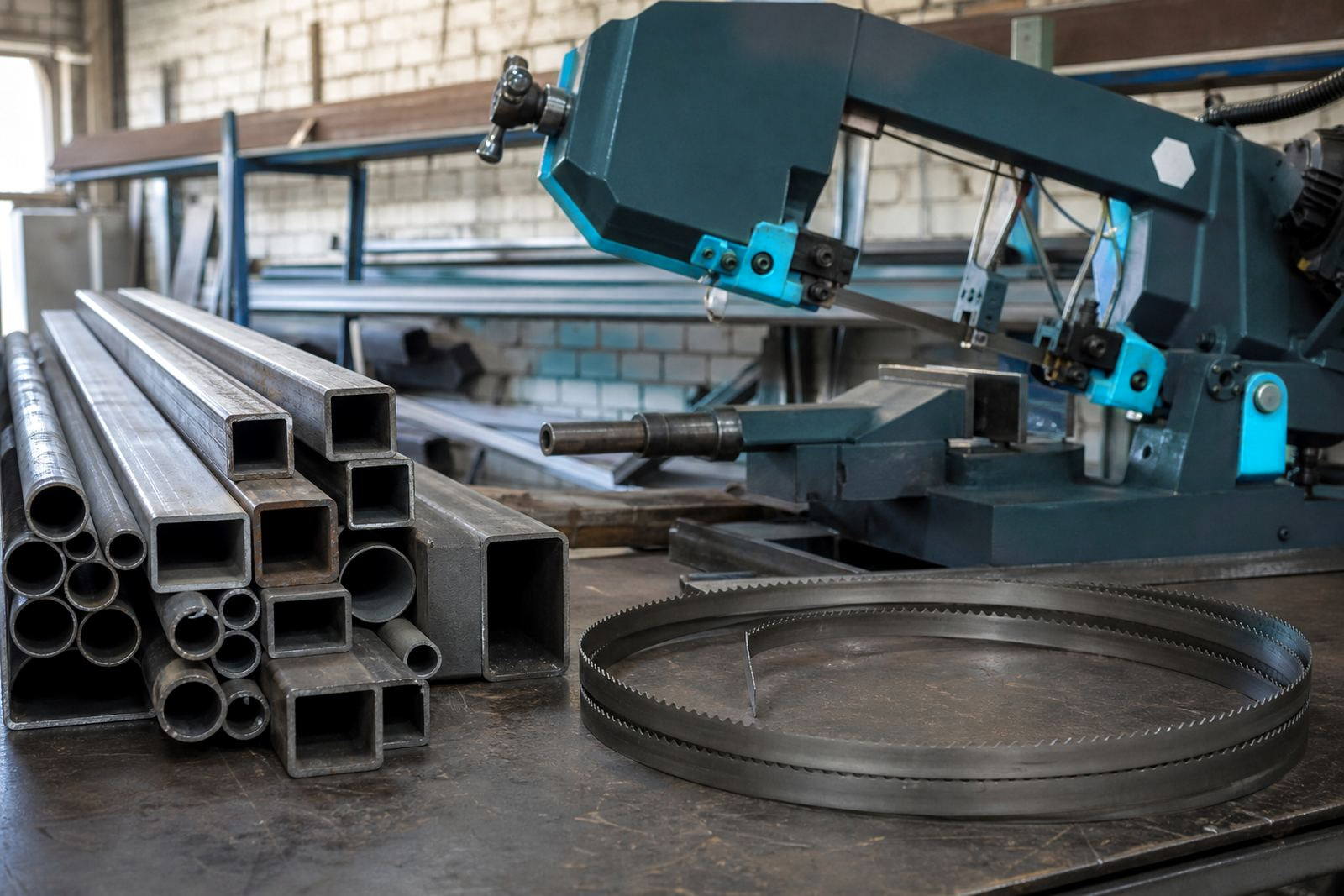
When a blade meets round tube, the contact changes all the time. A tooth that bites too hard can snag on the first wall, then strip teeth as it crosses the hollow section and the exit edge. Pitch choice is vital in pipe and tube work.
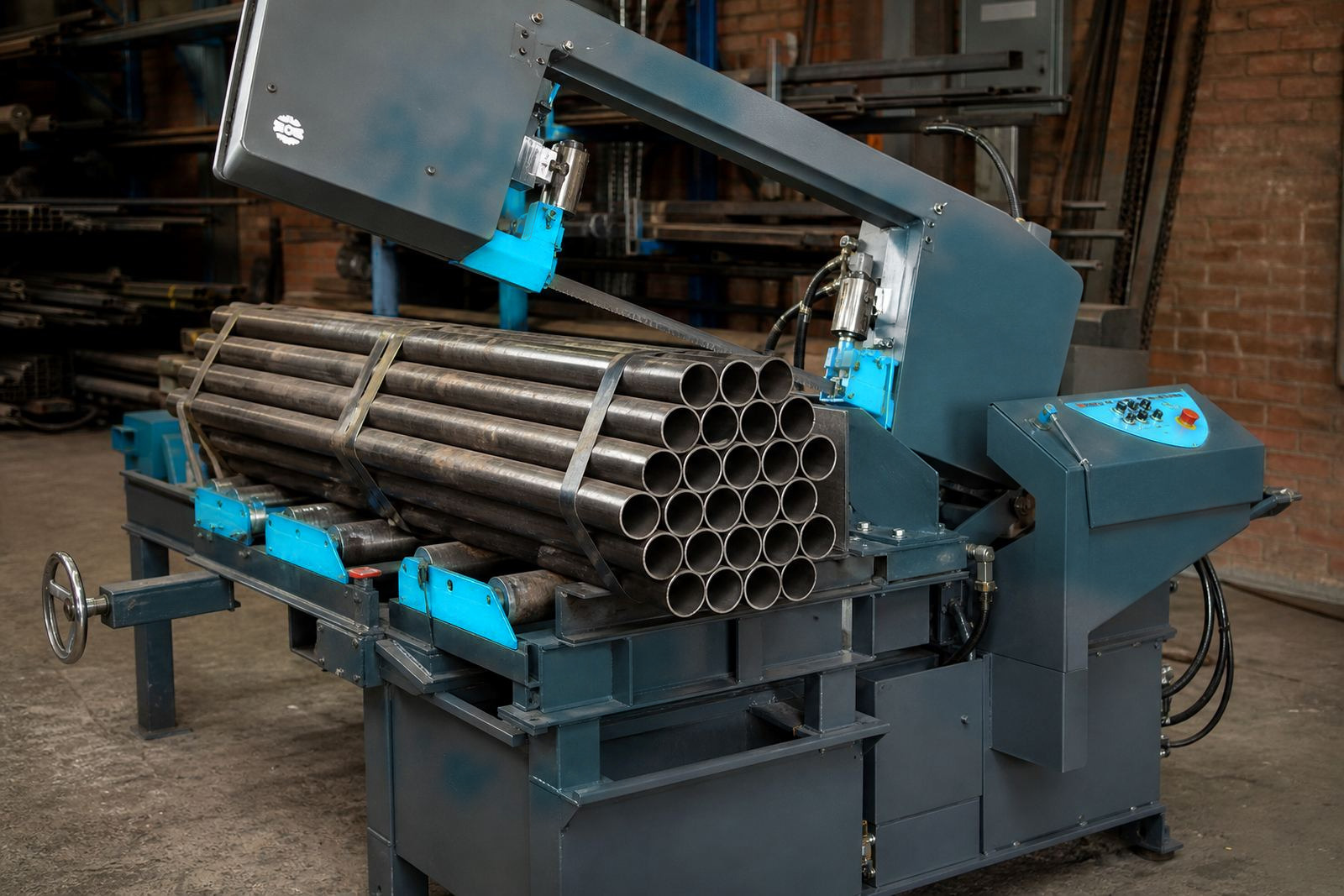
For thin wall tube, finer pitches keep more teeth in contact and reduce chatter. Heavier wall pipe needs a coarser pitch so the gullets clear chips instead of packing up. Variable pitch blades help on mixed bundles, cut sections with changing wall thickness and reduce the steady rhythmic vibration that can mark the cut face.
What the saw room usually needs on this job
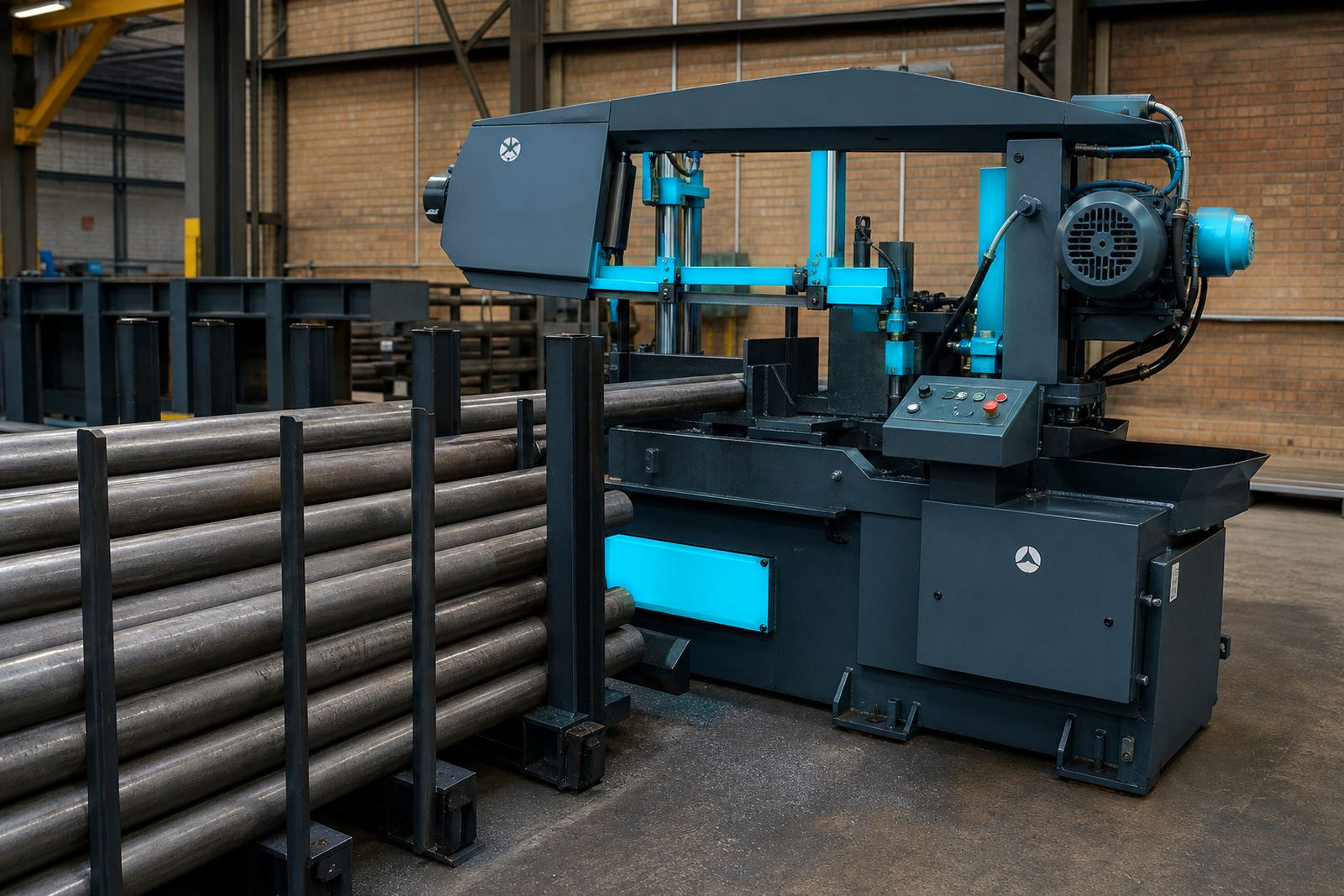
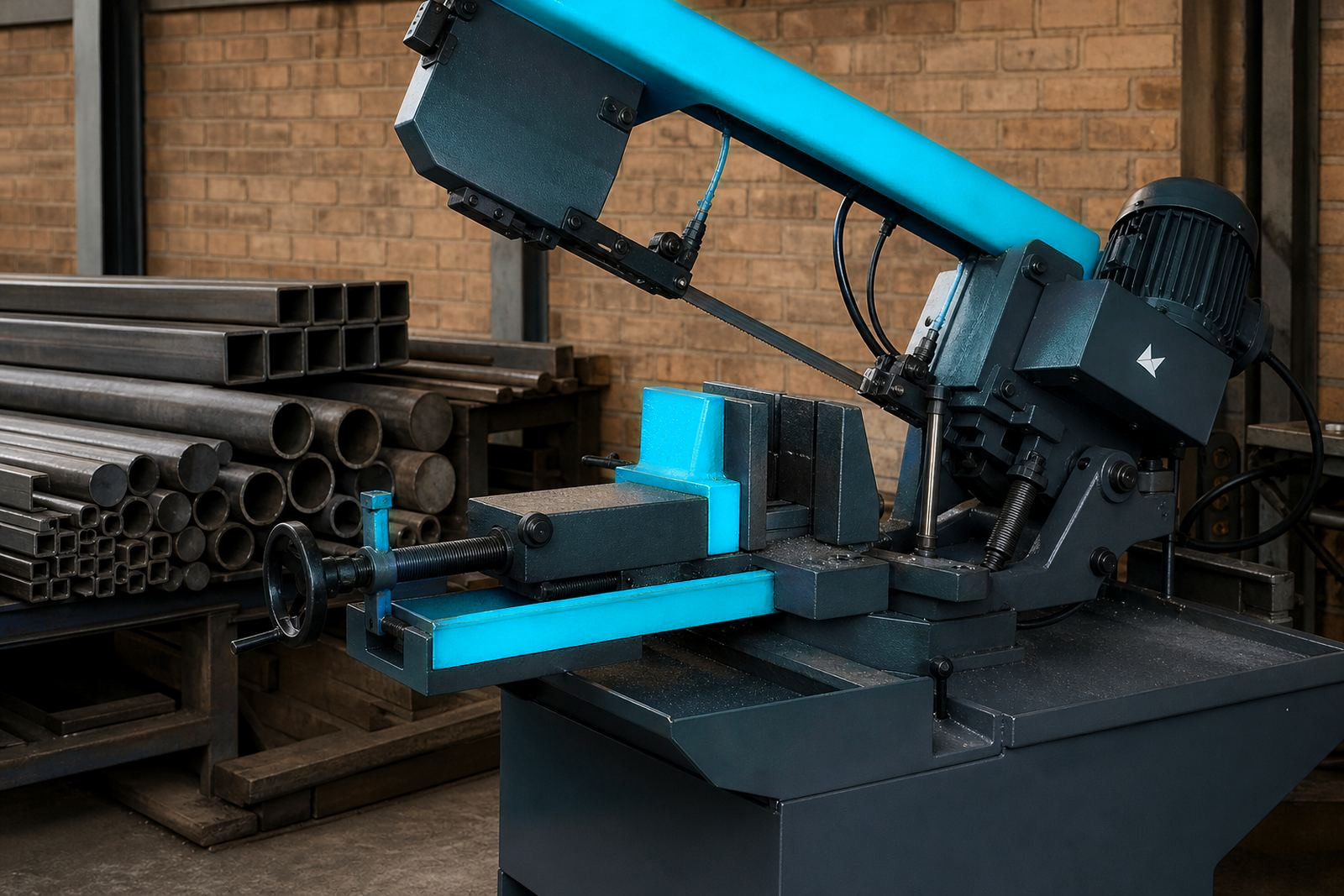
Most pipe and tube work in Alrode, Germiston and the wider Gauteng market runs through horizontal bandsaws, manual saws and small workshop machines. Straight cuts, mitres and short batch cutting are common, often with mixed diameters on the same shift.
- Bi-metal blades for regular steel tube, structural pipe and general fabrication work
- Carbon steel blades for lighter duty manual saw support and simple jobs
- Variable pitch options for bundles and mixed profile cutting
- Starter kits for new workshops that need a sensible first blade mix
- Weld-to-length service where the machine takes a continuous blade loop
We also check blade width and thickness. Wider blades track better on straighter cuts, while narrower blades suit lighter machines and tighter guiding systems. If the set is too aggressive, the blade can wander; if it is too tight, heat rises and tooth life drops.
Pitch, width and feed need to match the wall
Pipe and tube work usually starts with three checks: outside diameter, wall thickness and material type. Mild steel tube, thicker pipe and light gauge hollow section do not want the same tooth pitch. A common error is to choose by diameter only and ignore the wall. That is where snagging starts.
Run-in should be gentle on a fresh blade. A few light cuts help the teeth seat properly before full production feed is used. On pipe, feed speed needs to stay steady rather than forceful. Too much pressure crushes the first tooth line, while too little feed polishes the teeth and leaves a rough face.
Coolant helps with heat and chip wash, especially on long runs and stainless or alloy sections. Poor coolant coverage leaves the gullets dry, and the blade starts to rub instead of cut. On tube bundles, chip clearing is often the difference between a neat cut and a costly stoppage.
Planning the cut list before the machine starts
A clean pipe cutting shift is easier when the blade plan is set before the first clamp closes. Length verification is useful where stock arrives in mixed lengths or where a job calls for repeated pieces with a strict cut list. Machine fit check is needed too, because some saws carry blade guides that are fussy about thickness and back geometry.
For workshops in Johannesburg, Pretoria and Durban, the layout often includes a main saw, a rack for stock lengths and a second station for hand finishing. If the blade range is standardised, operators are less likely to fit the wrong pitch on a busy day. A steadier cut line reduces waste on short offcuts.
- Sort pipe by wall thickness before the saw work starts
- Separate thin wall tube from heavy pipe and mixed bundles
- Keep one blade spec for repeat work where possible
- Use a finer pitch for thin wall, a coarser pitch for heavy sections
- Check guide wear when cut quality starts drifting
Mistakes that strip teeth and slow the job
The most common mistake is forcing one blade to handle every tube on the floor. Another is running with too little coolant, which overheats the tooth edge and shortens blade life. Dull guides, misaligned clamps and a tired machine table also make round stock harder to cut cleanly.
Some teams push feed speed to finish a batch faster, then blame the blade when teeth start to shear. The blade is usually telling a different story. It may be the pitch, the machine alignment or the wrong blade width for the saw frame. On stainless pipe, keep the heat down, because a hot cut can harden the edge and make the next cut worse.
Blade failure review helps when the break pattern keeps repeating. That review looks at tooth breakage, back cracks, weld quality and signs of rubbing on the set. It is practical work based on what we see.
Budget ranges for pipe and tube work in Rand
Budgets vary with blade type, length and how hard the material is on the teeth. Carbon steel blades are the lower-cost option for light work, while bi-metal blades cost more but handle more demanding pipe and tube jobs with better tooth life. Weld-to-length service changes the final amount depending on blade size and machine requirement.
As a broad working range, smaller manual-saw blades and light duty consumables can sit in the low hundreds of Rand, while workshop bandsaw blades for regular pipe work often sit in the mid hundreds to low thousands of Rand per blade, depending on size and specification. Starter kits and stock standardisation plans move the spend around, but they can help a workshop avoid buying the wrong pitch in the first place.
For mixed pipe and tube work across South Africa, ask what a bad blade match costs when it strips teeth and leaves material to re-cut.