Flat bar does not cut like angle or round stock
Flat bar presents a wide face and a narrow edge, so the blade can bite too hard at entry if the tooth pitch is coarse for the thickness. When the bar is laid flat, the blade meets more material at once and chip load rises fast, which is where tooth stripping starts if feed is pushed too hard.
For thinner flat bar, a finer pitch usually gives cleaner tooth engagement and less snagging. Heavier flat bar often needs a variable pitch blade to quieten the cut and reduce vibration on older machines, especially where the vice does not grip perfectly square.
We look at the width, thickness, and how the bar is presented to the saw before suggesting a blade. Blade heat can harden the cut face on mild steel, free machining steels, and tougher sections when run dry and hot.
Machine set-up for bandsaws and manual saw frames
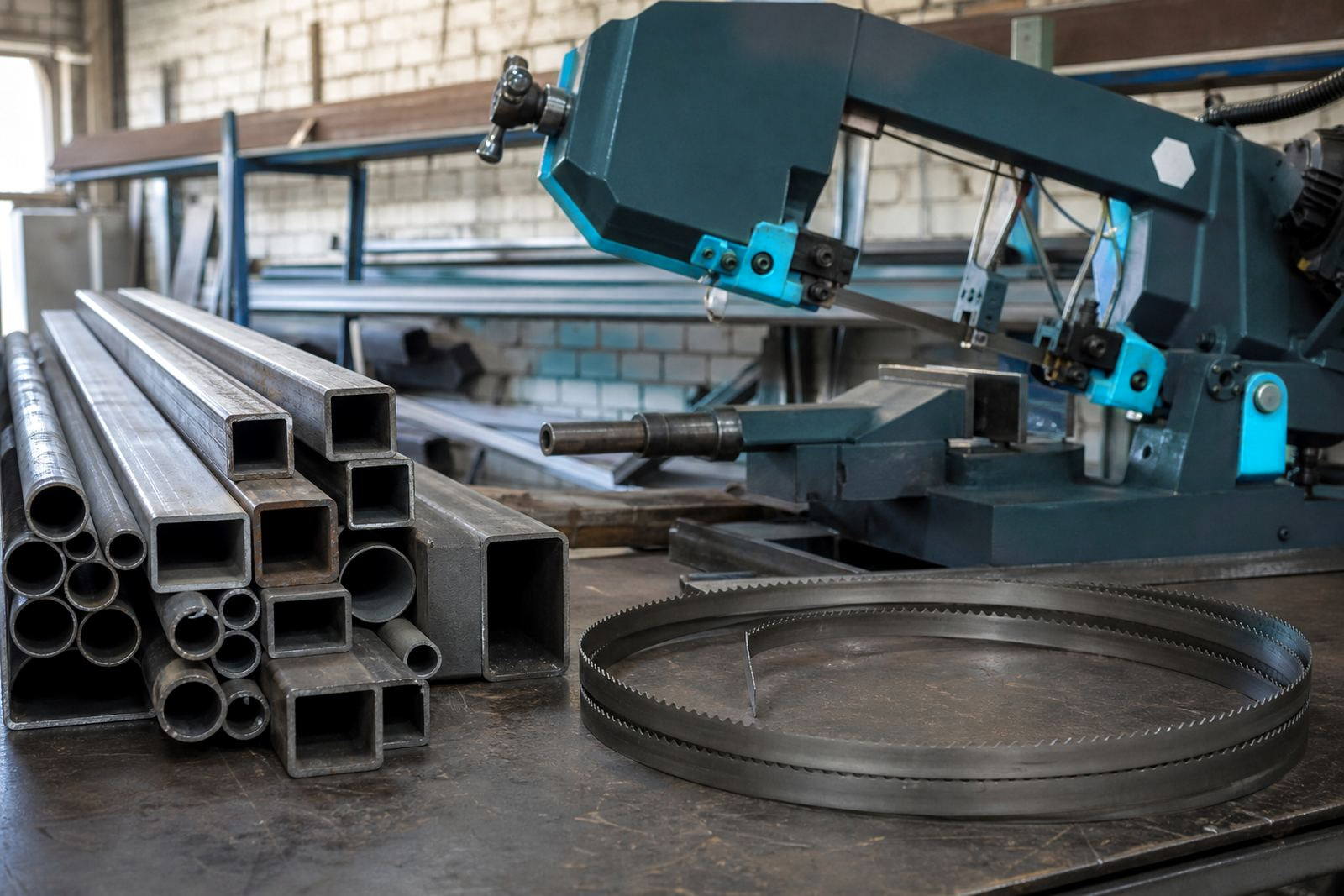
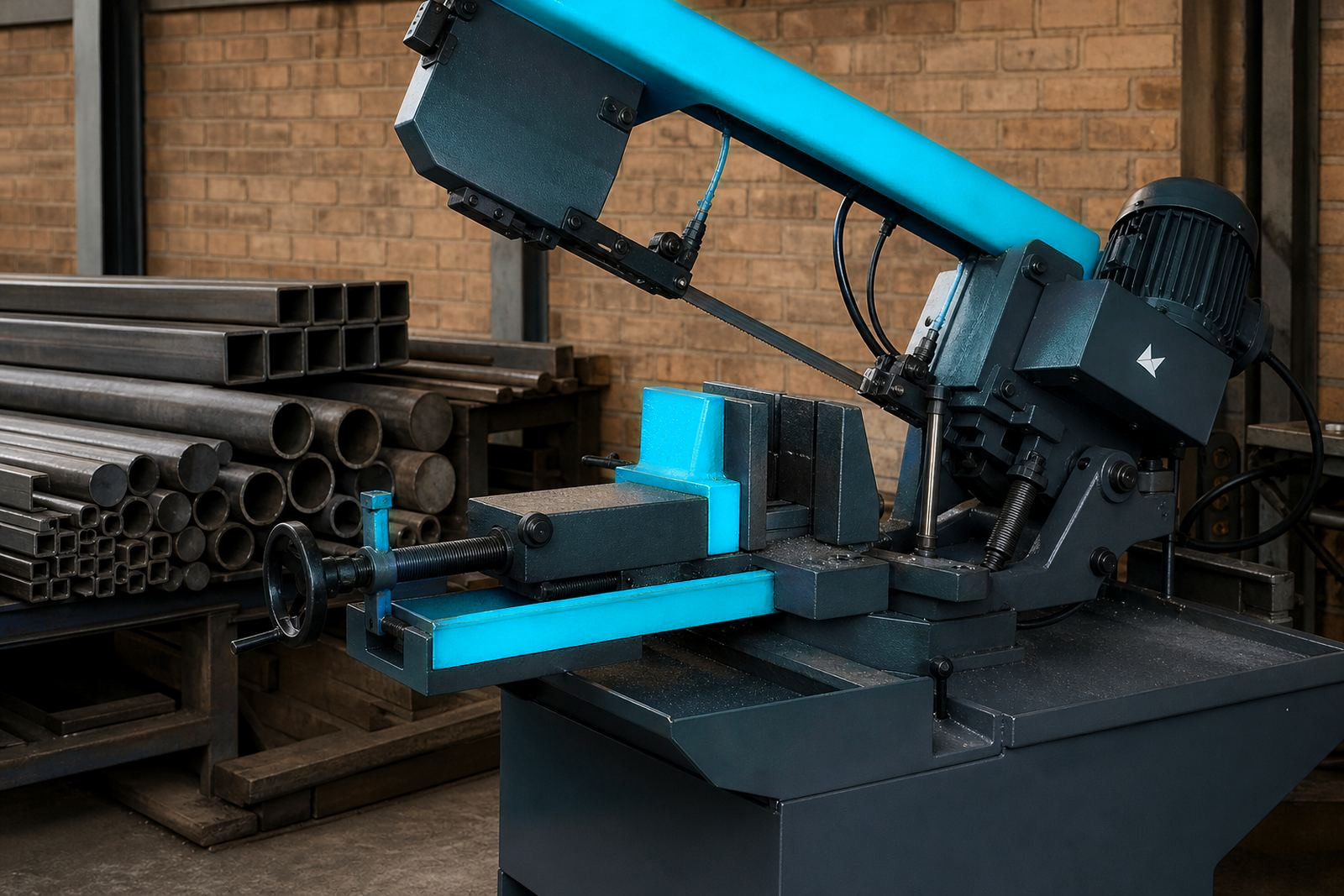
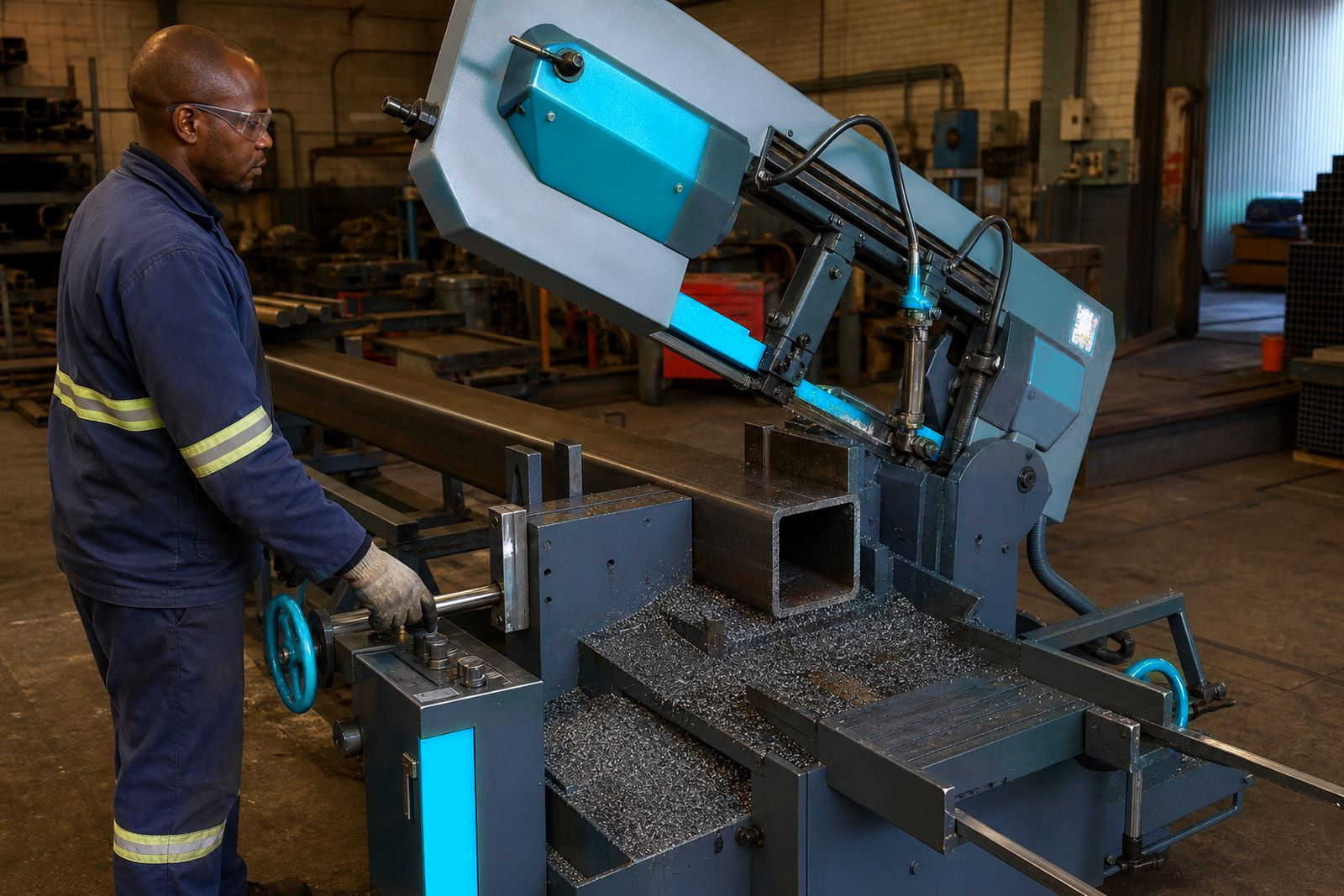
A workshop cutting flat bar all week may use a horizontal bandsaw with coolant, or a manual saw frame for shorter runs and fit-up work. The right blade width and tooth set depend on the machine guides, wheel diameter, and the length of cut needed before the kerf clears the work.
- Bi-metal M42 blades suit mixed workshop use where the bar thickness changes through the day.
- Carbon steel blades still make sense for lighter manual sawing and short, controlled jobs.
- Wider blades help with straighter tracking on larger machines, while narrower blades suit tighter radii and smaller frames.
- Choose blade thickness with care when the guides are worn, because a heavy blade can wander if the machine is not aligned.
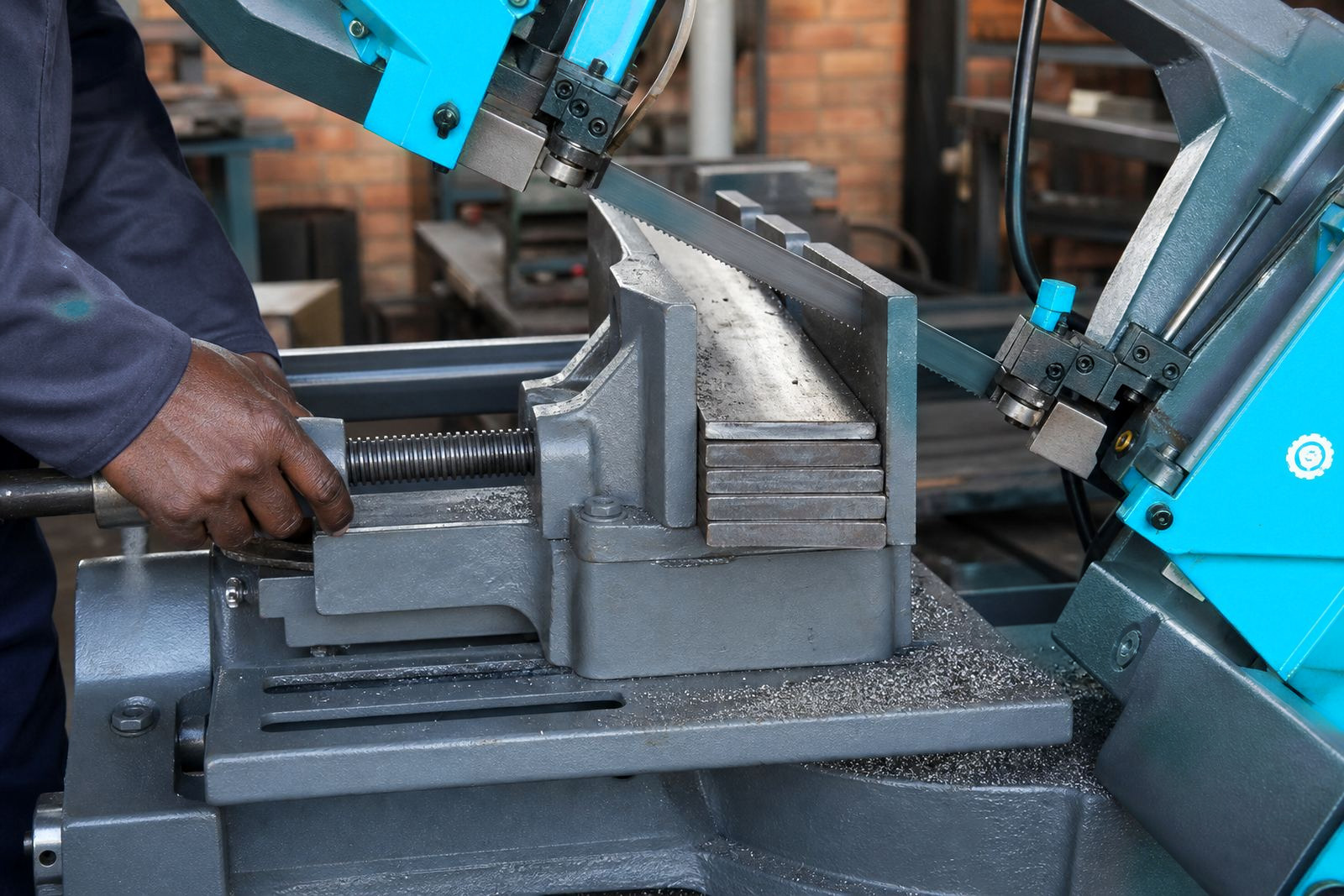
Flat bar also benefits from a firm vice grip and a checked square cut line. If the stock twists under pressure, the teeth start rubbing instead of cutting, and that shortens blade life very quickly.
Tooth pitch, feed and speed on flat bar
Tooth pitch, often shown as TPI, needs to suit the bar thickness and the size of chip each tooth can carry. Too fine and the gullets pack up with swarf, too coarse and the teeth dig in, chip out, or leave a rough face that needs extra dressing.
For flat bar, variable pitch often performs better than a fixed pitch because it breaks up resonance and lowers chatter. Feed and speed must match the material, the blade width, and whether coolant is flowing well enough to keep the cut cool at the tooth tip.
Run-in is worth doing properly on a new blade. The first cuts should be light, with reduced feed, so the tooth edges wear in evenly before full load is applied.
Common mistakes on flat bar jobs
Most blade damage on flat bar comes from forcing the cut, skipping run-in, or fitting the wrong pitch for the section. Another common issue is ignoring the orientation of the stock, because a wide face cut behaves very differently from an edge-first cut.
- Running a coarse blade on thin flat bar leaves hooked teeth and chipped corners.
- Using a blade that is too narrow can let the cut drift on long sections.
- Dry cutting without coolant often overheats the set and blunts the tips early.
- Failing to check the vice jaws can allow the bar to lift and bind mid-cut.
- Pushing feed too hard on old machines can overwork the motor and the blade at once.
Blade failure review helps identify whether the problem came from pitch, speed, coolant, or machine alignment. That saves a lot of guesswork when the same flat bar size keeps causing trouble.
Starter kits and stock planning for regular flat bar work
Workshops that cut flat bar often benefit from starter kits with a few pitch options instead of a single blade choice for every job. That makes it easier to cover thin strip, medium bar, and heavier sections without holding too much idle stock.
Blade selection help usually starts with three things: the material grade, the section thickness, and the machine that will do the work. From there, we can plan weld-to-length blades, check lengths for the saw frame, and line up blade widths that suit the guides on site.
- Length verification reduces waste from blades cut too short or too long.
- Blade width selection helps match straight cuts to the machine guide system.
- Stock standardisation keeps commonly used pitches ready for repeat flat bar jobs.
For Alberton and surrounding industrial areas, that kind of planning keeps the cutting bench organised. When jobs move between Johannesburg, Pretoria, Vereeniging, Durban, and Cape Town, the same blade spec needs to work across more than one machine.
Budget ranges in Rand for flat bar cutting blades
Budget depends on blade type, length, width, pitch, and whether the blade is welded to length for a specific machine. Carbon steel blades generally sit at the lower end for light manual work, while bi-metal blades cost more but handle heavier workshop use and longer cutting runs better.
For flat bar work, many buyers plan around a modest starter spend if they need a few replacement blades, then build stock around the pitches that actually get used. A basic manual-saw blade plan can sit in the low hundreds of Rand per blade, while workshop-grade bi-metal blades and longer custom lengths can move into the mid hundreds and above depending on size.
Coolant checks, machine fit checks, and run-in guidance are part of that budget picture too, because a correctly fitted blade lasts longer than one that is simply fitted fast. A small pricing mistake on pitch or width often costs more than the blade itself once scrap and downtime are counted.