When the section is not the same all the way through
Angle iron, channel and I-beam cuts are rarely steady work. One cut may start on a thin flange, then move into a thicker web or a packed bundle where the load on the teeth changes in seconds. Here, tooth pitch and blade type change the result more than speed on the machine dial.
For this work, bi-metal blades with a hard cutting edge and flexible backing are a strong starting point. A carbon steel blade can still earn its place on lighter manual saws and occasional jobs, but it wears faster when the section size climbs or the operator feeds too hard. Variable pitch helps cut down vibration on uneven profiles, especially where the piece is long and the machine frame is not very heavy.
- Fine pitch suits thin wall and smaller sections.
- Coarser pitch clears chips better on larger profiles.
- Variable pitch helps on mixed sizes and bundled stock.
- Blade width affects straight tracking and curve tolerance.
Setting up the saw for steel that varies in thickness
Structural steel asks for a machine that holds the blade true and keeps the feed steady. A blade that is too wide for a small manual machine can fight the guides, while a blade that is too narrow on a heavier bandsaw can wander on a long cut. A thicker blade body keeps line better on rigid equipment, and the machine needs to support that extra stiffness.
Run-in is worth doing properly. The first few cuts on a new blade should be light, with reduced feed and speed, so the tooth edges settle before full work starts. A rushed start can round the teeth early and leave a polished but blunt edge. Steel section work also needs coolant, especially where the cut stays hot and the swarf sticks in the gullets.
- Check blade width against the saw wheel and guide clearance.
- Match TPI to the thinnest section in the bundle.
- Use enough coolant to wash chips from the cut.
- Keep feed steady rather than forcing the blade.
Typical workshop set-up for angle, channel and beam work
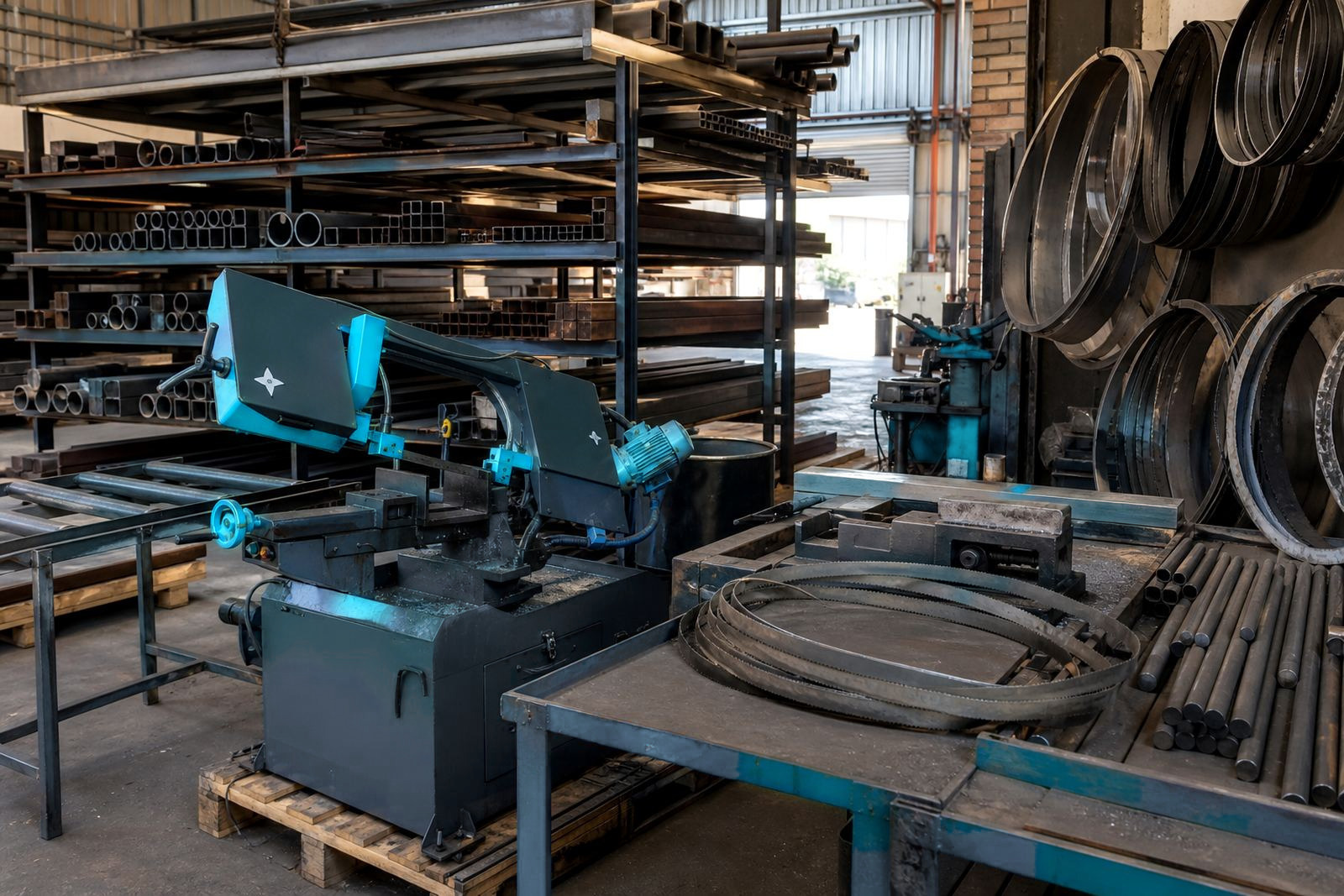
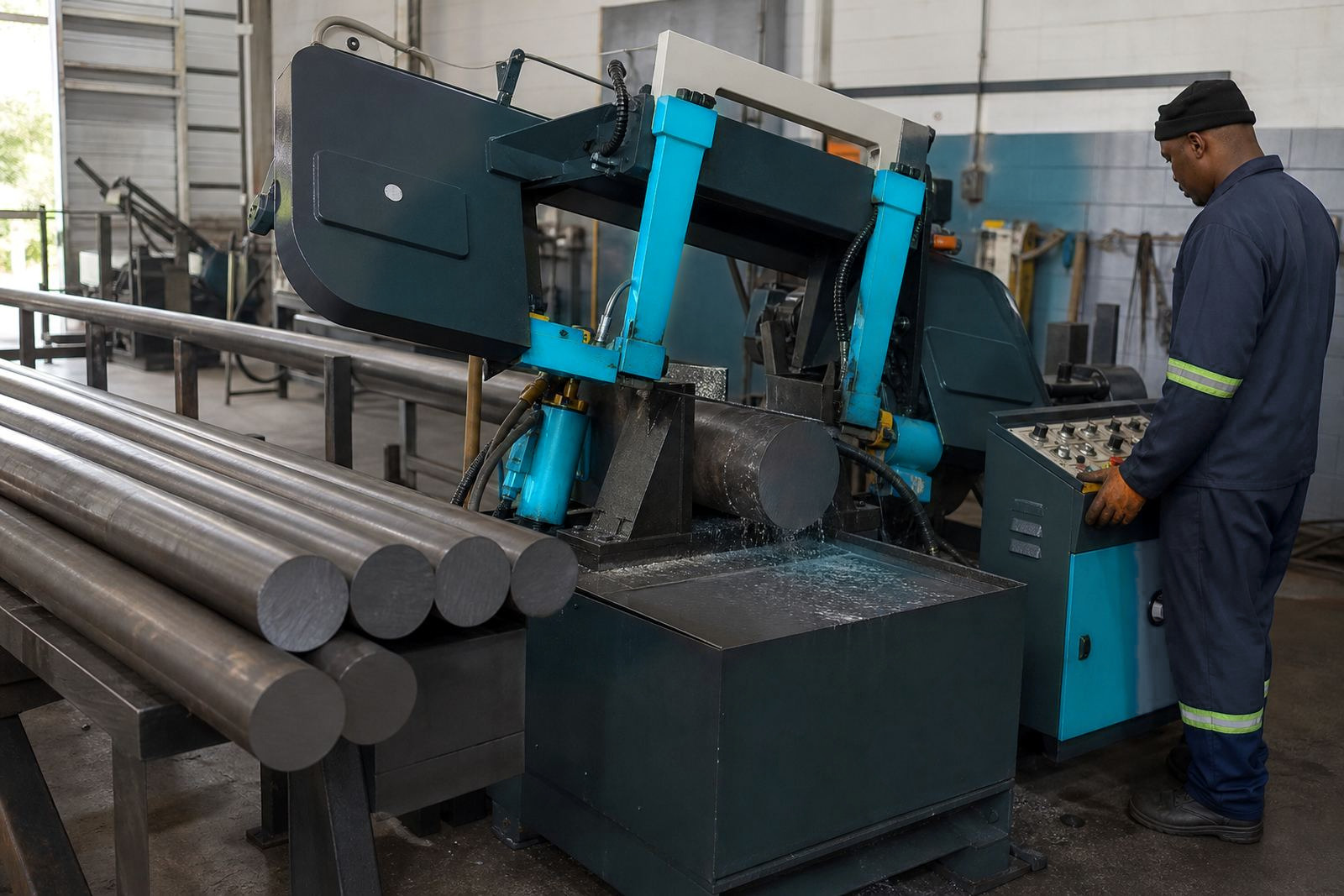
Most workshops cutting structural steel use a horizontal bandsaw for repeat work and a manual hacksaw or power hacksaw for odd pieces, site repairs or small batches. Starter kits can be useful where the stock changes often and the team needs a few blade choices on hand instead of one general option that does everything badly.
For a standard metal workshop in Alberton, the set often includes one coarse pitch bi-metal blade for heavy section, one medium pitch blade for mixed profiles, and a finer blade for thinner wall angle or light channel. Some teams also keep a carbon steel blade for slower manual cutting, where the machine is older and the duty cycle is short. Blade loop weld-to-length service suits a specific saw, and length verification avoids waste from a poor measurement at the bench.
- Horizontal bandsaw for repeat structural cutting.
- Manual saw support for repair work and short runs.
- Starter kit planning for mixed stock sizes.
- Welded loops matched to machine length and guide set-up.
How the cut layout affects the blade choice
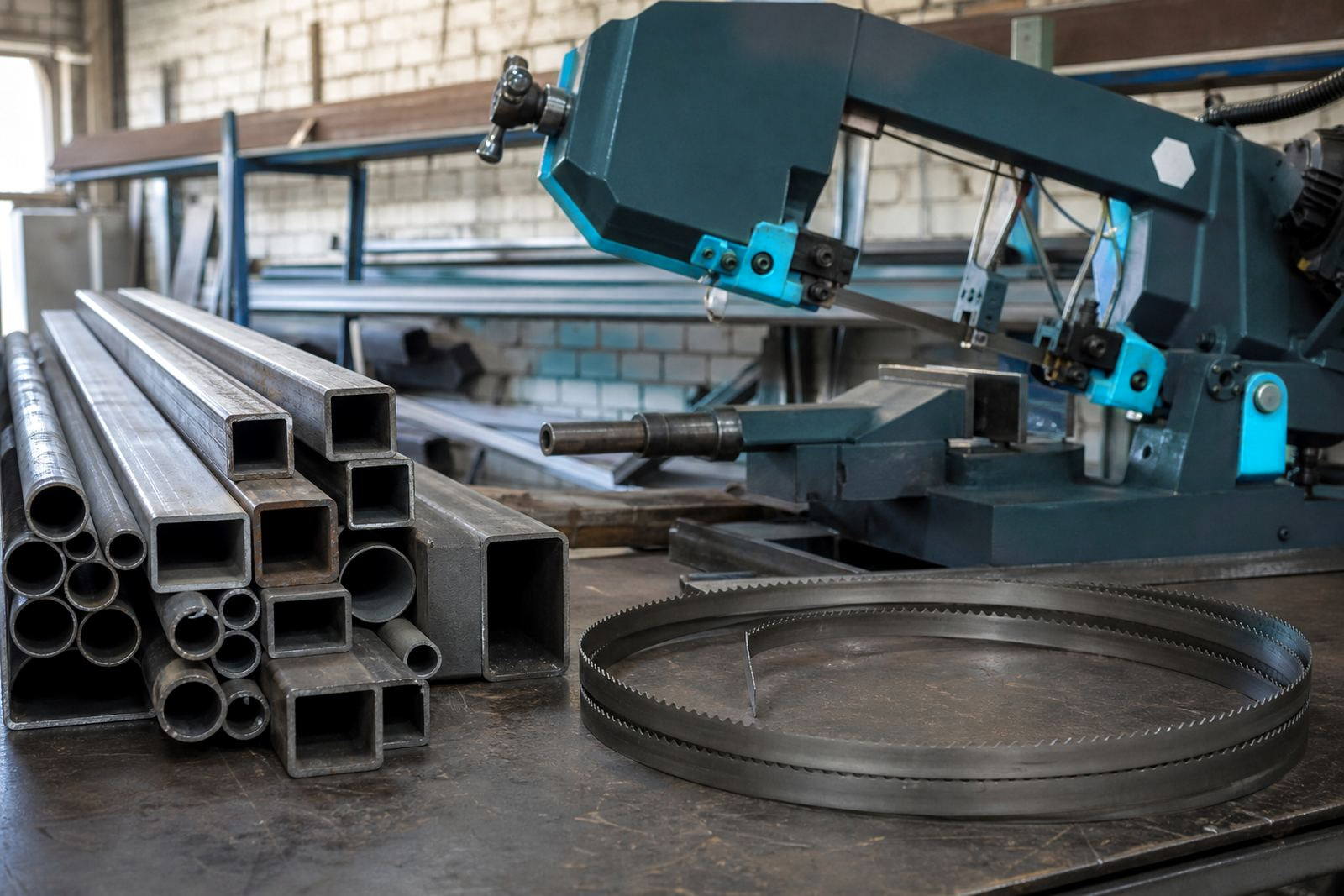
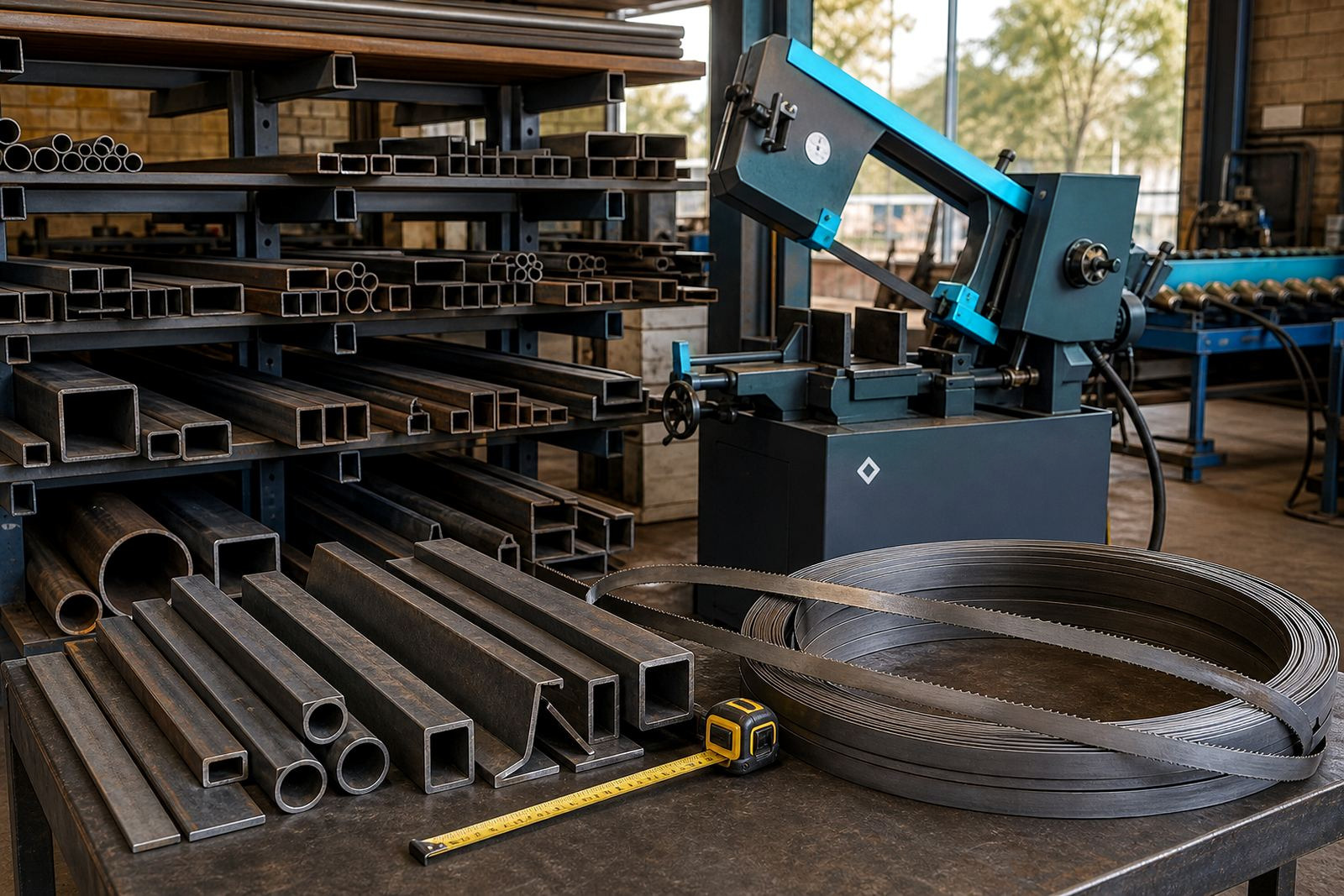
Before the first cut, it helps to look at the stock layout on the rack. Bundled angle can pinch the blade if the clamp is uneven. Channel can trap chips inside the section if the coolant flow is weak. I-beam work may start with a stable face, then shift when the web opens up and the blade leaves the thickest part. That movement changes tooth load and can make a blade sound fine for the first half of the cut, then start chattering near the finish.
Layout planning covers what is on the saw and how the job is stacked and measured. Separating thin wall and heavy section avoids mixing tooth requirements in the same run. Stock standardisation helps too, because a workshop that keeps similar sizes together can work with fewer blade changes and less guessing at the vice.
- Keep thin and heavy sections in separate cutting groups.
- Align bundles so the vice grips evenly across the stock.
- Allow chip escape from channels and box-like shapes.
- Mark repeat lengths before the cut starts.
Mistakes that wear blades out before their time
One of the common errors is using one pitch for every steel section in the yard. Another is pushing the feed too hard because the cut feels slow at the start. On structural work, that first contact can be deceptive. If the operator forces the saw before the full tooth line is engaged, the blade may strip teeth on the leading edge and leave a rough finish that only gets worse with each piece.
Poor coolant control causes its own damage. Dry cutting on long runs raises heat and shortens blade life, while too much fluid without chip clearing can make the gullets pack and rub. A blade failure review often shows the same pattern: wrong pitch, weak run-in, or a machine that is slightly out of alignment. In our base in Alrode, Alberton, blade fit checks are often as important as the blade itself because a good blade on a poor setup still cuts badly.
On price, structural steel blades usually sit in a few budget bands. A basic carbon steel blade can be the lowest-cost option for light manual work, while bi-metal blades for repeat structural cutting generally cost more but last better under steady shop use. Starter kits and welded lengths sit somewhere between those extremes, depending on blade size, pitch and the machine fit. For many workshops, planning the right blade early is cheaper than replacing a blunt one halfway through the batch.
What the team at MoreCut Saws focuses on
MoreCut Saws works with workshops that cut structural steel every day and need plain advice without guesswork. The team looks at the section type, wall thickness, machine style and cut volume, then helps with tooth pitch selection, blade width selection, feed speed advice and coolant checks. If the job shifts from thin angle to heavy channel, the blade choice should shift too, otherwise the teeth spend their life doing the wrong work.
Our team in Alrode, Alberton supports customers across Johannesburg, Vereeniging, Pretoria, Durban and Cape Town, with branches and supply areas that include Alberton Supply, Johannesburg Supply, Pretoria Supply, Vereeniging Supply, Durban Supply, Cape Town Supply, Germiston Supply and Boksburg Supply.