Tube profiles that punish the wrong pitch
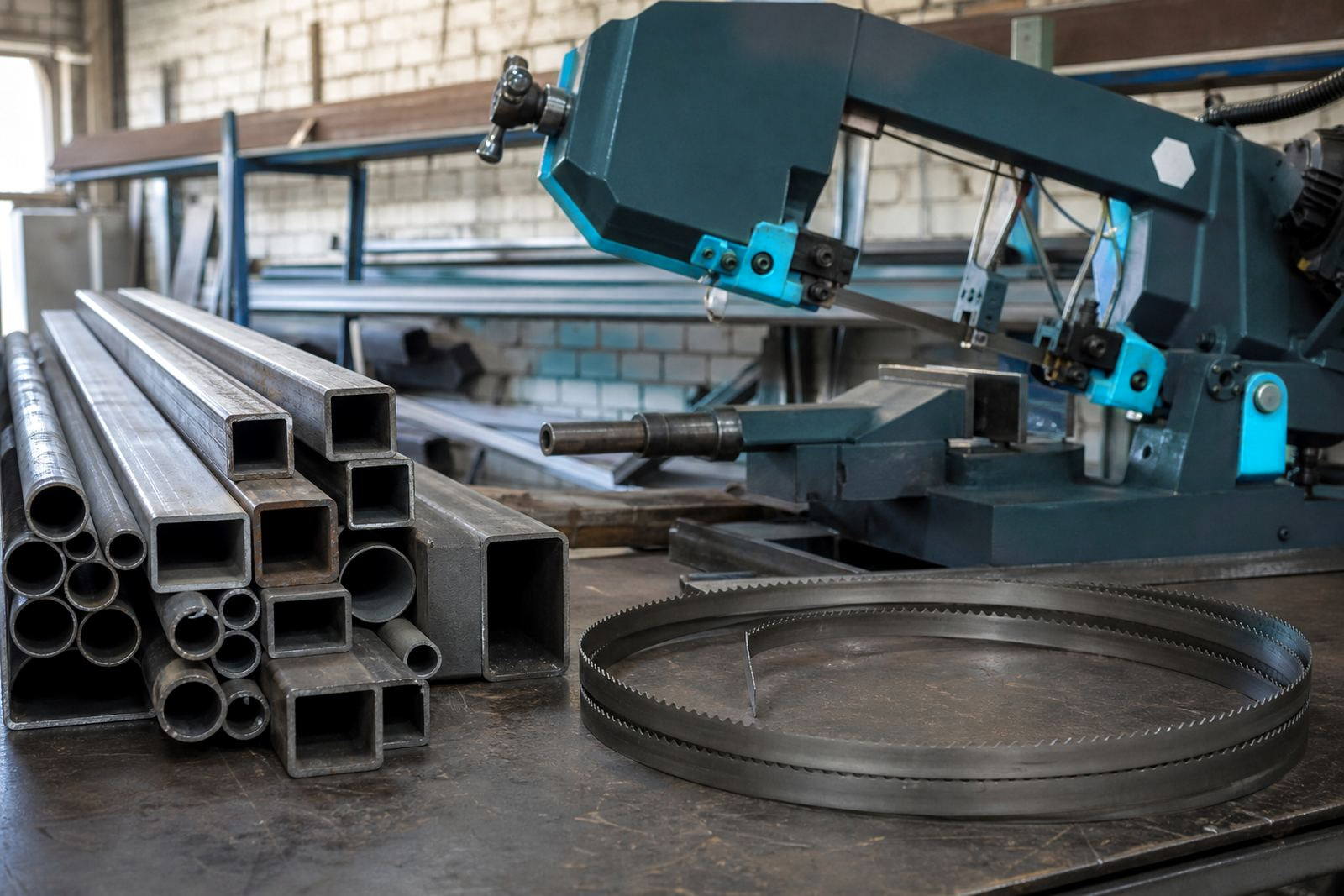
Hollow sections need a steady blade because the wall can guide it and the empty centre can pull it in. Square and rectangular tube put different loads on the teeth because each corner bites harder than the flat side, while round tube keeps the contact more even but still needs the right pitch for the wall thickness.
For thin wall mild steel, a finer pitch helps the teeth stay engaged instead of snagging. On thicker sections, a coarser pitch clears chips better and keeps the cut cooler. Variable pitch blades are useful where a bundle or mixed wall thickness shows up on the same machine, because they reduce vibration and chatter on lighter machines in smaller workshops.
Picking blade width, thickness and tooth form
Blade width and thickness are picked together with tooth pitch. Horizontal bandsaws track straighter with a wider blade and handle repeated tube cuts better, while narrower blades can suit manual saws and tighter guides. For hollow sections, the set of the teeth has to clear the cut without rubbing the sides, especially when the tube is twisted or not fully square.
- Bi-metal M42 blades suit longer runs on steel tube and general workshop cutting.
- Carbon steel blades still have a place for lighter manual saw work and simpler jobs.
- Variable pitch helps when the wall thickness changes within the same batch.
- Thinner blades can improve flexibility on smaller saws, but they need steady guidance.
A machine fit check helps confirm whether the blade width, back thickness and guide setup match the saw. That saves a lot of broken teeth on jobs that should have been routine.
What the cut list should tell us first
When a workshop sends through a hollow section job, the useful details are plain enough: profile size, wall thickness, material grade if known, cut length, and whether the work is single pieces or bundle cutting. Stainless, mild steel and galvanised tube all behave differently, and the surface condition can affect coolant choice and chip removal.
For square and rectangular sections, the cut list should also say whether the ends need to stay clean for welding or whether slight burrs are acceptable. Round tube often needs less correction on the end face, but the same blade can still fail if feed pressure is too high or the run-in is skipped. A tidy list makes length verification easier before the blade is welded to length.
Feed, speed and coolant on real workshop floors
Tube work rewards a steady hand. Too much feed heats the teeth, forces the cut off line and starts folding chips back into the gullets. Too little feed can polish the tooth tips and leave a glazed cut, which is common on thin-wall sections where operators try to be overly cautious.
- Start with a gentle run-in on a new blade.
- Keep chip colour and shape under review during longer batches.
- Use coolant where the machine and cut allow it.
- Watch for vibration on lighter manual saw frames.
Feed speed advice is most useful on mixed work, where one bundle might contain heavy tube and the next thin wall stock. Coolant checks are just as important on coastal work in Durban or Cape Town, where humidity can shorten blade life if swarf and moisture stay on the machine too long.
Common mistakes with hollow section cutting
Most blade failures on hollow sections come from predictable habits. A coarse pitch on thin wall tube strips teeth. A narrow blade on an unstable machine wanders through the cut. A blade that is too wide for the guides rubs, heats and then starts cracking at the weld. The wrong speed leaves the cut rough and the tube ends out of square.
A common problem is handling every hollow section as if it were the same job. Round tube, square tube and rectangular tube do not load the blade in the same way. If the workshop shifts from one profile to another without resetting feed or checking the set, the cut quality changes fast and the blade gets blamed for the setting.
Starter kits and stock that suits mixed tube jobs
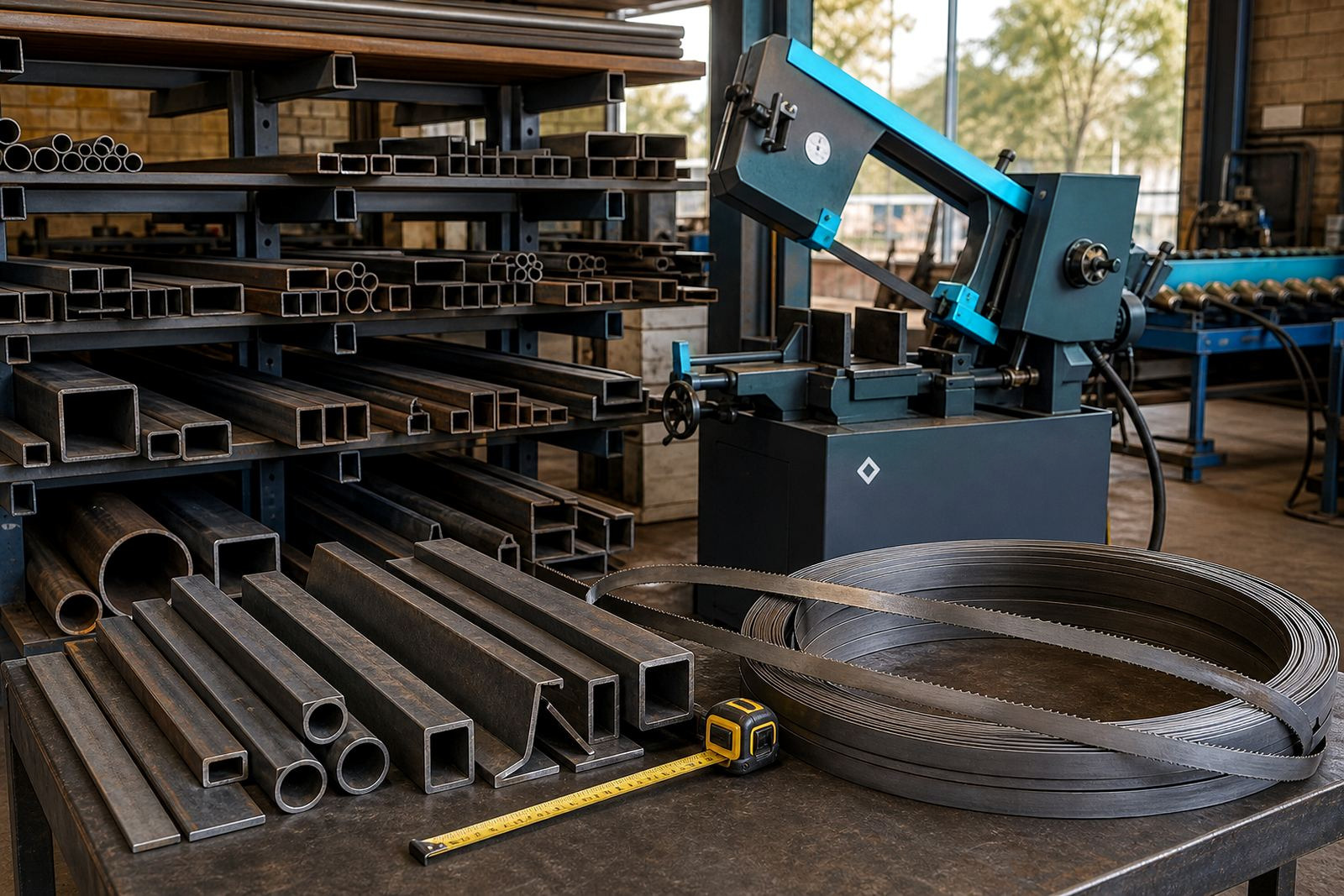
Starter kits are useful where a workshop is setting up to cut hollow sections across mixed sizes. A sensible kit usually carries a few pitch options, a choice of widths, and enough welded lengths to cover the common saw frames in the shop. A simple blade cupboard avoids overbuying sizes that never get used.
For budgeting, many hollow section jobs can be planned with a modest blade spend, but the range depends on material thickness, machine type and how often the blade is run. In Rand terms, lighter manual saw work can sit in the lower hundreds per blade, while longer bi-metal blades for repeated bandsaw cutting can move into the higher hundreds or more, especially when the workshop wants multiple pitches on hand. Weld-to-length service, length verification and stock standardisation help keep that spend organised and consistent.
From our Alrode, Alberton base, we support workshops across Johannesburg, Pretoria, Vereeniging, Durban, Cape Town and nearby trade areas such as Germiston and Boksburg.