Blade fit that starts with the machine, not the pack
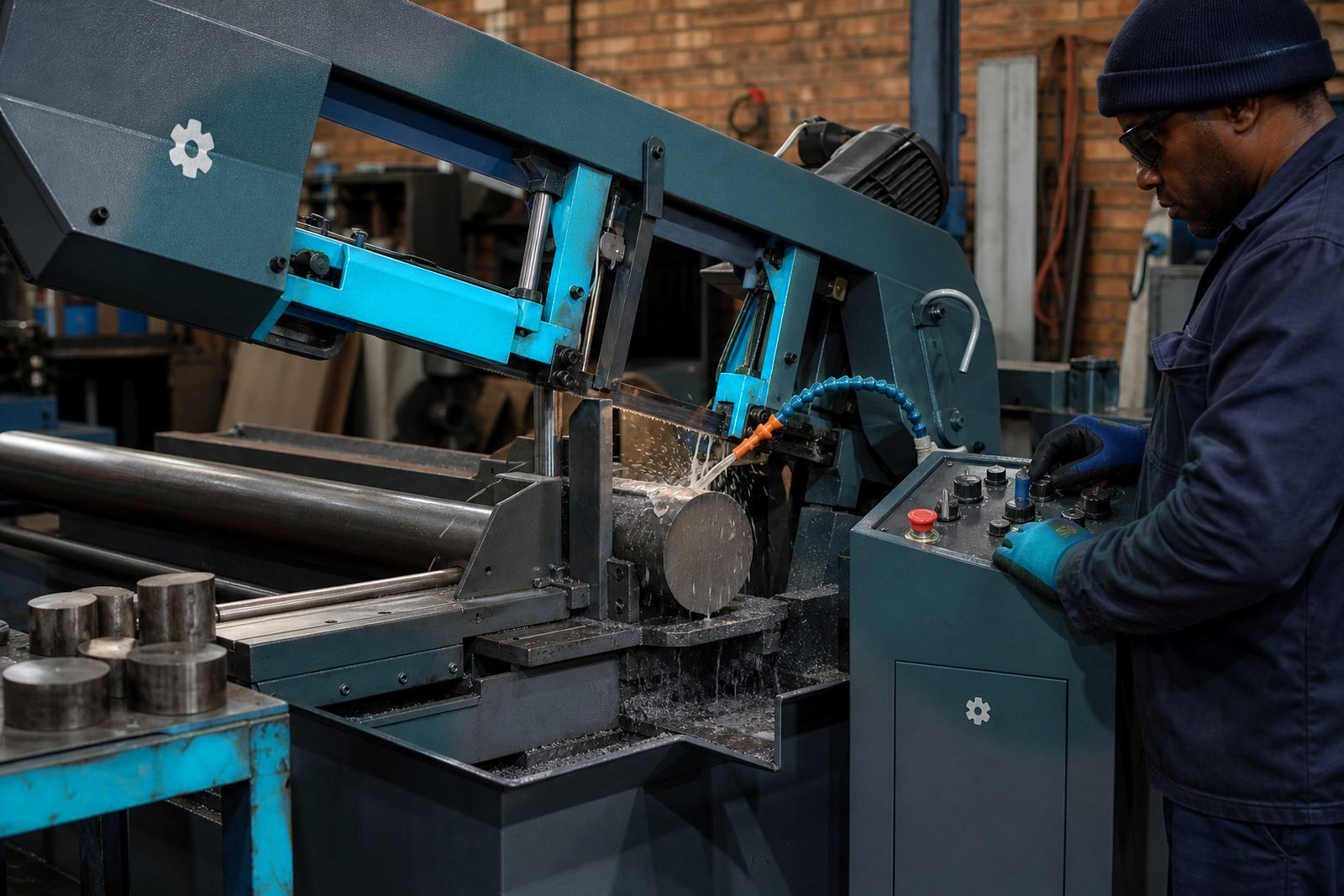
A new loop has to suit the saw frame, wheel diameter, guides and tension range, otherwise the cut wanders or the blade wears in the wrong places. Blade width, thickness, loop length, tooth direction and set are checked against the machine's working envelope, then matched to the material being processed. On bandsaws that run mild steel, stainless, tool steel or mixed offcuts, the fit decision affects straightness, surface finish and blade life from the first cut.
For hacksaw machines we look at the same practical points in a simpler format, with attention to blade length, section thickness and the stroke pattern the machine can carry. A blade that is too coarse on light wall tube will grab, while a blade that is too fine on solid bar can load up and overheat. We help stop those mismatches before they show up on the floor.
- Loop length and machine capacity
- Blade width and thickness for guide support
- Tooth pitch in TPI for the section size
- Variable pitch for mixed bundles or uneven sections
- Set and tooth direction for the cut path
What we look at before the new loop goes in
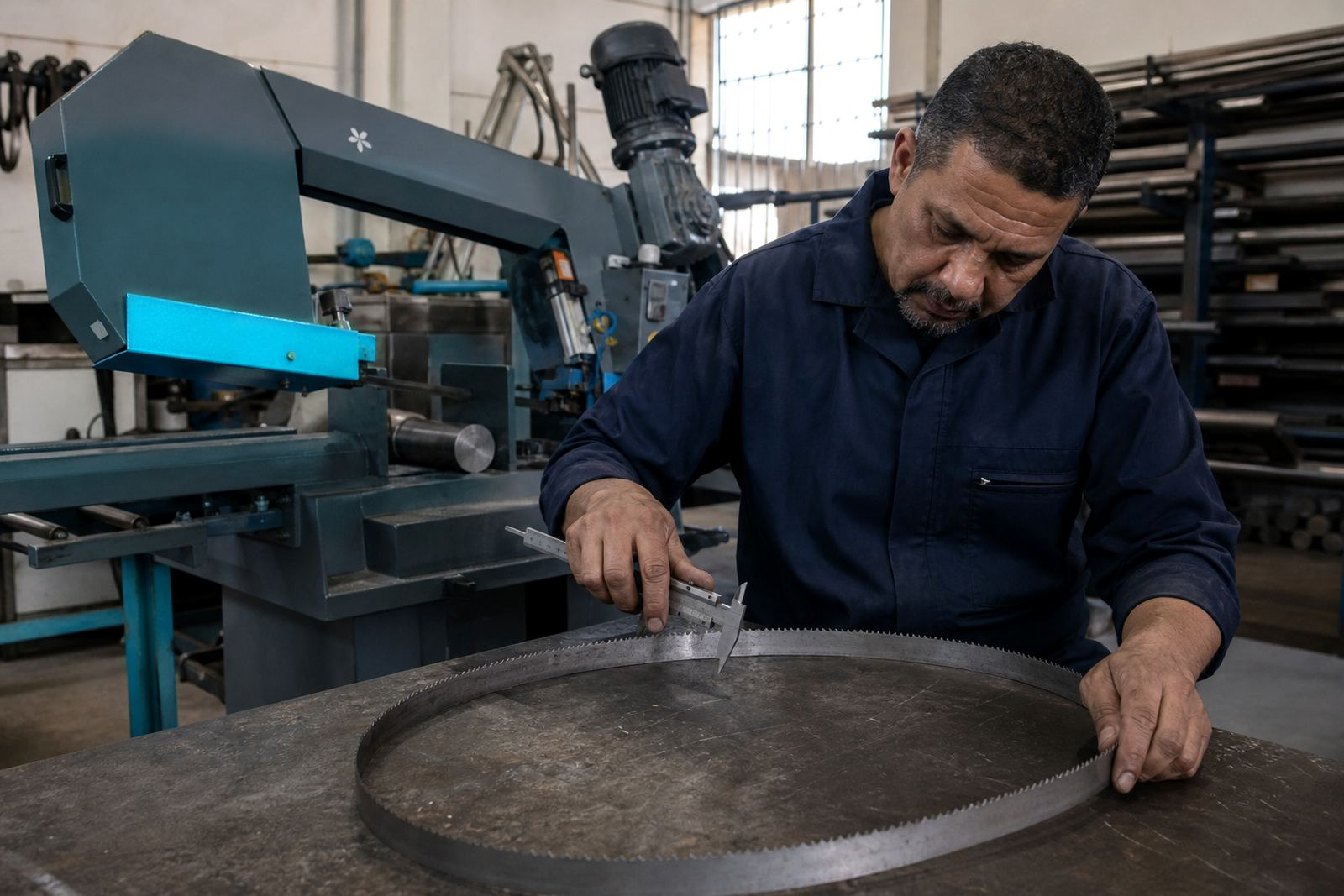
The check is practical and measured. We confirm the blade width against the guide rollers, the thickness against tension and tracking stability, and the pitch against the material grade and cross-section. A bi-metal M42 blade behaves differently from carbon steel, so the fit check also takes the blade body, tooth geometry and intended feed rate into account.
Where the job involves repeated cutting of tube, channel or solid bar, we can suggest a variable pitch blade to reduce chatter and reduce harmonic vibration. For fine-section work, the tooth count needs enough teeth in contact with the material to keep the cut controlled. Feed and speed affect performance too, because even a correct blade can underperform if it is forced through the stock too hard or run too fast for the section.
- Bi-metal M42 and carbon steel blade match-up
- Blade width selection for stability on the guides
- Thickness selection for tension and tracking
- Tooth pitch selection from finer to coarser TPI
- Run-in guidance for the first cuts on a fresh blade
A workshop process that keeps the fit check clear
We start with the machine details, the material list and the type of cut you need. We check whether the saw cuts solid bar, thin wall tube, bundles, angle iron or mixed stock, plus the blade length and any wheel or guide limits. If there is an old blade pattern, we compare it with the new one and check whether the machine has been running outside the clean fit range.
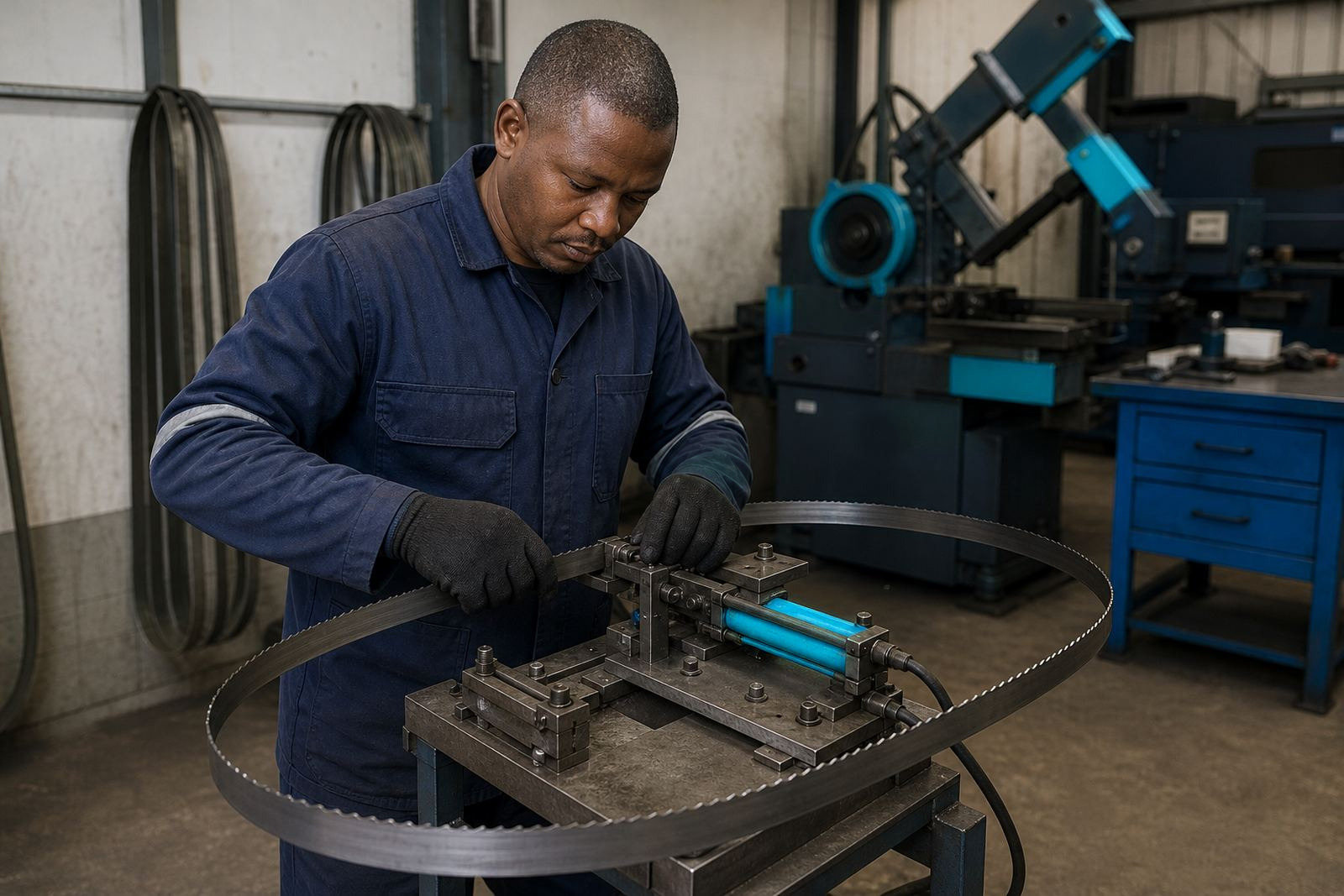
The next step is the dimension check itself. We verify the loop, confirm the blade width and thickness, and look at whether the tooth form matches the cut duty. If the machine has a history of blade breakage, poor tracking or early tooth wear, we note the likely causes and flag the settings that need attention before the next loop is installed.
For workshops that use starter kits or keep a standard blade stock on hand, we can also align the fit check with the blade set they want to keep in store. That makes it easier to keep one standard for a common machine, while allowing exceptions for harder materials, heavier sections or a finer finish requirement.
Fit comes first because the cut starts at the contact points
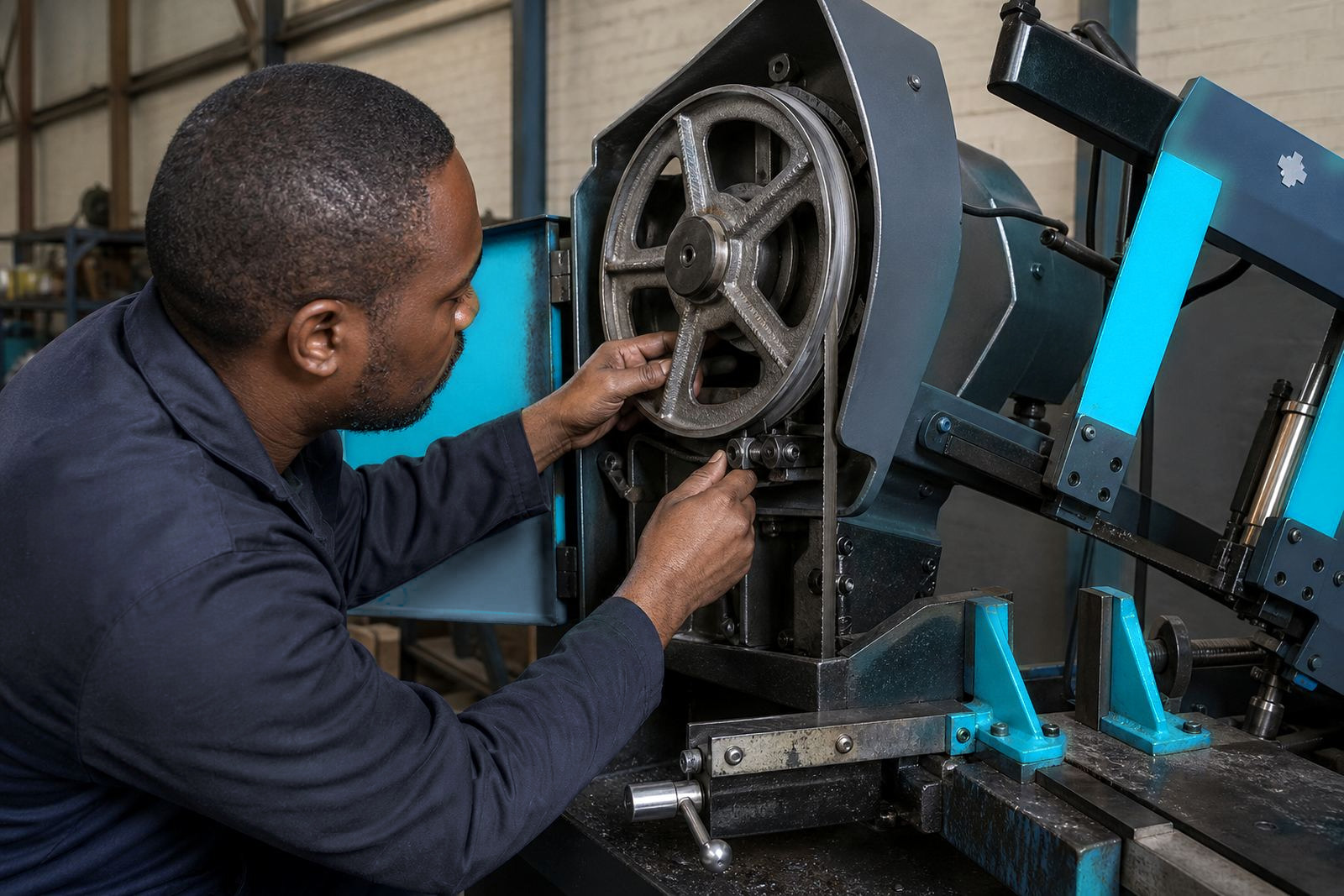
A blade can look correct on paper and still sit badly in the machine if the wheel crown, guide spacing or tension range are off. Too much side pressure will shorten blade life, while too little support lets the blade twist. We also look at coolant use where it applies, since coolant helps control heat, flush fine chips and keep the tooth gullets from loading up during longer runs.
On heavier sections, feed speed advice forms part of the fit check because the blade must enter the work smoothly. A coarse pitch is useful on thick material, but the same blade can chip teeth on thin sections. On lighter tubing, a finer pitch gives better contact and a cleaner finish. We check size and the full cutting picture.
- Guide pressure and wheel tracking
- Blade set and tooth support through the cut
- Feed speed matched to wall thickness and section size
- Use coolant when the saw and the cutting job need it
- Chip clearing and tooth loading control
Pricing based on your machine and blade specification
Our pricing approach depends on the amount of checking needed, the blade type being matched and whether the job includes weld-to-length supply or length verification. A simple fit check for one machine is different from a wider workshop review that covers several saws and several blade sizes. We keep the scope clear so the work on the table matches the invoice on the day.
If the job needs a standard bi-metal loop, a carbon steel blade for manual cutting, or a specific TPI pattern for mixed stock, we price around the chosen spec rather than padding for extras. The same applies where a workshop wants a starter kit planned around a single saw size. You get the fit check, the blade choice and the practical setting notes that go with it.
For Johannesburg, Pretoria, Vereeniging, Durban and Cape Town workshops, the service can be tied to blade supply and blade welding where needed, including standardisation across more than one machine. That helps keep the stock pattern tidy across branches and reduces the chances of the wrong blade ending up on the wrong saw.
Aftercare once the blade is mounted and running
Once the blade is in service, we stay with the practical side of the cut. That can include run-in guidance, feed speed advice, coolant checks and a review of any early tooth damage or tracking marks. If a blade starts pulling, squealing or leaving a rough finish, we look first at fit, pitch and machine settings before treating it as a blade fault on its own.
Where a workshop uses the same saw for different materials, we can help compare the existing blade against the next job so the changeover makes sense. Mixed workshops in Alberton and the wider Gauteng belt find this useful, with days that may move from mild steel to stainless or from tube to solid bar. The better the fit, the less chasing you do later.
- Run-in guidance for fresh blades
- Feed and speed changes for different materials
- Coolant checks where heat build-up shows up
- Blade failure review if tooth wear starts early
- Manual saw support for simpler workshop cutting
Local support from Alrode for workshops across South Africa
Our base in Alrode, Alberton handles machine fit checks for bandsaw and hacksaw users across South Africa, including Johannesburg, Vereeniging, Pretoria, Durban and Cape Town. The team includes Sibusiso Dawood, Anika Nortje, Pieter Moonsamy, Lerato Zungu, Themba Chetty and Chanel Jacobs, with each person working on a different part of the blade and workshop process.
We can work from a single saw, or from a set of machines that need the same blade pattern carried through the workshop. We match machine, blade and material more cleanly, without wasting stock on the wrong size.
Key facts
| Service | Machine Fit Check |
|---|---|
| Blade types | Bi-metal M42 and carbon steel |
| Fit points | Loop length, blade width, thickness, tooth pitch, set |
| Typical pitch range | Fine to coarse TPI, including variable pitch |
| Support covered | Run-in, feed speed, coolant and failure review |
| Base area | Alrode, Alberton |