Matching TPI to the cut you actually need
Tooth pitch is the starting point for a clean cut. Too fine a pitch and the gullets fill before the blade clears the chip, which can burnish the cut face and load the blade hard. Too coarse and the teeth bite unevenly, then chatter starts, especially on thin wall tube and light section. Our tooth pitch selection service looks at the material thickness, section shape and the machine style before we point you toward a suitable TPI range.
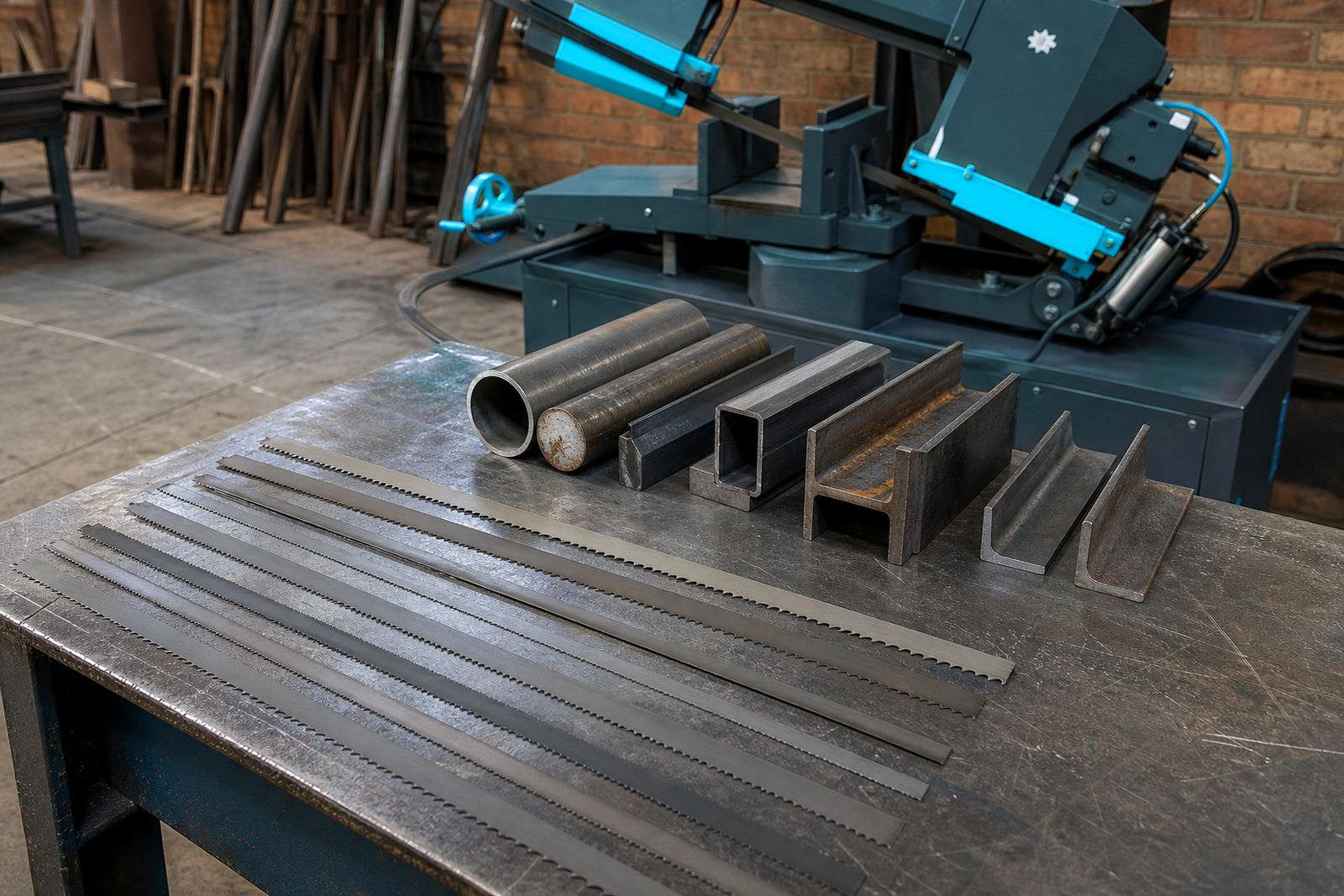
For bandsaw work, we look at the smallest section in the bundle first. A 14 TPI blade may suit thin wall material, while 6 to 10 TPI can work better on heavier wall and solid bar. Variable pitch blades help where the work changes from piece to piece, because the uneven tooth spacing breaks up harmonics and reduces vibration. Workshop cutting needs this when the stock mix changes through the day.
- Thin wall tube usually needs a finer pitch.
- Solid bar and heavy wall section need more gullet space.
- Variable pitch helps on mixed stock and noisy cuts.
- Correct pitch supports longer blade life and straighter feed.
What we check before the pitch is set
Pitch works with blade width, thickness and tooth form. A narrow blade can follow a lighter machine and tighter wheel set, while a wider blade gives better beam strength on larger frames. Tooth set, the sideways offset of the teeth, must clear the kerf without making the blade wander.
On some jobs, bi-metal M42 blades are the better match because they keep an edge well on structural steel, stainless steel and general metalwork. Carbon steel blades still have a place on lighter manual saws, or where the workshop wants a lower-cost option for softer material. We set the advice around the job, not a one-size answer. Feed pressure and blade speed change the cut as much as the blade label does.
- Blade width affects stability and tracking.
- Blade thickness changes rigidity and fatigue resistance.
- Tooth set must suit the material and machine guides.
- Speed and feed must match the tooth pitch chosen.
How the selection process works in the workshop
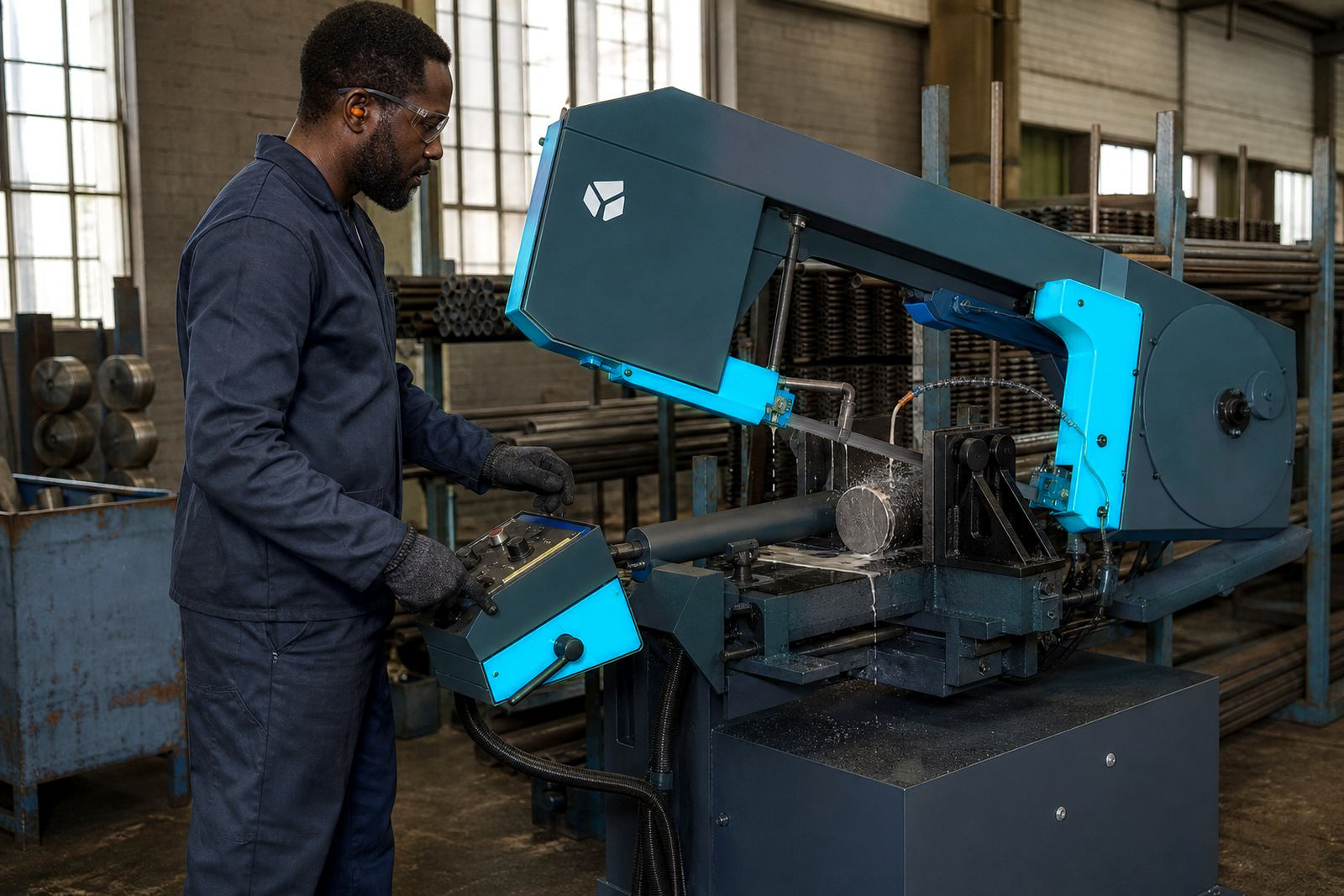
We begin with the material list. That can include round bar, square tube, angle, sheet pack cutting or mixed offcuts. Then we check the wall thickness, the largest and smallest diameters, and whether the job is for a bandsaw or a manual hacksaw setup. If the machine is old, or the guides are worn, that gets folded into the recommendation too. A pitch that works on one saw can misbehave on another if the wheels, guides or tension are off.
The next step is setting a practical range. In many cases, the answer is a working band, such as 8 to 12 TPI or 10 to 14 TPI variable pitch. We also consider run-in, because a new blade should not be driven hard from the first cut. A gentle run-in helps the tooth edges settle and reduces early chipping. If coolant is available, we check whether it is reaching the cut line cleanly and not washing chips back into the kerf.
- Material type and thickness come first.
- Machine condition shapes the final choice.
- Run-in and coolant use are checked where relevant.
- Variable pitch is often useful on mixed work.
Starter kits, standard ranges and blade length service
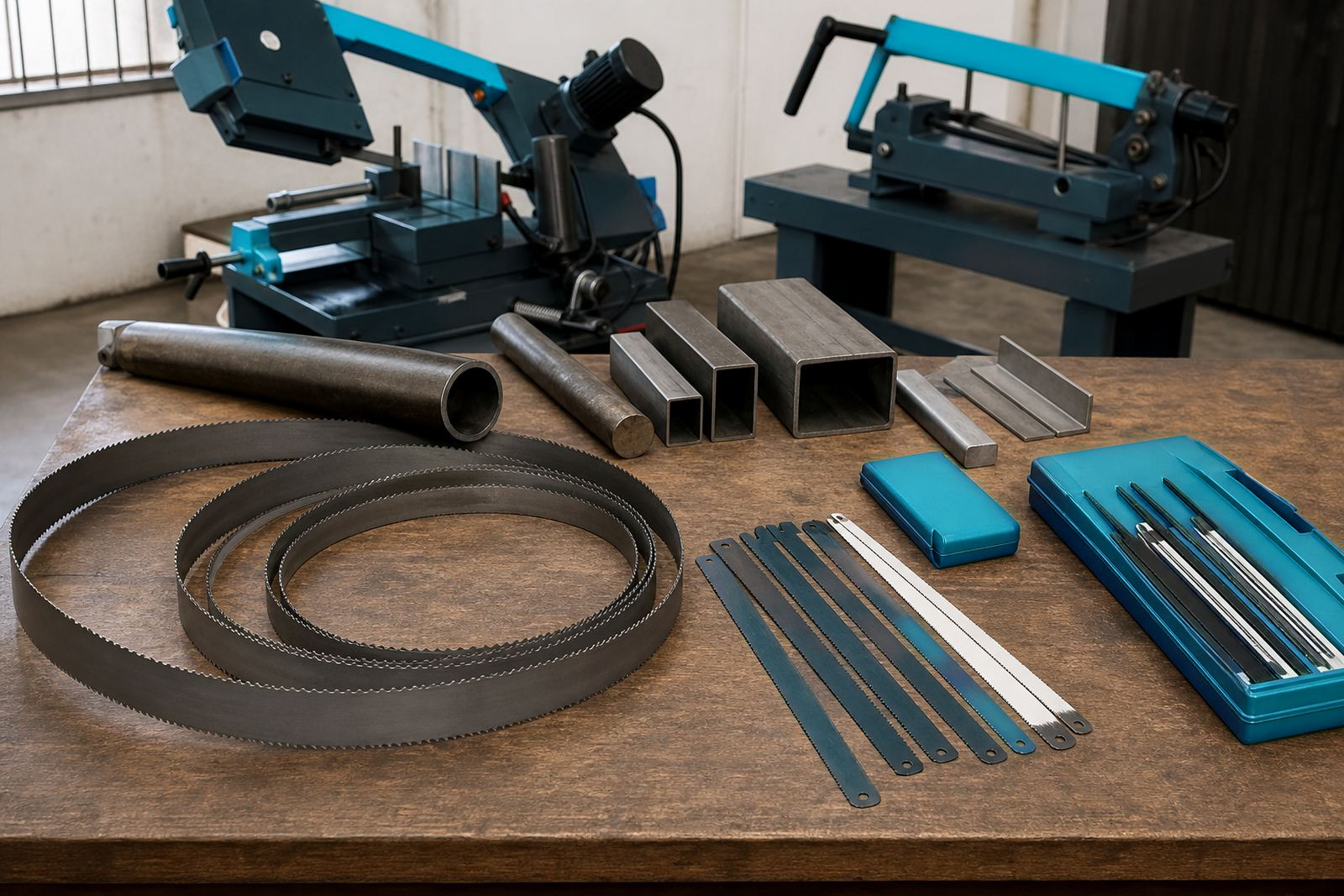
Some workshops need a quick start package and not a one-off blade. Starter kits can combine a few common pitches, a blade width that suits the machine, and a practical length for the frame or hacksaw body. That helps a new operator avoid buying a pile of blades that all behave the same way, or the wrong way. Use it where a shop wants to standardise stock across branches or shift teams.
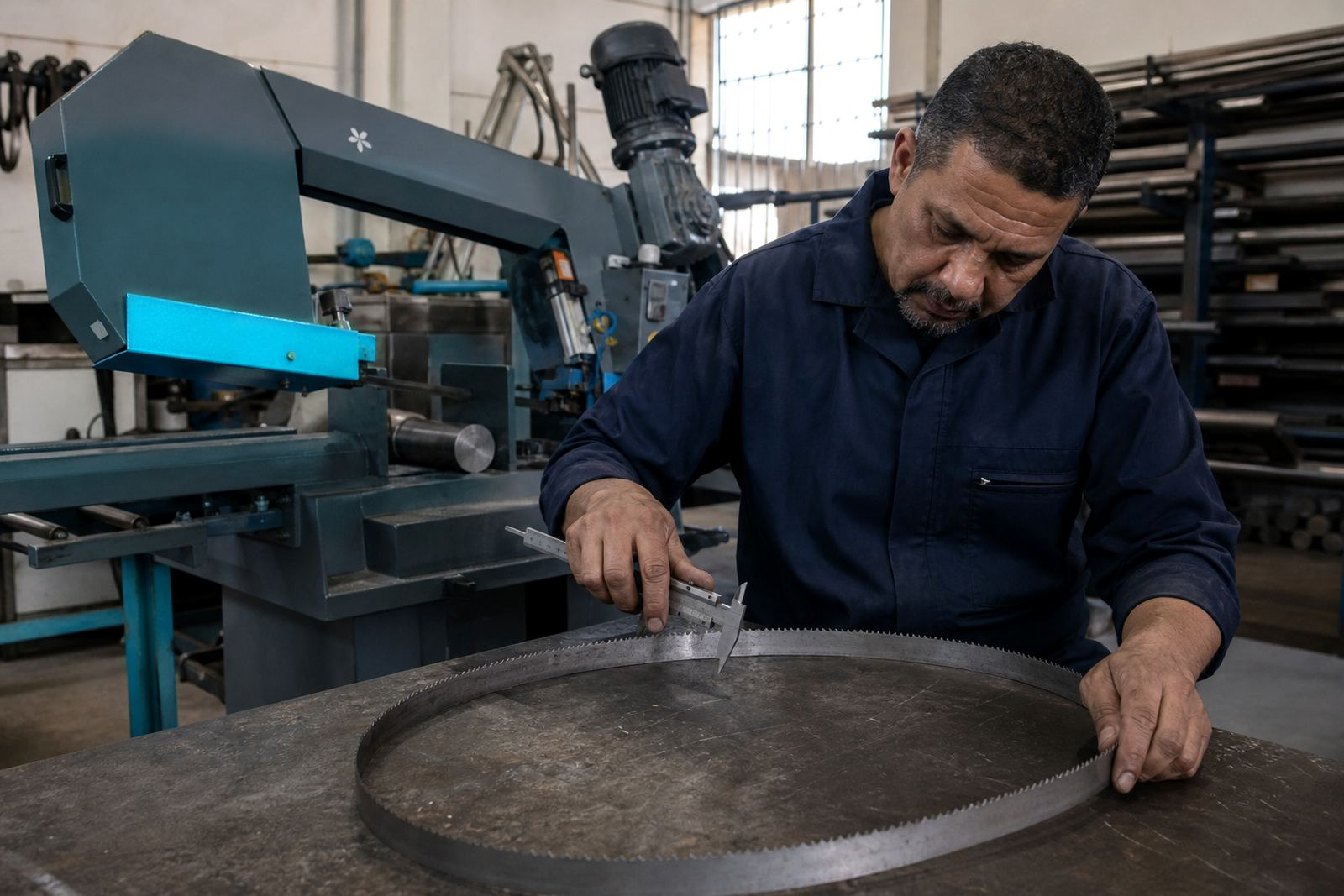
We weld blades to length for local machine sizes and can verify the finished length before dispatch. That service suits workshops that want a blade ready to fit, with the right tooth pitch already set for the intended material. For hacksaw blades, the tooth pitch choice is smaller in scale but the same logic applies. Fine TPI works for lighter sections and harder material, while coarser pitches suit thicker work and quicker chip clearance.
- Starter kits can mix common TPI options.
- Weld-to-length service suits bandsaw frames and workshop sizes.
- Length verification helps reduce fitting errors.
- Manual saw support covers hacksaw blade selection too.
Pricing based on the job
Pricing depends on blade type, size, pitch and whether the blade must be welded to length. A bi-metal blade costs differently from carbon steel, and a variable pitch pattern may sit in a different bracket from a standard tooth count. The price also changes with blade width and thickness, because more material in the backing strip and tooth line affects the finished blade. We keep the pricing conversation tied to the actual cutting duty.
For many orders, the most practical way to quote is by the blade spec and the quantity needed for the workshop. If the machine is cutting abrasive stock, has poor alignment or needs a special length, that affects the final cost too. A poor fit can waste money faster than a slightly higher spec blade, so machine fit is part of the value discussion. It is the same with coolant use and feed pressure, both influence blade life and cut quality.
Aftercare once the blade is on the saw
Aftercare starts with the first few cuts. We look at the chip shape, the sound of the cut and whether the blade is tracking straight. If the teeth are polishing instead of cutting, or if the blade is pulling to one side, the pitch may be wrong or the feed may be too light. If the blade is stalling and leaving a rough face, the gullets may not be clearing chips properly.
We also help with blade failure review when a blade snaps early, wears at one point or chips teeth across the length. That review can point to pitch mismatch, incorrect tension, poor coolant delivery, worn guides or a machine that is not square. Leave the workshop with a blade choice that makes sense for the stock in hand, and a clearer way to repeat that choice next time. Small changes in TPI, feed and speed often make a marked difference.
- Check cut sound, chip shape and face finish.
- Look for tracking issues or tooth wear patterns.
- Review failures for pitch, feed or coolant causes.
- Use the next blade spec with better confidence.
Key facts
| Service | Tooth Pitch Selection |
|---|---|
| Blade types | Bi-metal M42 and carbon steel |
| Pitch range | Fine, coarse and variable pitch TPI |
| Related checks | Blade width, thickness, set, run-in, feed and speed |
| Service area | Alrode, Alberton and workshops across South Africa |
| Support options | Starter kits, weld-to-length, length verification and machine fit check |