Blades cut to the machine length that actually fits
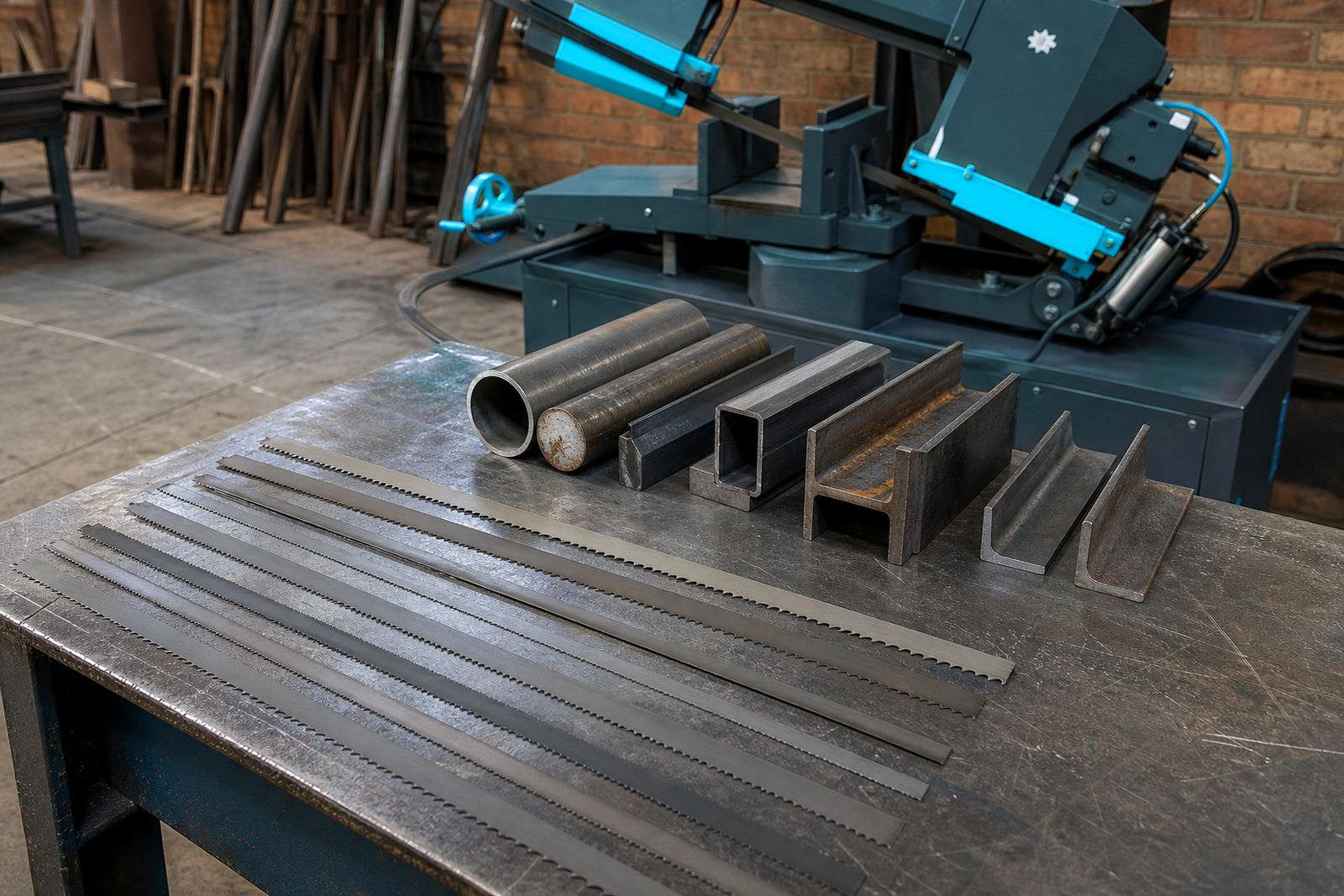
Besides length, tooth pitch, hook or neutral tooth form, set and blade width all shape how the blade enters the work and clears chips. Fine pitch blades suit thin wall tube, solid bar in smaller diameters and mixed bundle cutting. Coarser pitches suit heavier sections that need chip clearance more than a fine finish.
Variable pitch blades help when material changes section size through the cut or when chatter shows up on a manual feed machine. Blade thickness also has a part to play. A thinner blade can track a tighter wheel diameter, while a wider blade gives more beam strength on straighter, heavier cuts. The right choice depends on the saw, the cut height, the vice and the material grade.
- Bi-metal blades for production cutting and harder materials
- Carbon steel blades for lighter work and manual saws
- Variable pitch options to reduce vibration on awkward jobs
How the weld-to-length process runs
Metal cutting blades need the right setup. Tooth pitch is usually spoken about in teeth per inch, or TPI, and the right range depends on the section being cut. Thin tube often needs a finer pitch so more teeth stay in contact. Heavy solid stock usually needs a coarser pitch so the gullets clear chips instead of packing up. Mixed bundles can call for a variable pitch blade to soften vibration and reduce tooth stripping.
Blade width and thickness need the same attention. Narrower bands suit small wheel diameters and tighter tracks. Wider bands are better where straight cutting and beam strength are needed. The blade set, meaning the way the teeth are angled to clear the cut, should stay even across the loop. If the set is uneven, the saw may pull to one side or leave a rough kerf.
- Fine TPI for thin sections and tube
- Medium to coarse TPI for solid bar and heavy section
- Correct set to help the blade track true through the cut
Turnaround and pricing without surprises
Weld-to-length pricing is usually based on the blade type, loop length, width, thickness and the welding work needed. Extra checks such as length verification, machine fit checking or a blade failure review can change the scope if the saw has been chewing edges, cracking welds or drifting off line. Starter kit planning can also be added when a workshop wants a known mix of blade sizes for routine jobs.
For workshops in Alrode, Alberton and across Johannesburg, Vereeniging, Pretoria, Durban and Cape Town, we send out a blade that matches the machine and the cut list first time. That means less trial and error at the saw and fewer blades wasted because the pitch or width was off. Where stock standardisation is needed, the same blade family can be used across more than one saw if the wheel size and drive conditions allow it.
- Pricing reflects blade grade, size and welding work
- Scope can include verification and fit checks
- Standardised blade mixes can reduce workshop confusion
Aftercare once the blade is fitted
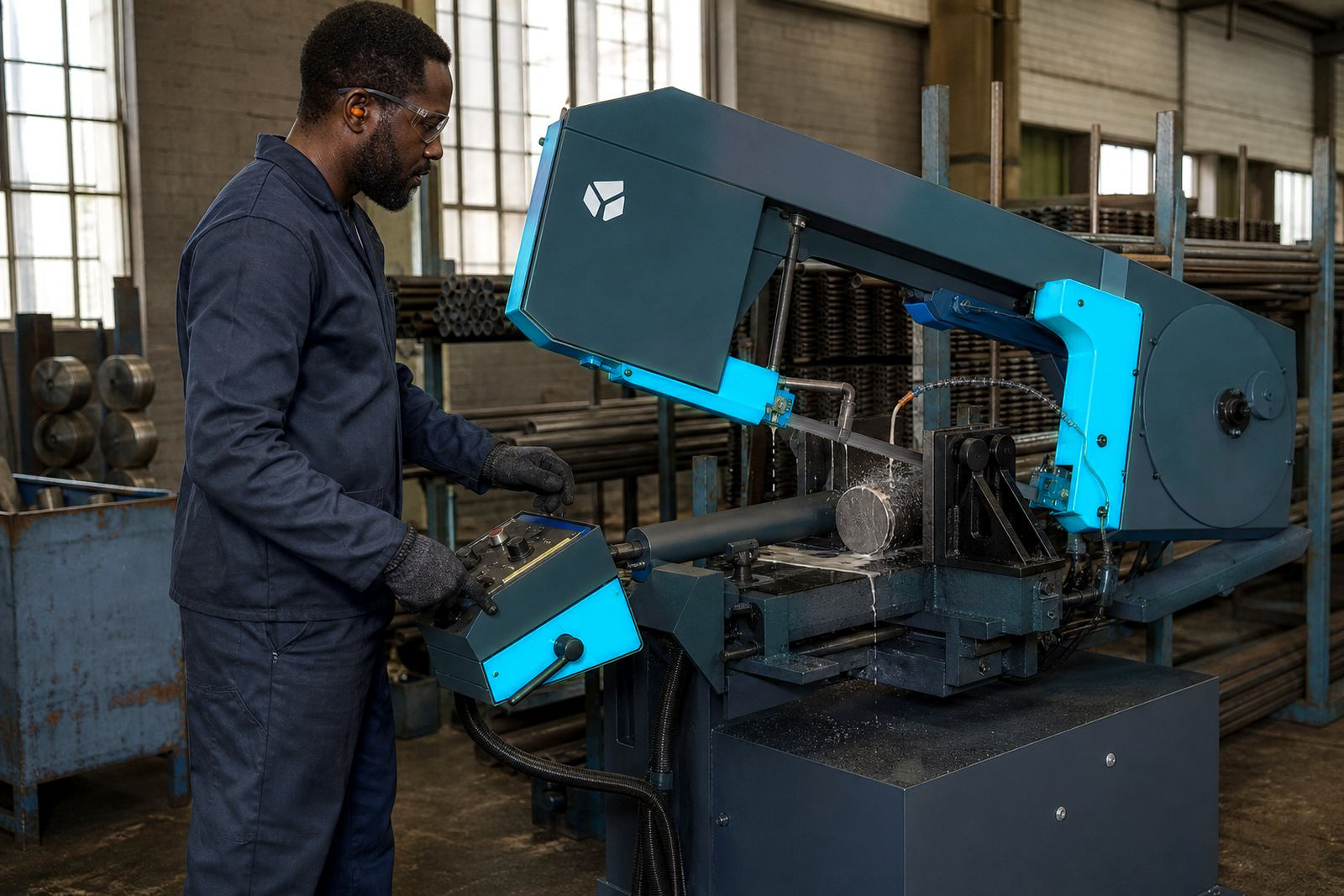
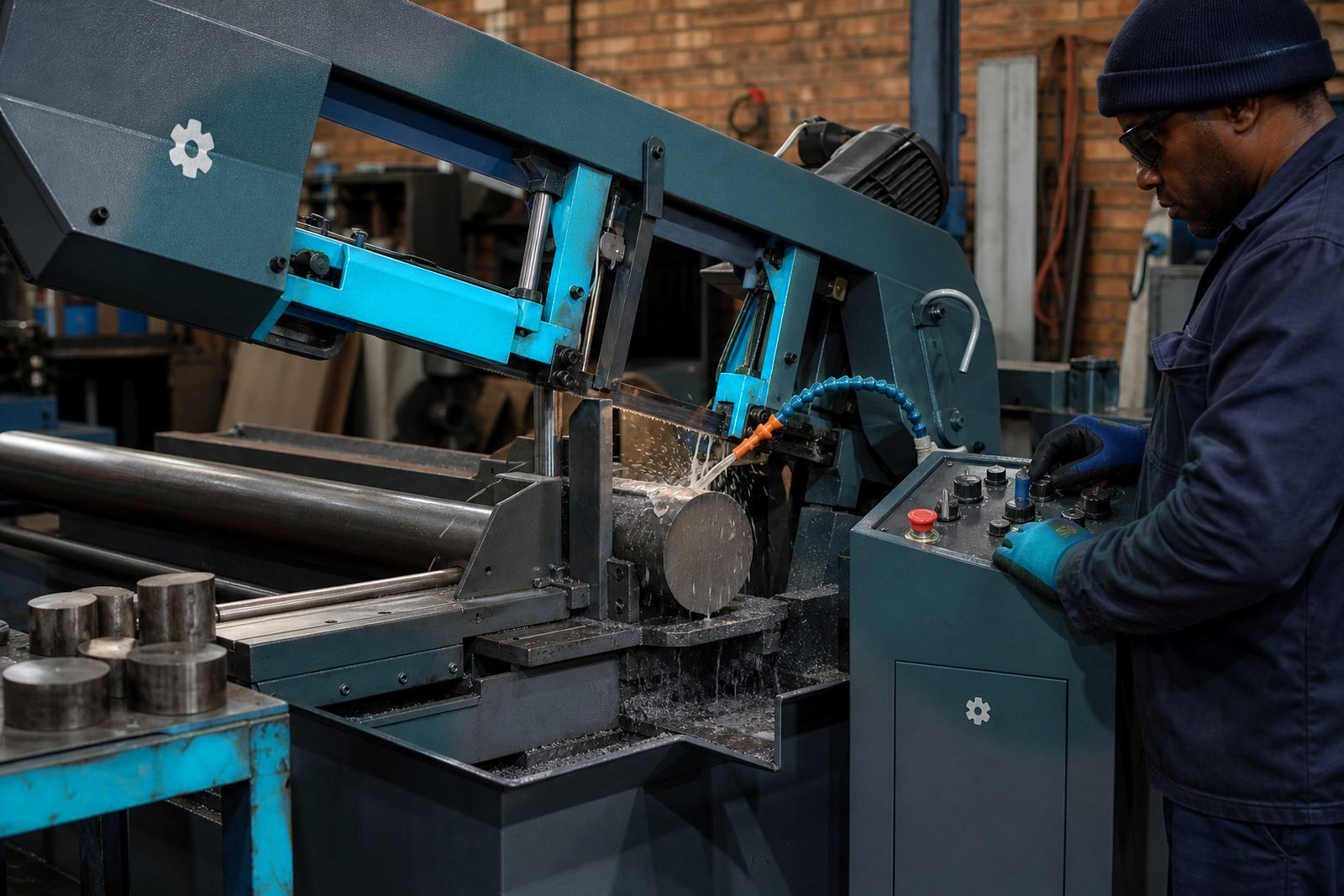
Once the welded blade is on the machine, a fresh blade should be run in with lighter feed and a controlled cutting speed. That protects the tooth tips and lets the edge settle before full production work. Use coolant on tougher steels and long cuts where heat builds fast. A clean coolant flow helps with chip washout and can limit tooth wear on stainless, tool steel and thicker mild steel section.
If a blade breaks early, cuts crooked, or leaves a rough finish, the cause is often outside the weld itself. Feed speed, guide alignment, wheel condition, poor clamping or the wrong tooth pitch can all be involved. Blade failure review looks at those signs and the cut marks left on the work. Manual saw support is available where the operator needs help with blade selection or with matching the blade to a hand fed machine.
- Run-in guidance for new blades
- Coolant checks for heat control and chip clearing
- Failure review when the cut pattern points to setup trouble
Key facts
| Service | Weld-To-Length |
|---|---|
| Blade types | Bi-metal M42, carbon steel |
| Length work | Blade coils cut and welded to required machine length |
| Selection checks | Tooth pitch, blade width, thickness, set, machine fit |
| Support | Run-in guidance, feed speed advice, coolant checks |
| Coverage | Alrode, Alberton and workshop deliveries across South Africa |