What gets checked before a blade is supplied or welded
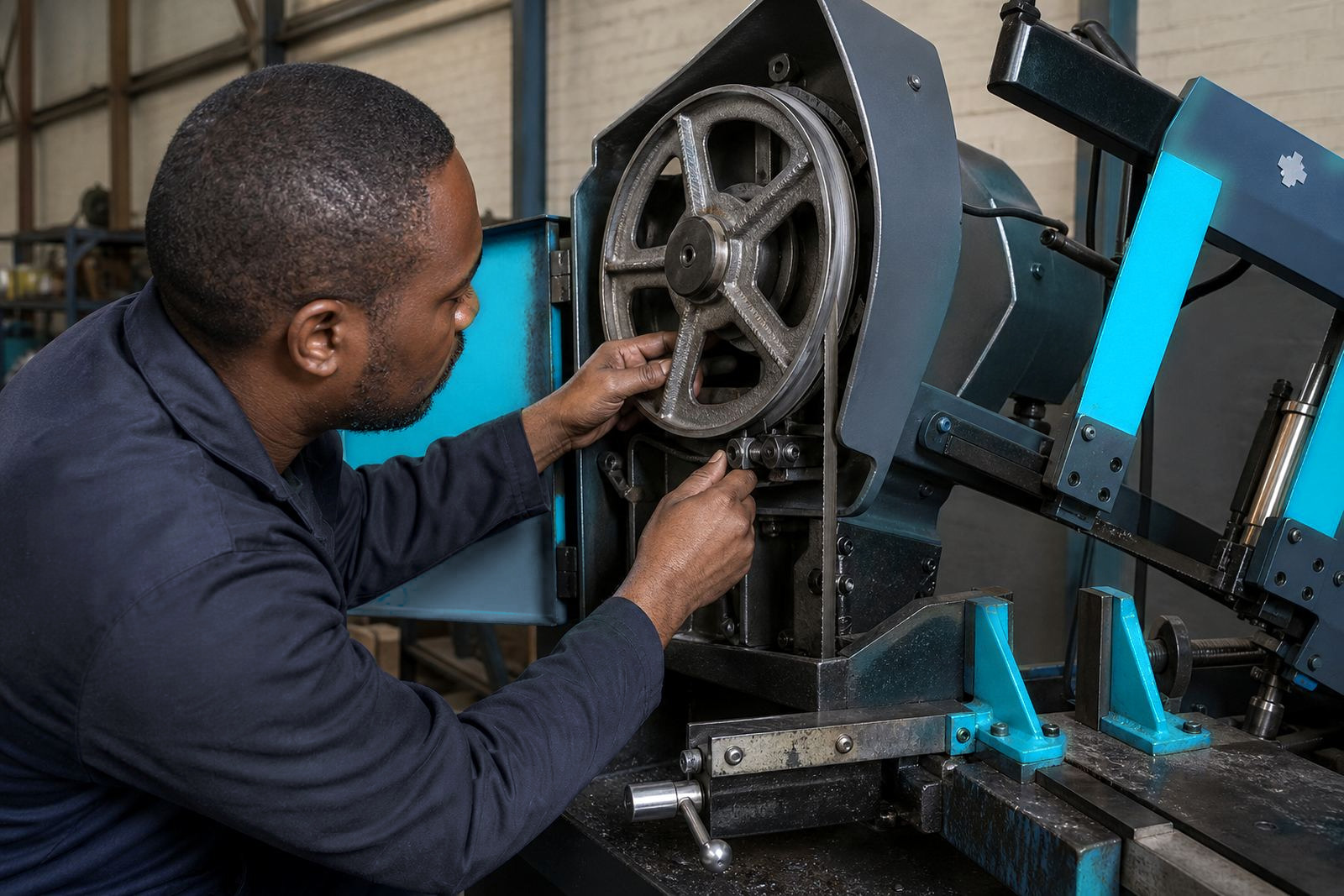
We compare the machine details against the blade requirement, then check the working length that the saw actually needs. That means wheel diameter, centre distance, blade path, guard space, tension range and any guide position that affects the finished loop.
For bandsaws, the blade length must suit the frame and tension travel or the blade can run short, sit loose, or force the wheels into a bad position. On hacksaws and manual saws, the blade length and hole or clamp arrangement need to match the holder and stroke, otherwise the blade can flex unevenly and wear at the ends.
- Machine model details where available
- Wheel diameter and centre distance
- Blade width, thickness and kerf needs
- Tooth pitch or TPI for the material
- Clamp, guide and tension allowance
How the length check is done in practice
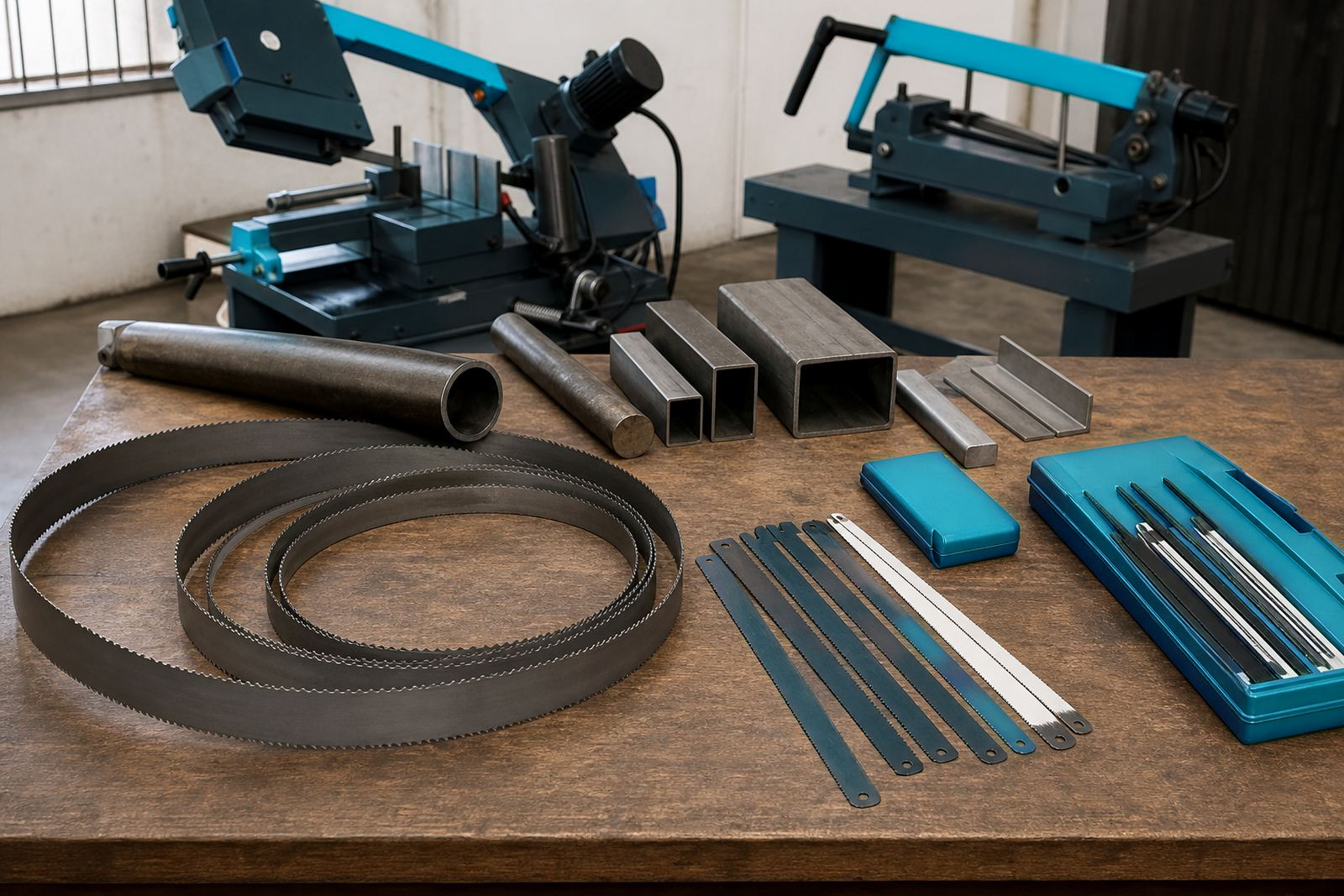
We start with the machine dimensions and the cutting job, then match those against the blade type chosen for the material. Mild steel sections, solid bar, angle, tube and mixed scrap all ask for different tooth pitch and blade width, so the length check sits alongside the cutting choice instead of being treated as a separate formality.
For bi-metal blades, keep the loop true enough for stable cutting while still giving the tooth set room to clear swarf. Carbon steel blades are more forgiving on lighter work, but they still need the right length if the saw tension is to stay in range. If the loop is too long or too short, the blade can wander, heat up or break early.
The same check also helps when a workshop is changing from hand cutting to powered cutting, or moving between machines in Johannesburg, Pretoria or Durban. A blade that fits one saw may be wrong for another frame even if the width looks similar.
Details on a real workshop saw
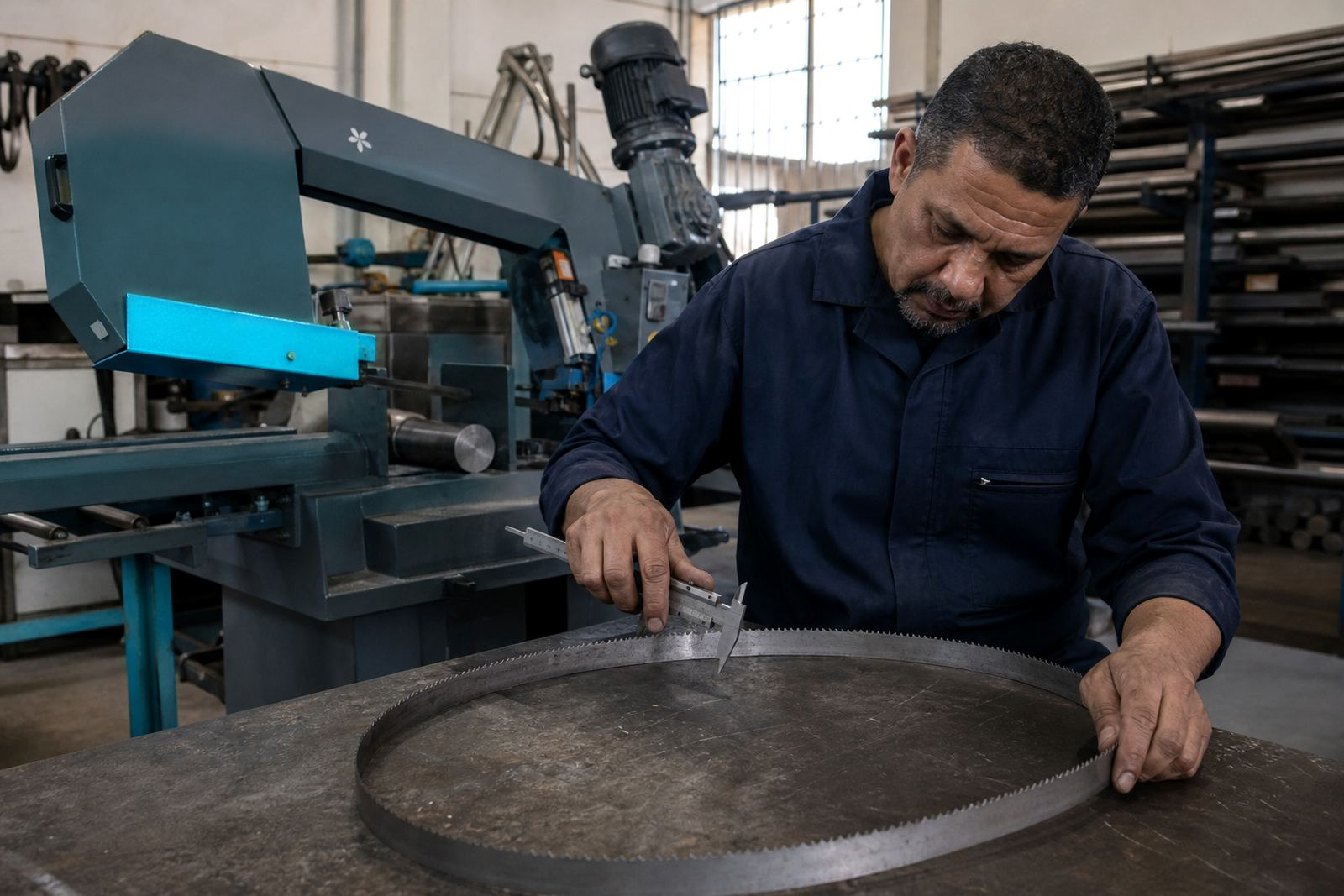
Several small measurements decide whether the blade runs properly. A few millimetres can throw out older machines, especially where the guides are worn or the wheels are not perfectly aligned. We also look at the material thickness, because the tooth pitch and blade width need to suit the work and the machine.
- Blade length in millimetres or inches, confirmed against the saw
- Blade width, from narrow section work to wider general-purpose cutting
- Blade thickness, chosen to balance flexibility and tracking
- Tooth pitch, including variable pitch where chatter needs control
- Run-in guidance for a fresh blade
- Feed and speed advice for the cut load
- Coolant checks where the machine uses a wet cutting setup
On metalwork with mixed wall thickness, variable pitch can help reduce vibration, while a fixed pitch may suit repeat cutting on the same section size. If the set is too aggressive for the saw, the blade may bite hard at one point and then rub at the next.
What the service includes at MoreCut Saws
Length Verification is part of our blade selection work for workshops, fabrication benches and maintenance teams. It is useful when the old blade has been lost, the machine plate is missing, or the job moved to a different saw and the old length note no longer helps.
- Check of machine details against the required blade length
- Match to bi-metal or carbon blade stock
- Selection support for tooth pitch and blade width
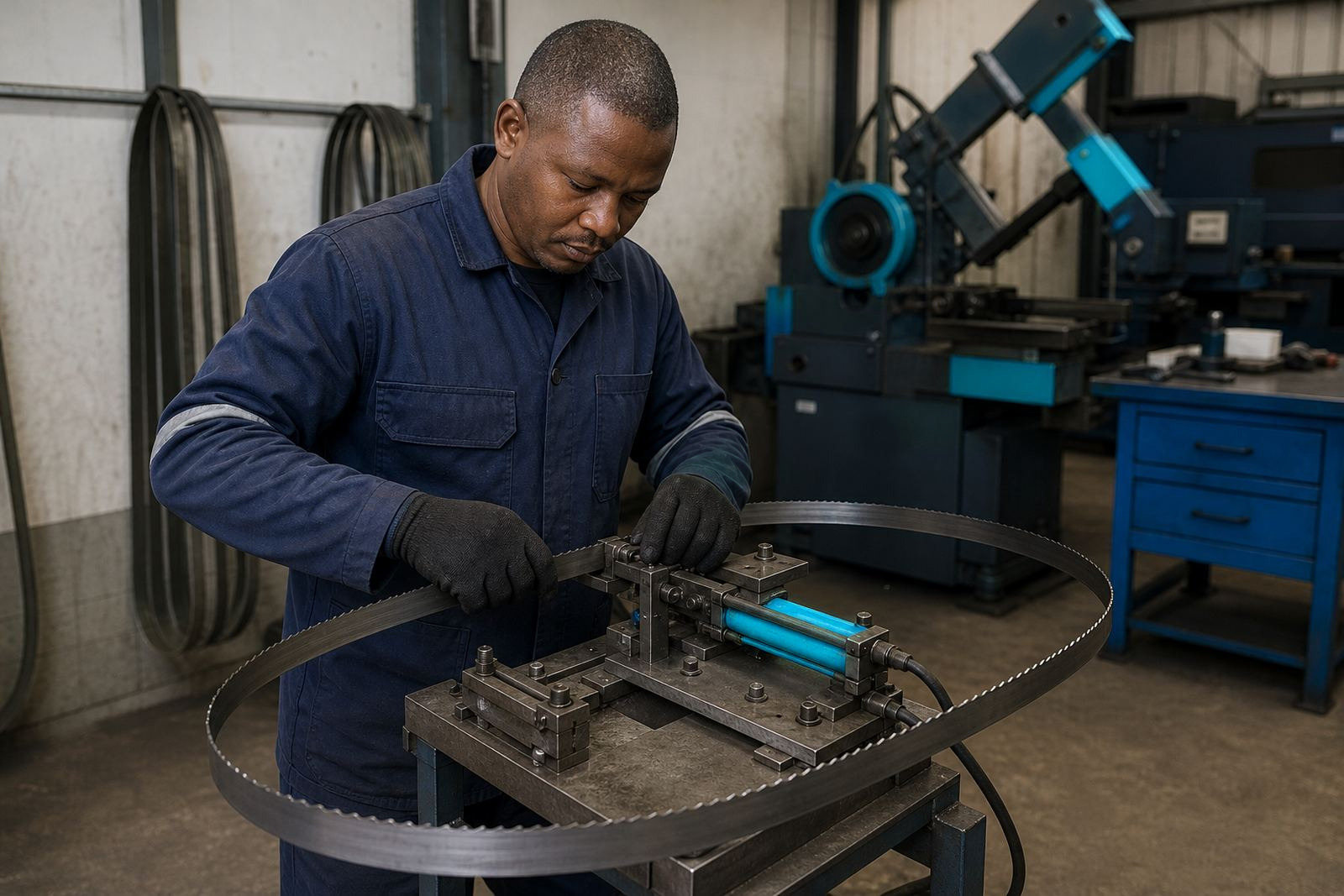
- Weld-to-length preparation where a loop is needed
- Starter kit planning for new or changing workshops
- Manual saw support for clamp based machines
Where a blade is to be welded to length, the final loop must suit the machine and allow the weld area to pass the guides cleanly. A poor length check can leave the weld sitting badly in the guide path, which is a nuisance on both light and heavy frames.
Turnaround, pricing approach and workshop planning
Pricing is based on the blade type, the length work needed and whether the order is a stock cut, a welded loop or part of a starter kit. The labour involved in verifying and preparing the blade is considered with the material choice, since a bi-metal blade for production cutting is priced and handled differently to a simple carbon blade for lighter manual use.
For larger workshops, we can standardise lengths across similar machines so the stores room holds fewer odd sizes. That makes blade control easier, especially where Johannesburg, Vereeniging and Boksburg sites share the same cutting list but use different saw frames. Standard lengths also help when the team wants fewer emergency substitutions on the floor.
If the job needs weld-to-length supply, the blade length, tooth pitch and width are checked together before the weld is made. That reduces rework and keeps the machine set-up aligned with the actual cutting job.
Aftercare once the blade is on the machine
After the blade is fitted, we can talk through the first cut, the run-in and the signs that the length or tension needs another look. A fresh blade should not be pushed hard from the start, because the tooth edges need a short settling period before full feed is used.
We also look at the common causes of early failure: incorrect tension, poor guide setting, feed that is too heavy, speed that is too fast for the material, or coolant that is not reaching the cut. On wet cutting machines in humid coastal areas like Durban and Cape Town, coolant condition and blade rust cause more trouble than many shops expect.
If a blade begins to track badly, a length check helps narrow the cause. It may be the blade loop, or it may be machine wear, guide position or a tooth pitch that never suited the job.
Who uses this service across South Africa
Length Verification suits fabrication shops, maintenance teams, contract cutters and workshops that move blades between machines. It is also useful when a site buys starter kits for new operators and wants the blade length recorded properly from the start.
We support enquiries from Alberton, Johannesburg, Pretoria, Vereeniging, Durban, Cape Town, Germiston and Boksburg, with the same practical checks whether the order is a single blade or a store room programme.
That approach helps avoid the common workshop problem of a blade arriving near right but not quite usable, which is a costly way to learn the difference between a guess and a measured fit.
Key facts
| Blade types | Bi-metal M42, carbon steel, manual saw blades |
|---|---|
| Length work | Verification against machine details before supply or weld |
| Tooth options | Fixed pitch and variable pitch |
| Sizing factors | Width, thickness, tension range, guide clearance |
| Cutting guidance | Run-in, feed speed and coolant checks |
| Service areas | Alrode, Alberton plus major South African workshop centres |