Blade supply for Vereeniging workshops that keep material moving
Vereeniging workshops often work with mild steel section, solid bar, tube, plate offcuts and repair work that changes from one shift to the next. Right blade specs affect cut quality and blade life, with tooth pitch, blade width and material choice all shaping how cleanly the cut runs.
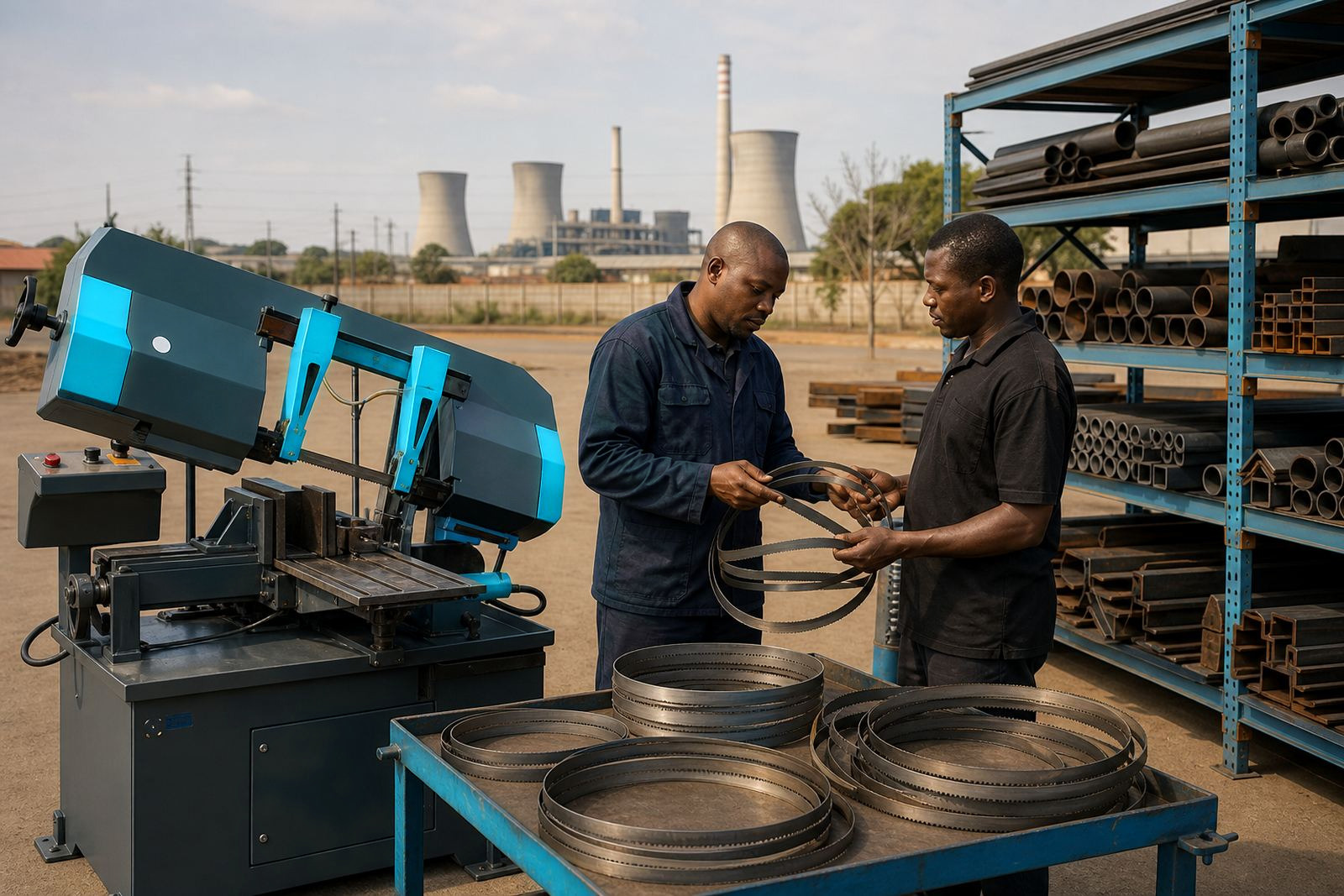
We supply bandsaw and hacksaw cutting products for workshop jobs, including bi-metal options with M42 tooth material, carbon grades for lighter duty work and starter kits for shops setting up a fresh cutting routine. If the job involves thin wall tube one day and heavier solids the next, we help match the blade to the cut rather than forcing one blade to do everything.
- Bi-metal blades for mixed steel cutting
- Carbon steel blades for lighter, routine work
- Planning a starter kit for workshops that are new or growing
What Vereeniging cutting conditions do to a blade
Vereeniging's industrial areas see dust, scale and general workshop grit, and that builds up around the machine if blade care is loose. On metal cutting machines, a blade that runs too fast or feeds too hard can wander, heat up and lose set before the cut is finished. Cooler cutting usually comes from matching feed and speed to the material, keeping the guides in line and checking coolant use where the machine calls for it.
We focus on blade width for stability, thickness for the machine, tooth pitch in TPI, and whether a variable pitch blade handles changing section sizes better than a fixed pitch. If the machine is making noise, marking the work or snapping blades too often, the cut pattern usually shows the cause.
- Feed speed advice for steady cutting
- Coolant checks where the machine uses coolant
- Blade failure review for repeated breakage or tooth wear
Weld-to-length blade work for local stock needs
Some Vereeniging customers keep a tight list of standard lengths and want blades welded to size instead of only taking full coils or random cut lengths. Our weld-to-length service suits workshops that want less waste and a more regular blade shelf. Length verification is part of that process, because even a small mismatch can affect tracking, tension and the way the blade seats on the machine.
We also support machine fit checks for manual saws and powered saws used in repair yards, fabrication bays and maintenance stores. That includes checking the tooth direction, blade width, thickness and the set against the machine's guides and wheels. If the saw is older, a careful fit check can save a lot of false starts and bent blades.
- Weld-to-length orders for specific machine sizes
- Length verification before dispatch
- Machine fit check for older and newer saws
Typical Vereeniging users and the work they send through
The area brings in a mix of steel stockists, fabrication teams, maintenance crews, engineering shops and manual saw operators who cut on a daily basis. Some work on repeat sizes for production, others cut repair material with no fixed pattern. Both need blade advice that stays close to the material in front of the saw.
We also assist with stock standardisation where a workshop wants fewer blade types on the shelf. That makes reordering simpler and keeps the cutting room easier to manage. For some teams, one well chosen blade family and one backup option does more useful work than a shelf full of mismatched blades.
- Fabrication and repair workshops
- Maintenance teams and plant stores
- Steel-cutting rooms with mixed material sizes
How blade choice changes the cut on steel and section
Tooth pitch has a direct effect on how a blade enters the metal. Finer TPI suits thin section and small diameters, while coarser pitch can clear chips better on heavier solids. Variable pitch is often useful where the workshop cuts a range of sizes, because it can reduce chatter and help the blade stay calmer through the cut.
We also confirm blade width. Wider blades tend to track more steadily on suitable machines, while narrower blades can suit tighter radii or lighter saws. Thickness, set and run-in all have a place too. A careful run-in helps the tooth edges settle, and a poor feed rate can undo an otherwise good blade choice.
- Tooth pitch selection for mixed section sizes
- Blade width guidance for machine stability
- Run-in guidance for new blades
Reaching Vereeniging from our Alrode base
Our base in Alrode, Alberton serves Vereeniging and the surrounding steelworking belt through planned supply runs and order handling from the workshop side. That route suits customers who need a steady blade stream without overbuying or holding awkward stock. It also supports nearby industrial areas when a workshop wants the same blade spec across more than one machine.
The more detail that comes through, the easier it is to match the blade width, tooth pitch and finish to the job. For manual saw support, starter kit planning and blade failure review, we work from what the workshop is already seeing on the floor.
- Regular supply into Vereeniging from Alrode
- Support for workshops across Gauteng and national sites
- Blade planning for one machine or a full cutting room