A yard that cuts mixed material without fuss
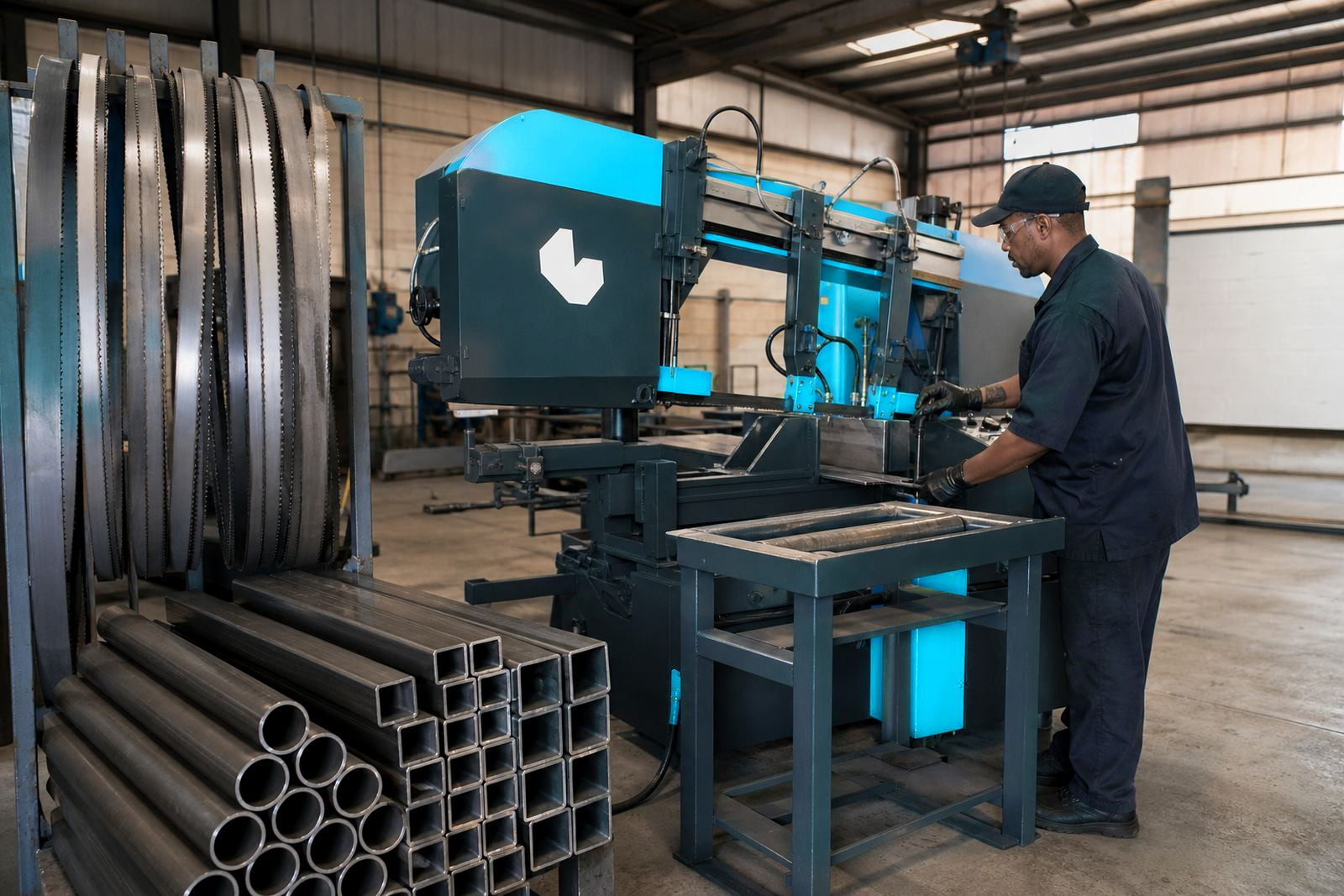
The site handled stock preparation for mild steel, hollow sections and bar in regular lengths, with a few heavier bundles that asked more from the saws than the usual workshop mix. The team wanted blades that stayed true on wider wheels, held their line through long cuts and made fewer false starts when material changed from light offcuts to heavier sections.
We looked at the saws already on the floor, checked guide condition, and matched blade width to machine capacity rather than pushing the narrowest blade that could fit. For a stockyard, that choice brings better tracking on larger saws, especially where straight cuts and repeatable lengths need wider blades than tight radius work.
- Broader blade widths for improved tracking on larger saws
- Mixed material cutting across stock lengths and offcuts
- Fit checks for wheel size, guides and tension range
Blade notes we worked through on the floor
The workshop asked for practical guidance on tooth pitch, blade thickness and the cut style for each material group. We set out the options simply: bi-metal blades for general steel work, carbon steel blades for lighter duty and manual sawing, and variable pitch patterns where chatter control and smoother entry worked better than one fixed spacing.
Tooth pitch was matched to section size, because coarse TPI clears chips faster on thick solid material while finer pitches give better contact on lighter wall and smaller sections. We also checked set and run-in, since a new blade that is driven too hard from the first cut can wander, glaze or crack at the weld before it has settled into service.
- Bi-metal M42 for tougher mixed steel cutting
- Carbon steel for lighter work and manual saw support
- Variable pitch for steadier cutting on changing section sizes
- Run-in guidance to protect the tooth edge and weld
What went into the supply
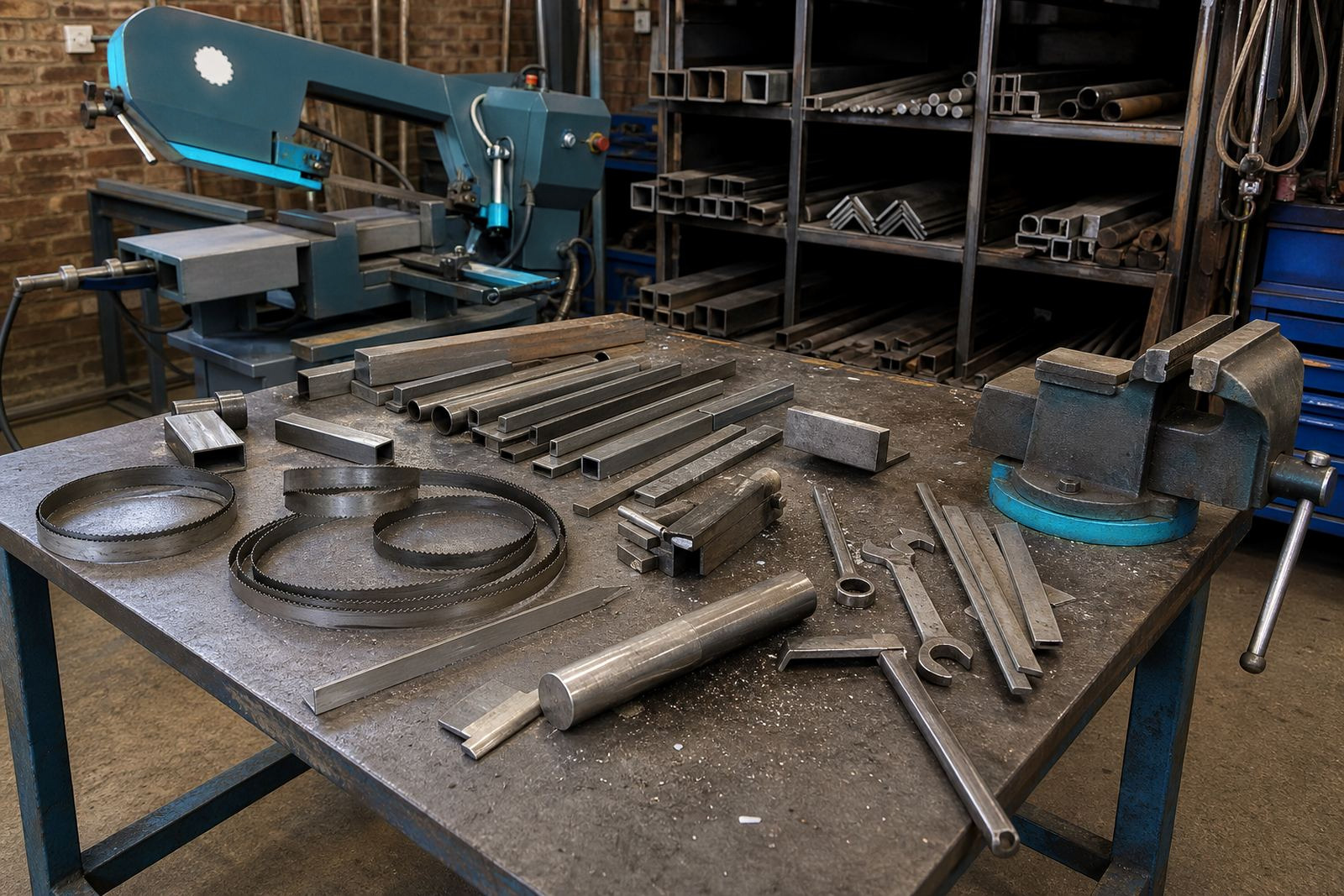
We supplied a starter batch built around wider bandsaw blades for the main machines, plus a set of hacksaw blades for hand trimming and on-bench corrections. Blade widths were selected to suit the saw frames in use, with thickness matched to the wheel and tension range so the blade could carry the cut without fighting the machine.
Where a blade had to be finished to the exact length for a specific saw, we used our weld-to-length service and checked the finished loop for fit and tracking before dispatch. That reduced the chance of a blade arriving on site and needing extra trimming or a second pass at the weld.
- Bandsaw blades for the larger production saws
- Hacksaw blades for manual support and trimming work
- Weld-to-length service for machine-specific loops
- Length verification before the blades left the shop
Settling the cut without chasing it
The main constraint was consistency. The yard did not need a fine joinery cut or decorative finish, it needed straight stock sections that could go to the next stage without rework. Feed speed advice sat alongside tooth selection, and we kept coolant checks in the conversation because dry cutting on heavy steel can lift the temperature fast and reduce blade life.
We also reviewed blade failure patterns the team had seen before. Common trouble spots were cracked welds from over-tensioning, stripped teeth from aggressive feed, and wander on wider stock when the wrong blade width had been used. The machine fit check and run-in guidance were there to reduce those familiar problems rather than add another rule sheet to the wall.
- Feed and speed set for controlled chip removal
- Coolant checks for hot cutting conditions
- Blade failure review based on earlier workshop wear patterns
- Machine fit check for guides, tension and wheel condition
A three week handover across the workshop
Week one covered the site visit, saw inspection and the first blade measurements. Week two focused on the supply run, weld-to-length work and the blade set-up notes for the floor team. By week three the workshop had the right mix of wider blades in service, with manual saw support and starter kits ready for the bench work that still sat alongside the main cutting line.
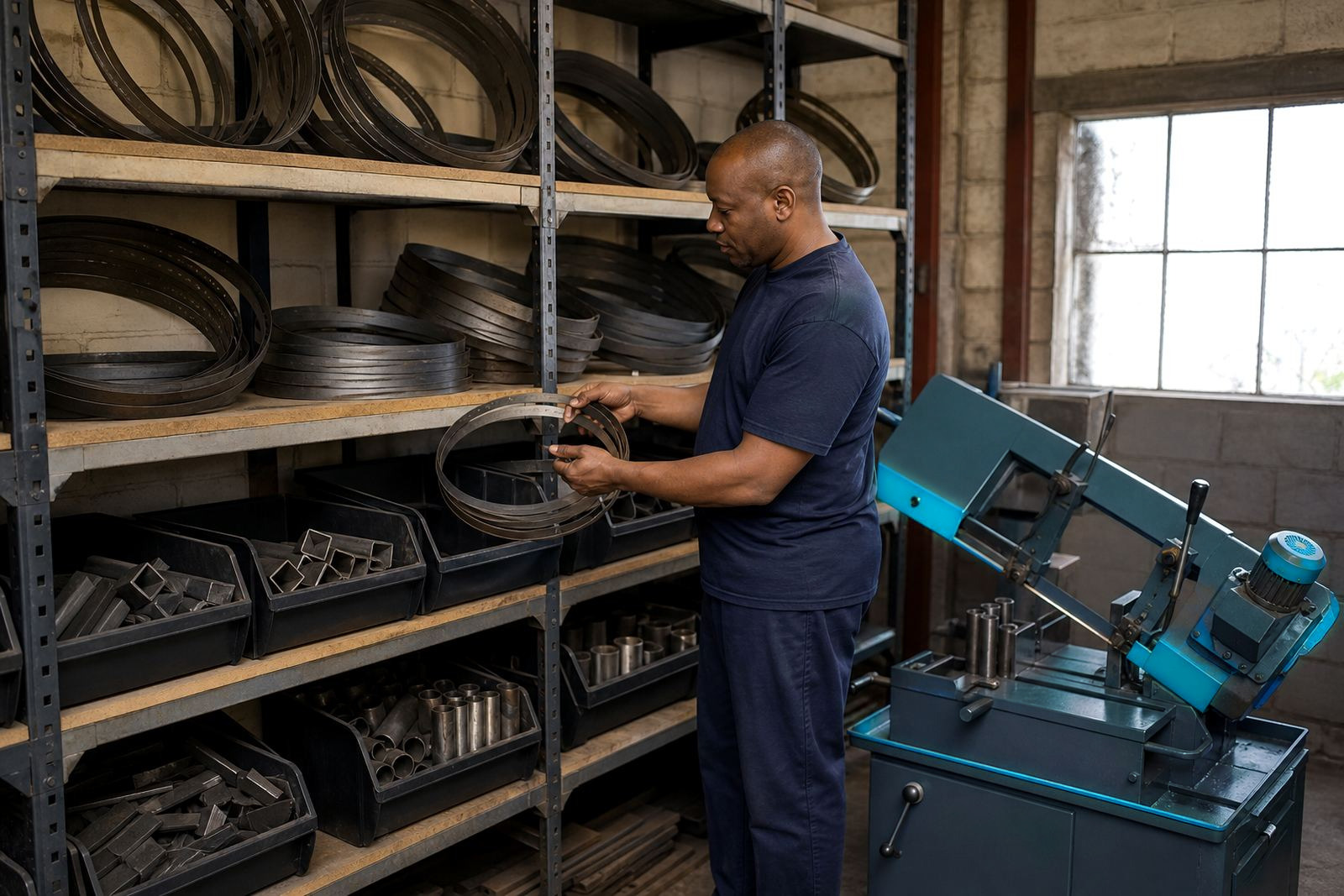
The staff also wanted stock standardisation, because a mixed pile of odd lengths and worn blades wastes time when the job list changes. We grouped the blades by saw type, pitch range and width so the team could pull the correct loop without guessing which roll or box suited which machine.
- Week 1: machine review and blade measurements
- Week 2: supply, welding and fit checks
- Week 3: blade roll-out and stock grouping
What changed once the wider blades went in
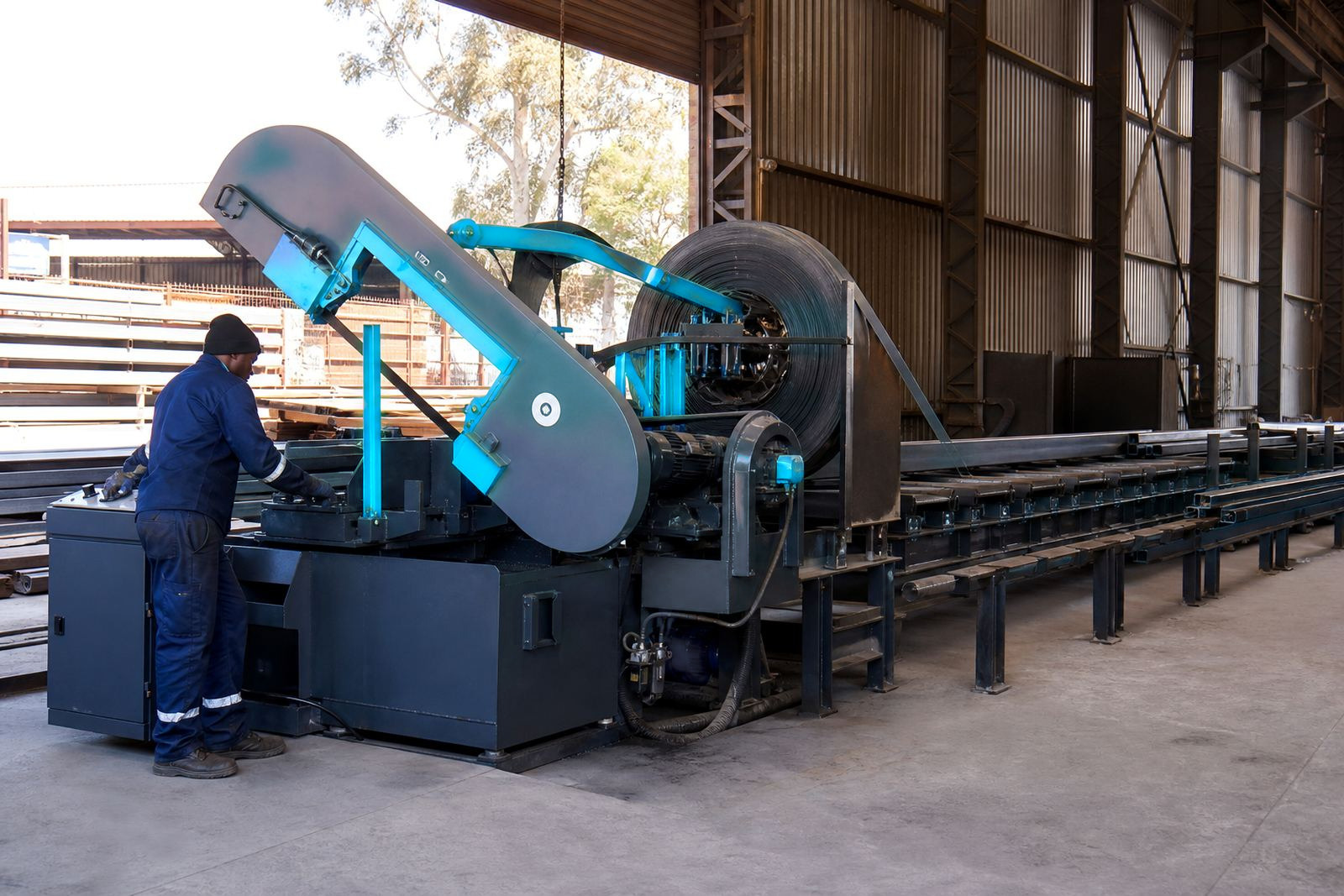
The larger saws tracked more confidently with the broader blade widths, and the straight cuts became easier to hold on long stock. The team spent less time correcting wander and more time feeding material at a steady pace, which suited the stockyard rhythm better than constant adjustment at the machine.
The smaller manual jobs still had a place, but they no longer dictated the setup for the main machines. With clearer tooth pitch selection, better run-in and a cleaner weld finish, the workshop had a more predictable blade cycle and fewer interruptions when section sizes changed through the day.
If a similar yard needs a cut list that covers heavy stock, mixed sections and manual trimming, the same approach still stands: match blade width to the saw, set pitch to the material, and treat feed speed and coolant as part of the blade choice rather than an afterthought.
The practical parts we would repeat
The strongest part of the job was the way the workshop set-up and the blade supply were matched to each other. Wider blades made sense on the larger saws, while the lighter saws stayed on the pitches and widths that suited their frame and guide setup. That split kept the whole stockyard more orderly.
We would use the same structure again for another Vereeniging yard, with the same checks on fit, weld finish and section size. For teams that work with a mix of bar, angle and hollow section, the blade choice needs to be practical from the first cut to help prevent damage.
- Broader blades on larger saws for straighter tracking
- Separate blade groups for heavy and light cutting work
- Run-in and coolant notes tied to the actual machines
Key facts
| Project type | Stockholding workshop blade setup |
|---|---|
| Town | Vereeniging |
| Blade focus | Broader bandsaw blades for straighter tracking |
| Blade types | Bi-metal M42, carbon steel, hacksaw blades |
| Services used | Weld-To-Length, Length Verification, Tooth Pitch Selection, Blade Width Selection, Run-In Guidance |
| Support extras | Feed Speed Advice, Coolant Checks, Blade Failure Review, Machine Fit Check, Starter Kit Planning |