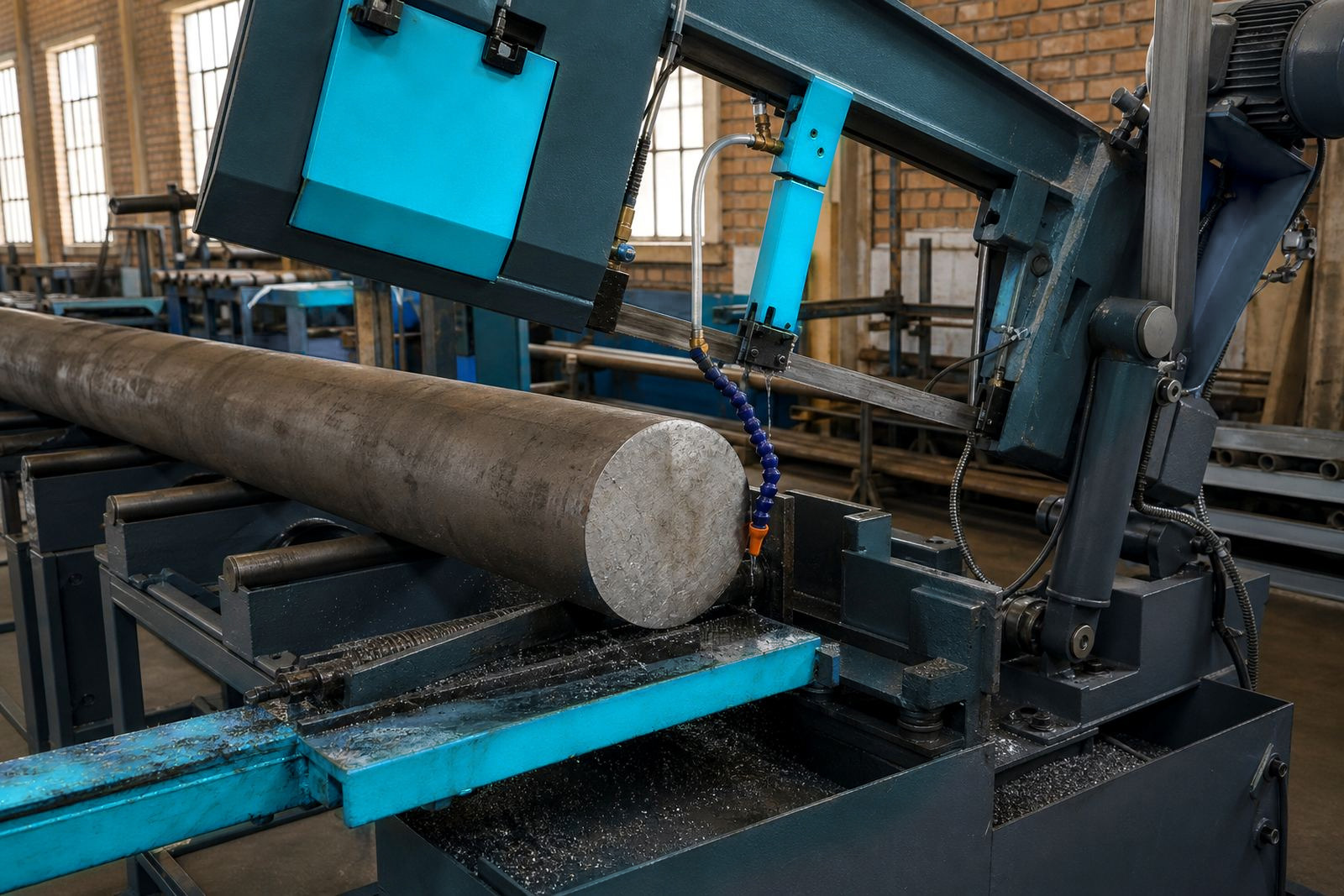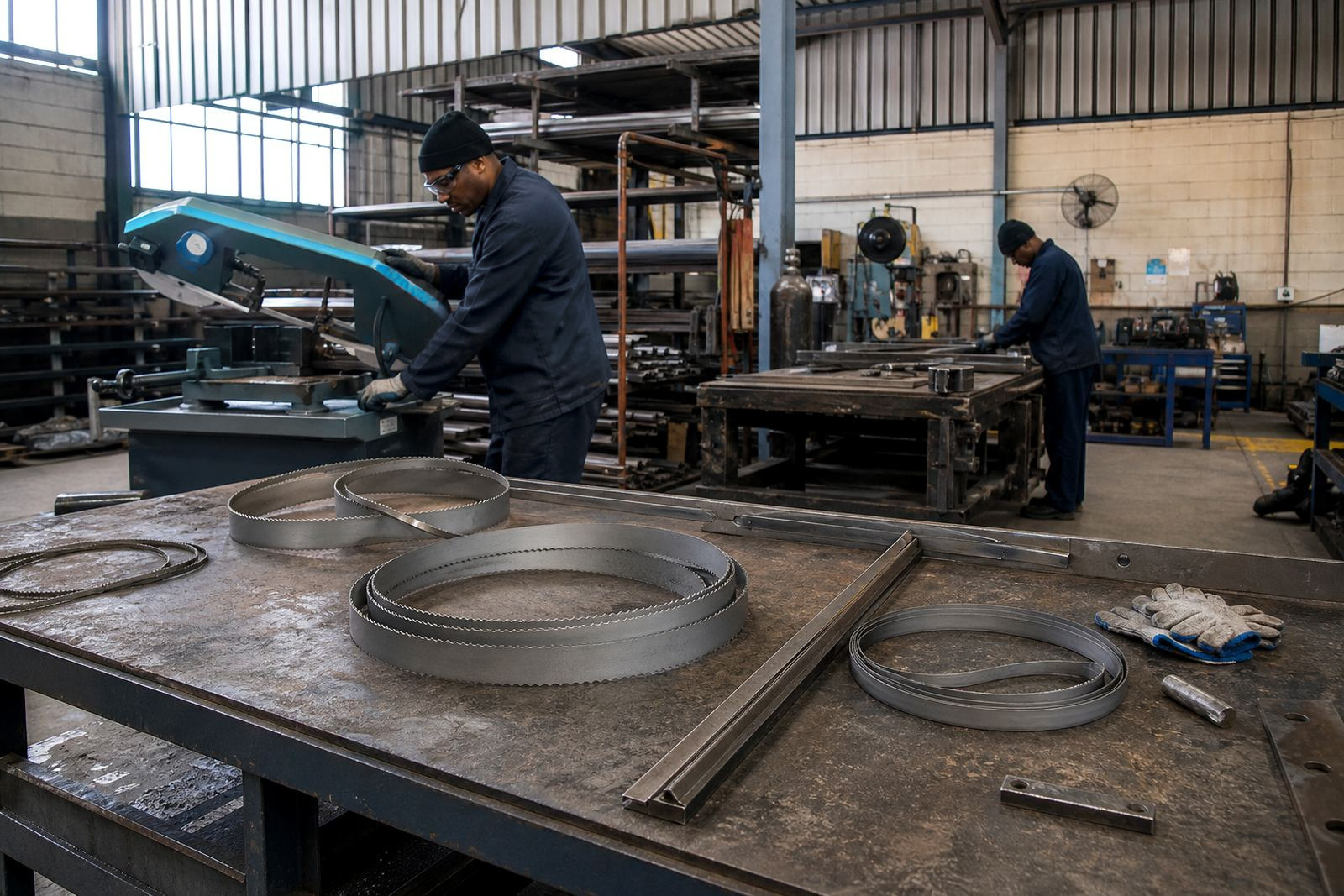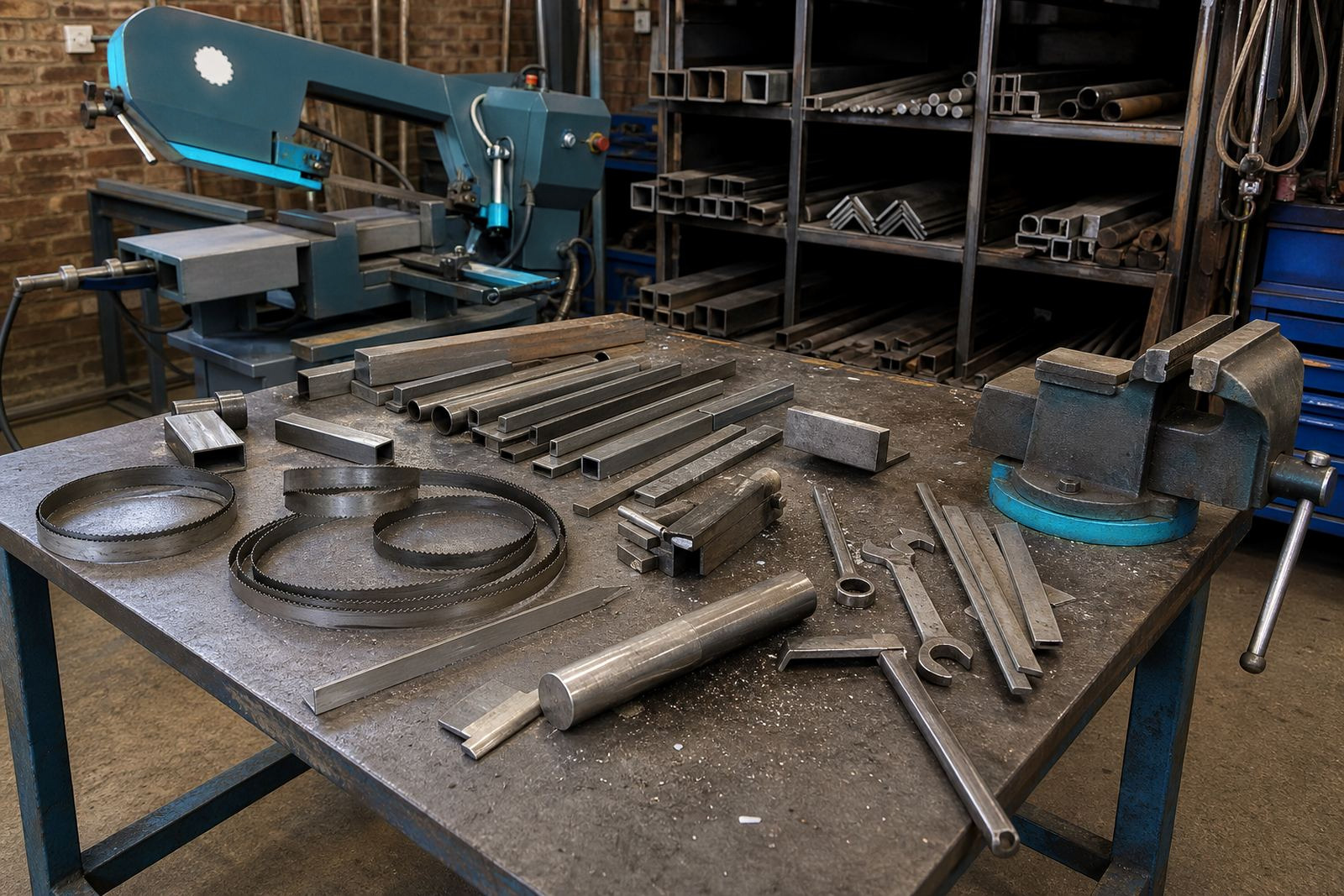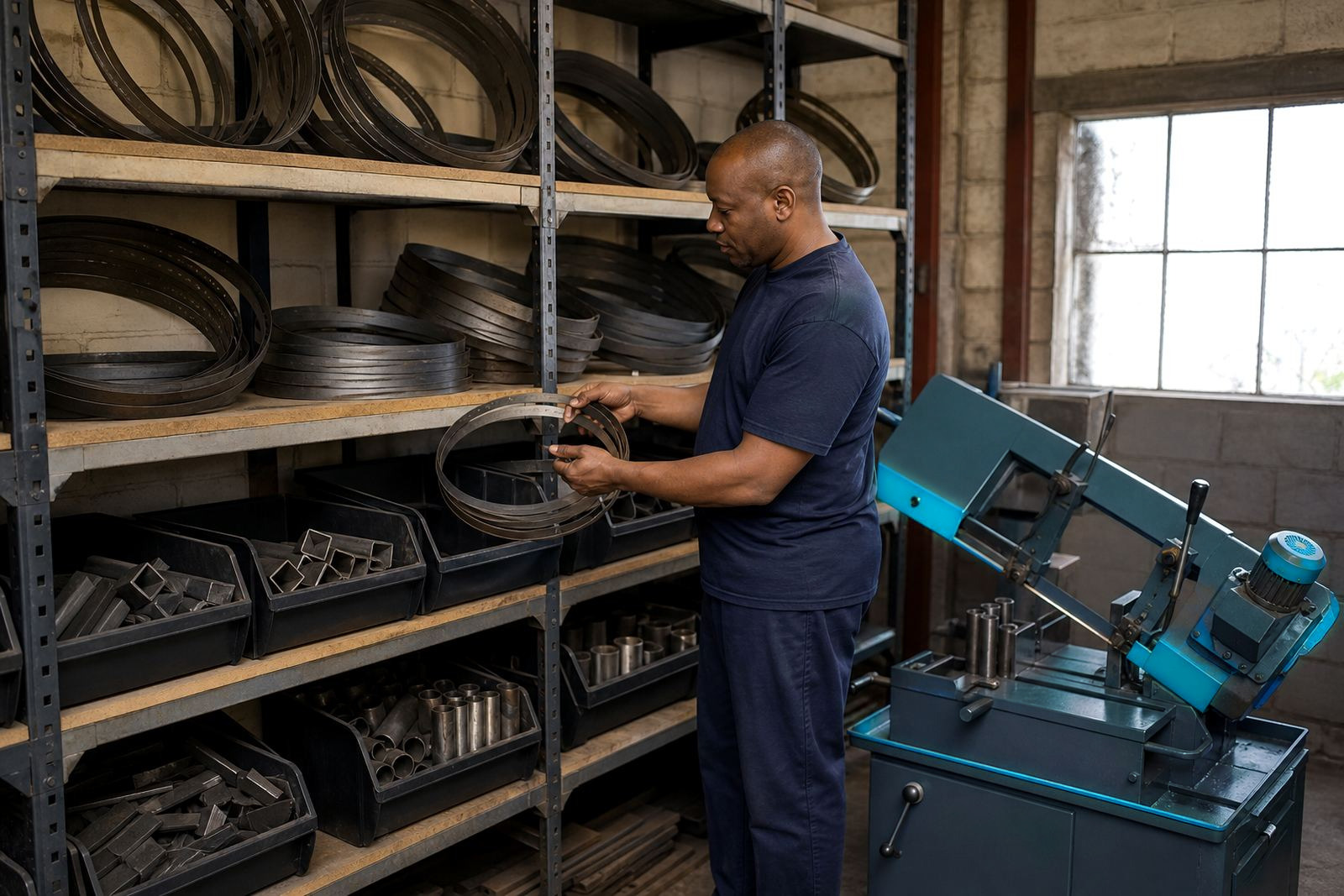
A bench that had to cover many metal jobs
The workshop handled short-run work, repairs and regular cut lists from steel sections, pipe and solid bar. The brief was to keep useful blade stock on hand for mixed incoming work, without overloading the shelf with awkward sizes that sat unused.
Blade choice had to suit mild steel one hour and thicker structural material the next. That meant a mix of bandsaw blades and hacksaw blades, with the right tooth pitch for each section thickness, plus enough length control to avoid awkward fitting at the machine.
- Mixed jobs in mild steel, box section and round bar
- Common blade lengths kept ready for workshop machines
- Pitch ranges matched to thin wall and heavier sections
- Support for manual saw work where a machine was not the fit
The blade mix we set around the machines
We supplied bi-metal blades for general metalwork, plus carbon steel blades where the job called for straightforward cutting on lighter material. The workshop also needed starter kits, so the shelf held a basic spread of blade widths and tooth pitches for day-to-day work rather than a single narrow option.
For bandsaws, the useful variables were blade width, thickness and pitch. Wider blades offered better tracking on heavier work, while narrower blades suited tighter guides and lighter stock. Variable pitch helped reduce chatter on mixed section sizes and kept vibration down on longer cuts.
- Bi-metal blade stock for general workshop use
- Carbon steel blades for lighter cutting tasks
- Variable pitch options for mixed section sizes
- Starter kit planning for a practical first stock set
Sizing, fit and weld-to-length handling
Some machines in the workshop used standard blade loops, while others needed weld-to-length supply to match the machine frame and wheel size. We measured blade lengths against the saws already on site, then checked fit against the guides, wheels and tension range so the blade sat right before it was put into service.
Many people underestimate how important that point is. Blade length and a clean weld keep the cut straight and the operator focused on the job. Length checks and machine fit checks kept the setup practical and saved time at the bench.
- Weld-to-length service for workshop machines
- Length verification against existing saw frames
- Machine fit checks on guides, wheels and tension
- Blade welding for ready-to-fit supply
Run-in, feed and coolant notes for the team
The workshop wanted more than blades in a box. We set out run-in guidance so new blades could be eased into service without overloading the teeth on the first cuts. Feed speed advice was matched to the blade type and the stock being cut, because too much pressure or too much speed will blunt a blade long before its time.
Coolant checks were part of the handover too, especially for heavier cutting and longer runs. A dry cut on the wrong material can make the edge hot and noisy, and that is where tooth wear starts to climb. The team was also shown how tooth set and pitch interact with chip clearance, so the cut stays clean on longer sections.
- Run-in guidance for new blades
- Feed speed advice for manual and machine cuts
- Coolant checks for heavier or longer cuts
- Blade failure review for teeth damage and wear patterns
Three weeks from briefing to working shelf mix
The project ran over three weeks. Week one covered the brief, the machine list and the material mix. The second week covered blade selection, length verification and the first weld-to-length runs. The third week was about balancing stock lines so the shelf held enough common lengths without crowding the workshop with dead stock.
Once the setup settled, the workshop had a more orderly blade routine. Operators could pick from a sensible pitch range, match the blade width to the machine, and keep the work moving without stripping through trial and error. The result was a cleaner handover at the machine and less waste from ill-fitted blades.
- Week 1: job mix, machine list and material review
- Week 2: selection, fit checks and weld-to-length supply
- Week 3: stock balancing and workshop handover
- Result: steadier cutting choices and better blade use on site
Key facts
| Client type | Midrand service workshop handling mixed incoming metalwork jobs |
|---|---|
| Location | Midrand, Gauteng |
| Blade types | Bi-metal and carbon steel bandsaw blades, plus hacksaw blades |
| Selection focus | Tooth pitch, blade width, blade thickness, set and material match |
| Services used | Weld-To-Length, Length Verification, Tooth Pitch Selection, Run-In Guidance |
| Supply scope | Common lengths and pitch ranges for workshop stock and fit checks |