The job the workshop needed covered
The workshop was cutting heavier sections for fabrication, repair work and line maintenance, so the blade choice had to suit size, wall thickness and the way each saw was being pushed on the floor. Mild steel, solid bar and thicker profile sections all behaved differently, and the team wanted a tighter match between blade width, tooth pitch and feed speed. Coolant was part of the fix, because hot chips and dry running were shortening blade life and leaving rougher faces than the job needed.
The brief was practical. Keep the cut square enough for downstream work, reduce tooth stripping on awkward material, and build a small stock pattern that the team could use without guessing each time a new job landed on the bench. The workshop also wanted support for manual saw work where the operator was not using the same settings every day.
- Town focus: Vanderbijlpark engineering workshop
- Material range: larger solids, sections and mixed mild steel work
- Cutting method: bandsaw and manual hacksaw support
- Main aim: better blade life and cleaner, straighter cuts
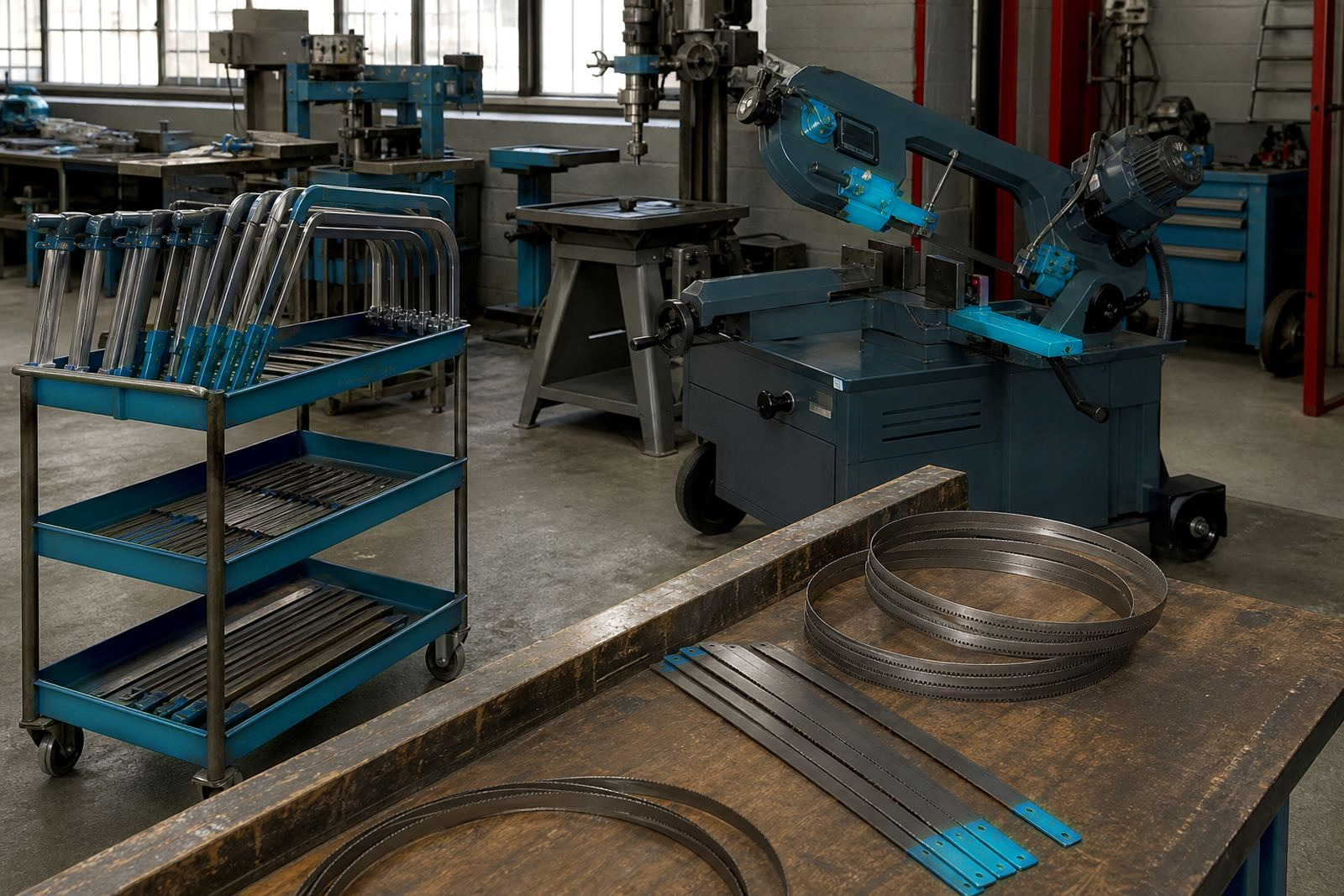
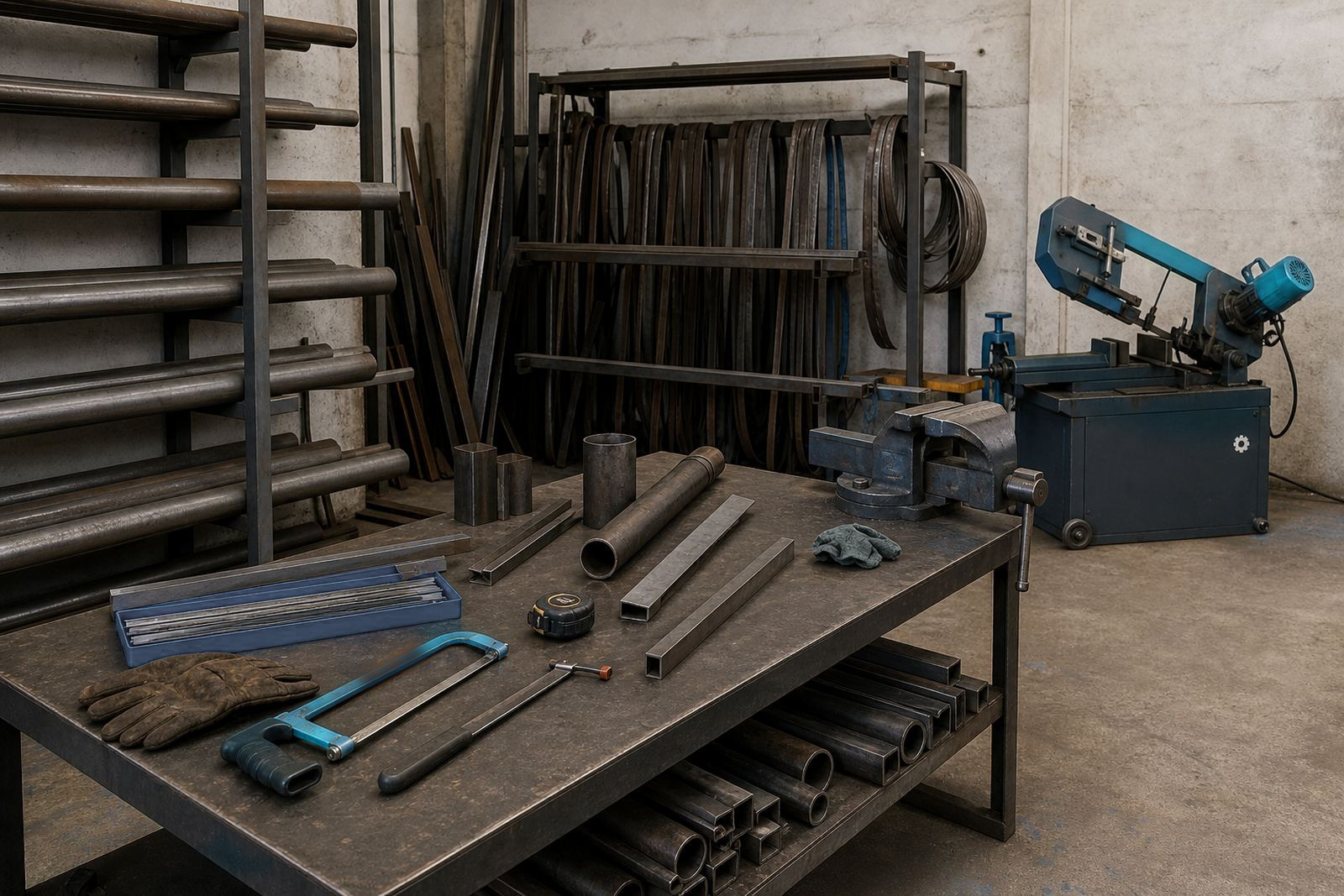
Blade choices matched the material and the machine and job type.
We worked through the saws in use and matched the blade style to each machine and job type. For the heavier work, bi-metal M42 bandsaw blades were the main option because they hold up well on steel, cope with variable loading and tolerate the heat that builds when feed is uneven. Carbon steel blades stayed relevant for lighter manual cutting and for jobs where the material was easier and the blade needed to stay economical.
Tooth pitch was reviewed along with the blade material. Coarser TPI was set aside for larger solids and thicker sections, while finer pitch was used where the wall section was thinner and tooth engagement had to stay steady. Variable pitch blades were useful where vibration was creeping in on longer cuts, because the tooth spacing helped break up harmonics and reduce chatter. Blade width and thickness were also checked against the machine guides and the cut depth needed on the day.
- Bi-metal M42 for heavier workshop cutting
- Carbon steel for lighter manual and starter work
- Variable pitch where chatter needed calming
- Width and thickness matched to guide capacity
Weld-to-length supply and fit checks on the machines
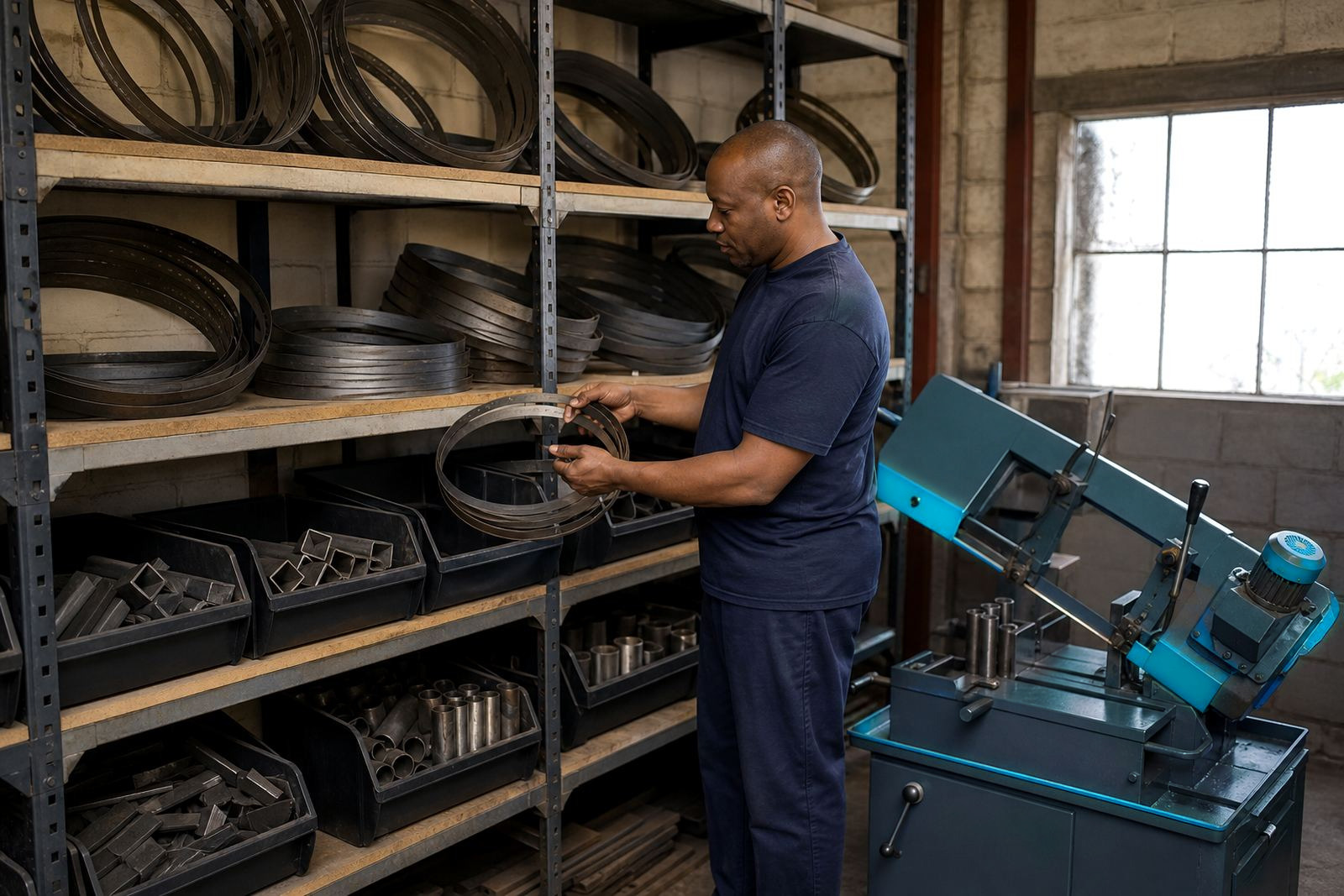
The workshop needed blade lengths matched to the saws already installed, so we handled weld-to-length supply and length verification before anything went out. That saved the team from trimming around an incorrect loop size or forcing a blade onto a frame that was slightly out. We also checked machine fit, because a blade that looks right on paper can still run badly if the guide spacing or wheel condition is off.
Where the saws were being used on mixed batches, we built a small starter kit plan with the most useful blade combinations for larger solids, general section work and manual support. Standardised stock let the workshop keep fewer blade types on hand while covering the jobs that actually show up. That was especially useful when multiple operators shared the same saw and needed one clear blade pattern for each material group.
- Weld-to-length blades for the saw frames in use
- Length verification before dispatch
- Machine fit check on guides and wheel tracking
- Starter kit planning for mixed workshop jobs
Run-in, feed and coolant settings on a real cutting week
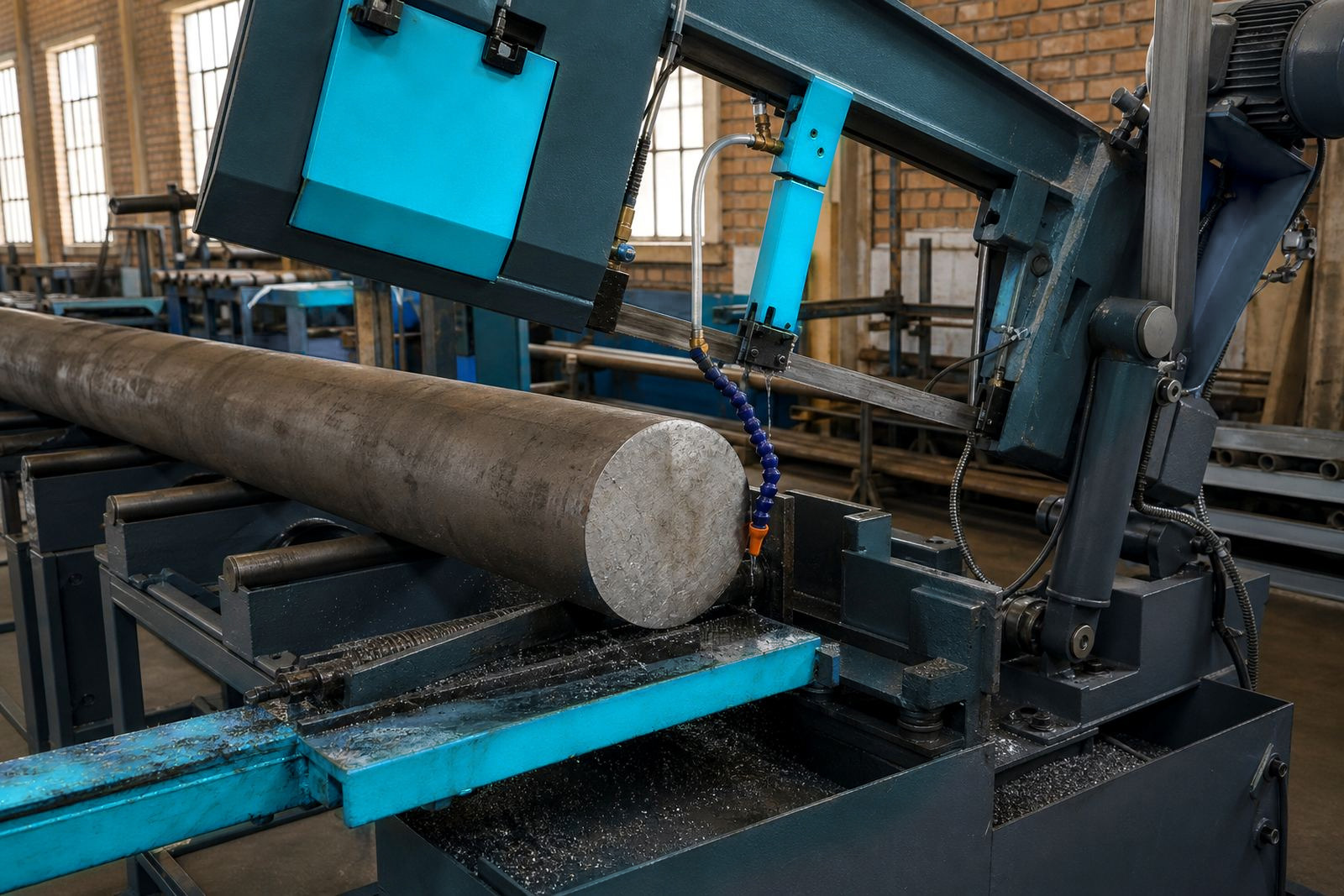
The blades needed the right specification. They also needed the right start-up behaviour. We gave run-in guidance so fresh teeth would settle into the work instead of being hammered on the first cut. Feed speed advice was set around the material, because too much pressure was causing edge damage and too little pressure left the teeth rubbing and heating up. The team also checked coolant delivery, concentration and coverage, since cooling and chip wash affect both finish and life.
On the manual saw side, the guidance was simpler but still important. Tooth pitch had to suit the stock, the set had to clear the cut without binding, and the operator needed a steady stroke without a hard push. That kept the blade from wandering on tougher material and helped reduce the broken-tooth pattern that shows up when a saw is forced through the job.
- Run-in guidance for new blades
- Feed speed advice matched to cut load
- Coolant checks for heat and chip control
- Manual saw support for lighter shop work
What changed after the blade pattern was reset
Once the blade selection was matched to the material mix, the workshop had fewer stops for blunt teeth and fewer blades ruined by the wrong pitch. Cuts were cleaner on the larger solids, and the team had a better feel for where a coarse blade was saving time and where a finer blade was worth the extra control. The coolant-managed jobs also settled down, with less heat staining and less drag in the cut.
The real gain was consistency. Different operators could pick from the same small set of blade options and know which one suited the job, instead of starting from scratch each time. This helped on a busy engineering floor where the next cut might be a solid bar, then a heavier section, then a manual repair piece that still needed a straight finish.
- Cleaner cuts on thicker material
- Less tooth stripping on mixed stock
- Better blade life through proper feed and coolant
- Fewer wrong-blade installs across the team
Our pick for another Vanderbijlpark job
On a similar workshop, we would keep the first pass tight: check the machines, confirm the material mix, then set the blade pattern around the worst case rather than the easiest cut. Start with one or two core bandsaw specifications, then add a manual saw option for light or awkward pieces. If the coolant delivery is weak, we would sort that early because it affects everything that follows.
We keep the stock list plain and usable as well. Too many blade options can confuse a workshop, but too few leave people forcing the wrong blade onto the job. The best balance is a short list that covers the common solids, the common sections and the occasional tougher piece that needs a slower hand.
- Start with the worst-case material in the batch
- Keep the blade list short and clear
- Check coolant delivery before chasing blade changes
- Match tooth pitch to the stock, not the habit
Key facts
| Project type | Engineering workshop blade selection |
|---|---|
| Town | Vanderbijlpark |
| Main products | Bandsaw blades and hacksaw blades |
| Blade types | Bi-metal M42 and carbon steel |
| Key settings | Tooth pitch, blade width, thickness, set, feed and coolant |
| Services used | Weld-to-length, length verification, machine fit check, run-in guidance |