
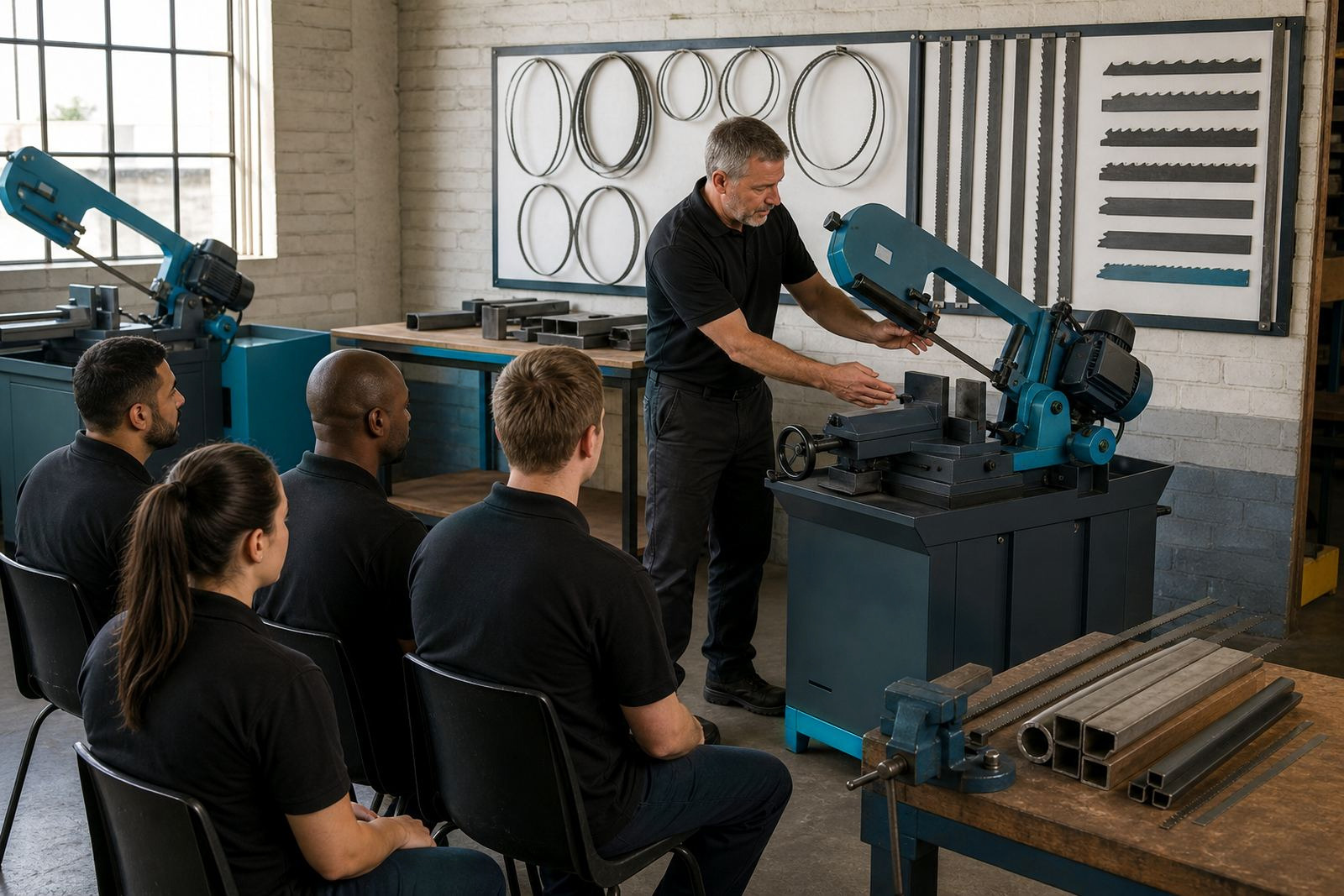
A training room built around first cuts
The client was a Pretoria workshop with newer operators taking over cutting work on mild steel, angle, flat bar and tube. Their main issue was inconsistency. One operator would fit a blade with the right width but the wrong tooth pitch, another would run too hard on the first cut, and the result was tooth damage, wandering cuts and wasted stock.
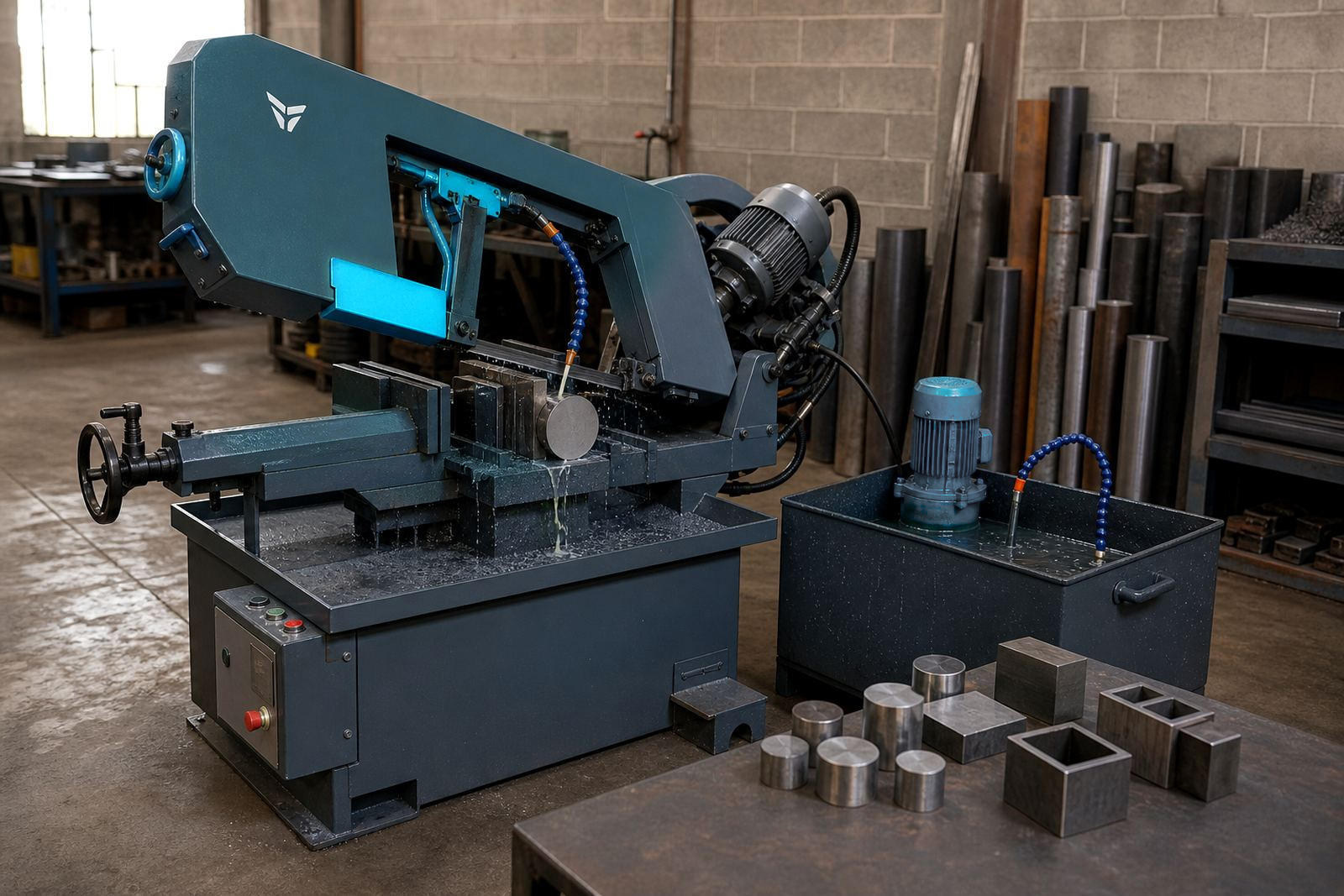
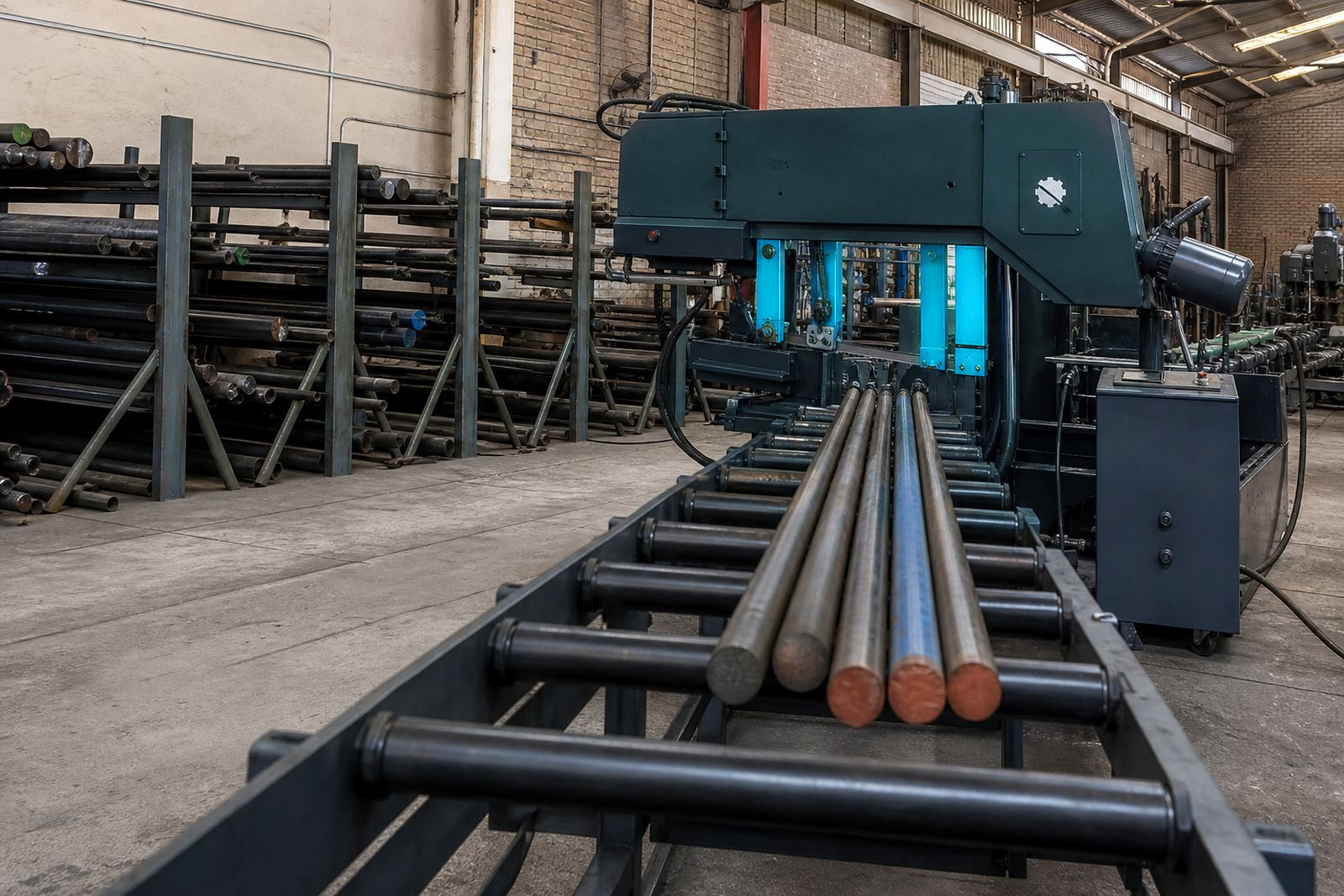
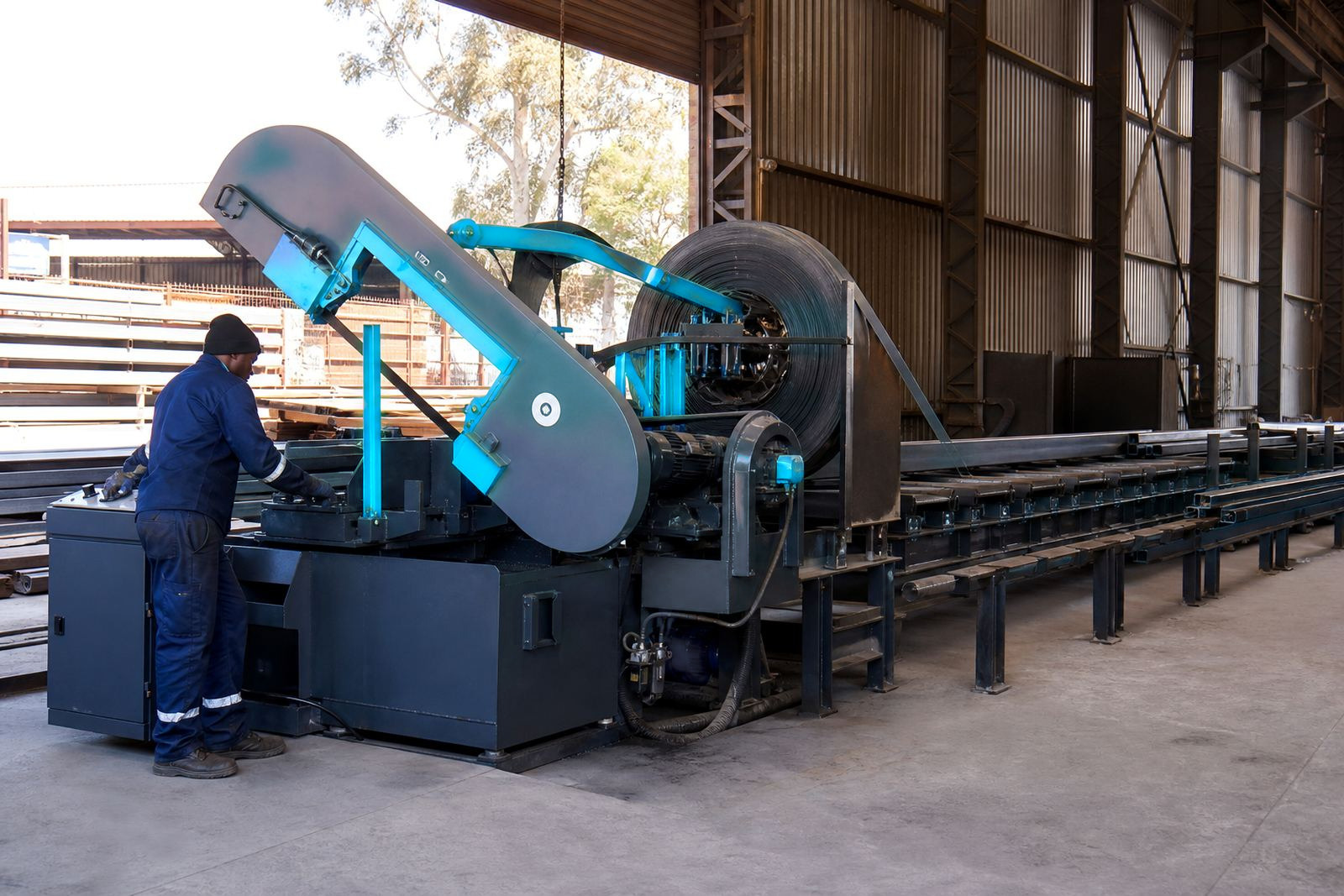
We set up the training around the jobs they actually see each week. That meant small-section ferrous material, a mix of manual saw work and powered bandsaw work, and enough variety to show when a finer pitch, coarser pitch or variable pitch blade makes sense. The brief was clear: make blade selection easier for a team that is still learning, and keep the process practical for a real Pretoria floor, not a classroom version of it.
- Mixed metalwork cuts on mild steel and section stock
- New operators learning blade fitment and first-use checks
- Starter kits for a controlled start-up process
- Blade guidance for bandsaw and hacksaw use
The constraints that shaped the kit
The workshop needed a compact blades inventory on the shelf, organised for the machines, the materials and the people using them. Blade width had to suit the saw guides properly, and thickness had to be sensible for the machines in use so the blade would track well without being over-stressed.
We also had to keep the training simple enough for supervisors to repeat without calling for outside help each time a blade failed early. That meant covering tooth pitch selection, set, feed and speed, run-in and coolant checks in plain workshop terms. In Pretoria and the surrounding industrial area, operators often move between jobs fast, so the notes had to be short enough to use beside the machine.
- Blade width matched to machine capacity and guide clearance
- Tooth pitch guidance for thin wall and solid section work
- Run-in notes for the first cuts on fresh blades
- Coolant checks for heat control and blade life
Starter kits with the right blade mix
We supplied starter kits built around bi-metal and carbon steel blades, selected for the shop's common work rather than a long catalogue spread. The bi-metal blades were specified for tougher day-to-day metal cutting, while the carbon steel blades gave the team a lower-cost option for lighter duties and training runs. We included the tooth counts and widths the workshop would reach for most often, including variable pitch options where vibration and chatter needed to be reduced.
Each kit was paired with a simple label set so the operators could identify the blade type, pitch and intended material before fitment. That sounds small, but it prevents the same mistake being repeated in a busy bay. We also included replacement planning notes so the workshop could hold the right spares without overbuying blades that would sit unused.
- Bi-metal blades for general workshop cutting
- Carbon steel blades for lighter training and manual saw use
- Variable pitch options for steadier cutting on mixed profiles
- Marked storage notes for blade size, pitch and intended job
Run-in guidance that operators could follow
Run-in is where many new blades get damaged early. The team needed a method that was easy to remember: start with lighter feed, keep the blade stable in the cut, and avoid forcing the saw through the stock before the teeth have settled. We walked them through the first cuts on each blade type and showed where feed speed and blade speed had to be adjusted for thicker sections or harder material.
We also covered the signs of poor setup. A blade that is rubbing instead of cutting leaves heat, a poor pitch choice leaves noisy cutting, and a loose machine setup shows up as drift or uneven wear. Once the operators could link those signs to the actual cut, they stopped treating blade failures as random events. That shift saved time and reduced unnecessary blade changes.
- First-cut run-in steps for new blades
- Feed and speed adjustment for different section sizes
- Signs of rubbing, chatter and poor chip formation
- Simple checks before a blade goes into service
Three weeks from brief to working training set-up
The project ran over three weeks. The first week covered the machine list, the material mix and the saw types in use. In the second week we finalised blade selection, tooth pitch and widths, and prepared the starter kits and marked blade notes. The third week focused on run-in guidance, fit checks and how to explain blade changes to operators without overcomplicating the process.
By the end of the setup, the workshop had a repeatable method for choosing blades, checking machine fit and handling first use. The supervisors could assign the right blade for the job without guessing, and the team had a better sense of whether a blade issue came from pitch, feed, speed or handling, or from the saw itself.
- Week 1: machine list and material review
- Week 2: blade specification and starter kit build
- Week 3: training on fitment, run-in and checks
What the Pretoria team gained on the floor
The main change was steadier cutting. Operators became more confident about when to use a finer tooth pitch, when to move to a wider blade and when coolant needed checking for heat control. The workshop also had fewer mixed-up blades lying in the same drawer, which made daily setup less messy and less prone to error.
The client needed a hands on training setup, and the project provided it. The team now has a clear path for starter kit use, blade selection and early-stage operator training. For a shop that is still building confidence around saw work, that helps more than a long manual no one opens twice.
- Cleaner blade handling and storage
- Better fit between blade choice and material
- Less uncertainty during first use
- More consistent cuts across manual and powered saw work
What we would keep in the next workshop setup
We would keep the same practical structure: a short material review, a narrow blade range, and clear notes for run-in and feed control. For Pretoria workshops, the best results usually come when the blade list stays close to the actual stock range on hand. That way the team learns one system and uses it often enough for it to stick.
The handover would still include a machine fit check. A blade can be well chosen and still underperform if the guides, tracking or tension are wrong. Once those basics are handled, the blade service becomes easier to manage and the workshop can carry on with a more disciplined cutting routine.
- Keep the blade range tight and job-specific
- Repeat fit checks before new operators take over
- Use the same labels for storage and issue control
- Include coolant and run-in notes with every starter kit
Key facts
| Project | Pretoria Training Centre |
|---|---|
| Client type | Workshop training setup for new saw operators |
| Area | Pretoria |
| Blade types | Bi-metal M42 and carbon steel |
| Services used | Starter Kit Planning, Tooth Pitch Selection, Blade Width Selection, Run-In Guidance, Machine Fit Check |
| Timeline | 3 weeks |