Steel section work in Germiston needed steadier blades
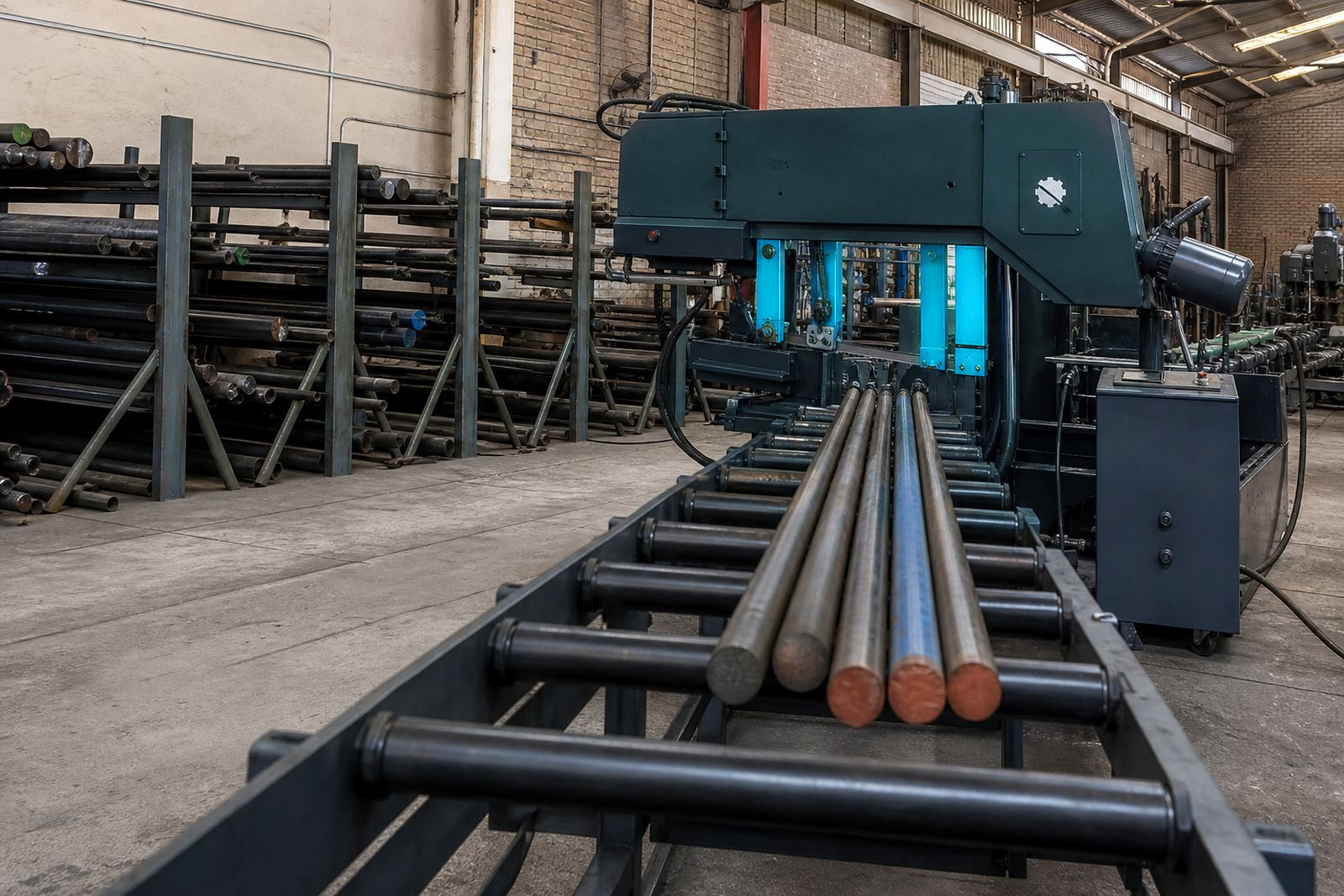
The job came from a steel service workshop in Germiston that cuts mixed mild steel sections through the week. Bar, angle and channel were the main materials, with a few solid rounds and heavier offcuts folded into the same cutting schedule. The team wanted fewer broken blades, less tooth stripping and a cleaner cut on the first pass, with a blade that handled every section size well.
We treated the request as a setup exercise, with more to it than a straight supply order. The saws in use included a manual machine and a powered horizontal bandsaw, so the blade choice had to suit both the material range and the way the operators feed the work. That meant looking at tooth pitch, blade width, blade thickness, set, run-in practice and the cutting speed the machines could hold without forcing the blade.
The workshop also wanted a weld-to-length service, because keeping a ready coil on hand is often easier than carrying fixed lengths for every machine. We built the recommendation around that practical need and kept the blade plan tied to the sections they cut most often.
The brief was mixed section cutting with fewer stoppages
The main challenge was the spread of section sizes. Thin wall shapes need a different tooth pitch from heavier bar, and a blade that is too coarse leaves a rough finish or catches on light material. A blade that is too fine loads up in heavier stock, so the workshop needed a balanced setup rather than a single rule that fit everything.
We also had to take account of differences between operators. In a busy steel yard, feed pressure changes from one shift to the next, and coolant use varies too. Many people underestimate how much those two factors affect blade life. A blade can be right on paper and still fail early if the feed is aggressive or the blade runs hot on long cuts.
- Mixed section sizes on the same machines
- Need for weld-to-length supply for regular use
- Cut quality needed to stay acceptable on bar, angle and channel
- Operators wanted a setup that could be repeated without fuss
Blade choices set for the jobs on hand
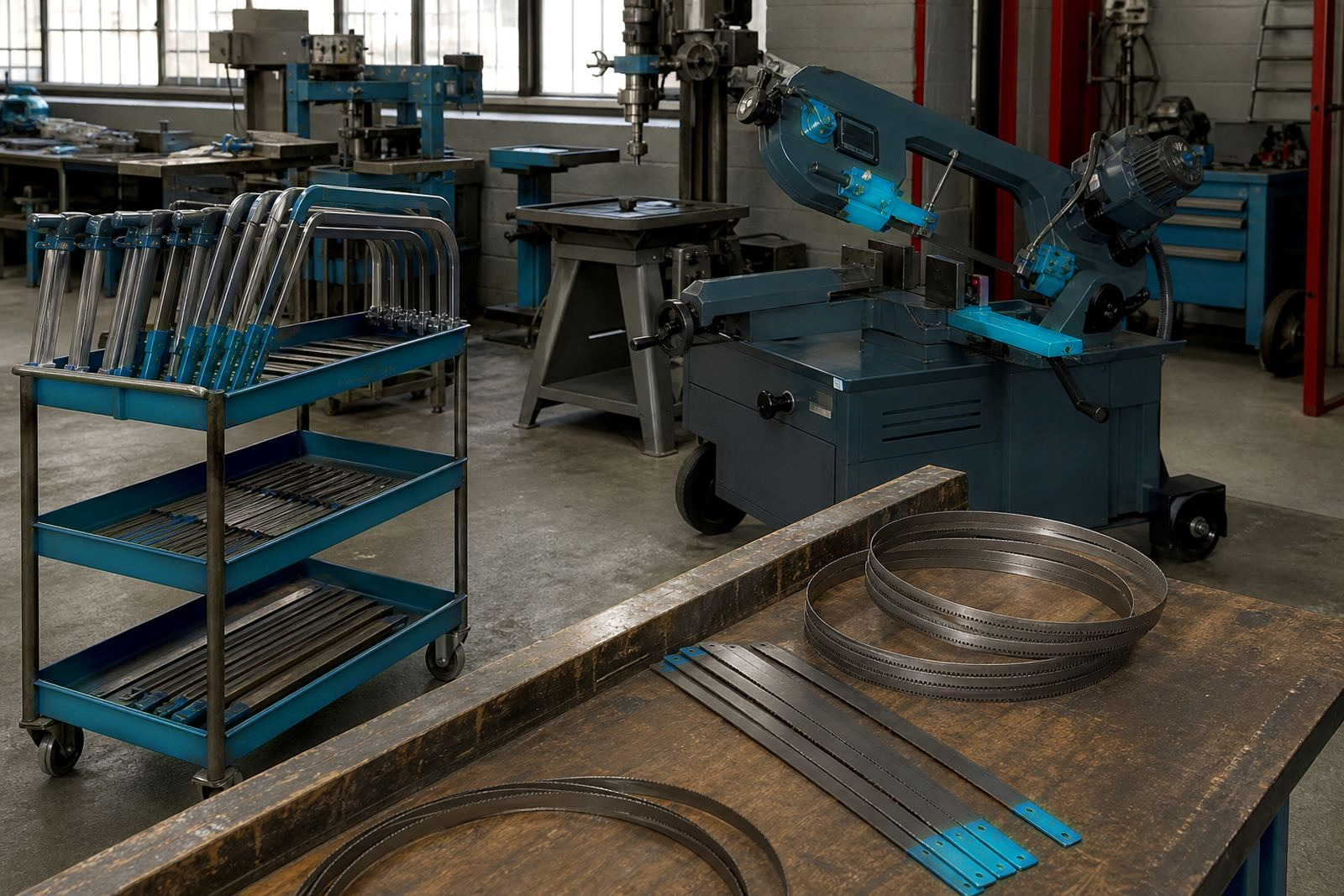
We supplied bi-metal bandsaw blades with a variable pitch pattern for the bandsaw work, and carbon steel hacksaw blades for manual cutting tasks where the workshop still kept a hand tool in use. The bi-metal specification gave better wear resistance on repeated section cutting, while the variable pitch helped reduce vibration on mixed shapes and interrupted cuts.
For the main bandsaw stock, we set the tooth pitch to suit the material range. Smaller section and thin wall material suit a finer pitch, while heavier stock works better with a coarser pitch for chip clearance. Blade width was matched to the machine guides and the straight cutting needed on section work, while blade thickness was kept within the saw’s practical range so the blade could track without wandering.
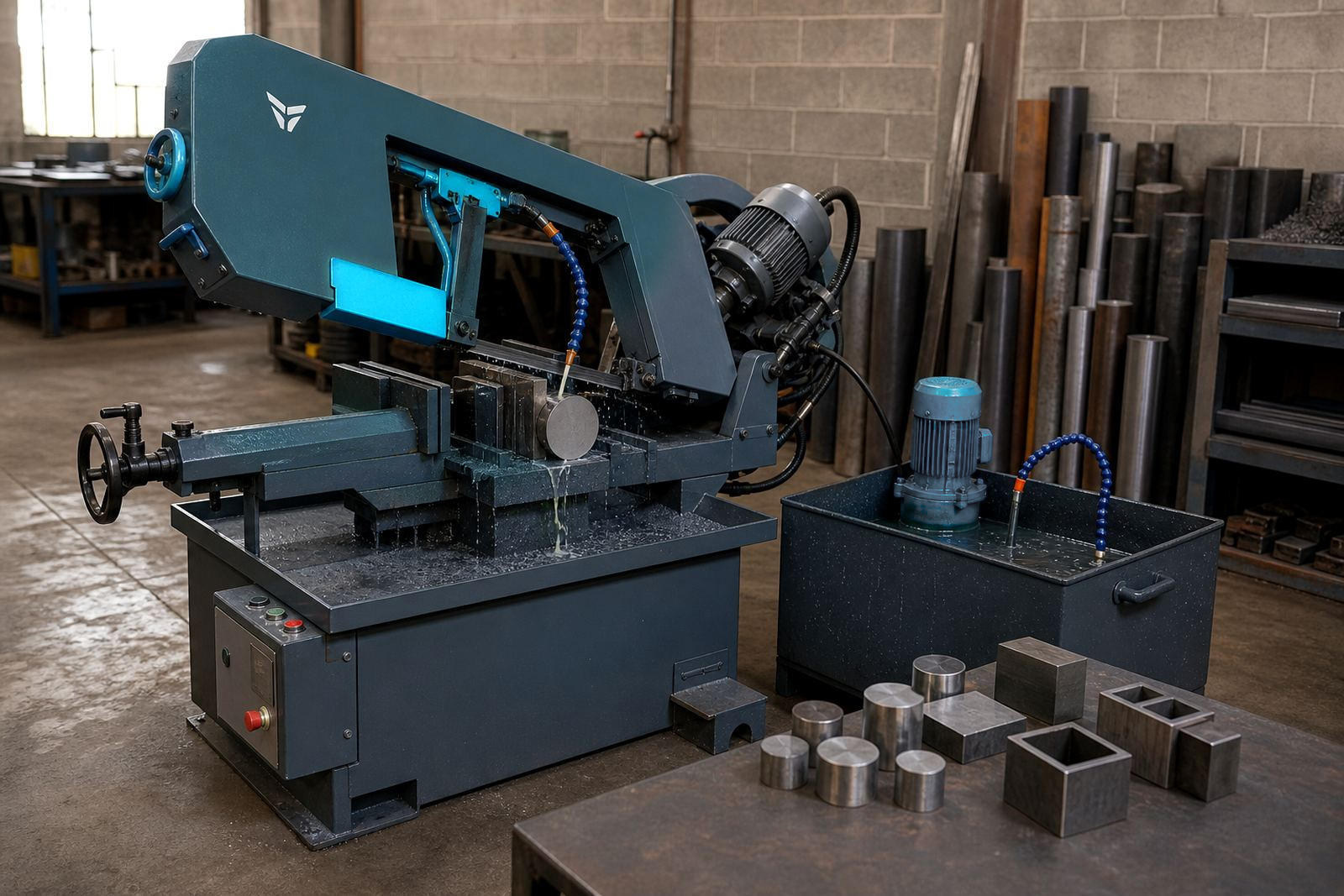
We also covered run-in guidance. When a new blade starts, use a lighter feed so the teeth seat properly, especially on mixed section work, where crews often expect more from the first stage. Once the blade is dressed in, the feed and speed can be brought up carefully, with coolant checked often enough to keep the cut cooler and the gullets clear.
- Bi-metal bandsaw blade for repeated steel section cutting
- Variable pitch to soften vibration on mixed profiles
- Carbon steel hacksaw blades for manual cutting tasks
- Tooth pitch matched to bar, angle and channel ranges
- Blade width and thickness aligned to the saw guides
What the workshop received and how it was set up
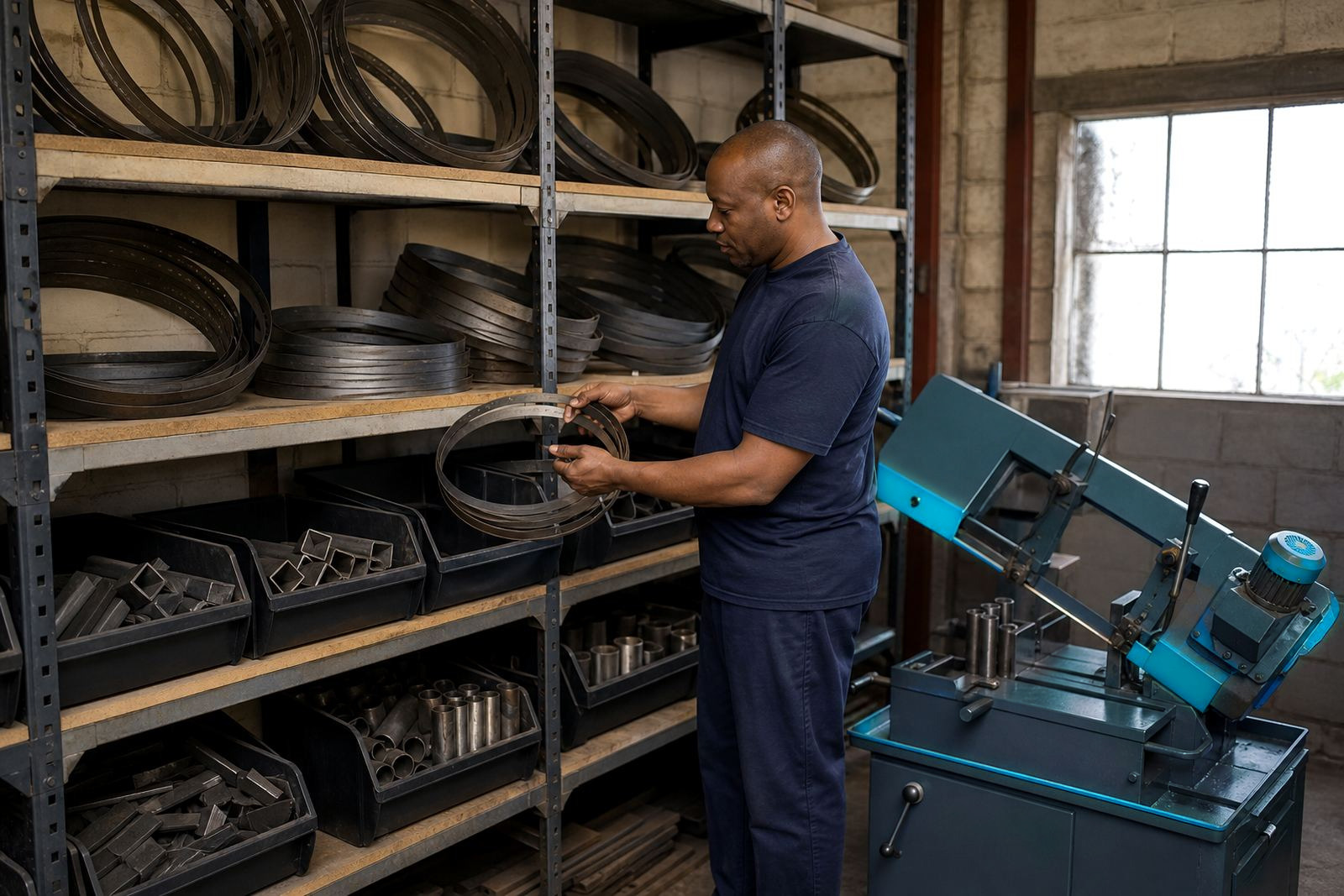
We supplied weld-to-length blades for the main bandsaw and added starter kit planning so the crew could keep a practical spare set on hand. Length verification formed part of the job, because a blade that is even slightly off length can create unnecessary weld strain or poor tracking on the machine.
The blade failure review also helped us remove a few habits that had been costing the workshop time. The teeth were showing signs of heat marking and uneven wear, which pointed to feed pressure that was too heavy on some cuts and coolant use that was being treated as optional. We walked through the machine fit check too, to make sure the blade sat correctly in the guides and the weld passed smoothly through the machine path.
For the manual saws, the advice stayed practical. The operators needed a blade that could cope with quick hand cutting on odd lengths, so the hacksaw stock was chosen for general steelwork as well as fine detail work. That gave the floor team a cleaner fallback when a powered saw was tied up.
Three weeks on the floor from the initial blade review to the last length checks.
From the initial blade review to the last length checks, this job took three weeks. In the first week we worked through the machine fit and measured the blade path, then set the tooth pitch selection for the common jobs. The second week covered the weld-to-length supply and the first round of run-in guidance on the shop floor. In the third week we checked the results against the cuts being made each day and adjusted the advice on feed speed and coolant use where needed.
We kept that sequence because a cutting setup only proves itself when people use it on real stock. The workshop had enough section variety to show where the blade was helping and where small handling changes would reduce wear. By the end of the review, the saws were giving a more predictable cut and the team had a clearer blade standard for routine work.
- Week 1: blade review and machine fit check
- Week 2: weld-to-length supply and run-in guidance
- Week 3: feed, speed and coolant review on actual cuts
What settled down after the blade change
The practical result was a steadier cut path on the mixed steel sections, with less wandering in the blade and fewer signs of tooth damage on the heavier pieces. The workshop also had a simpler buying pattern, because the standardised blade lengths and tooth pitches made stock control easier for the team on site.
There was another useful outcome too. Once the crew had a fixed point for blade width, pitch and run-in, they stopped treating every cut as a separate problem. That saved time on the floor and made the manual saws, bandsaws and spare blade stock work as one system instead of three unrelated habits.
For a steel service team in Germiston, that sort of change is worth more than a one-off blade swap. It reduces the stop-start routine that usually comes with mixed section cutting and gives the operators a base they can repeat without guessing.
Which of our blades would we choose again for a similar steel yard job?
We would approach the next job in the same order: confirm the common stock, match the tooth pitch to the smallest and heaviest cuts, and check the machine path before talking about extras. The weld-to-length service is useful when a workshop runs several saws or keeps spare coils, and the length verification step avoids a lot of avoidable noise later on.
We would keep that guidance with the team on the machine. Feed speed advice, coolant checks and run-in notes are given against actual stock, so they stay useful on the floor. When that happens, the blade lasts better and the cut stays more even across the week.
- Start with the stock mix before finalising blade length
- Check machine fit before finalising blade length
- Use run-in and coolant habits from the first cut
- Keep a standard blade plan for repeat section work
Key facts
| Client type | Steel service workshop in Germiston |
|---|---|
| Main materials | Bar, angle, channel and mixed steel section |
| Blade types | Bi-metal bandsaw blades and carbon steel hacksaw blades |
| Bandsaw tooth pattern | Variable pitch set to suit mixed section cutting |
| Service scope | Weld-to-length, length verification, blade fit check |
| Project timeline | Three weeks from review to final checks |