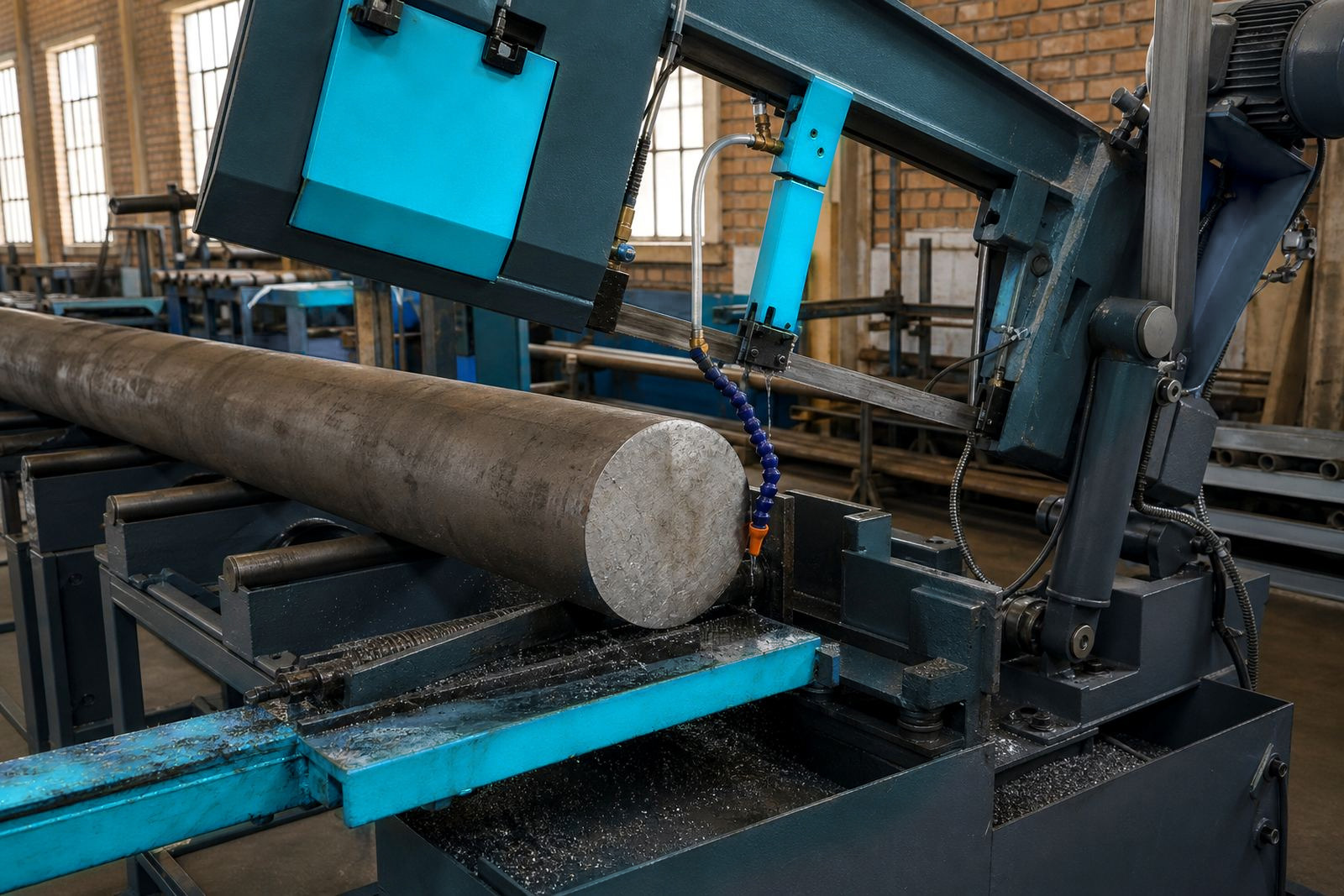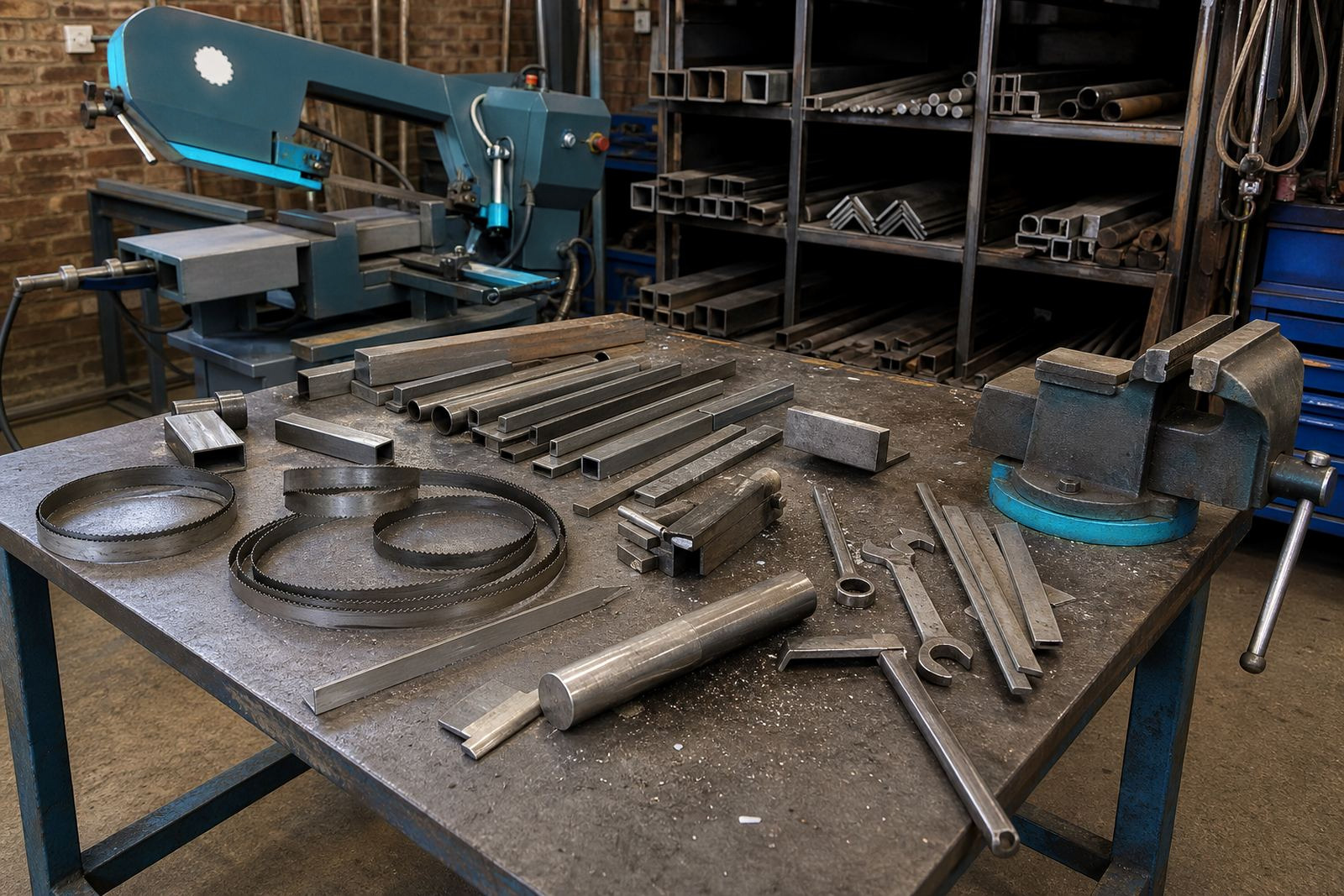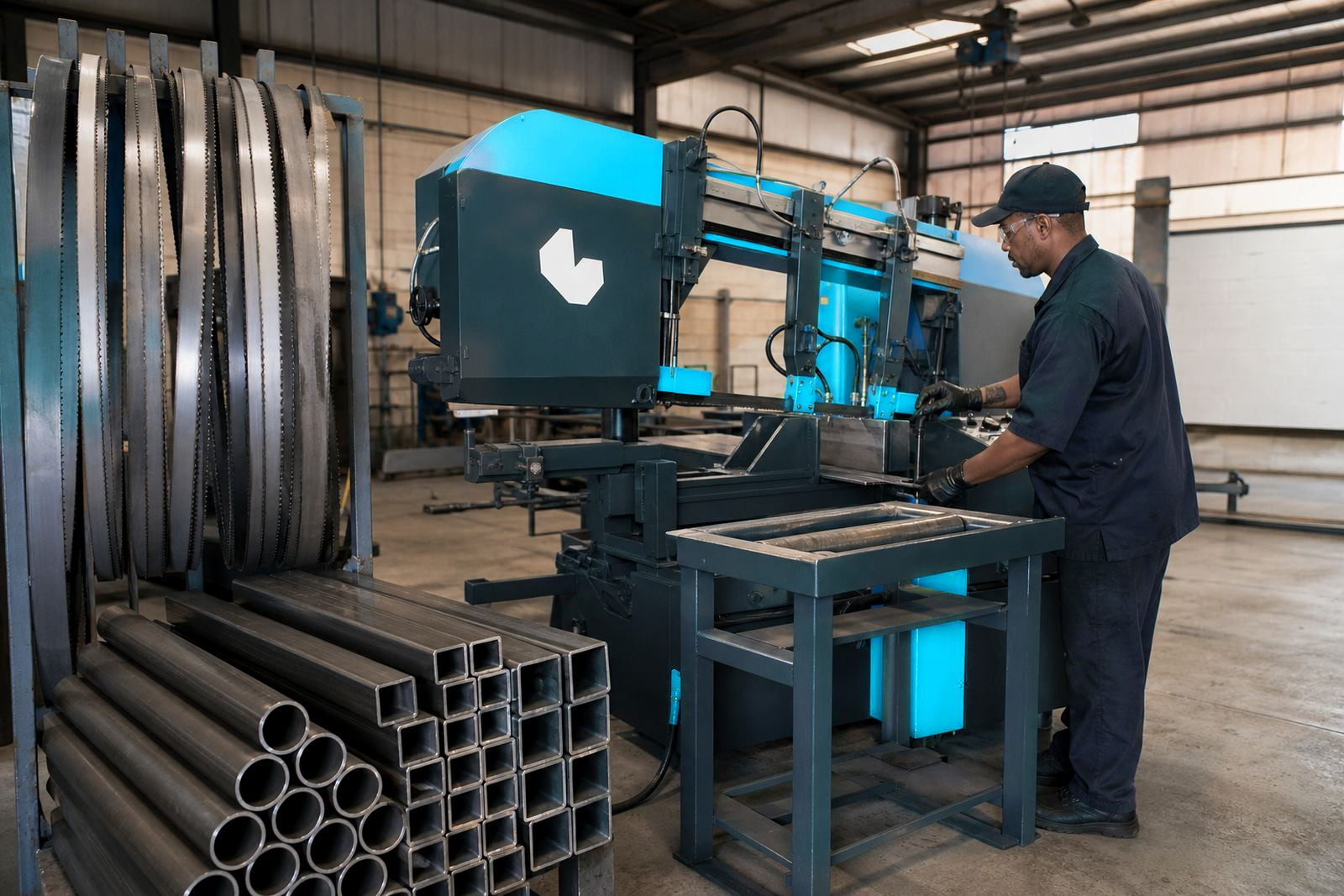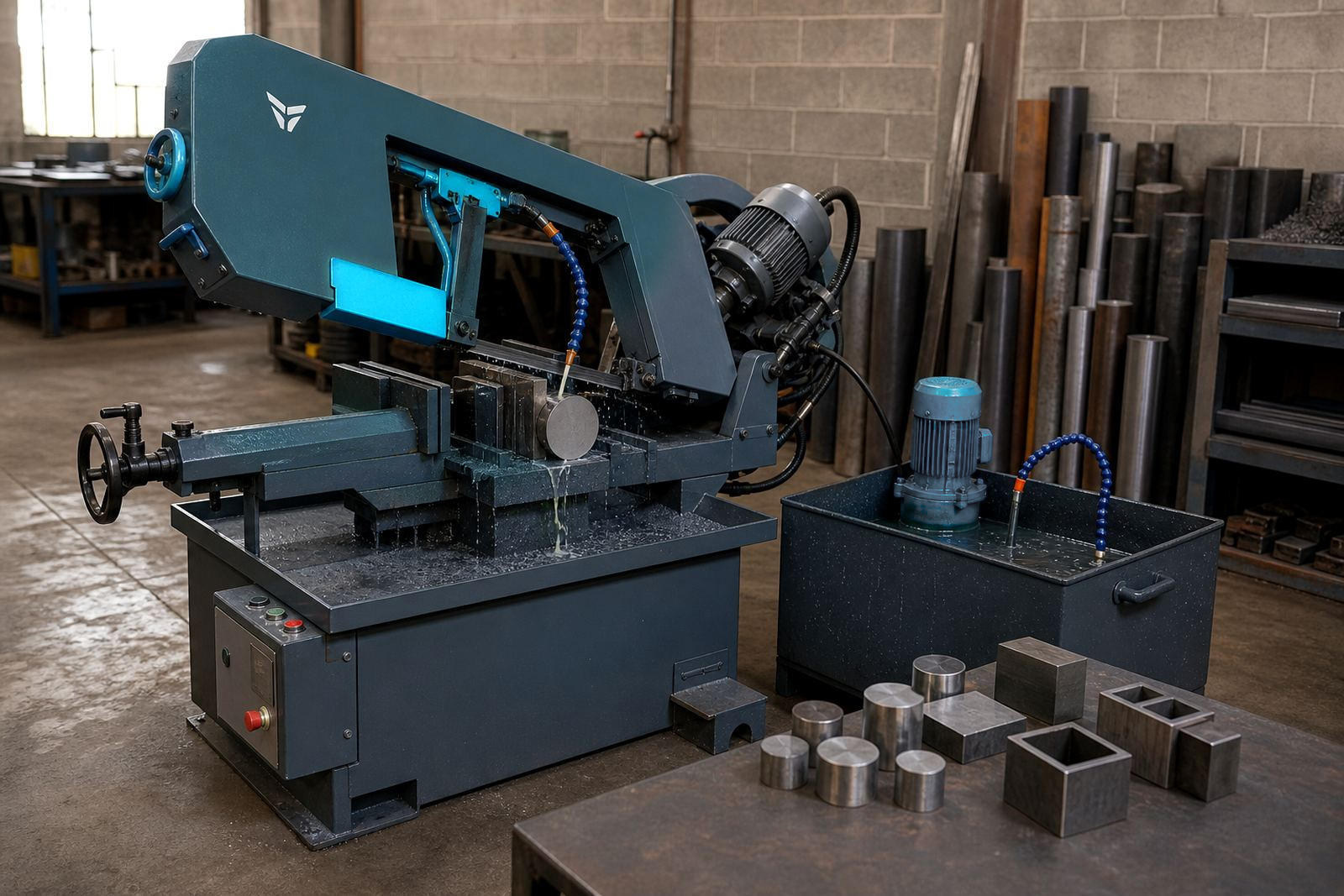
Solid round stock needs the right tooth set
The job came from a machine shop in Boksburg working through mild steel rounds, billet sections and mixed offcuts that had to stay square at the saw. The cutting room needed a steadier blade choice, less tooth stripping and a better fit between machine speed and the material being sawn.
We started with the basics: blade width for stability, thickness for body, and tooth pitch for the cut size. For larger solids, a coarser pitch keeps more teeth out of the cut at once. For smaller diameters and thinner wall sections, a finer pitch gives better tooth engagement and a cleaner finish. A steady balance is vital when the shop is pushing batches through a horizontal bandsaw or a manual saw frame.
- Material mix: solid rounds, billets and short cut lengths
- Blade types discussed: bi-metal M42 and carbon steel
- Cut focus: steady feed, straight tracking and fewer tooth breakages
Setups we provide for the Boksburg floor
We supplied bandsaw blades and hacksaw blades suited to general metalwork, with weld-to-length support for the saws already on site. The blade plan covered width, thickness and pitch selection so the team could match each machine to the work rather than forcing one blade to handle every job.
The main bandsaw choices were bi-metal M42 for tougher daily cutting and carbon steel for lighter, more routine work on easier materials. We also built starter kits for the shop, with spare blades grouped by size and cut type so the cutting bay stayed organised instead of mixing everything in one box.
- Weld-to-length blade service for the existing saw frames
- Length verification before fitment
- Starter kit planning for recurring stock sizes
Keeping feed rates steady on mixed billets
The biggest constraint was inconsistency. Some pieces were short and heavy, others were longer bars that flexed a little at the start of the cut. That meant run-in guidance was important, because a blade that is pushed hard too early will wander or lose teeth long before it should.
We talked through feed speed advice for each material group and checked coolant use where the machine allowed it. On carbon and bi-metal blades, coolant helps reduce heat, clears swarf and keeps the tooth face from loading up. In a busy shop, that small detail can save a blade from turning rough halfway through the day.
- Run-in guidance for new blades and fresh welds
- Feed speed advice for solid stock and billet cuts
- Coolant checks where the saw setup used fluid
How the blade sizes were matched to the work
We reviewed tooth pitch selection for the actual cut list instead of using one general setting. Solid rounds needed enough chip clearance, while smaller cut sections called for a finer pitch to keep the teeth working evenly. Variable pitch blades were useful where the shop moved between sizes and wanted less chatter on changing sections.
We also changed the blade width. On the larger saws, a wider blade gives better directional control, while a narrower blade suits compact machines or tighter work envelopes. Thickness was selected to suit the frame, the job load and the material. Checking the blade against the machine first avoids repeated trial cuts.
- Variable pitch used where sizes changed during the week
- Wider blades specified for better tracking on larger frames
- Machine fit check completed before welding lengths
What changed after the first blade cycle
The workshop moved into a more controlled cutting pattern over the first few weeks of use. The team had a clearer split between blades for heavier solids and blades for lighter repeat cuts, which made the saw area easier to manage and reduced the stop-start guessing that often slows a machine shop down.
Blade failure review was part of the follow-up work, especially where tooth wear or breakage hinted at feed pressure that was too high. We also helped with manual saw support for smaller cut-offs that did not need the main machine every time. That kept the main saw available for the bigger jobs and made stock use less wasteful.
- Cleaner separation between heavy and light cutting tasks
- Less random blade mixing in the cutting bay
- Better control over wear on the main saw blades
Our go to choice for another job in Boksburg
On a similar machine shop arrangement, we would keep the same order of work: confirm the stock list, check the machine frame, set the tooth pitch against the largest and smallest cut sizes, then weld the lengths to suit the saws already in place. That sequence avoids buying blades by habit instead of by cut demand.
We would also keep a tighter stock standardisation plan in place, especially where a workshop uses the same materials week after week. A small set of proven blade sizes, marked clearly and stored separately, saves time at the saw and gives the operators a simpler routine to follow.
- Standardise the common blade sizes first
- Separate blades by material group and cut type
- Keep a clear check on pitch, width and weld length
Key facts
| Project | Boksburg machine shop arrangement for solid rounds and billet cuts |
|---|---|
| Blade types | Bi-metal M42 and carbon steel |
| Pitch guidance | Finer for smaller sections, coarser for solids, variable pitch where sizes changed |
| Blade sizing | Width, thickness and weld length matched to each machine |
| Services used | Weld-to-length, length verification, run-in guidance, feed speed advice, coolant checks |
| Timeline | Set-up and blade matching completed over 3 weeks |