The Benoni brief, cut by cut
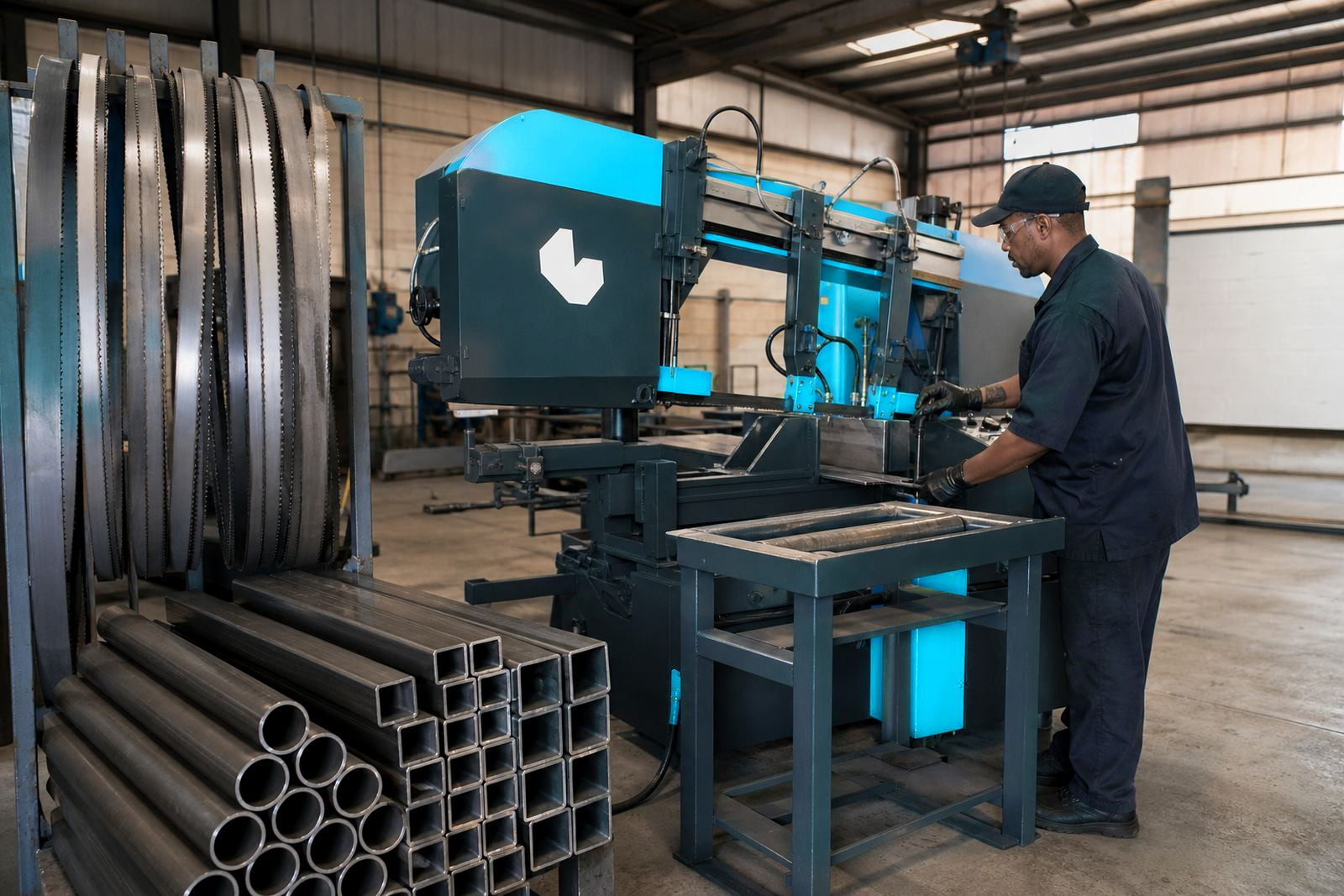
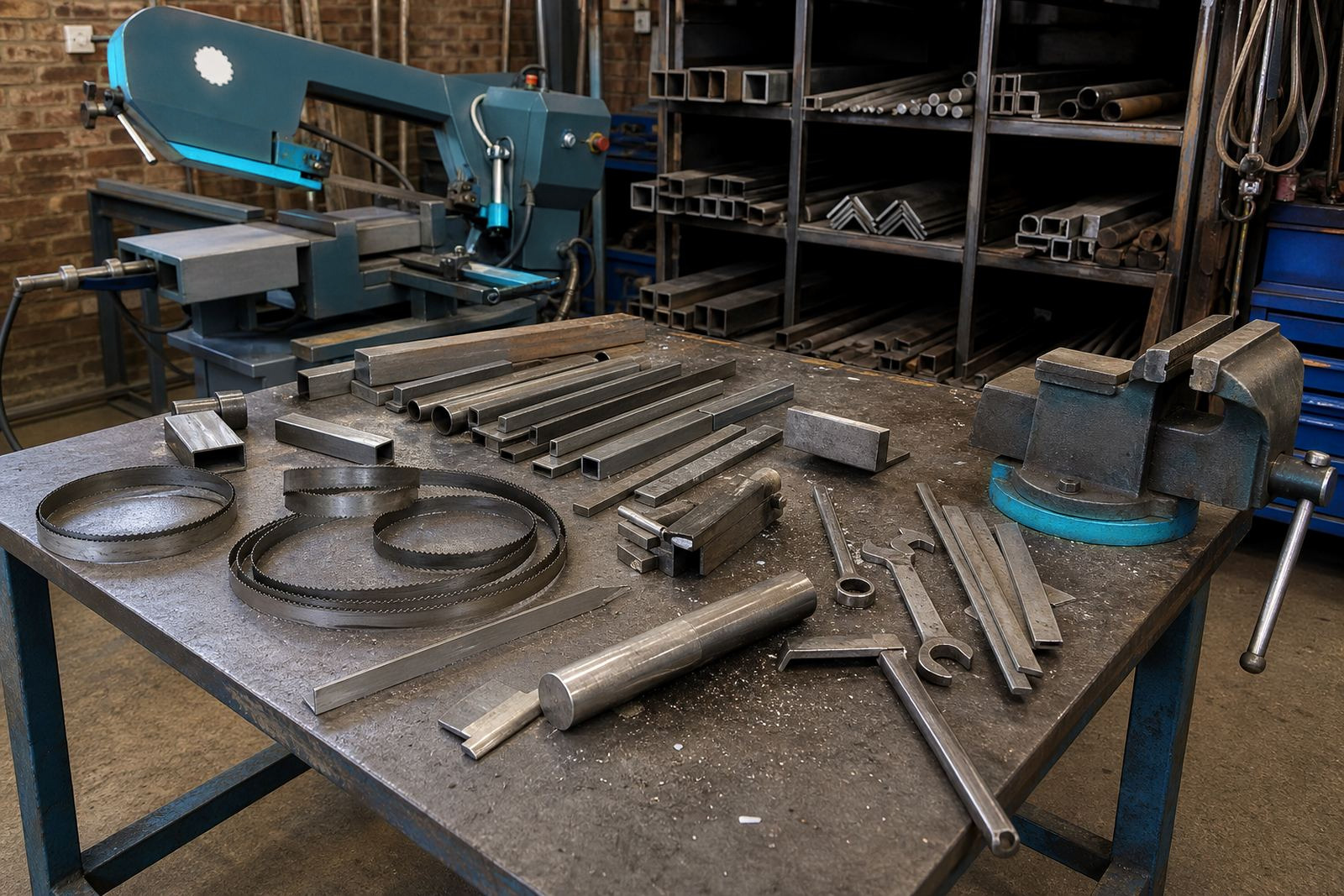
The shop was running mixed fabrication work, with square tube, round tube, flat bar and short batch cuts moving through the same saws. Their main problem was variation from job to job. Some cuts left a rough edge, others pushed the machine harder than needed, and the team had no fixed pattern for selecting pitch or blade width.
The brief was to build a practical blade plan for repeat work, especially where the same section sizes kept returning through the week. The team needed support with blade choice for general carbon steel, guidance on run-in, and a sensible way to keep stock standardised instead of carrying too many random lengths and tooth patterns.
- Material mix: tube sections, flat bar and general fabrication steel
- Machine type: workshop bandsaw and manual saw use
- Cut style: repeat batches, not single decorative cuts
- Main aim: steadier finish and longer blade life
Blade set-up for the stock they actually run
We supplied bi-metal blades for the heavier repetitive work and carbon steel blades for lighter manual saw use where the cut length and duty cycle did not justify a more expensive blade. The bi-metal option was set up with a tooth form suited to mixed wall thicknesses, while the carbon blades were kept for simpler cuts and smaller batches.
Tooth pitch was selected to suit the material wall thickness. On thinner tube and small section, a finer pitch helped keep more teeth in the cut. On thicker flat bar and heavier sections, a coarser pitch reduced clogging and helped the blade clear swarf properly. Where the saws were being used across mixed jobs, variable pitch was recommended to reduce chatter and improve stability.
- Bi-metal blade selection for mixed fabrication work
- Carbon steel blades for lighter manual cutting duties
- Pitch matched to wall thickness and section size
- Variable pitch for mixed bundles and changing profiles
Run-in, feed and coolant on the floor
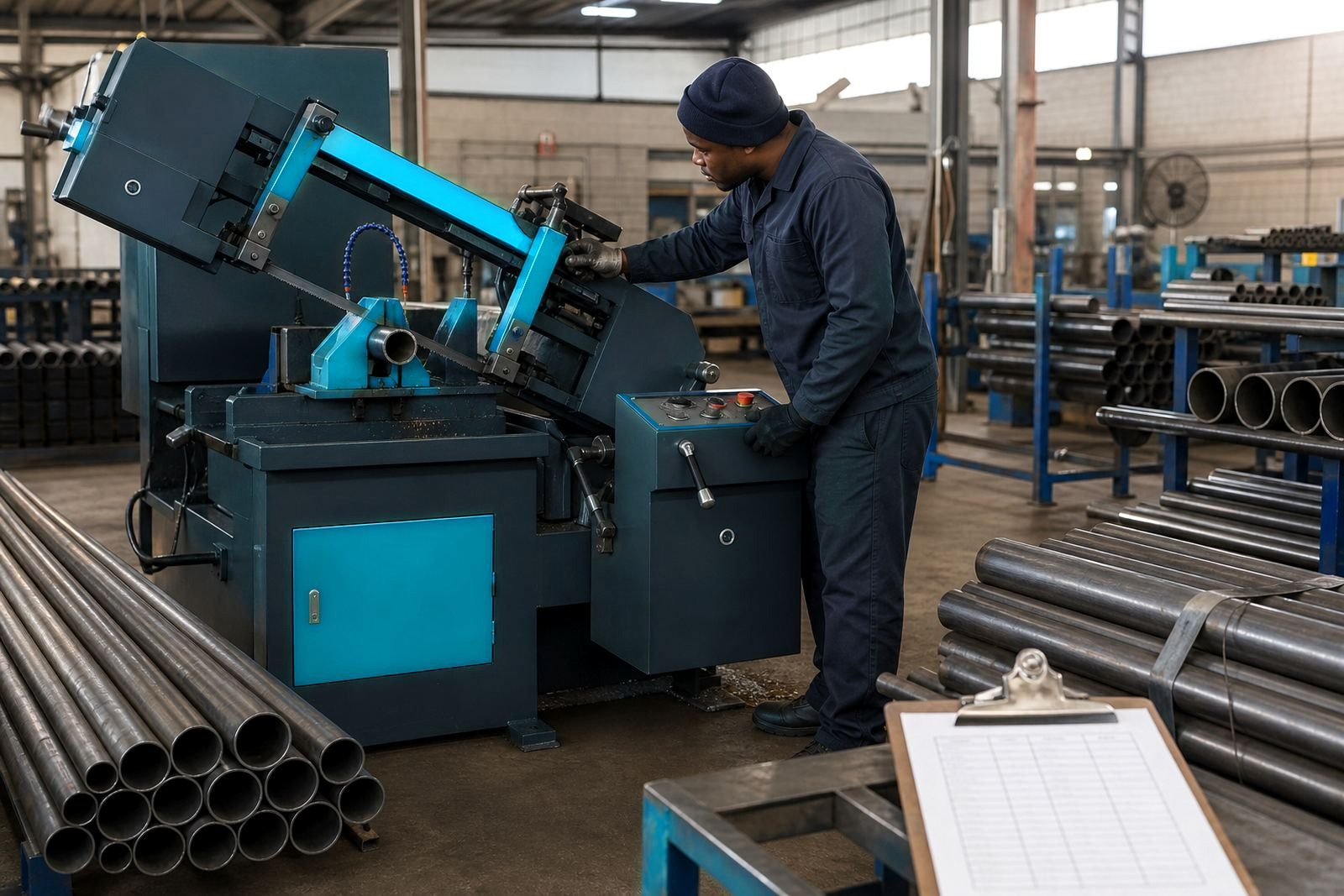
The blade plan covered what to fit and how to run it in. The first cuts on a new blade were kept controlled, with feed eased back and speed matched to the section so the teeth could settle before full production work began. On fabrication floors, a rushed setup can damage a fresh blade in a few heavy pushes.
We also checked feed speed advice against the saws in use, because an aggressive feed on thin tube often brings tooth stripping or wandering, while a slow feed on heavier bar can glaze the cut and waste time. Coolant checks were part of the plan too, especially for longer batch runs and hotter days in Gauteng. Clean coolant delivery helps with heat control, chip removal and blade life, and poor flow shows up quickly on repeated cuts.
- Controlled run-in on every new blade
- Feed adjusted for wall thickness and bundle size
- Speed kept in line with section and blade type
- Coolant checked for flow and coverage
Weld-to-length supply and fit checks
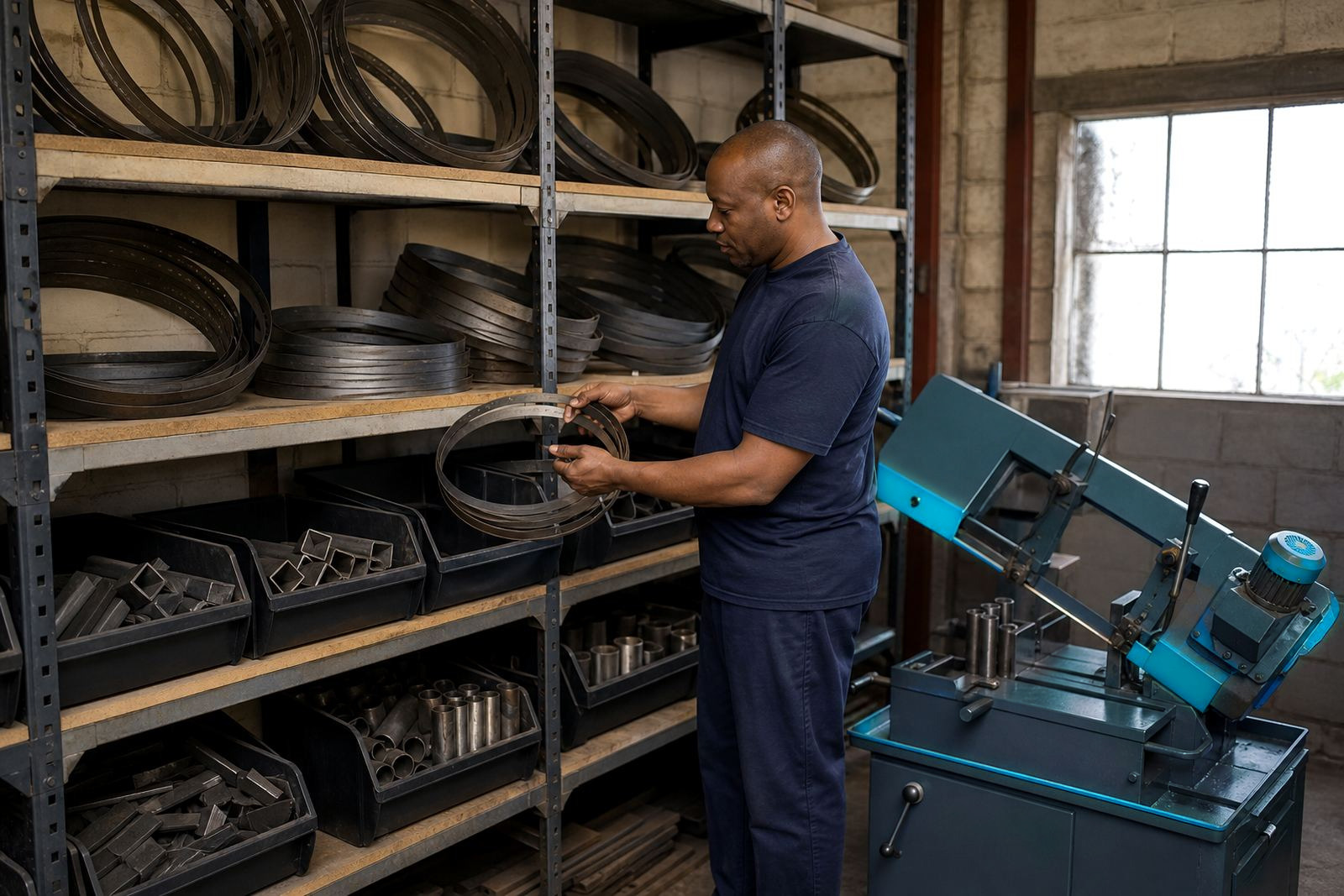
The workshop wanted blades welded to the lengths they use most, without having to carry loose stock and guess on fit each time. We set up weld-to-length supply for the common saw sizes, then verified length, blade width and thickness so the fit stayed correct after welding. A few millimetres off can affect tracking and tension when a blade is set up, so that step needs attention.
A machine fit check was done alongside the supply plan. That included the wheel path, guide alignment and the blade width that the machine could carry safely. Using a wider blade gives better straight-line support where the saw allows it. A thinner blade can turn more easily, though it must still suit the material and the cut path. Small mismatches create heat, noise and poor edge finish, even if the blade itself is decent.
Starter kits and stock that made sense
To keep the bay moving, we put together starter kits for the most common fabrication needs. We covered the blade types and tooth pitches that were being used repeatedly, without filling the shelf with sizes that would sit idle. We also helped the team standardise stock so the same widths and lengths could be pulled for similar jobs.
That approach suited a workshop doing repeat fabrication cuts, where the next order often looks a lot like the one before it. The team could separate stock for tube work, heavier bar and manual sawing instead of mixing everything into one bin. It made the saws easier to set, and the fit-up more predictable when a job had to move from one machine to another.
- Starter kits for common fabrication cutting duties
- Stock standardisation for repeat jobs
- Separate blade sets for different material groups
- Manual saw support for lighter cut work
What changed after the setup
Over the following weeks the workshop settled into a clearer cutting pattern. Blade changes became more deliberate, the team stopped forcing one blade type across every job, and the cut edge quality improved on the repeat sections. The biggest difference came from matching pitch and feed to the material instead of treating every saw cut the same.
For Benoni fabrication work, the practical gain was consistency. Tube sections cut cleaner, flat bar stopped chewing through blades as quickly, and the saw operators had a clear reference for which blade went where. That also made the ordering side easier, because the shop now had a standard list of lengths and widths to hold for the usual jobs.
- Sharper cut consistency across repeat jobs
- Less trial and error at the saw
- Better blade life on mixed material work
- Cleaner stock control for the workshop team