
Start with the cuts your shop makes most often
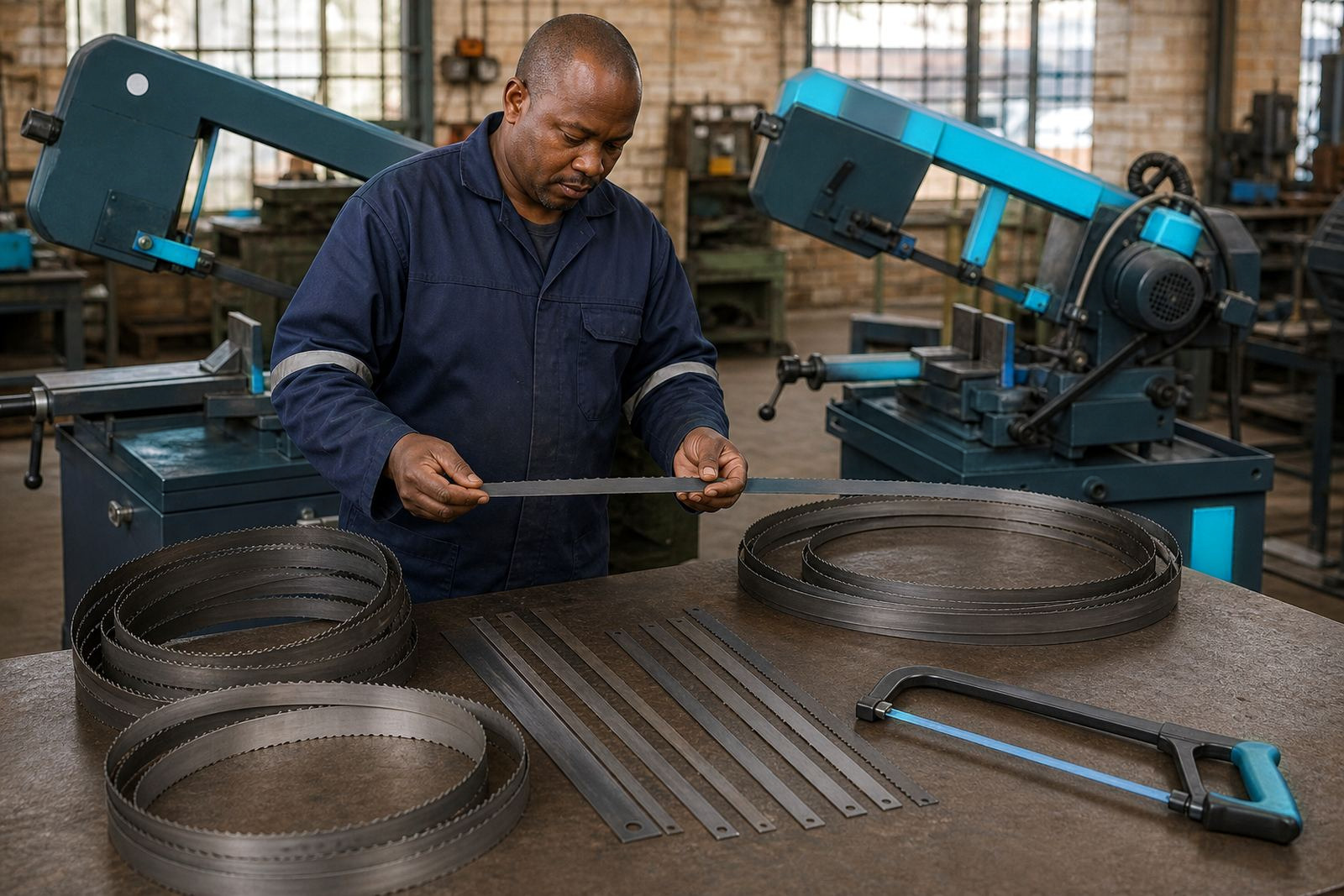
A starter kit should cover the material that lands on the saw table most days and the jobs that arrive most often. Mild steel, structural sections, solid bar, thin tube and mixed offcuts each ask for a different tooth pitch and blade width, so the first step is listing the work in front of you.
For a new or expanding workshop in Alrode or further out in Johannesburg, Pretoria, Durban, Cape Town, Vereeniging, Germiston or Boksburg, we usually begin with the saws already on site and the stock sizes you cut most. That stops the kit from being too narrow, or full of blades that sit on the shelf while the busy jobs keep waiting.
- List the main materials by thickness and shape.
- Note whether the saw is manual, semi automatic or powered feed.
- Check the blade length, width and thickness the machine accepts.
- Separate general workshop cuts from heavier production work.
Pick one coarse, one medium and one finer option
A practical starter mix normally includes a coarse tooth blade for heavier section work, a medium pitch for mixed wall thicknesses, and a finer pitch for smaller solid sizes or thinner wall tube. Variable pitch blades help reduce chatter on awkward profiles and can cover a wider range, which is useful when a workshop is still learning its normal cut pattern.
For bandsaw blades, tooth pitch is one factor. Blade width changes tracking and straightness, while thickness affects flexibility and fatigue life on smaller wheels. The set of the teeth, the cutting speed and the feed rate all work together. If feed is too heavy for the tooth form, the blade wanders or strips teeth. If speed is too slow on the wrong material, heat builds and the cut starts to drag.
- Coarse pitch for solid bar and heavier wall sections.
- Medium pitch for general steel stock and day-to-day work.
- Fine pitch for smaller sections and cleaner control.
- Variable pitch for mixed jobs and vibration control.
How bi-metal and carbon steel blades fit into a starter pack
Bi-metal blades suit workshops that want longer service life on regular metal cutting, especially where mild steel and tougher alloys are both part of the week. A bi-metal blade with a hard tooth edge and flexible backing handles more heat and holds up better when the work mix shifts.
Carbon steel blades are still useful in the right place. They suit lighter duty cutting, hand hacksaws, and budget conscious setups where the work is softer material or shorter runs. They suit training, backup stock, and jobs where a workshop wants a simpler blade on the shelf.
Starter kit planning balances cost, tool life and the kind of steel your team keeps feeding through the saw without loading every drawer with the same spec.
Run-in, coolant and feed settings affect blade life more than most teams think
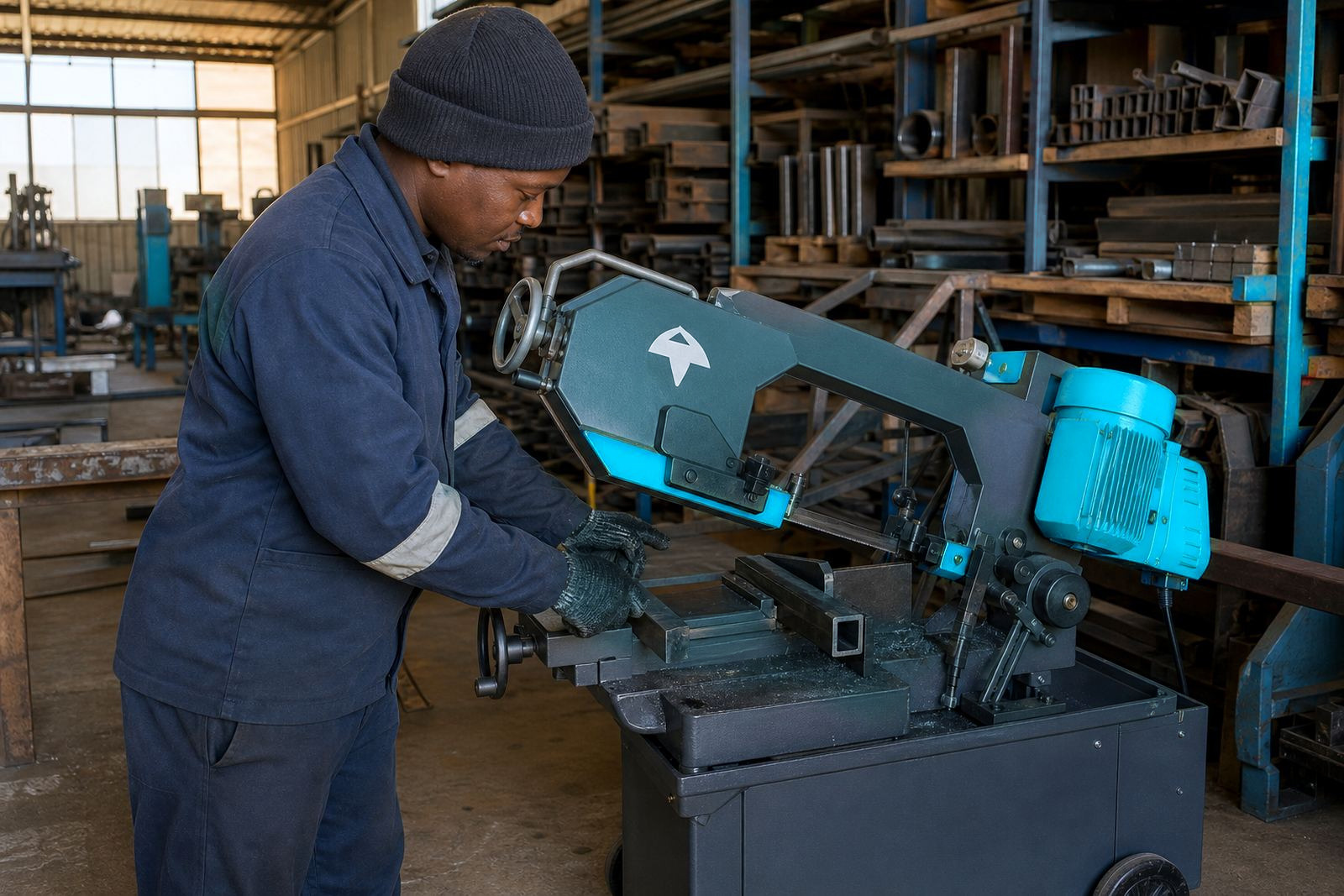
A proper run-in helps a new blade settle in. Begin with gentle first cuts so the tooth edges settle before full feed comes into use. Rushing that stage shortens blade life, even when the pitch and width were chosen correctly.
Check coolant where the saw is running hard or the cut length is long. Good coolant helps carry heat away, clears swarf and keeps tooth tips from glazing over. Feed and speed should match the machine, the tooth form and the material thickness. A blade that sounds smooth but leaves a shiny, hot cut is often running too dry or too fast for the job.
- Use a lighter feed during the first cuts on a fresh blade.
- Match cutting speed to the material and tooth pitch.
- Check coolant flow and concentration where the machine uses it.
- Watch swarf shape, it tells you a lot about the cut.
Starter kits for workshops that cut more than one profile
A growing workshop rarely cuts only one type of section. Angle iron, flat bar, channel, pipe, solid rounds and bundles of mixed stock can all turn up in a single week. A starter kit should be built around range and informed selection.
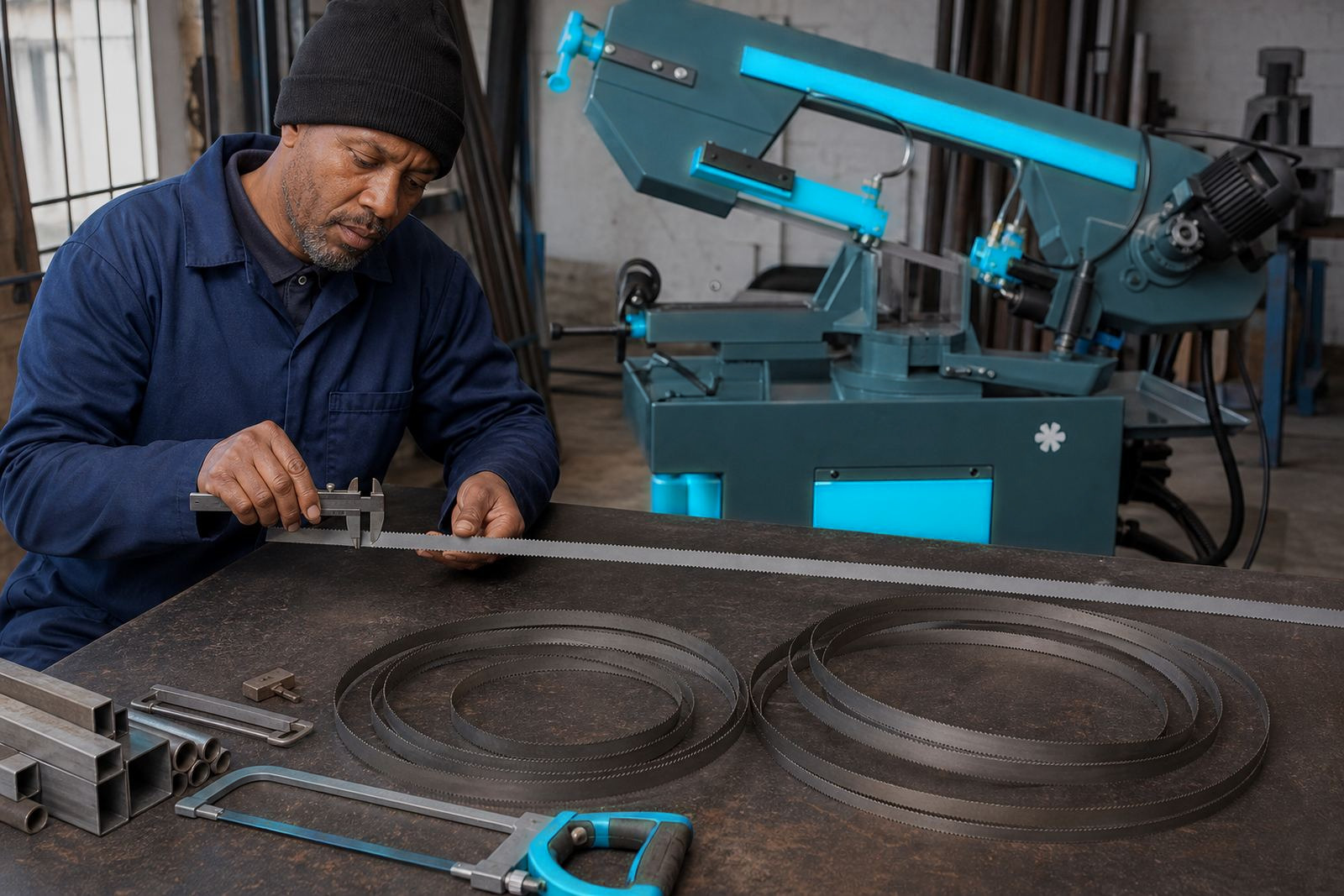
We often help divide the kit into the saw for everyday production, a spare, and a manual saw option if hand cutting still forms part of the job. Some teams also need weld-to-length blades for machines that take a joined loop instead of a standard retail length. A length verification check is worth doing before stock is ordered, because one wrong measurement can hold up the whole bench.
- Main blade for daily production work.
- Secondary blade for thinner sections or mixed stock.
- Manual saw support for trim work and workshop backup.
- Weld-to-length option where the machine calls for it.
A sensible path when the workshop is still finding its rhythm
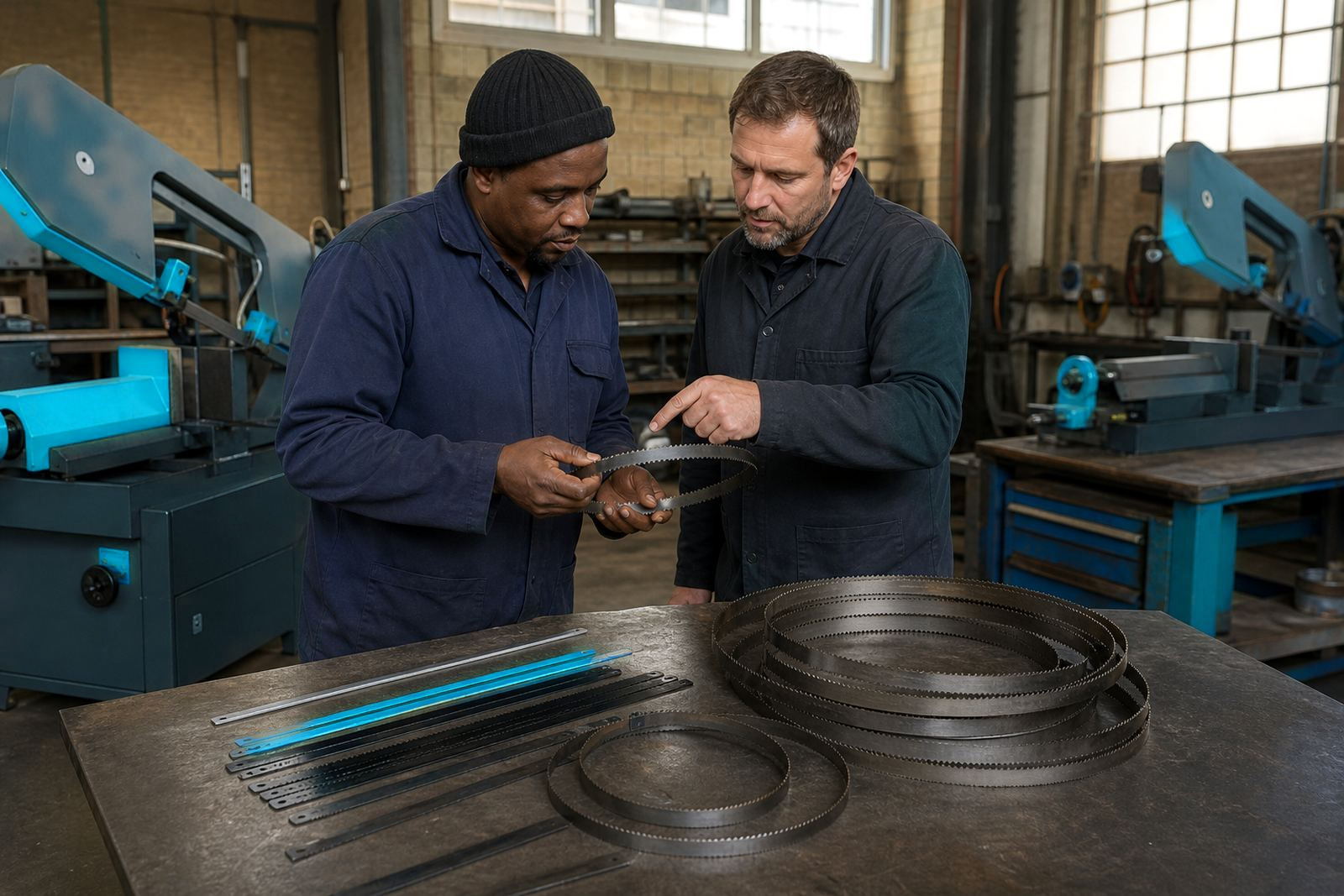
When a business is expanding, the blade cupboard can fill up with half useful sizes. A better approach is to standardise the common tooth pitches, keep the widths matched to the machines, and build a small reserve of proven options. Fresh bundle arrivals give the team a clear starting point every time.
Blade failure review is part of that process. A snapped blade can point to poor clamping, off-square stock, worn guides, excessive feed, or a pitch that was too fine for the cut section. Looking at the failure pattern helps shape the next starter kit so the same mistake does not keep repeating in the workshop.
MoreCut Saws supports workshops across South Africa from Alrode, Alberton with blade selection help, starter kit planning and stock standardisation for bandsaw blades and hacksaw blades.