What we need from the blade or machine
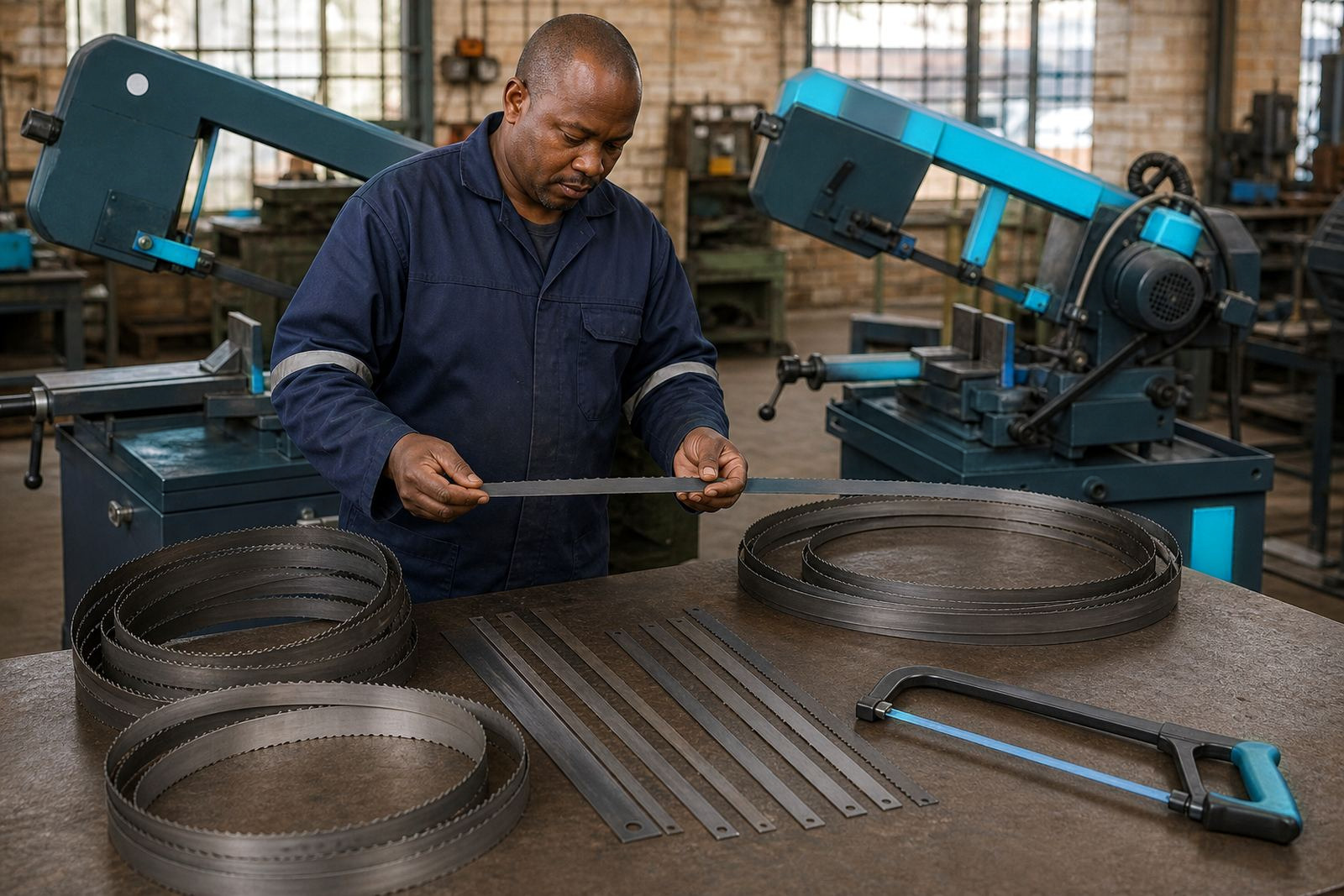
The length check starts with the blade you have, or the machine it runs on. A clear photo of the blade loop, the old tag, or the saw model plate often gives enough to work from, but physical measurements are better where the workshop has already changed guides or wheels.
For bandsaws, the loop length must suit the machine frame and wheel centres. For hacksaw blades, the key points are the blade type, fixing centres and the stroke length used on the machine. If the wrong length goes in, tension, tracking and cutting life all suffer.
Measurements for a real job
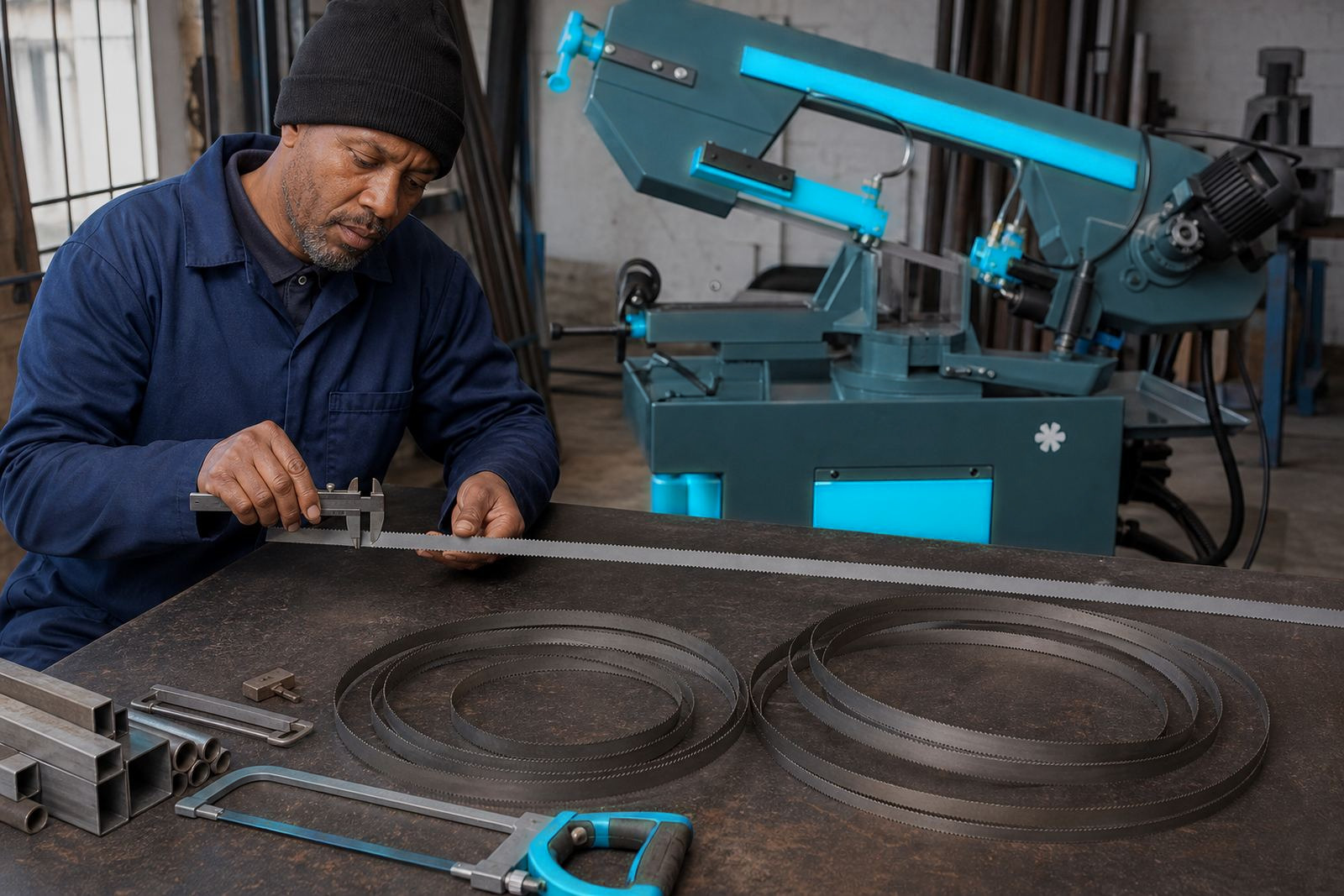
We consider every part of the blade, beyond the number stamped on it. Tooth pitch, blade width, thickness and set all influence how the blade behaves once it is under tension and running through section, tube or solid bar.
- Overall loop length or blade length
- Machine make, model and cutting capacity
- Material type and wall thickness
- Tooth pitch, including variable pitch where used
- Blade width and thickness
- Whether the saw runs with coolant
How incorrect length shows up in the cut
A blade that is too short can pull the machine hard and make wheel alignment awkward. Too long, and the blade may not tension properly, which leads to poor tracking, wandering cuts and chipped teeth. On older workshop saws, that mismatch often gets blamed on the material when the loop length is the real problem.
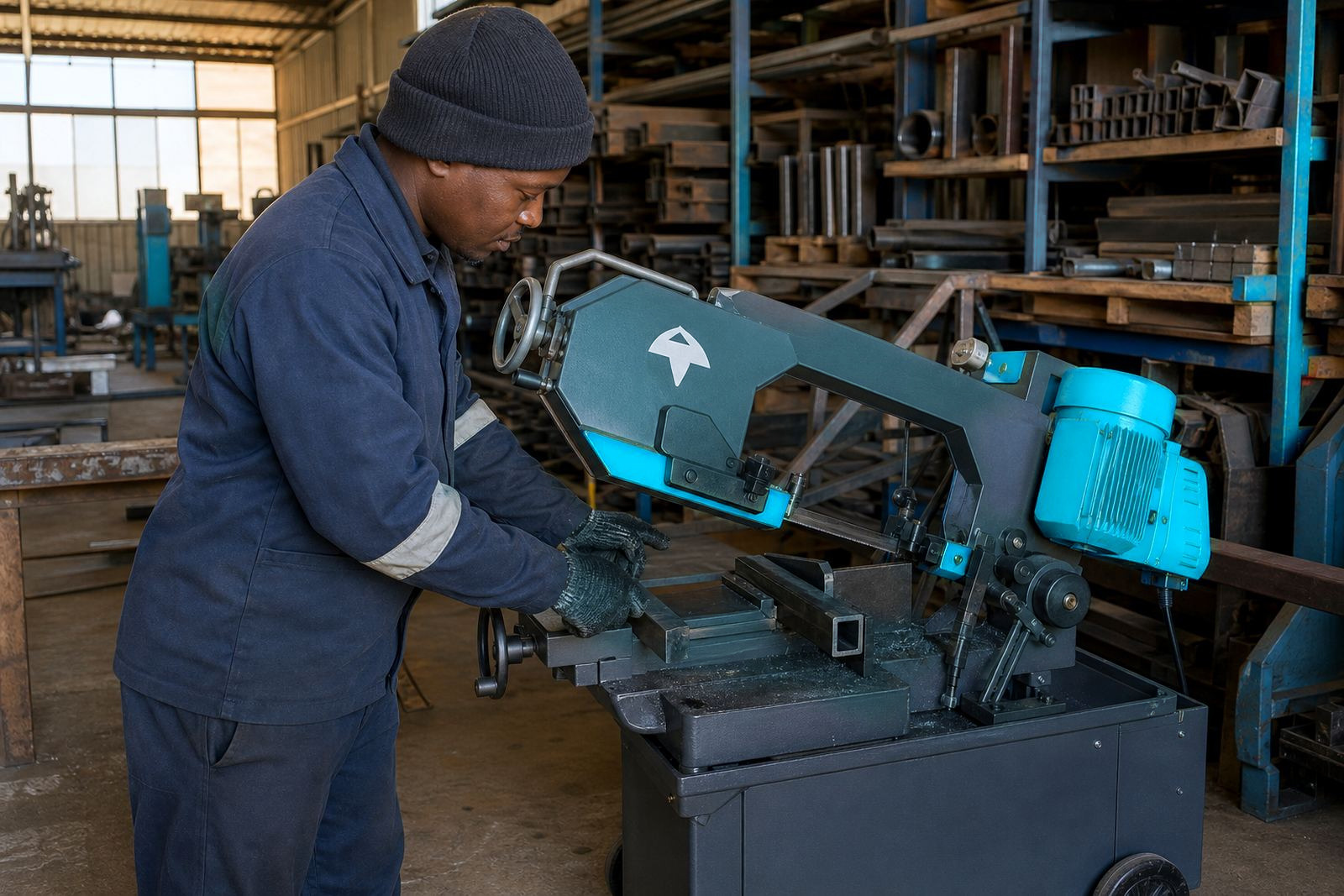
We also check for signs that the machine itself is affecting the blade. Bent guide arms, worn bearings, tired tension hardware and badly set guides can all throw the reading off. A fresh blade on a machine with slack hardware still gives poor results.
The check we use before a weld or supply order
Where a blade is being welded to length, the weld area must suit the blade material and section. Bi-metal blades and carbon steel blades behave differently during welding, cooling and finishing, so the length check goes together with the blade type.
- Confirm the machine's required loop length
- Match the blade type to the job
- Check tooth pitch against the material
- Review feed, speed and coolant use
- Confirm whether a starter kit or spare blade set makes sense
That process helps avoid a loop that fits on paper but runs badly in the workshop.
When we ask for a second measurement
Some machines carry no readable plate, especially after a move between branches or a workshop rebuild. For those jobs, we may ask for a second measurement from the wheel centres, tension range or the old blade itself. If the blade has stretched, cracked or broken at the weld, we use the machine data and the remaining loop pattern together.
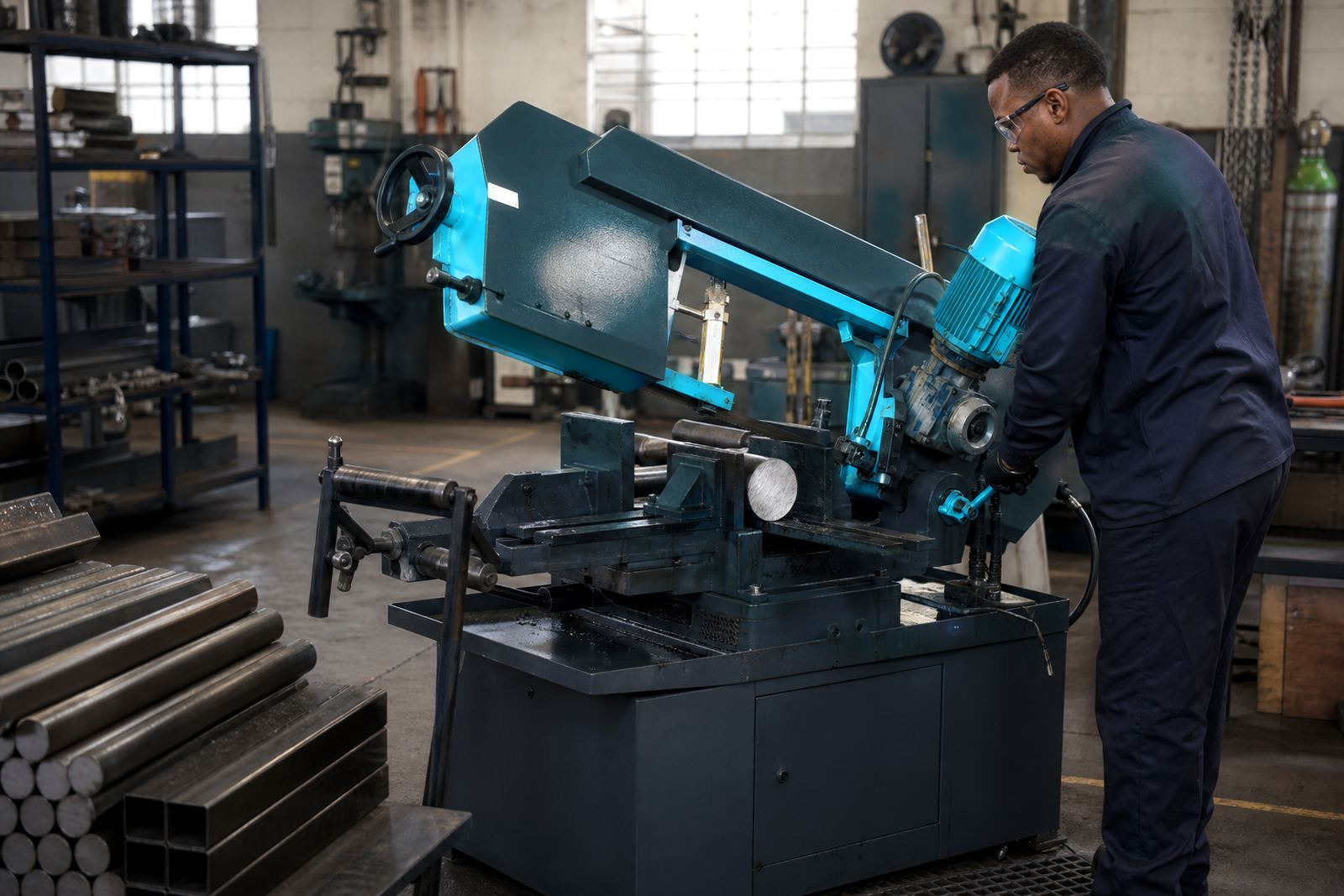
Manual saw support follows the same approach. A hand-fed saw can still be fussy about length, and the right loop keeps the blade seated and cutting evenly through everyday steel stock.
What happens after the length is confirmed
Once the length is confirmed, we can set up the rest of the blade choice around the job. That includes help with blade width, running in the blade and coolant checks where the machine uses cutting fluid. The length check is one part of getting the saw ready, and it protects everything else.
Workshops in Alberton, Johannesburg, Pretoria, Vereeniging, Durban and Cape Town may need the same blade length, with different finishing details depending on the machine condition and the material being worked on. Mild steel tube, heavy solid bar and mixed bundle work each treat a blade differently.
If you have the blade in hand, send the full loop size and the tooth count visible on the body, along with the label number.