Start the blade gently, not flat out
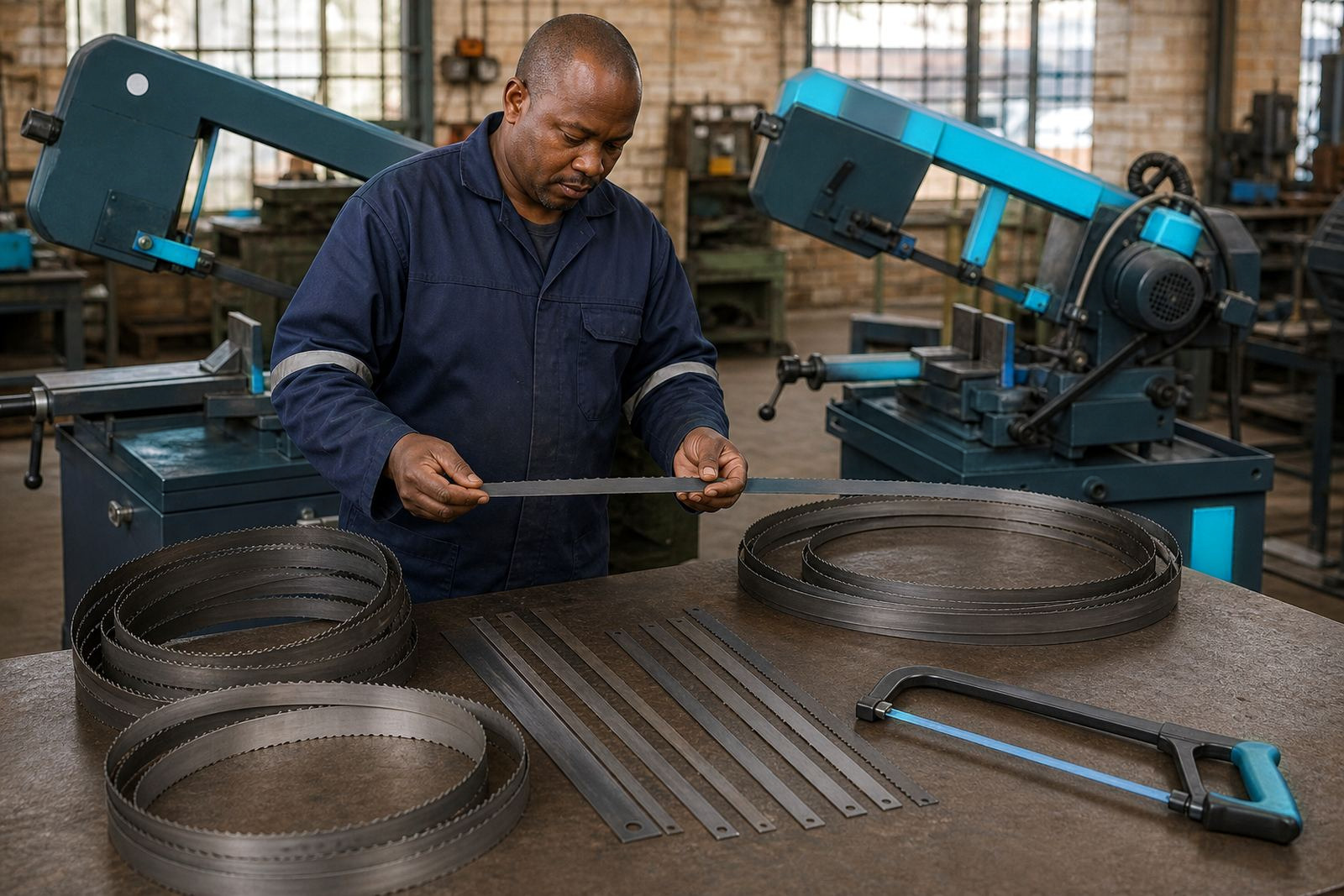
A fresh bandsaw blade or hacksaw blade carries a keen tooth edge and a clean set. If you drive it at full feed from the first cut, the teeth can chip at the tips or lose their line before the blade has settled. The first job should be treated as a controlled break-in, especially on hard section, thick wall tube or mixed scrap where the cut can change suddenly.
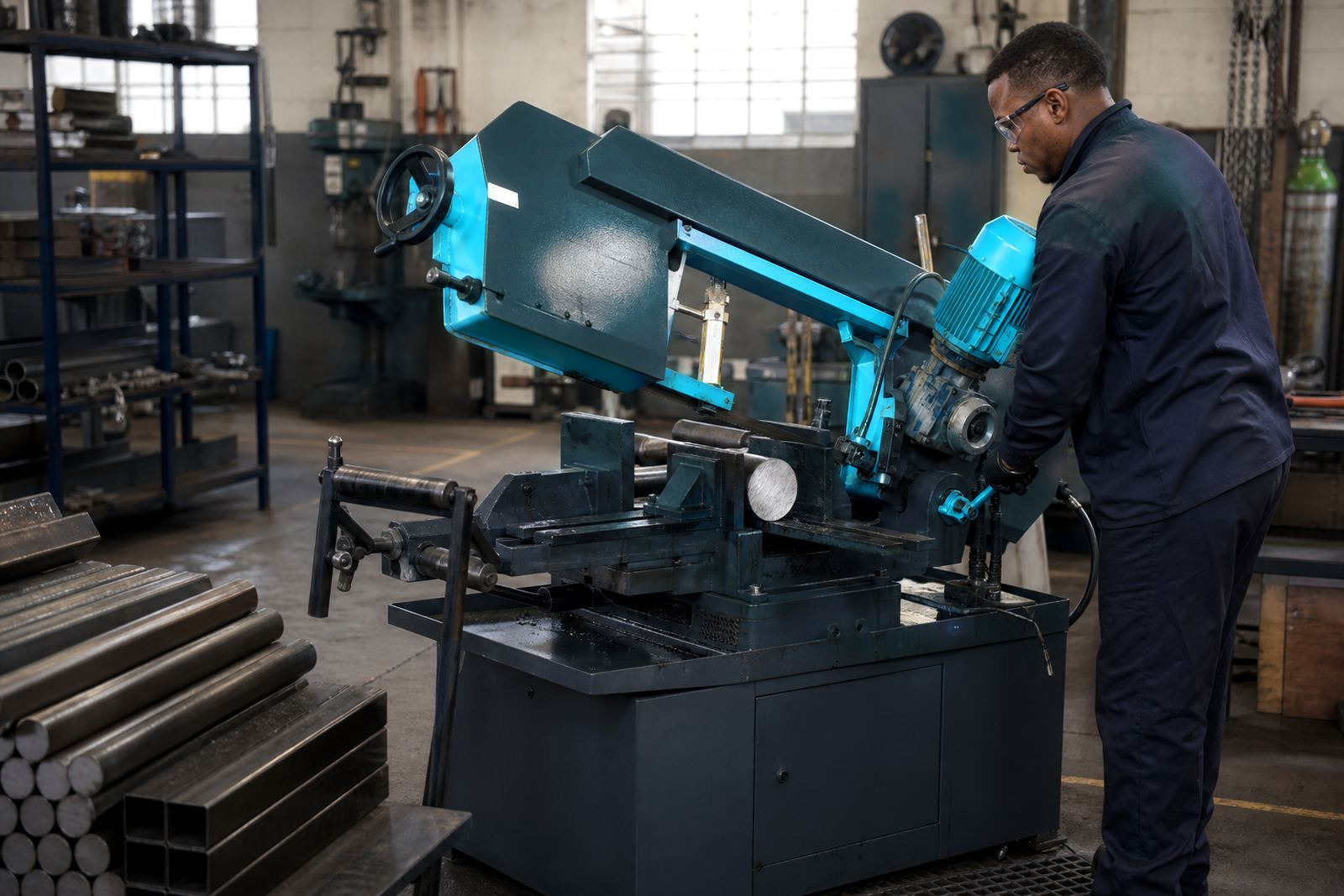
Use a lower feed than normal and keep the cut steady. The blade should make a clean path without forcing the machine to work against a heavy load. On bandsaw work, a calm first cut helps the blade seat properly on the wheels and guides, when the blade width and thickness have been matched to the machine. On a manual hacksaw setup, the same principle applies: light pressure, even stroke and no sideways twist.
For M42 bi-metal blades, the tooth tips are hard but still need a controlled start. Carbon steel blades need even more care because the teeth are less forgiving if the feed is too aggressive. If the blade is new and the material is dry, warm or gummy, the first cut is not the place to test the limit.
Use the first cuts to settle the teeth
A good run-in gives each tooth a chance to seat into the work evenly. That means the blade cuts without one area carrying all the pressure. For bandsaw blades this is especially important on variable pitch patterns, where the tooth spacing changes along the blade and the load moves a little during the cut. If the run-in is too hard, the coarser teeth may take the shock while the finer teeth polish rather than cut.
Start with shorter cuts in similar material before moving into production lengths. This lets the tooth set settle and gives you a chance to listen to the machine. A clean sound is usually steady, while harsh vibration, squealing or a rough finish can point to too much feed, the wrong speed or poor coolant coverage. The blade should not hunt from side to side in the kerf, and the cut face should remain fairly straight.
- Begin with light feed and low pressure.
- Keep the blade square to the workpiece.
- Watch the chip shape and colour.
- Move to normal cutting only after the first few cuts stay consistent.
Match speed and feed to the metal
Run-in is about patience and pairing the blade to the material. A bi-metal blade on mild steel can take a different start from one used on stainless or solid bar. We also check tooth pitch. Fine TPI works better on thin wall sections and smaller solids, while a coarser pitch suits larger sections where the tooth can clear the cut. Variable pitch blades help reduce chatter on mixed profiles, but they still need the first few cuts handled with care.
If the feed is too heavy, the teeth may plough instead of slice. If the speed is too high for the section size, the edge can heat up and lose its bite. The right balance keeps chips moving away from the cut and stops the gullets from packing. On many jobs the first sign of trouble is a hot blade, blue chips or a finish that looks torn rather than cut.
Coolant helps here too. Even a modest flow helps remove heat and flush fines away from the tooth line. For some hand sawing tasks, a dry cut can work. On machine bandsaw work, especially in longer cuts, coolant support is part of a proper start. In humid coastal areas and inland workshops alike, a fresh blade still needs the same steady approach.
Check the machine before the blade works hard
A run-in goes better when the machine is in good shape. Blade tracking, guide position and wheel condition all influence how a blade sits during those first cuts. If the guides are open too far, or the blade sits off line, the edge can wear unevenly and the set can be damaged on one side. That becomes obvious later as a wandering cut or uneven tooth wear.
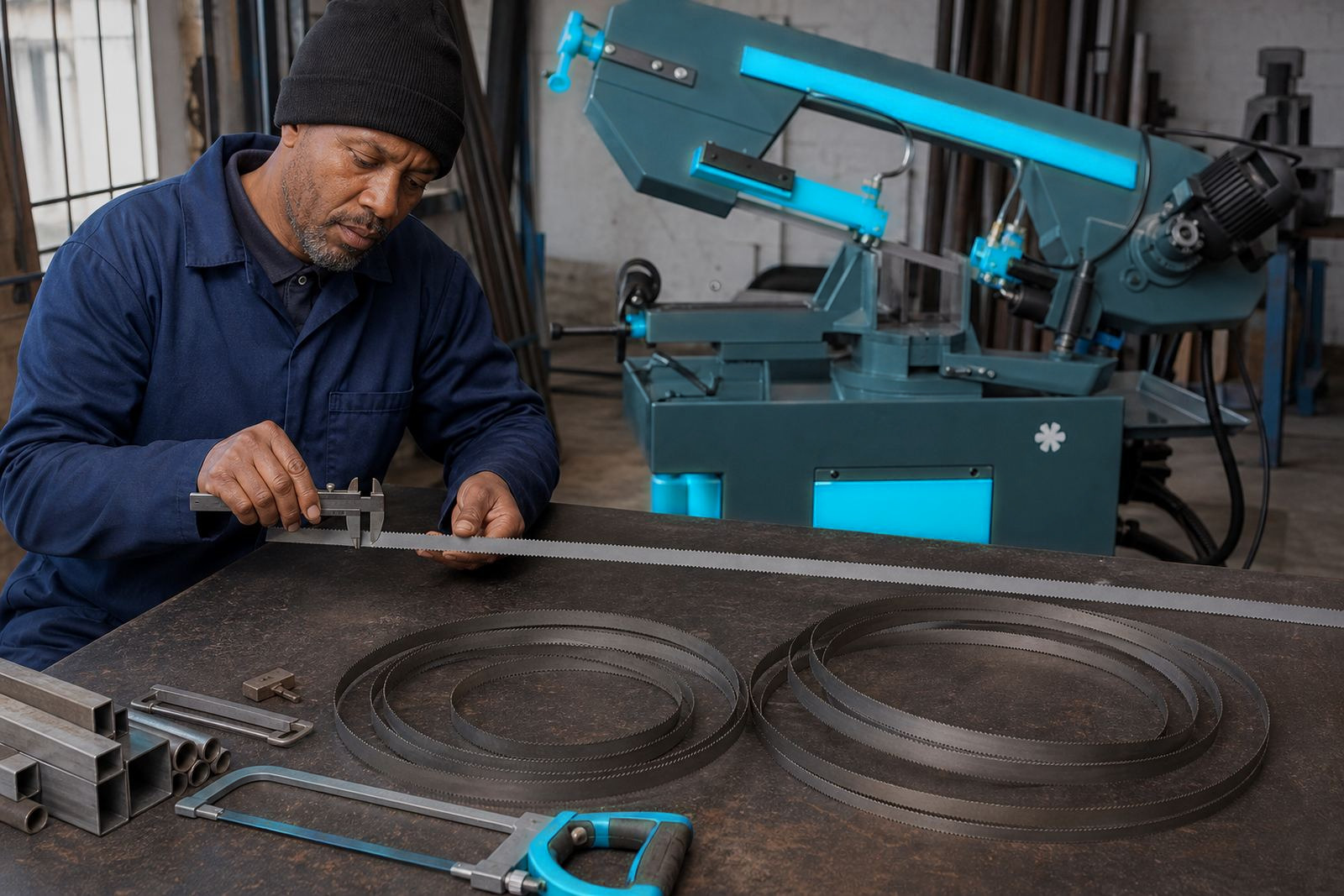
Length verification is also worth checking before the first serious cut. A blade that is too tight will run hot and sound strained. A blade that is too loose can flutter, especially on a narrow width. For weld-to-length service, the joint should be sound and dressed clean so the blade passes through the guides smoothly. A poor weld can spoil a good blade before the run-in is finished.
- Check tracking and guide position first.
- Make sure the blade length is correct for the machine.
- Inspect the weld and the dressed joint.
- Confirm coolant reaches the cutting line.
What to watch during the first shift of use
The first shift with a blade often tells you more than the label on the box. Watch the chips. Fine powder can point to rubbing, while bright even chips usually show the teeth are working properly. Listen for a steady cut rather than chatter. Feel the machine if you can do so safely, because excess vibration may mean the tooth pitch, feed or blade width is not matched to the job.
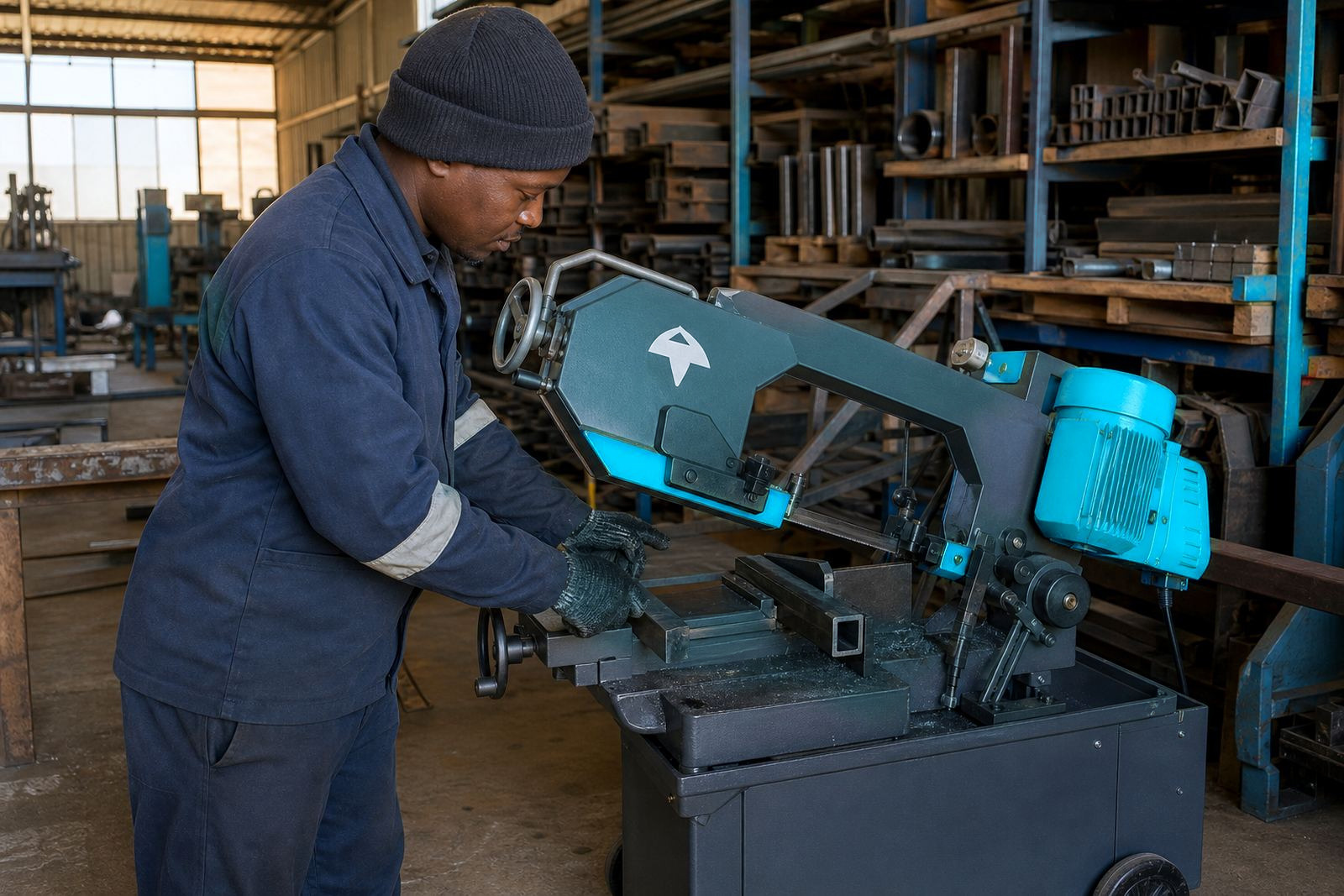
When a blade is used on a manual saw, keep the stroke smooth and avoid pushing down hard on the return. When it is fitted to a powered bandsaw, let the machine do the work. Run-in guidance also changes with the material. Tube, angle iron, heavy section and stainless all behave differently, and a good start takes that into account. If the blade is a starter kit item, keep the first cuts simple and repeatable until the edge has settled.
A blade failure review can help if a new blade chips early, twists or breaks at the weld. Sometimes feed, speed, coolant, blade width or machine condition works against the blade itself.
How MoreCut Saws supports the first cuts
Our team helps workshops with run-in guidance, tooth pitch selection, blade width selection and starter kit planning for bandsaw blades and hacksaw blades. We also look at stock standardisation where a workshop wants fewer blade types and clearer buying patterns. We keep the right blade on hand for mild steel, solid bar, tube and other common metalwork jobs.
Sibusiso Dawood leads the business, with support from Anika Nortje, Pieter Moonsamy, Lerato Zungu, Themba Chetty and Chanel Jacobs. From Alrode in Alberton, we support customers across Johannesburg, Pretoria, Vereeniging, Durban, Cape Town, Germiston and Boksburg.
Long service usually begins in the opening few metres of sawing. Treat that opening stretch carefully and the blade usually settles into steadier work after that.