The material comes first, then the machine dial
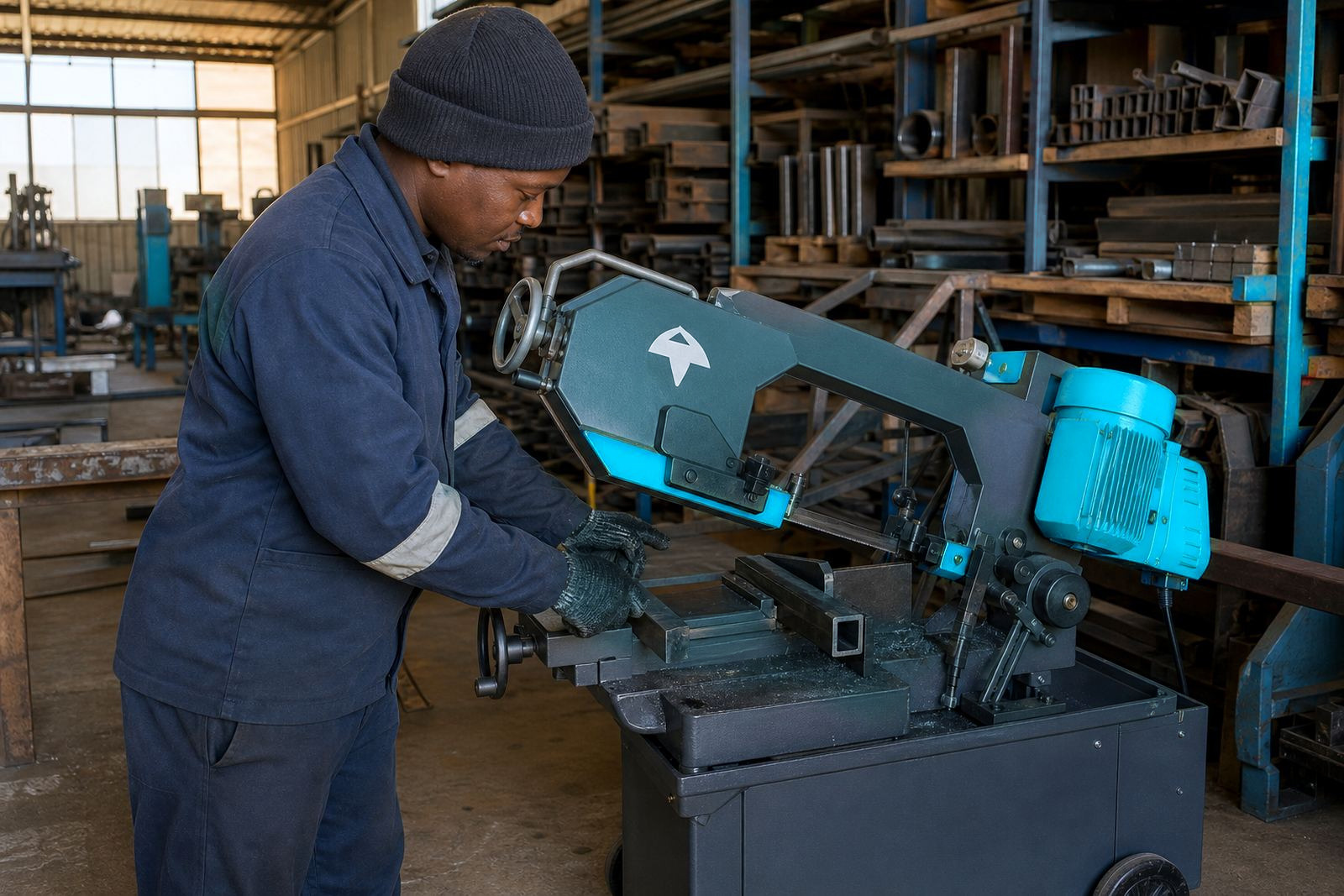
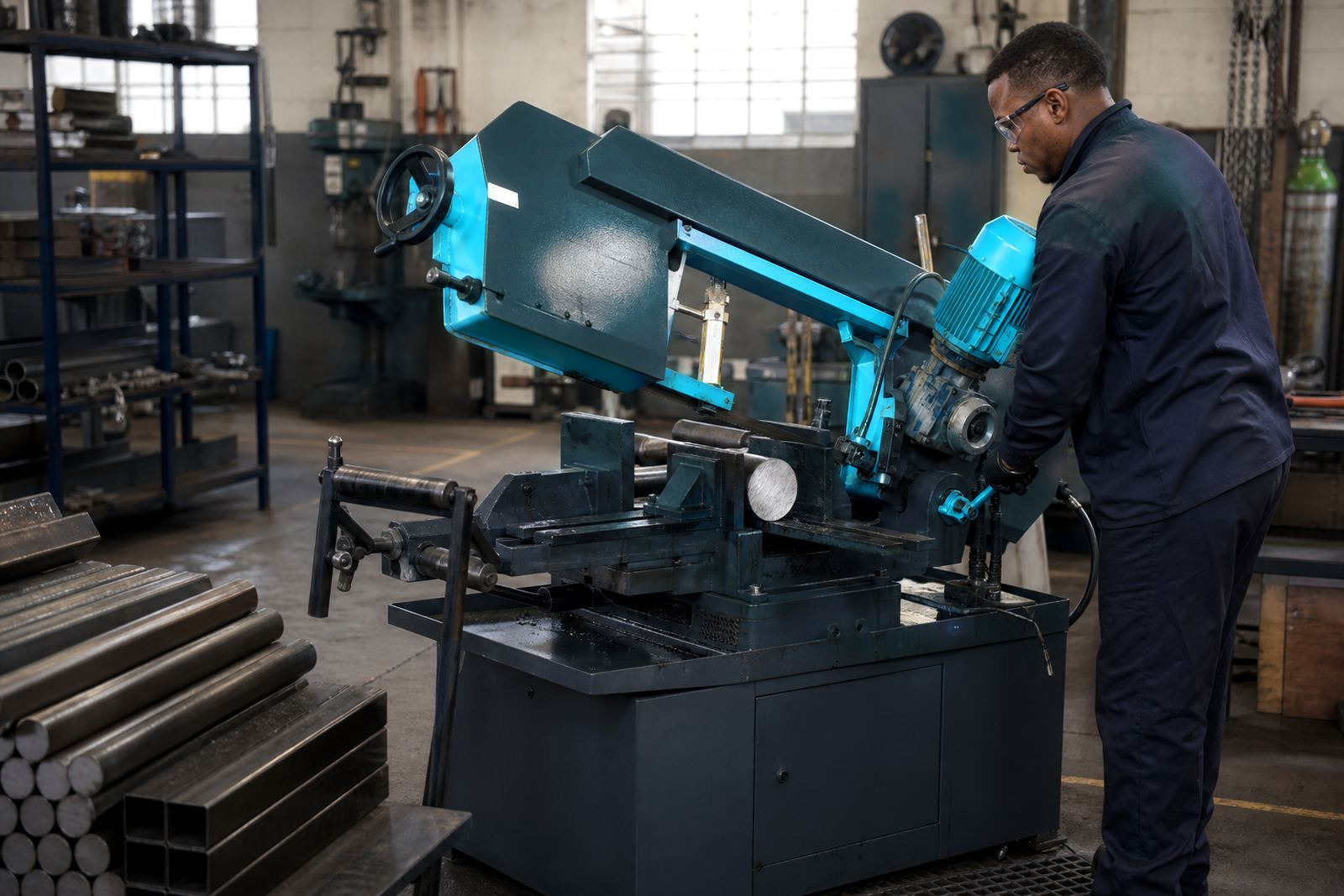
Steel sections, solid bar, bundle cuts and thin wall tube all ask for different settings. A fine pitch that works on small solids can pack chips in a thick section, while a coarse pitch can snatch on light wall material and leave a rough finish. When the job changes, the settings should change with it.
Harder materials usually need a slower blade speed and a steadier feed. Mild steel will take a broader working range, but the cut still benefits from a clean tooth engagement and enough pressure to keep the teeth cutting instead of rubbing. Stainless and other tougher alloys need more care, because heat builds quickly and the teeth can lose life if the operator pushes too hard.
How tooth pitch and feed work together
Tooth pitch is the starting point for the whole setup. Coarser teeth clear thick chips better on heavy sections, while finer teeth hold a stable bite on thin material. Variable pitch blades help reduce vibration on mixed profiles and can calm a chattery cut on a manual saw or a machine with a lighter frame.
- More teeth in the cut usually means a smoother finish on thin wall stock.
- Fewer teeth suit heavy sections and larger solids with deep chip loads.
- Too much feed on a fine pitch can strip teeth or push the blade off line.
- Too little feed can polish the material and glaze the tooth tips.
A good setting lets the blade make a steady chip with a small, even sound. If the cut squeals or burns, the feed and speed need adjustment and the operator should use less force.
Blade speed, heat and coolant in daily work
Blade speed controls how fast the teeth meet the work. Faster suits some jobs, and other jobs need a slower feed. Thin material, stainless and tool steel can punish a blade that runs too hot, especially where the cut is long and the teeth stay engaged for a while. Cooler running keeps the set in shape and helps the blade track straighter.
Coolant should reach the cut in a steady flow. On machines that rely on coolant, blocked lines, dirty tanks or a low fluid level can cut blade life short. If a workshop runs dry cutting on a light task, the operator should still watch heat, chips and tooth colour, because blue chips point to trouble.
- Bright chips often mean the blade is cutting cleanly.
- Dark or powdery chips can point to rubbing or wrong speed.
- Long stringy chips can mean the feed is too light for the pitch.
Run-in makes a new blade earn its keep
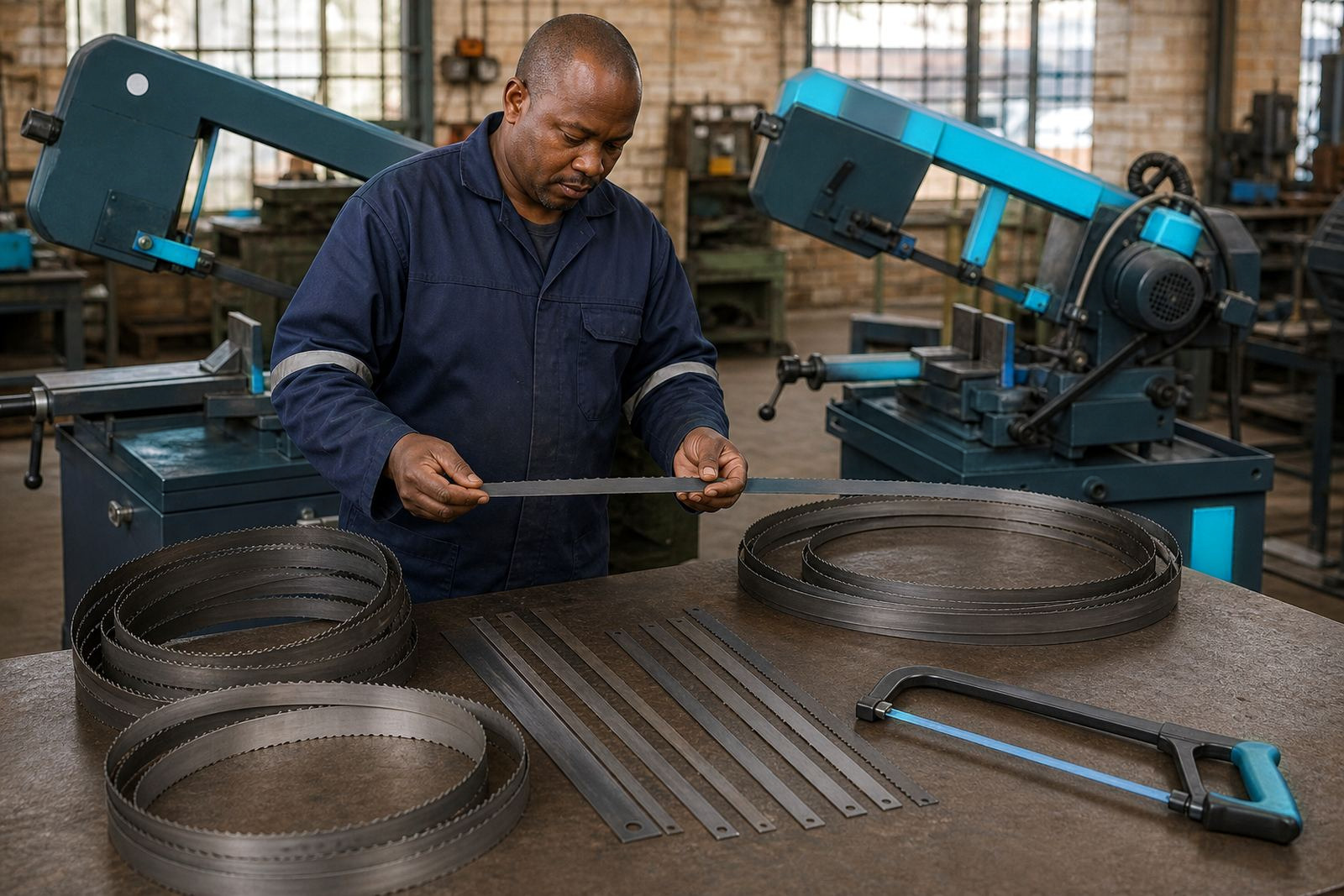
A fresh bi-metal M42 blade needs a careful run-in before full pressure is used. Use lighter first cuts so the tooth edges settle in and do not chip away at once. This applies to new blades and to replacement blades welded to length for a workshop saw.
During run-in, keep the feed modest and let the blade form a neat chip. Once the teeth have settled, increase the pressure step by step until the cut becomes steady. That approach is useful on both bandsaws and hacksaws, because the first few jobs often decide whether the blade lasts or fails early.
Reading the cut when something feels off
When a blade starts wandering, the reason is often visible in the swarf, the sound of the machine, or the face of the cut. A blade that leaves heavy burrs may be running too fast or feeding unevenly. A blade that stalls in the kerf may be too fine for the section, or the machine may be pushing with too much pressure for the set.
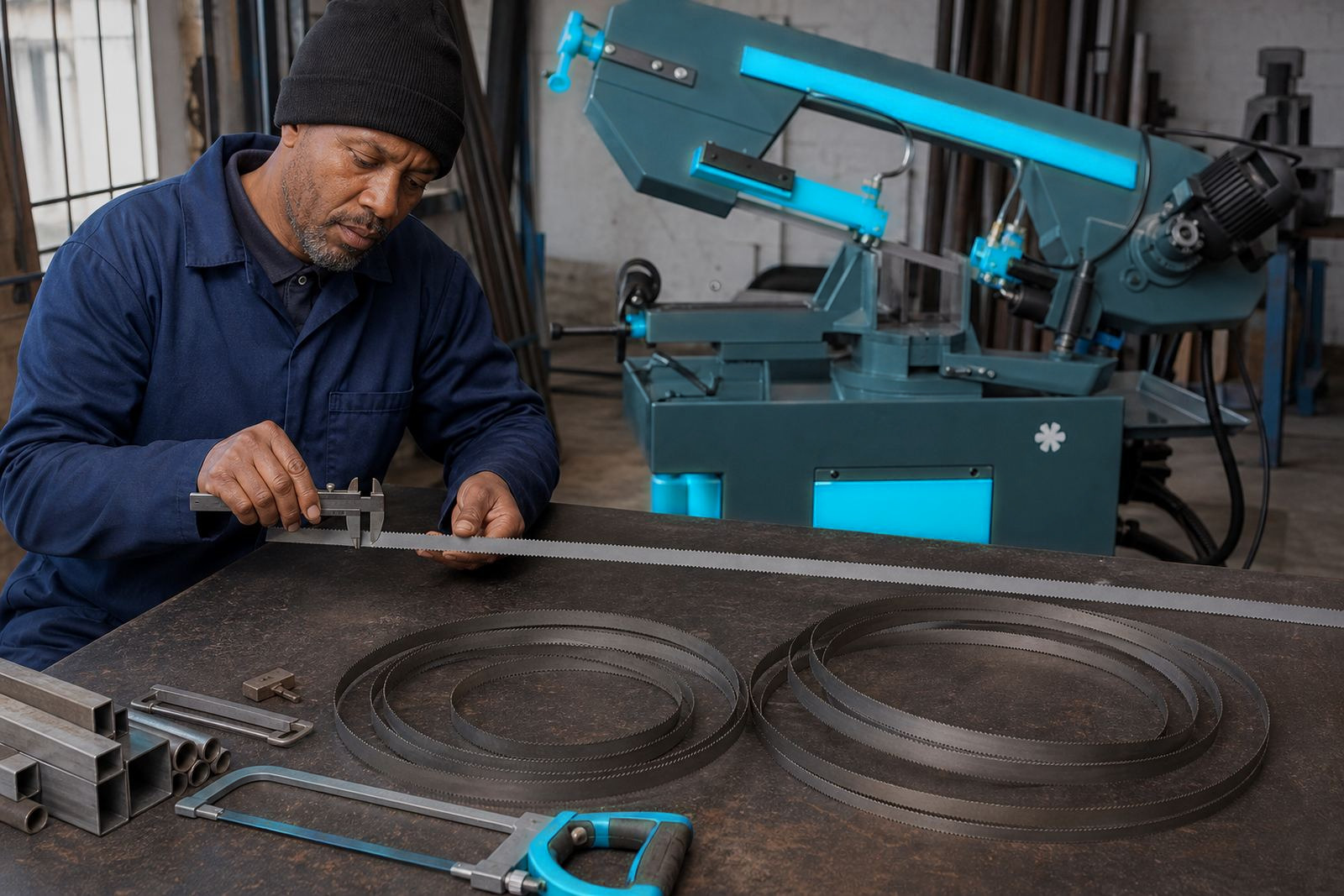
Our blade failure review looks at the cut marks, tooth wear and any signs of heat damage. We also check blade width, thickness and machine fit, because the wrong blade body can flex too much on a long cut or bind in a guide system that needs a different size.
What to send when asking for feed and speed help
Good advice starts with the job details. We look at material type, section size, machine style and whether the cut is manual or powered. If the blade is for a bandsaw or a hacksaw, that changes the target speed and the way feed pressure should be handled.
- Material type and hardness if known.
- Solid, tube, angle, flat bar or bundle cutting.
- Blade width, thickness and tooth pitch in TPI.
- Whether coolant is in use and how it reaches the cut.
- Any signs of chatter, burning, tooth stripping or crooked cuts.
For workshops in Alrode, Alberton and across Johannesburg, Vereeniging, Pretoria, Durban and Cape Town, we match the blade and settings to the job details and the work pattern.