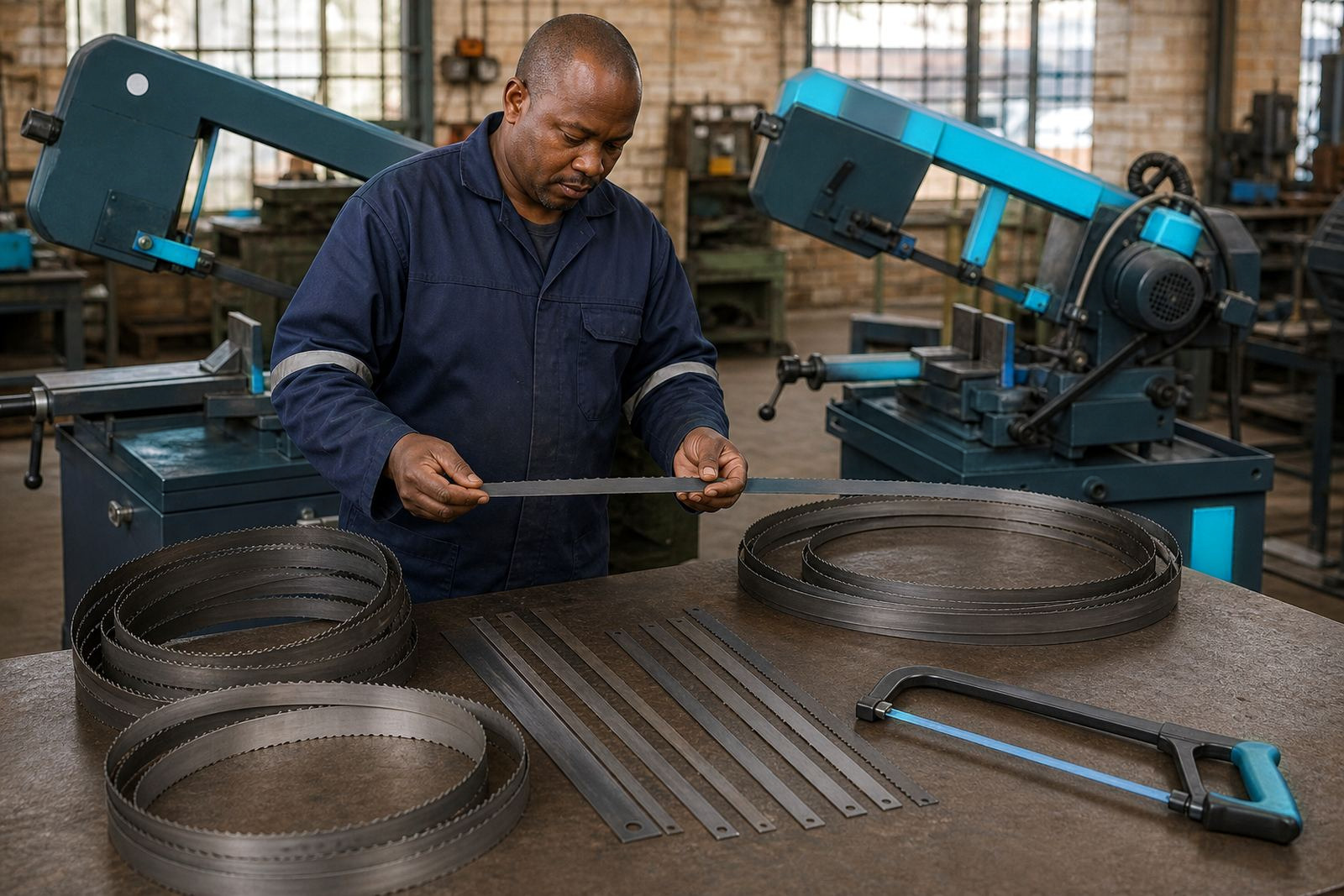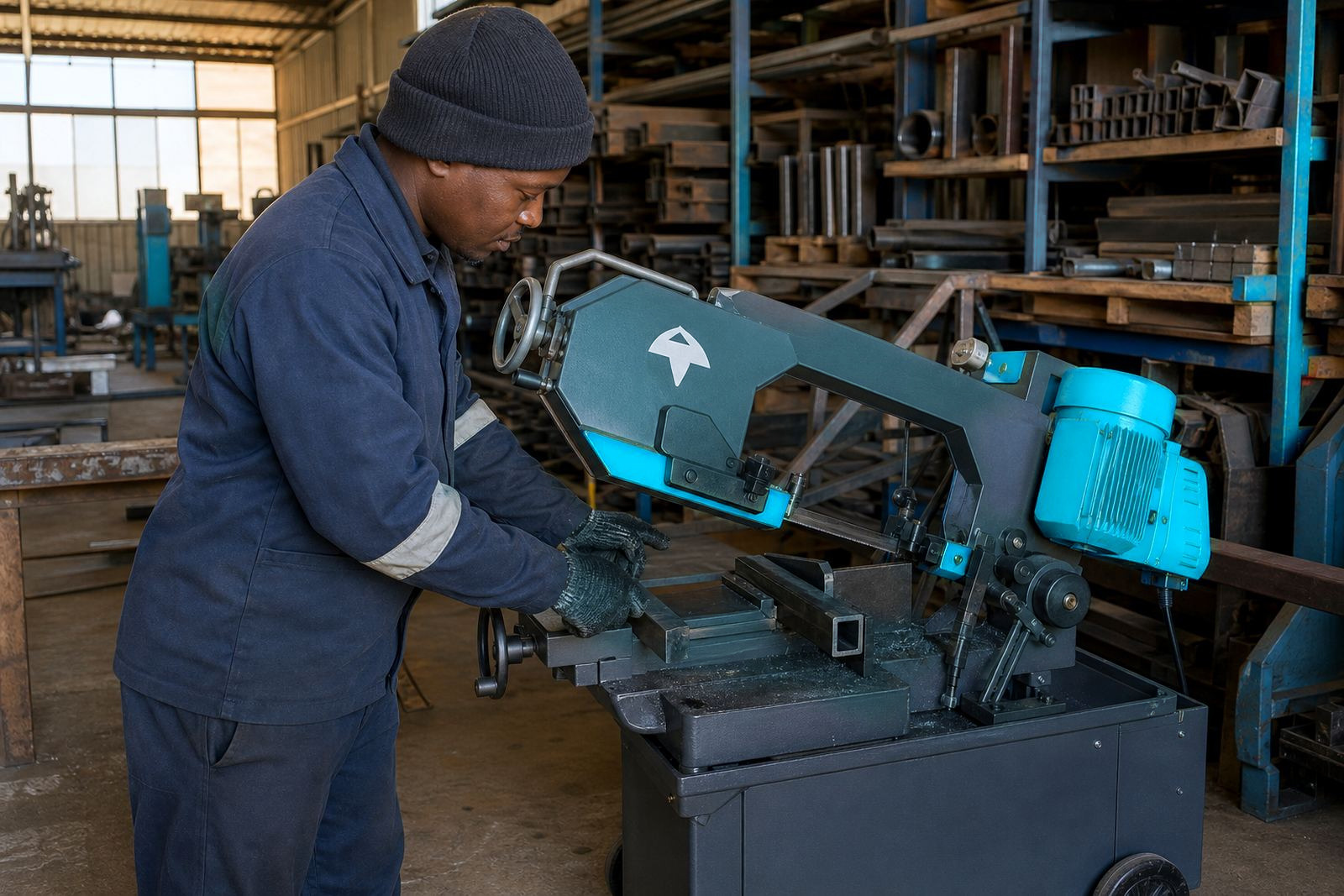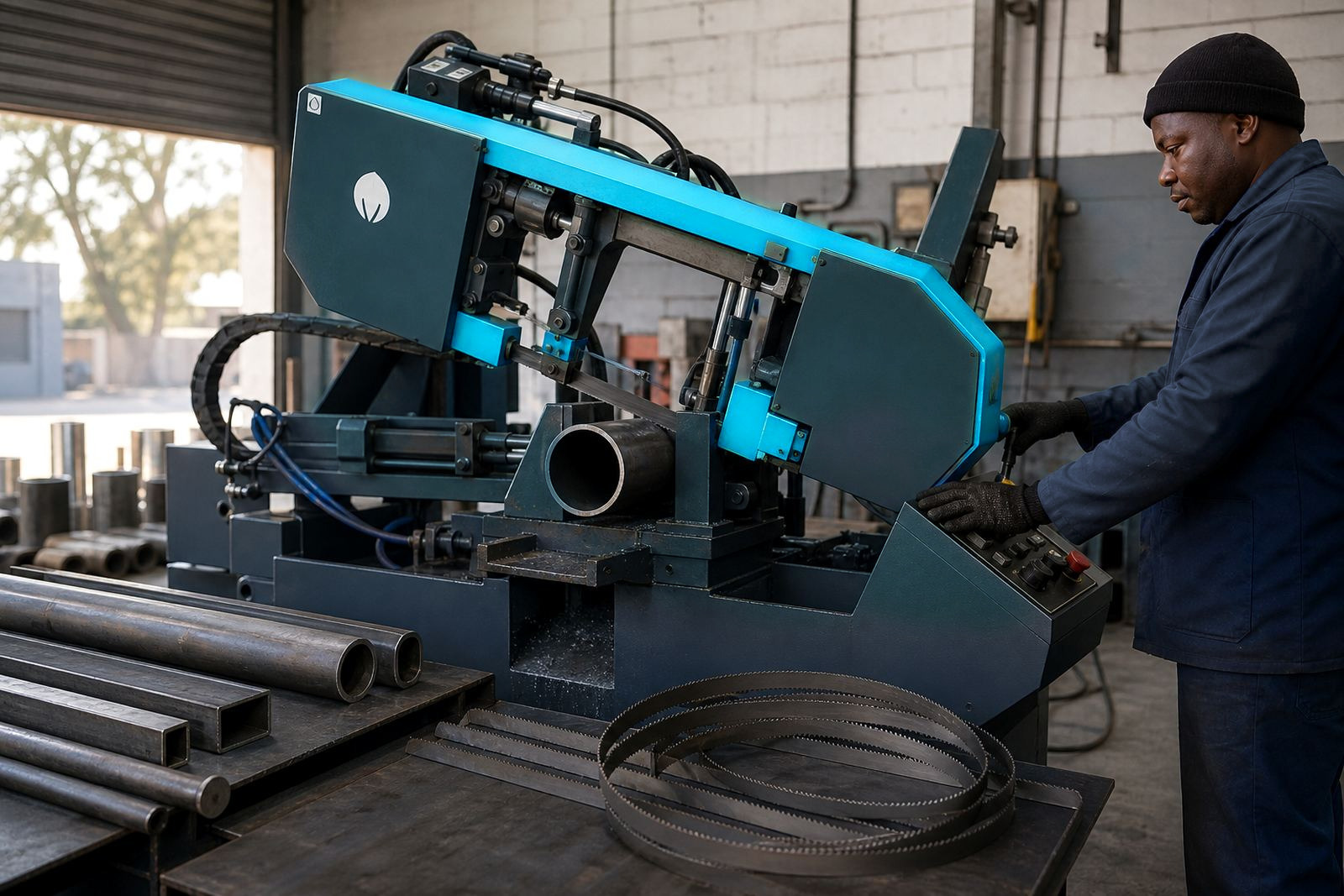
What coolant should be doing at the cut
Coolant has two jobs in a metalcutting workshop. It helps carry heat away from the tooth line, and it washes fine chips out of the kerf so the blade does not keep cutting through its own waste. When either job slips, the cut gets hotter, the finish gets rougher, and the tooth set can wear unevenly.
On bandsaw blades and hacksaw blades, this gets harder when the material is thick, gummy, or full of scale. Stainless, mild steel with heavy mill scale, and solid sections all ask more from the fluid than a light, dry cut on thin wall tube. A good coolant mix must stay clean and at the right strength for the work.
First checks before you blame the blade
When cutting starts sounding harsh, look at the coolant before you change the blade. Many workshop problems come from blocked nozzles, weak concentration, or a sump full of swarf and sludge. A blade can look dull when the real issue is that chips are not clearing and the tooth gullets are carrying packed material around the wheel.
- Check that fluid reaches both sides of the cut, not just the top edge.
- Look for a steady stream rather than a thin dribble from one nozzle.
- Clear settled fines from the tank and screens before they move back into circulation.
- Inspect hoses, valves, and nozzles for kinks or partial blockages.
- Watch the cut face for hot discoloration, steam, or chips sticking to the blade.
If coolant is turning milky, sticky, or foul, it may no longer be separating chips well. In coastal areas, especially where humidity is high, stale fluid can also form residue that clings to guards and guides. That residue is worth cleaning out before it builds up around the blade line.
Mix strength and water quality
Many workshops run into trouble by mixing coolant too weak for the job, or too rich for the machine. Too little concentration can reduce lubrication and leave the cut dry at the tooth face. Too much can leave a sticky film that traps fines and fouls the machine. The right mix depends on the fluid type and the cut, but it should always be checked with a proper refractometer or the method specified for that coolant.
Water quality also changes the result. Hard water can leave scale in the tank and on parts, while dirty water can shorten the useful life of the mix. If a machine sits in a warm shop near Johannesburg, Pretoria, Durban, Alberton or Cape Town, a sump that is ignored for weeks can change faster than expected. A simple log helps, even if it is only a note on the tank cover or a sheet near the saw.
- Use clean water when making up fresh fluid.
- Keep the concentration in the working range for the cut type.
- Top up with the same mix, not plain water every time.
- Replace fluid that has gone sour, separated, or filled with fines.
How coolant supports tooth pitch and blade width choices
Coolant supports correct blade selection. A coarse pitch blade on heavy section needs enough flow to clear larger chips. A finer pitch blade on thin wall material needs fluid that keeps the gullets from loading up without washing the cut dry. The same is true for blade width and thickness. Wider blades hold straighter in heavier work, yet they still need clean flushing through the gullets.
With bi-metal blades, especially M42 tooth lines, heat control is important because the teeth do hard work at the front of the cut. Carbon steel blades are less forgiving when the setup runs hot or the feed is too aggressive. If the cut is tight, noisy, or drifting, check coolant flow before changing the whole setup. A small change in nozzle position can make a big difference.
Run-in, feed and speed need the fluid to match
Blade run-in is often rushed, then the teeth get treated as if they are already fully settled. That is a common reason for early tooth wear. During run-in, coolant should be present and steady, while feed pressure stays moderate and speed is kept sensible for the material. Once the blade beds in, the cut can move to the normal setting for that stock and section size.
Match feed and blade speed to the coolant flow, so the three work together. If the feed is too heavy, chips pack into the gullets faster than the fluid can carry them away. If speed is too high for the material, heat builds at the tooth tip and the coolant has less time to help. A well set machine leaves clear, bright chips and a cut face that does not look scorched.
Simple coolant housekeeping for shops and saw lines
Good coolant care is mostly routine. It needs a regular look at the tank, the nozzles and the cut. In a busy workshop, that routine saves time because the saw spends less time fighting heat and debris. Blade failure review is easier when a job goes wrong, since the cause is simpler to trace.
- Skim floating tramp oil from the tank when it appears.
- Remove chips from guards, trays, and return channels.
- Wipe guide areas so fluid does not carry fines back into the cut.
- Check nozzle aim after blade changes or machine cleaning.
- Note any burnt smell, foaming, or colour change in the fluid.
Manual saws and automatic lines in a workshop still need the same coolant habits. Manual saw support often needs more operator attention, because flow can vary with the way the machine is set up. Steady checks, sensible feed, and clean fluid make the work easier to control.
When to ask for a blade and machine fit check
If the coolant looks fine but the blade still wanders, burns, or sheds teeth, the problem may be in the fit of the blade to the machine, the tooth pitch, or the way the cut is being driven. In those cases, a machine fit check can help narrow the fault. After weld-to-length work, check blade length carefully because a poor match can make the saw seem to have a coolant fault when it does not.
Across South Africa, from Alberton and Germiston to Johannesburg, Vereeniging, Pretoria, Durban and Cape Town, that check often forms part of keeping stock standardised for workshops. A sound coolant routine, the right blade width, and the right tooth pitch sit together. When one slips, the others feel it fast.