Start with the material and the section size
Steel bar, tube, solid sections and light wall profiles do not all ask for the same tooth pattern. A constant pitch blade gives an even rhythm through the cut, while a variable pitch blade helps break the regular pattern that can set up chatter on awkward sections. For thick solid stock, the cut is steadier when the teeth keep a fixed spacing and the machine is set with the right feed and speed. Thin wall tube often behaves better with variable pitch, especially where the walls want to sing or hook up on exit.
Our first check is always the job in front of the saw. The section size, wall thickness and material grade tell you more than a general rule ever will.
- Use constant pitch for repeat cuts in one material and one section size.
- Use variable pitch where vibration, noise or chip packing is part of the job.
- Match the tooth count to the smallest wall or tooth contact area.
When variable pitch earns its place
Variable pitch blades are handy on mixed profile work, pipe, structural sections and jobs that move between short and long cuts. The changing tooth spacing helps spread the cutting load and reduces harmonic chatter. That can make a difference on manual saws too, where the operator has less control over pressure from one stroke to the next.
They do not cure poor setup. If the blade width is too narrow for the machine or the feed is too heavy, the cut will still wander and the teeth will still fatigue. A variable pitch blade works best when the machine is sound, the guides are set and the coolant is reaching the cut.
- Good for mixed sections and vibration prone work.
- Helpful where chip evacuation is poor on constant spacing.
- Needs correct tracking, tension and guide setting.
Where constant pitch still does the better job
Constant pitch blades keep the tooth spacing even all the way through the strip. That gives a predictable cutting rhythm, which suits production cutting on one material, one profile and one blade width. In many workshops, constant pitch is the cleaner choice for bar cutting, repeat batch work and jobs where the operator wants a steady feel at the vice.
They also make fault finding easier. If the cut starts to drift or the finish goes rough, you can look at feed, speed, tooth set and blade wear without the extra variable of changing tooth spacing. On a saw that is already well matched to the job, constant pitch can be the simpler option.
- Useful for batch cutting and repeat sizes.
- Easy to monitor when you are comparing blade wear.
- Best where machine setup is already consistent.
The numbers that should guide the choice
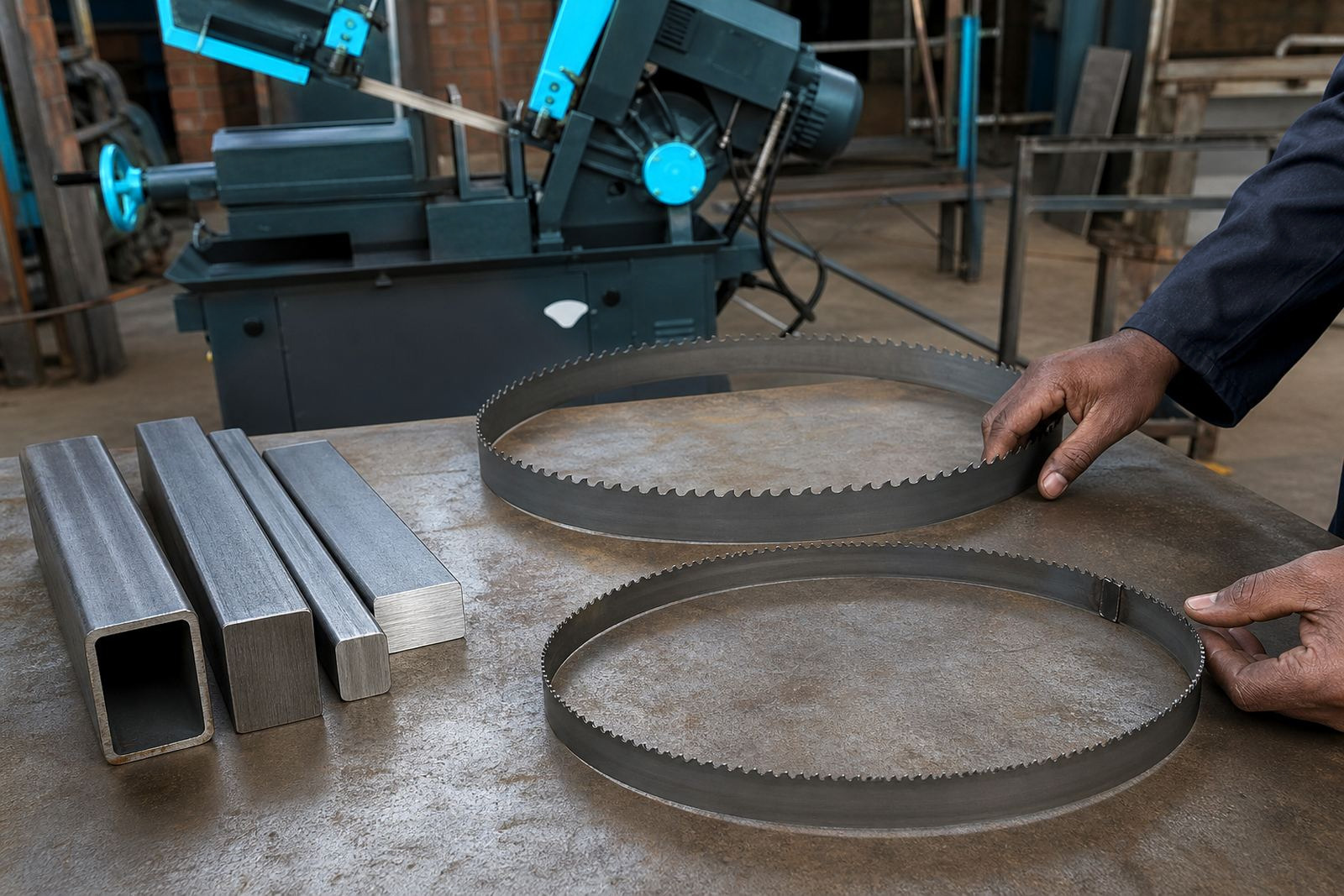
Tooth pitch, blade width and blade thickness need to sit together. A coarse pitch suits larger sections and heavier chip load, while a finer pitch suits thinner material where too few teeth in contact can snatch. We check the blade body as well. A wider blade tracks better on straight work, while a narrower blade can suit tighter guides or smaller saw frames. Thickness changes how the blade carries tension and how long it keeps a true line.
Feed and speed come next. Too much feed on the wrong pitch will strip teeth or glaze the cut. Too little feed can make the teeth rub rather than cut, and then heat rises fast. On carbon steel and bi-metal blades, coolant keeps the tooth edge cleaner and helps the set work as intended.
- Coarse pitch for larger sections and heavier chip load.
- Fine pitch for thin wall or small section work.
- Wider blades suit straighter cuts, narrower blades suit smaller machines.
A quick shop-floor decision path
When a workshop rings in from Johannesburg, Pretoria, Vereeniging, Durban or Cape Town, the same few checks usually settle the question. Begin with the material, followed by the shape, and then the machine After that, look at whether the job is repeat work or mixed work. If the saw is cutting a wide range of profiles, variable pitch is often the safer first trial. If the cut list is fixed and the material stays the same, constant pitch may be the better fit.
There is no need to guess. A blade that suits a 150 mm solid bar can behave badly on thin wall tube, and the other way round too. Our blade selection help, length verification and machine fit check are there for that exact reason.
- Identify the material and section first.
- Check whether the job is mixed or repeat cutting.
- Confirm the saw frame, guides and wheel condition.
Starter kits, weld-to-length service and practical support
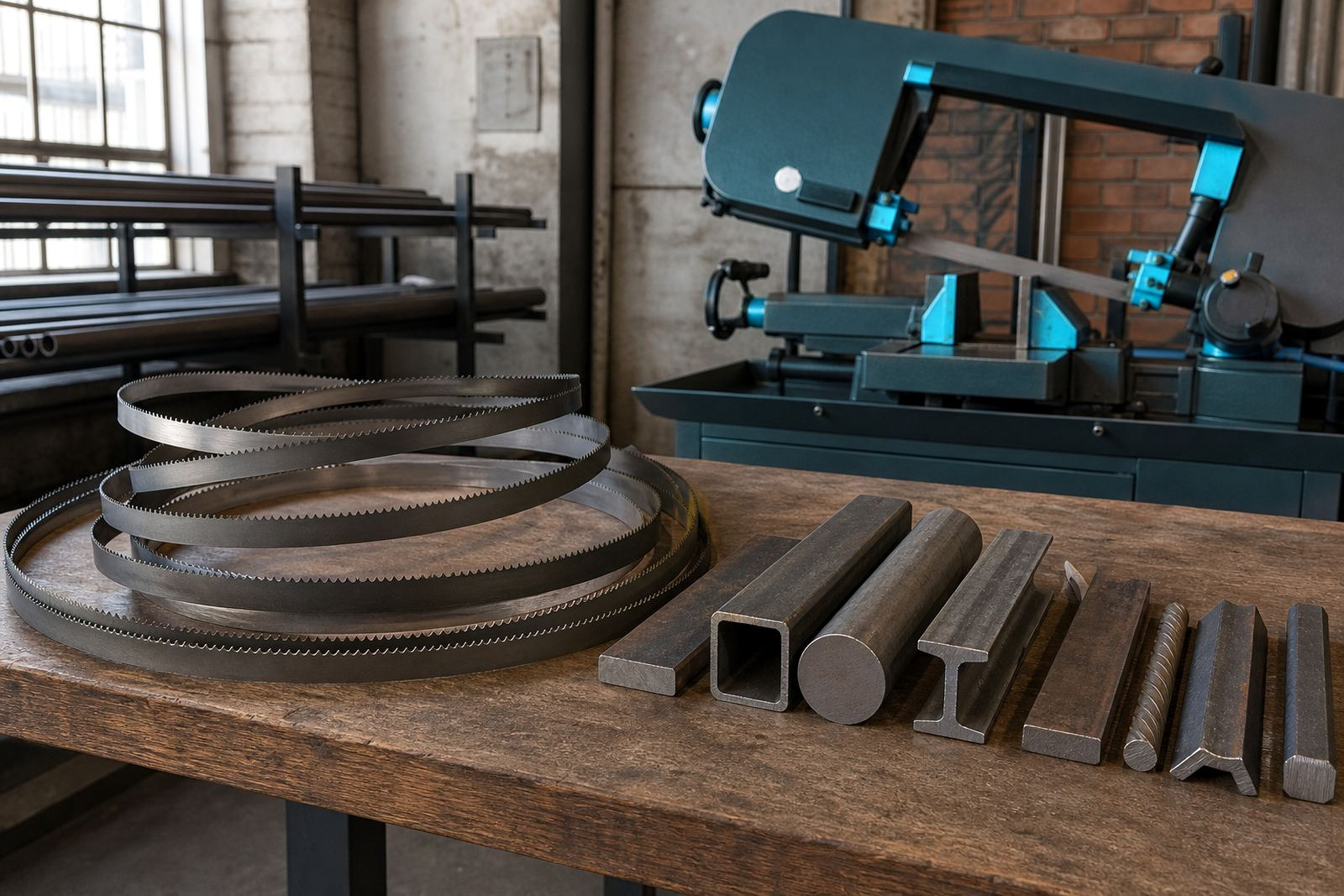
Starter kits make more sense when the workshop wants a known set of blade types rather than a loose mix of offcuts. A sensible kit can cover a common range of tooth pitches and blade widths for metalwork, with the option to weld to length for the saw on site. That keeps the stock easier to manage and cuts down on the wrong blade being pulled for the wrong job.
We also help with running in a new blade, coolant checks and blade failure review. We check each of those details. A blade that is technically right can still fail early if it is run too hard on the first cut or if the coolant stream is poor and the chips stay packed in the gullets.
- Starter kits suit workshops building a standard blade range.
- Weld-to-length service helps match the exact saw length.
- Failure review can show whether the issue was pitch, feed or setup.