Start with the section shape, not the saw
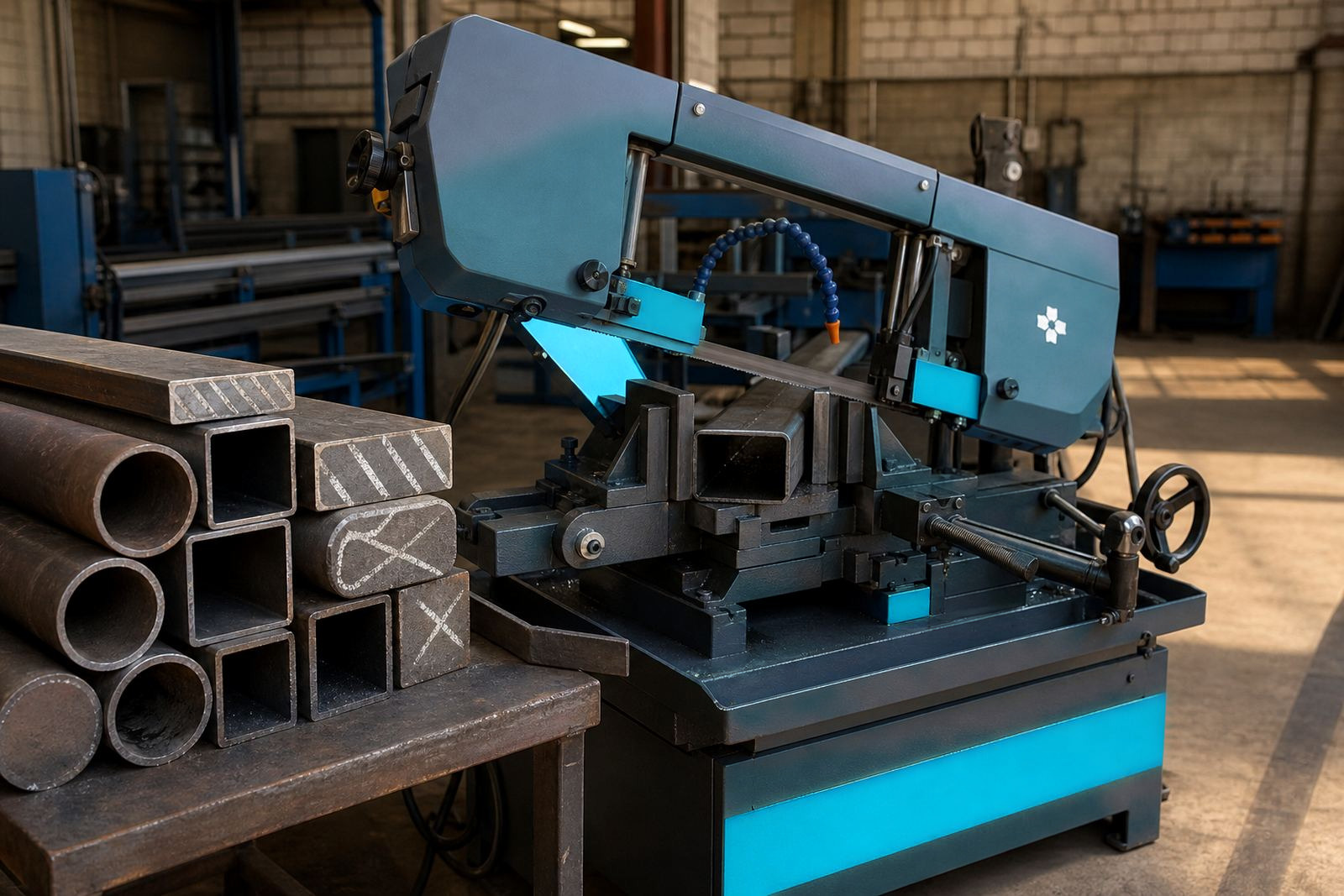
Angle and channel open up in different ways as the cut travels, while beam sections can load a blade hard at the flange and web. Start with wall thickness, section depth and whether the cut is a bundle, a single length or a mitre. A blade that suits mild steel flat bar can struggle on a deep beam if the pitch is too coarse or too fine.
For structural work, bi-metal blades with a tough tooth edge are the usual starting point. Carbon steel blades still have a place on lighter, manual work and shorter runs, but they need kinder feed and more careful set-up. If the blade keeps snagging, squealing or leaving a rough kerf, the match is usually wrong before the machine is at fault.
Pick tooth pitch for the wall thickness you are cutting
Tooth pitch, measured in TPI, needs enough teeth in the cut to stay steady without filling the gullets. Thin wall angle and light channel normally want a finer pitch, while thicker beams and solid sections need a coarser pitch so the teeth can clear chips. Variable pitch can help reduce chatter on mixed section work, especially where the profile changes through the cut.
- Fine pitch for thin wall material and small section changes
- Medium pitch for mixed angle, channel and light beam work
- Coarser pitch for heavier beam sections and thick solids
- Variable pitch when chatter appears on wider structural sections
If the pitch is too fine, the blade packs up and heats quickly. If it is too coarse, the cut can grab, wander or leave a marked finish that needs extra dressing.
Blade width and thickness decide how straight the cut stays
Blade width helps control the cut line, especially on beam flanges and long mitres. Wider blades track straighter on heavier structural work, while narrower blades suit tighter radii and smaller machines. Thinner blades can flex more easily on a light frame, so correct tension and careful handling are needed to avoid twist.
For most structural jobs, use a blade that stays stable without forcing the machine. A full-width blade suits a saw that keeps tension and alignment true. Machine fit check, wheel condition and guide setting all affect performance, because even a good blade will misbehave on poor tracking.
Set-up on the day keeps the cut under control
Run-in is worth doing properly on a fresh blade. The first cuts should be lighter so the tooth tips bed in cleanly before full feed is used. After that, feed and speed need to suit the material hardness and section size. A blade pushed too hard on structural steel can glaze, crack at the weld or pull teeth out early.
- Start with a steady, lighter feed on a new blade
- Check chip shape and colour while cutting
- Slow the feed if chips are blue or the blade sounds strained
- Increase feed only when the cut stays smooth and square
Check coolant on longer cuts and heavier sections. Good coolant flow helps clear heat from the tooth line and keeps the gullets open, which is useful on beam packs and repetitive cutting through the day.
Welded-to-length blades for workshop layouts
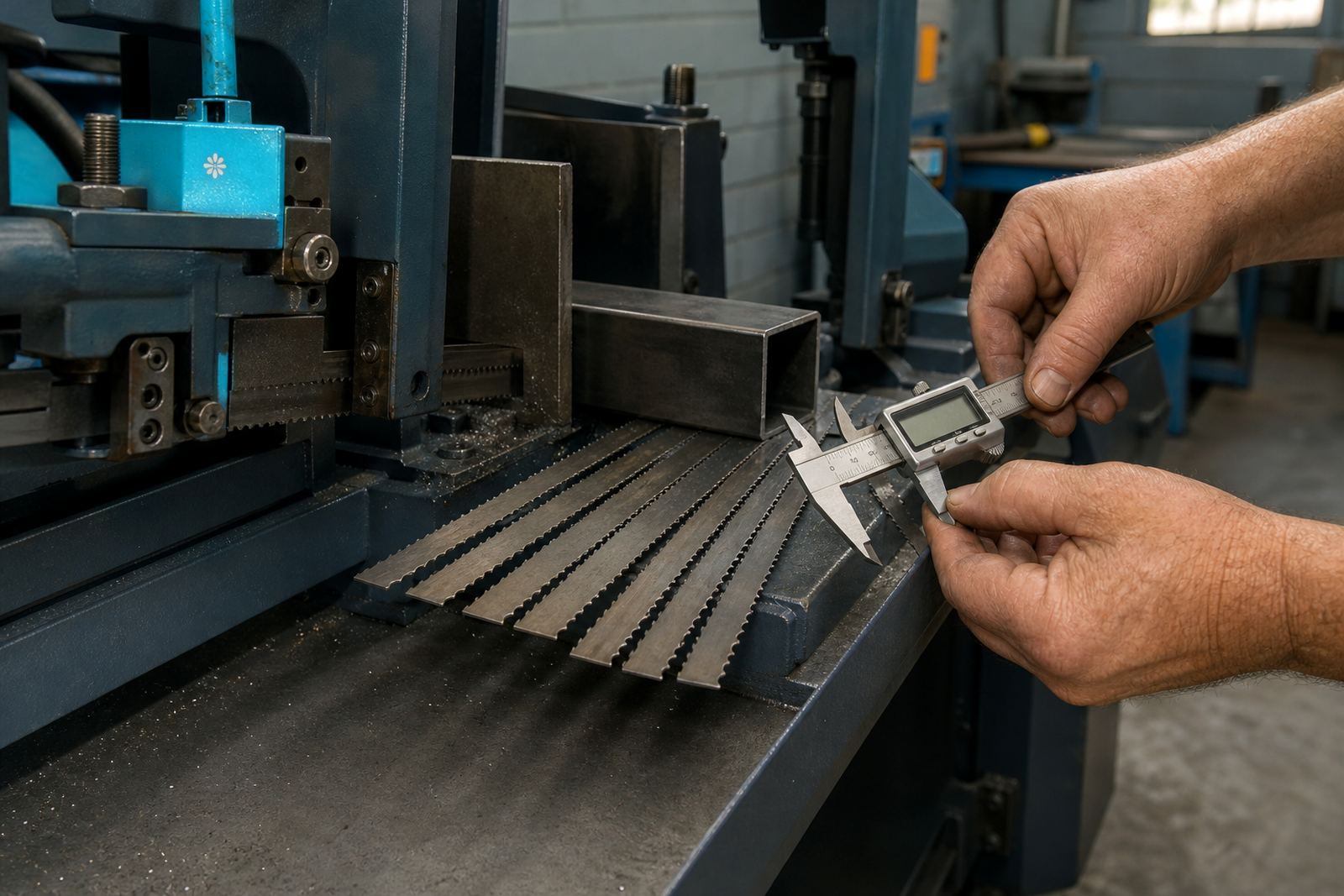
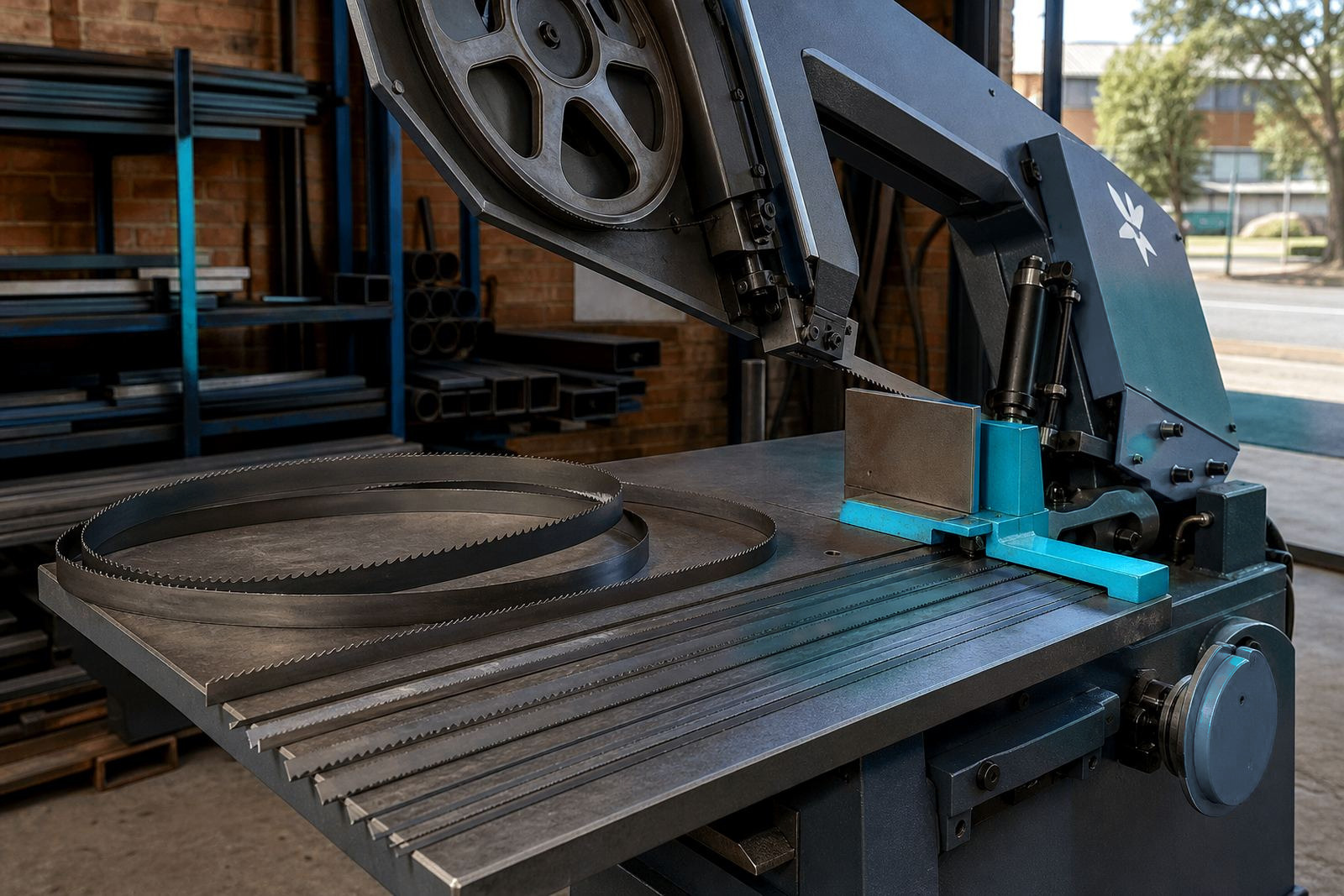
Some workshops run manual saws, older machines or mixed machines where a supplied loop needs to be welded to the right length. That is where weld-to-length service helps, because a blade that is a few millimetres off can track badly or stress the weld. Length needs checking when a machine has worn wheels or non-standard guides.
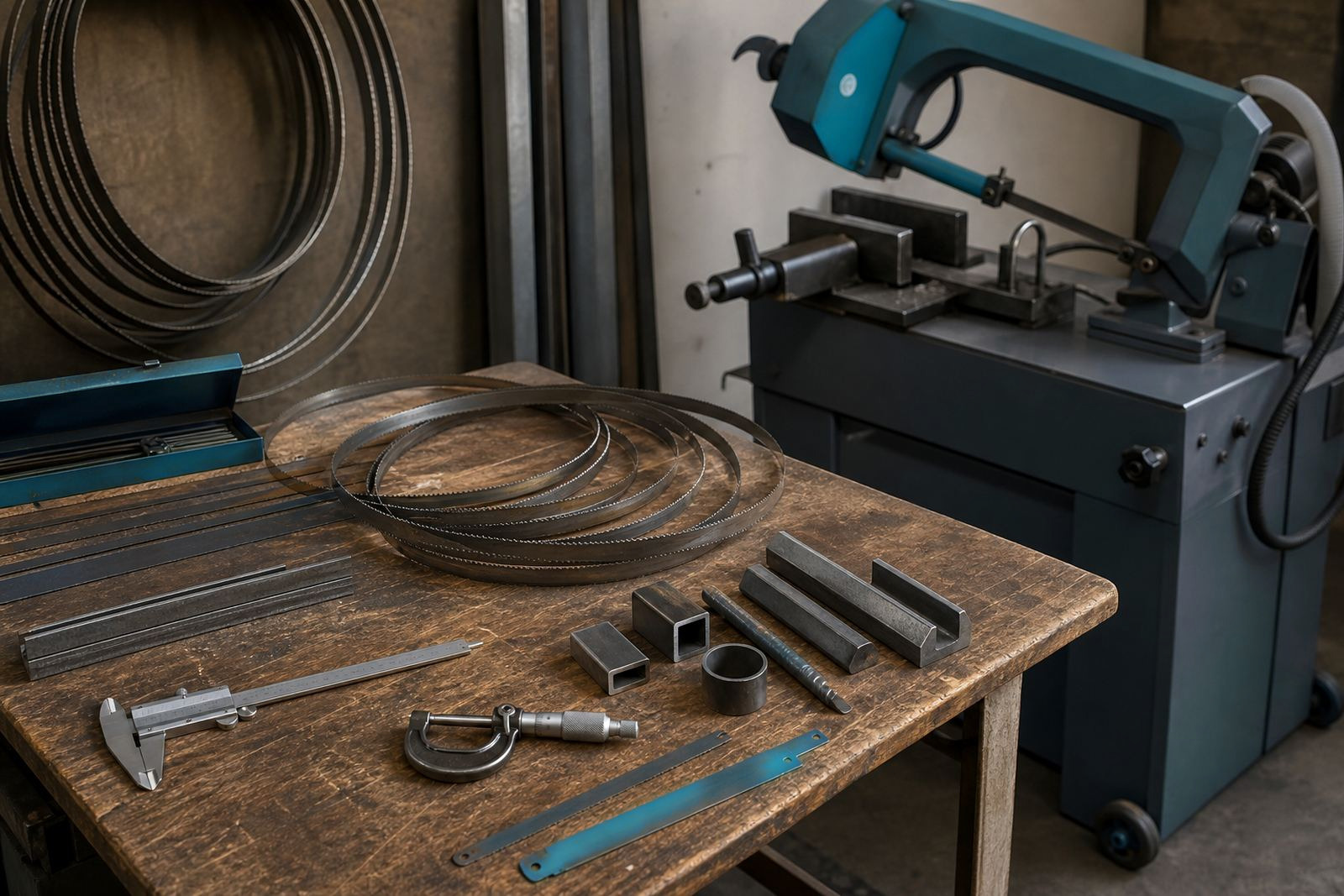
Starter kits are useful where a shop needs a practical mix instead of one box of the same blade. A sensible kit can include a finer pitch for lighter section, a medium blade for general structural work and a coarser blade for heavier beams. Stock standardisation then makes it easier to keep the same cutting behaviour across different branches or crews.
Before you cut angle, channel or beam
Before the first cut, check the section size, wall thickness and material grade. Then match the tooth pitch, blade width and speed to that job, not to the last job that came through the door. If the saw has started leaving hooked teeth, chipped tips or a wandering line, the blade failure review should start with feed pressure, guide alignment and coolant flow.
- Confirm material thickness and whether the cut is light or heavy structural work
- Check blade width against the machine and the required straightness
- Choose pitch for chip clearance, not just for speed
- Inspect guides, tension and wheel tracking before loading the blade
- Watch chips, sound and finish during the first cuts
Our team in Alrode, Alberton supports workshops across Johannesburg, Vereeniging, Pretoria, Durban, Cape Town and nearby areas such as Germiston and Boksburg.