Two blade types, two working habits
Bi-metal blades are built for harder use. A tough backing strip carries hardened teeth, so the blade can cope with mixed stock, stainless sections, heavier wall tube and steady workshop cutting. Carbon steel blades are simpler and more affordable, and they still do useful work on lighter duty jobs, softer steels and manual sawing where the cut count is lower.
The choice includes price, how the blade wears, how much heat builds up in the cut and how much control you need over finish and straightness. In a busy shop in Alrode or a fabrication bay in Pretoria, the wrong blade can waste time through wandering cuts, tooth stripping or a short blade life.
When bi-metal earns its place
Bi-metal blades are usually the better fit when the work is varied or the material is demanding. The hardened tooth edge stays usable for longer, while the springy backing helps the blade flex through repeated cutting. This applies to square bar, solid rounds, tube bundles and sections with scale or uneven surfaces.
- Choose bi-metal for production cutting where the blade sees many cycles.
- Use it on mixed material batches where thickness changes through the day.
- Lean toward bi-metal on stainless and tougher structural steels.
- Keep it in mind for workshops that want fewer blade changes and less downtime.
A bi-metal blade still needs the right tooth pitch and a sensible feed. If the pitch is too fine for thick stock, the gullets pack with chips and the teeth start rubbing. If it is too coarse for thin wall material, the cut can chatter and leave a rough edge.
Where carbon steel still makes sense
Carbon steel blades are often the practical answer for lighter duty work. They can suit manual hacksaws, light frame saws and jobs where the material is mild, short run and not especially abrasive. For a small maintenance team or a farm workshop, the lower entry cost can be useful when blade consumption is modest.
They are less forgiving under heat and overfeed, so the operator has to keep the cut calm. If the blade is forced, the teeth can soften faster and the set can go off line. That shows up as a wandering blade, a rougher finish or a tooth line that starts to lose grip on the workpiece.
- Best for mild steel, lighter section and manual use.
- Useful when the cut volume is low and the blade load is gentle.
- Works well when the operator can control feed by feel.
- Not the first pick for hard alloys or heavy daily production.
Tooth pitch, width and thickness must work together
Blade material is only one factor in choosing the right blade Tooth pitch, usually shown in TPI, has to suit the section size and wall thickness. Fine pitch teeth suit thin wall and small solids. Coarser pitch teeth clear chips better on larger sections. Variable pitch can reduce vibration and help on mixed profiles, especially where the cut starts on a corner and then settles into a solid face.
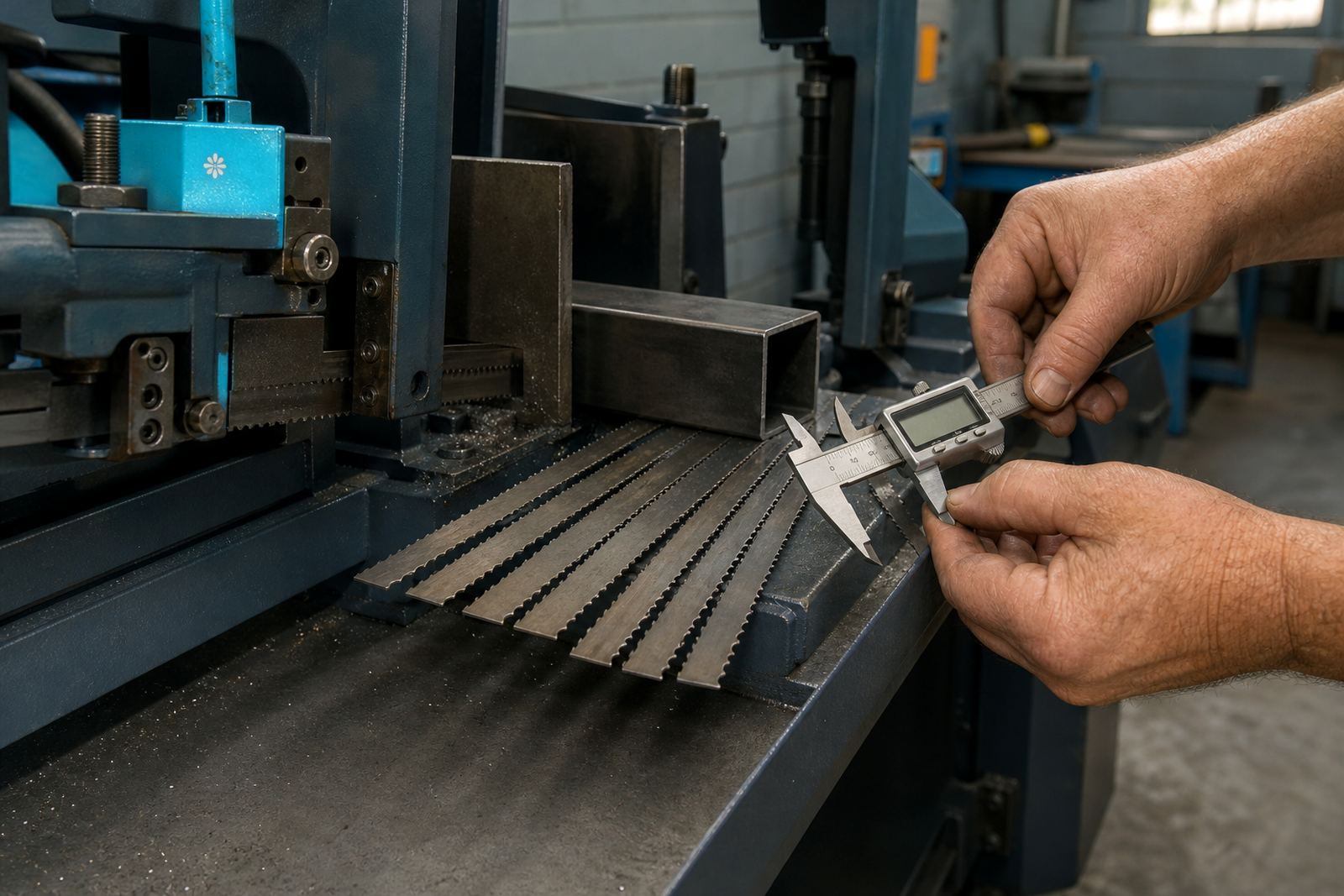
We also check blade width and thickness. A wider blade tracks straighter on large saws and heavier work, while a narrower blade can handle smaller machines and tighter guides. Thickness affects stiffness and fatigue. If the blade is too thick for the machine, tracking and guide pressure can suffer. If it is too light for the job, it can twist under feed and wander off line.
Our blade selection help looks at the saw, the stock and the finish you need. A blade that fits and runs at the right set holds a straight cut over a full shift.
A practical selection check before you order
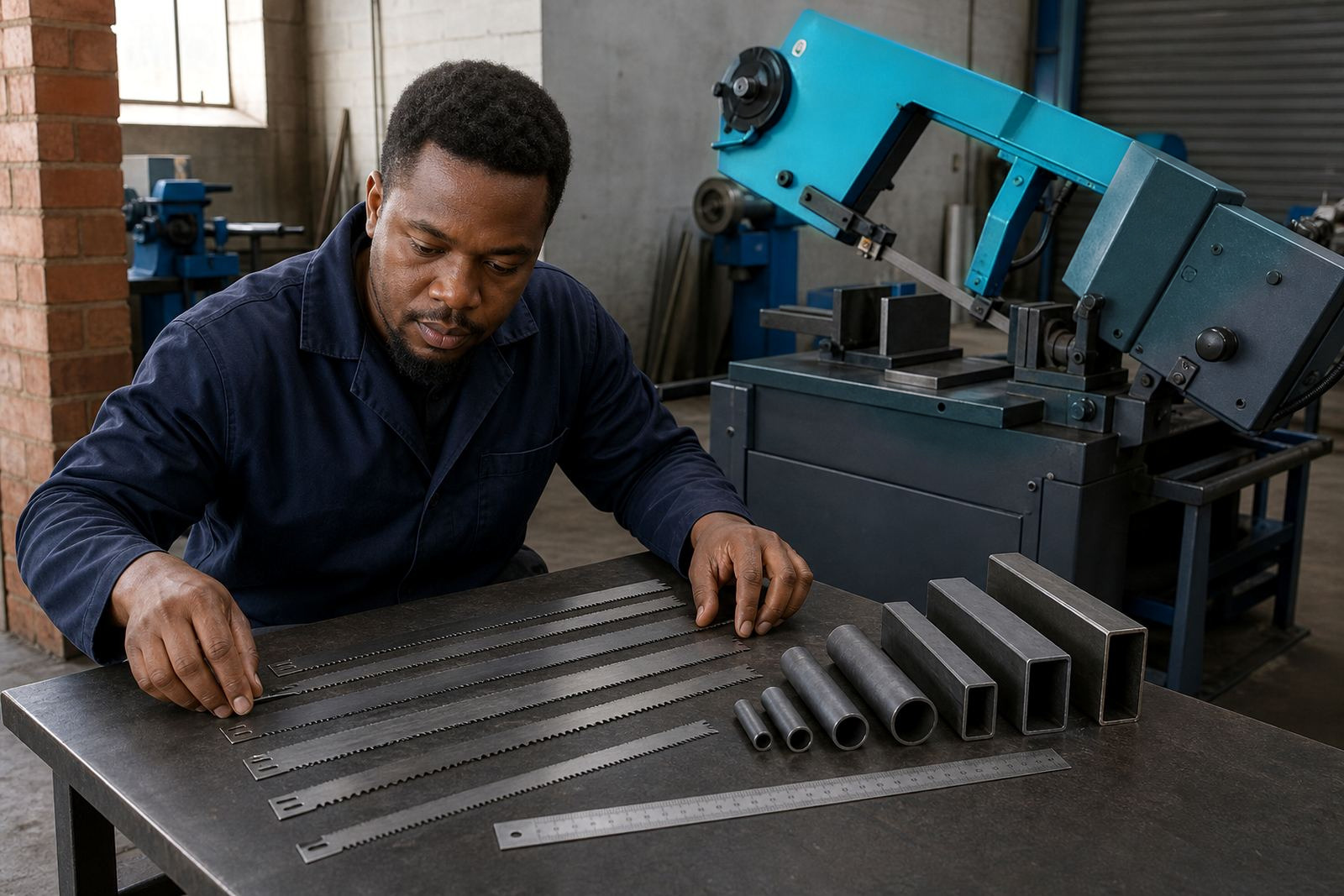
When a workshop is choosing between bi-metal and carbon, a short checklist saves guesswork. Planning starter kits or standardising stock across branches in Johannesburg, Durban or Cape Town also benefits from this approach.
- Confirm the material type, including mild steel, stainless steel or mixed stock.
- Record the minimum and maximum section sizes you most often cut
- Check the machine size, guide layout and blade length required.
- Look at whether the work is manual, semi-automatic or repeated production cutting.
- Decide if the priority is lower upfront cost or longer blade life.
- Ask whether a variable pitch blade would suit changing profiles.
If the workshop cuts a lot of thin wall tube, choose pitch carefully and keep the feed lighter. On heavier sections, the cut needs enough pressure to keep teeth engaged, but not so much that the blade overheats. Coolant helps where the machine setup allows it, especially on longer cuts and harder steels.
Run-in, feed and coolant change the result
Even a good blade can fail early if it is treated badly in the first few cuts. A run-in period lets the tooth tips settle before full load is applied. That means a lighter feed at the start, then a gradual return to normal cutting pressure. Those first gentle cuts add noticeably to edge life.
Feed and speed need to match the blade type and the workpiece. Too much speed can burn the teeth. Too little feed can make the blade rub instead of cut. Coolant is there to carry heat away and clear the cut zone. Where coolant is used, it should cover the tooth line properly and stay clean enough to do its job.
When a blade fails, the cause is often tooth pitch, machine alignment, poor clamping or a guide that is out of line. That is why blade failure review and machine fit check are part of our support on the sales floor and in the workshop.
Starter kits and stock standardisation for busy shops
Many teams do better with a small standard range than with a shelf full of one-off sizes. A starter kit can cover a few common widths, pitches and lengths for the saws that do the most work. That keeps the store room easier to manage and helps the operator reach for the right blade without delay.
Standardising stock also helps when workshops across Alberton, Vereeniging, Boksburg and Germiston share one cutting pattern. The same blade family can be used for similar machines, with length verification and weld-to-length service keeping the fit correct. Where a manual saw is still part of the job, a separate blade plan may be needed because the cutting style is different.
MoreCut Saws works from Alrode, Alberton and supports workshops across South Africa with blade welding, pitch selection, width selection and practical guidance from people who deal with cutting problems every day.