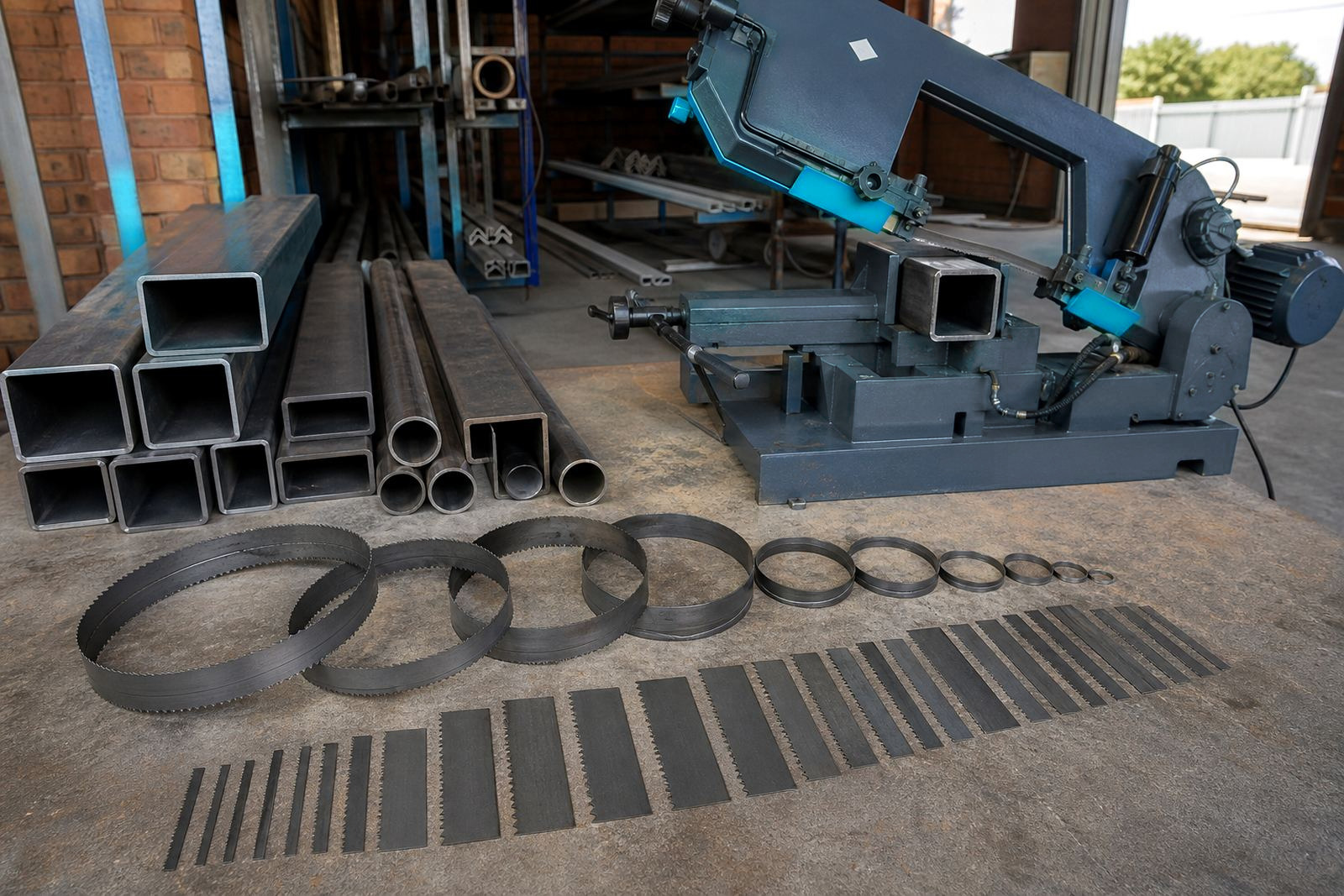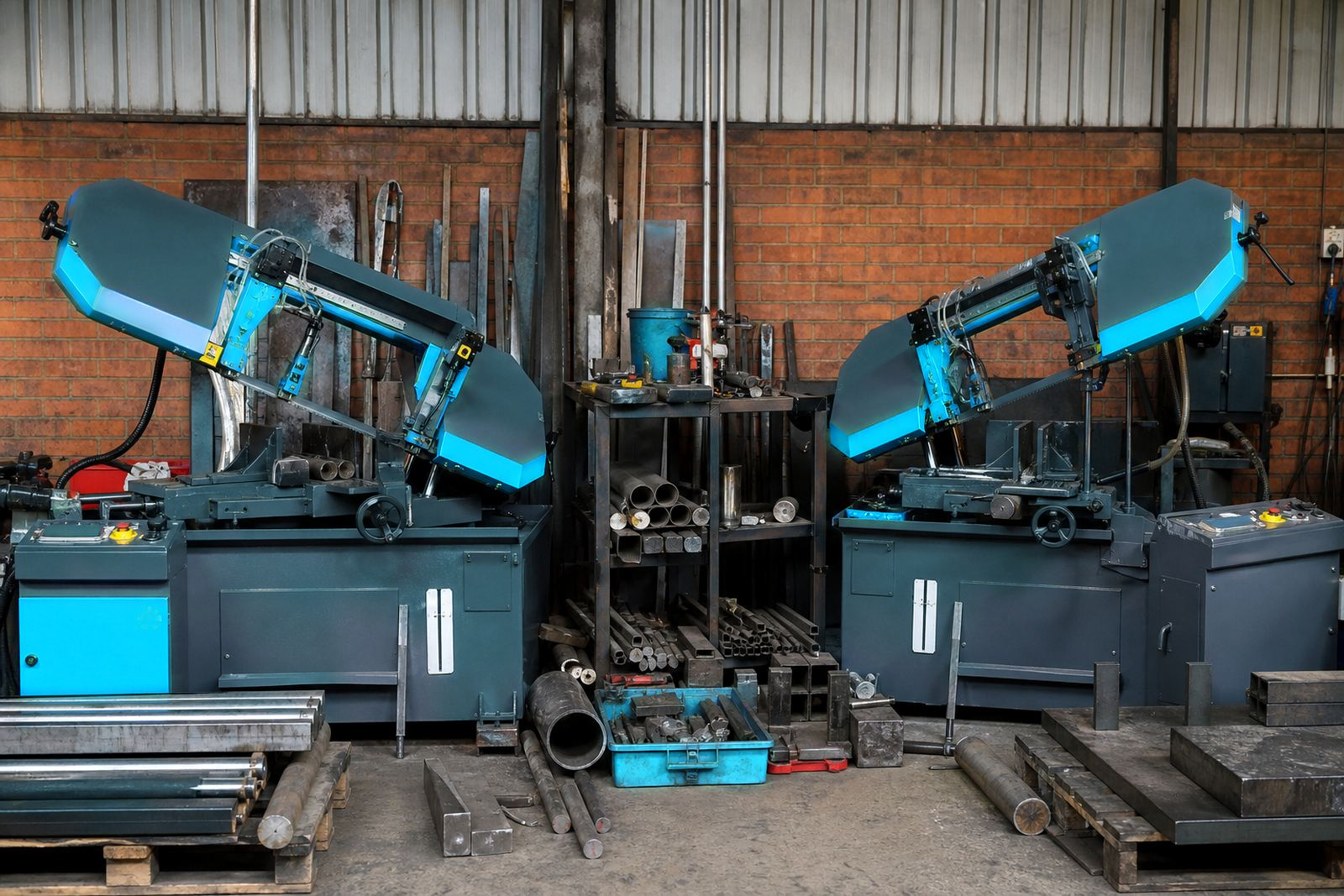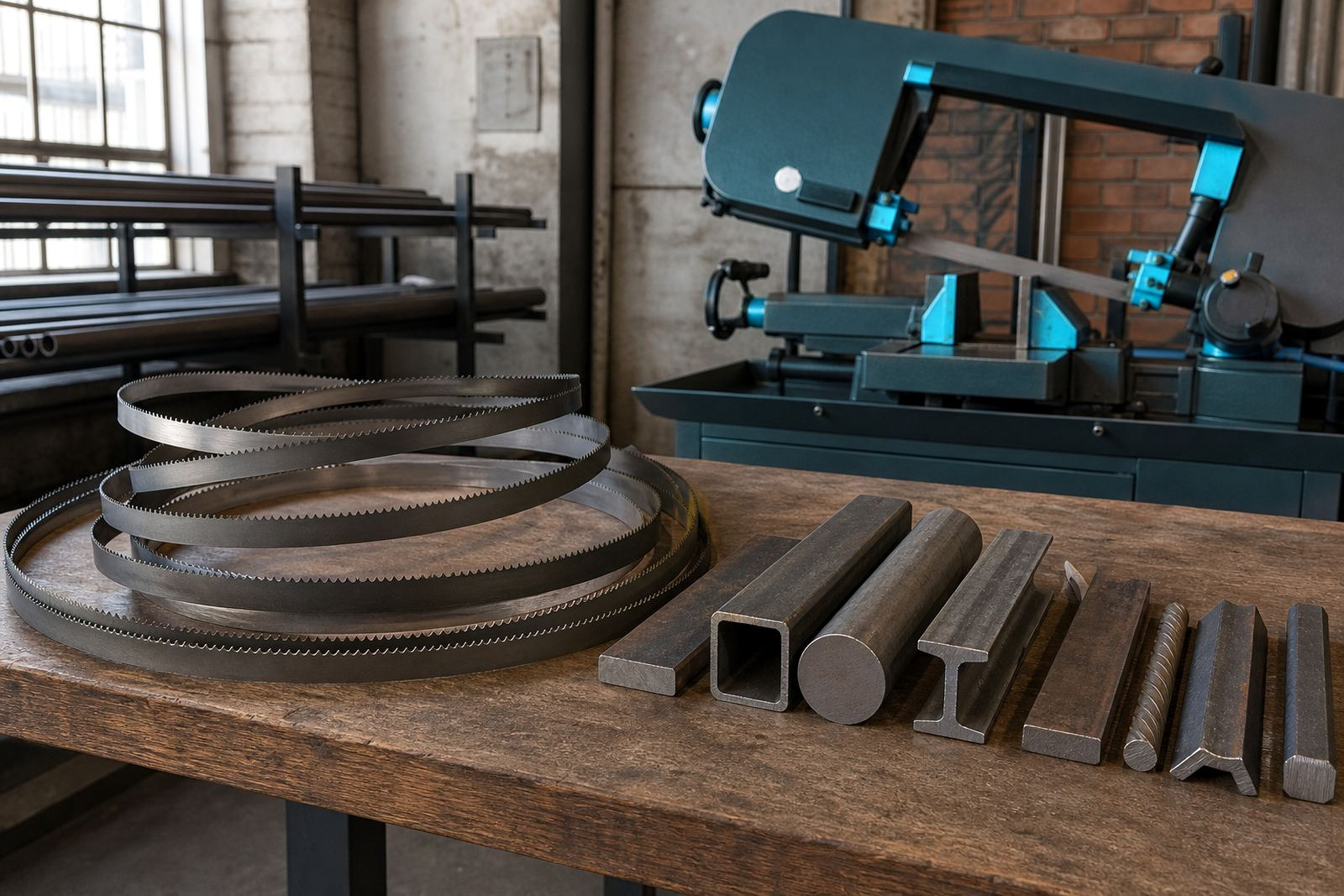
Look at the metal first, then choose the saw
Steel sections, solid bar, stainless and thin wall tube all behave differently under the blade. Start with wall thickness, cross-section and hardness, then decide whether the cut is light, mixed or heavy duty. Follow the sequence rather than the machine label.
For workshops in Alrode, Johannesburg, Pretoria or Durban, the usual mistake is choosing a blade that is too fine for heavy bar or too coarse for small sections. When the tooth count is off, the blade can grab on entry, chatter in the cut, or leave a rough face that needs extra grinding.
- Thin wall tube needs a finer pitch than solid bar.
- Large sections need fewer teeth in contact at once.
- Harder material usually needs a steadier feed and a tougher tooth form.
Choose tooth pitch that keeps teeth in the cut
Tooth pitch, shown as TPI, sets how many teeth touch the work at once. A general rule is to keep several teeth engaged, but not so many that the gullets clog with chips. Variable pitch blades help on mixed sections and reduce vibration on manual saws and powered machines alike.
For a starter kit or a busy maintenance bay, a small range of pitches often covers most jobs. In practice, one finer blade may suit tube and angle, while a medium or coarser blade suits solid sections and thicker profiles. If the job changes often, pick a pitch that matches the material you cut most often.
- Fine pitch suits small sections and thinner walls.
- Medium pitch works for mixed general metalwork.
- Coarse pitch suits heavy section and solid stock.
Blade width and thickness change how the saw tracks
Blade width affects both tracking and the tightest curve the blade can manage. Narrow blades turn more easily on smaller radii, while wider blades track straighter through long cuts and heavier material. A thicker blade holds line better, but the saw wheels and guides must be rated for it.
On manual saws and smaller workshop machines, the best width is the one that fits the guide set, the wheels and the job pattern. If the blade is too wide for the machine, it will fight the guides. If it is too narrow for straight work, the cut can drift and leave more cleanup.
- Wide blades suit straight cuts and deeper sections.
- Narrow blades suit tighter curves and lighter work.
- Thickness must match the machine and the intended feed.
Set, run-in and feed alongside steel grade
Bi-metal M42 blades are used for general metalwork with high tooth wear, while carbon steel blades suit lighter duty and some manual saw work. The tooth set and the run-in period both influence blade life. A fresh blade needs a gentle start, then a steady feed once the teeth have seated.
Too much feed can strip teeth early. Too little feed can make the blade rub, heat up and glaze the cut. The saw should take a chip and cut with a steady sound. If the cut edge looks blue or smeared, the feed or speed is usually wrong for the material.
- Start a new blade at a lighter feed.
- Increase feed only after the cut stabilises.
- Watch for heat, squeal and chipped teeth.
Coolant and chip removal for a clean cut
Coolant helps carry heat away and clears fine chips from the gullets. On longer cuts, harder steels and stainless work, it makes the biggest difference. A dry cut can work on some small jobs, but a blade that runs too hot will lose life quickly and leave a poorer finish.
Check that the coolant reaches the cut zone and that chips are not packing between the teeth. In coastal conditions, especially around Durban and Cape Town, stored blades and machine parts also need protection from moisture. A clean, dry blade storage area reduces surface rust and saves time at the machine.
- Use coolant on longer or hotter cuts.
- Clear chips before they compact in the gullets.
- Store spare blades away from damp floors.
Before the blade goes on the machine
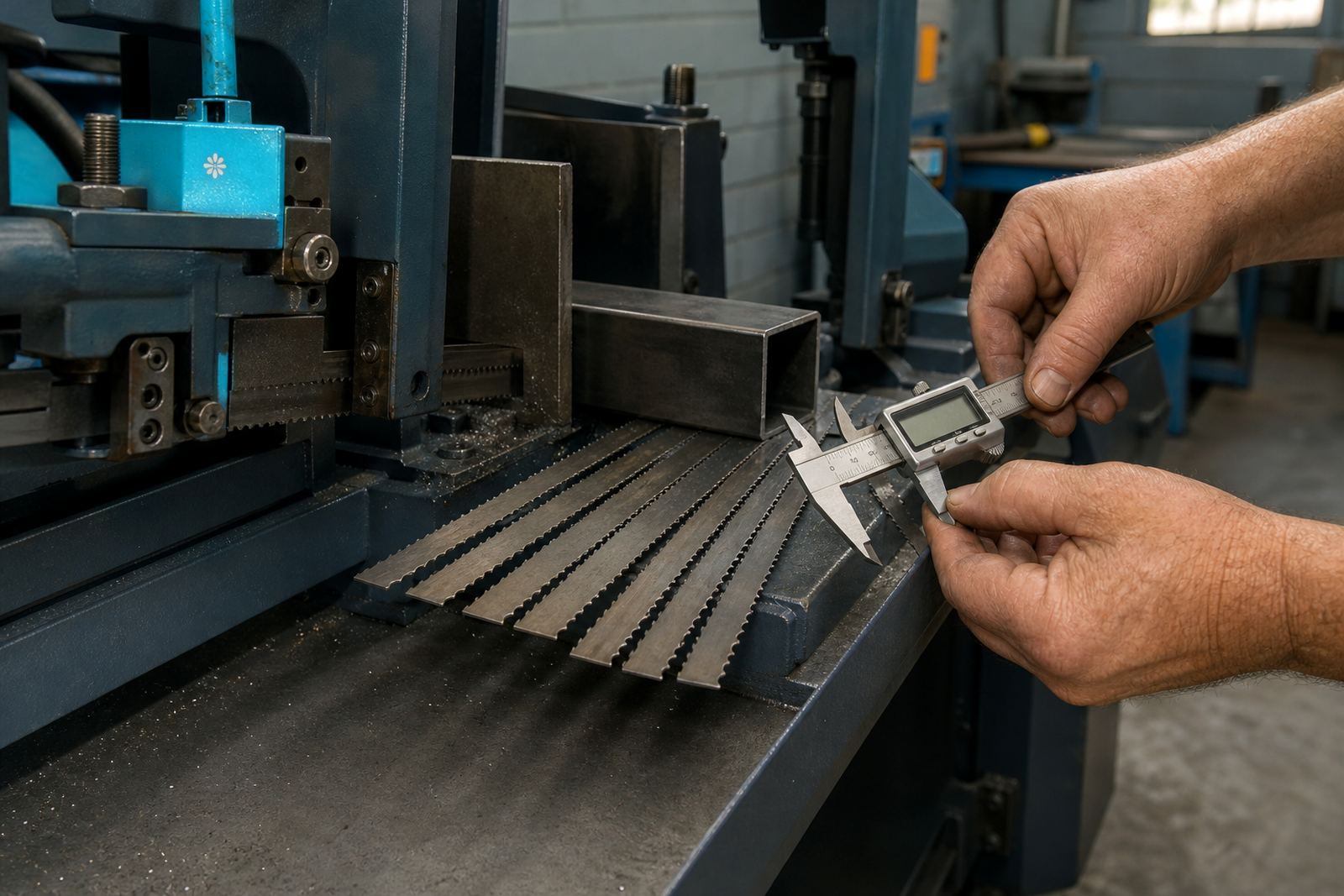
A blade can be correct on paper and still fail if the machine fit is wrong. Check the wheel condition, guide alignment, tension setting and the blade length before fitting. A weld-to-length service is useful when the machine uses a non-standard size or when the existing blade has been measured from an old sample.
Length verification helps avoid guesswork, especially where several saws share the same store room. If a workshop in Pretoria, Vereeniging or Germiston runs different machines for maintenance and production, standardising blade lengths and pitches makes ordering simpler and reduces mix-ups.
- Confirm blade length before welding or fitting.
- Check guide wear and wheel alignment.
- Choose the blade to suit the machine and stock list
When to ask for blade selection help
If the cut keeps wandering, teeth strip early or the finish changes from one batch to the next, the blade choice needs a second look. Blade failure review can show whether the issue comes from pitch, feed, speed, coolant or a machine fit problem. This applies to band saws and hacksaws alike, because each machine loads the blade in a different way.
For workshops that cut mild steel, stainless, tube and solid sections in one week, starter kit planning and stock standardisation save space and keep the right blade on hand.
- Use selection help when the blade fails early.
- Standardise pitches for the work you repeat most.
- Keep a starter kit for common section sizes.