
Width first, cut shape second
Blade width is the first thing to settle when a job moves from rough stock to a finished cut. A wider bandsaw blade resists twist better and stays straighter on long, straight work, while a narrower blade handles tighter curves and irregular profiles with less strain on the machine.
On metalwork jobs, width is never chosen in isolation. Tooth pitch, blade thickness, set and the material type all work together. A blade that is too wide for the machine or the radius you need can wander, chatter or fatigue early. A blade that is too narrow may track safely around a contour but lose stability on heavier section work.
- Use wider blades for straight cuts and larger section sizes.
- Use narrower blades for contour work and tighter radii.
- Match width to the machine guides and wheel size.
- Check that the frame can take the selected blade safely.
Straight section work and large stock
When the job is a straight cut through solid bar, box section or thick plate, the blade needs enough width to stay rigid. In those cases a wider blade usually helps the cut remain square, especially where the operator is feeding slowly and wants a consistent finish. If the stock is heavy or the cut length is long, blade width carries more of the load and helps reduce drift.
Choose a blade width that suits the machine, wheel diameter and feed speed. On hardened or abrasive material, a bi-metal blade with the right tooth pitch often gives better service than a heavier blade used outside its range.
- Choose a wider blade when cut accuracy is most important.
- Maintain a steady feed and avoid pushing the blade.
- Use coolant where the cut runs hot or the stock is thick.
- Check blade tracking before starting the full run.
For straight work, blade width and machine fit go hand in hand. A clean square cut often starts with the blade sitting properly on the wheels and guides, as well as the tooth pattern chosen at the counter.
Contour work needs a lighter footprint
Contour cuts ask for a different approach. A narrower blade bends more willingly around curves, notches and internal shapes. That is useful on brackets, templates and repair work where the cut line changes direction. If the blade is too wide, the operator has to fight the radius and the cut can bind or mark the workpiece.
On manual saw support jobs, contour work often goes better when the blade width is chosen with the smallest turn in mind. The narrower blade can still cut cleanly if the tooth pitch suits the material and the run-in is handled properly. Feed should stay controlled, because a blade that is being pushed too hard will lose its line long before the teeth are worn out.
- Narrow blades suit tighter curves and irregular profiles.
- Allow enough set for chip clearance in softer metals.
- Slow the feed when the cut changes direction.
- Watch for rubbing on the back of the blade in the curve.
Machine size and blade width must agree
Every bandsaw has limits. Wheel diameter, guide setting, frame stiffness and blade length all affect which width will work properly. A blade can look suitable on paper and still misbehave if the machine was set up for a narrower section of work. Machine fit check comes first before a workshop moves to a new width.
For older saws and manual machines, the safest approach is to start with the width the frame handles confidently, then work outward only if the job needs it. In some workshops, the real issue is the blade path through worn guides or a tired tension system. Width is only one of the causes. Check the guide condition before changing blade width.
- Check guide condition before changing blade width.
- Confirm the wheel and tension range suit the blade.
- Make sure the blade length matches the saw frame.
- Review blade thickness if the guides run tight.
Our machine fit check and length verification work are there for this reason. A blade must suit the saw as a whole and the job in front of it.
How pitch, thickness and set affect the width choice
Blade width works with tooth pitch, thickness and set rather than standing alone. Coarse tooth pitch can clear heavy section material well, while finer pitch suits thinner wall tube and smaller profiles. A variable pitch blade can calm vibration on mixed sections, but the width still has to suit the cut shape and the machine layout.
Blade thickness is the next check. A thicker blade can hold line well on larger saws, yet it may feel stiff in tighter work. The set must clear chips without making the cut wander, and that balance changes with the width chosen. Feed speed and cutting speed need to stay sensible too, especially on mild steel, stainless sections and mixed scrap where the material changes along the cut.
If the blade runs hot, coolant checks become important. Heat can push the blade out of line, shorten tooth life and make a narrow blade feel unstable. A good run-in at lower load helps the teeth settle, especially on a new bi-metal blade.
A workshop check before you place the blade on the saw
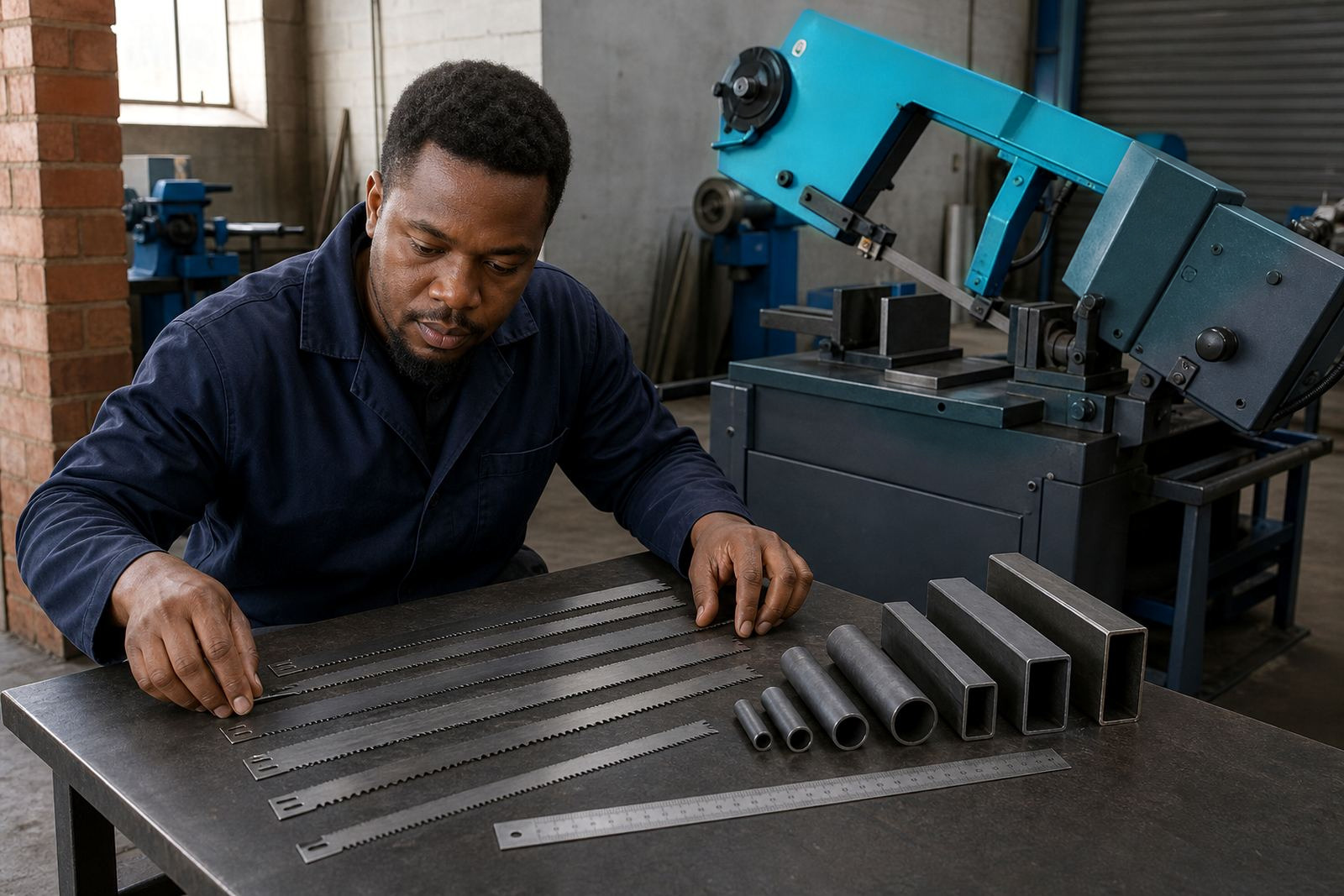
Before a blade goes into service, it helps to work through the job methodically. The right width usually becomes clear once the cut shape, stock size and machine details are all laid out on the bench. Starter kits and stock standardisation also help, because the workshop can keep a practical range and avoid guessing every time a new job arrives.
- Measure the smallest radius or the longest straight cut.
- Confirm the material type and wall thickness.
- Check whether the saw is manual or powered feed.
- Decide if the cut needs speed, finish or endurance.
- Match the blade width to the machine and the guides.
- Set the tooth pitch and feed speed together.
For workshops across Johannesburg, Vereeniging, Pretoria, Durban and Cape Town, the useful answer is usually the one that fits the saw and the job without forcing either. Blade selection help is most useful when it keeps a machine within its range and the cut true from the first stroke to the last.
When a cut starts to wander
If a blade drifts, shudders or marks the workpiece, width may be part of the problem but it is rarely the only one. The cause can sit in the guides, the pitch choice, a poor run-in or feed that is too eager for the material. On some jobs the blade is simply too wide for the contour, while on others it is too narrow for the straight cut and starts to twist under load.
Blade failure review is useful when the same fault repeats. The wear pattern on the teeth shows whether to change the width, the tooth pitch or the coolant. For welded-to-length blades, the right width should be matched before the weld is made, because the finished loop has to run true from the start.
On busy floors, a practical blade choice saves time in small ways that add up. Fewer adjustments, less wandering and cleaner cuts make the job easier to manage, especially where the saw is used every day.