Start with the thickness at the cut line
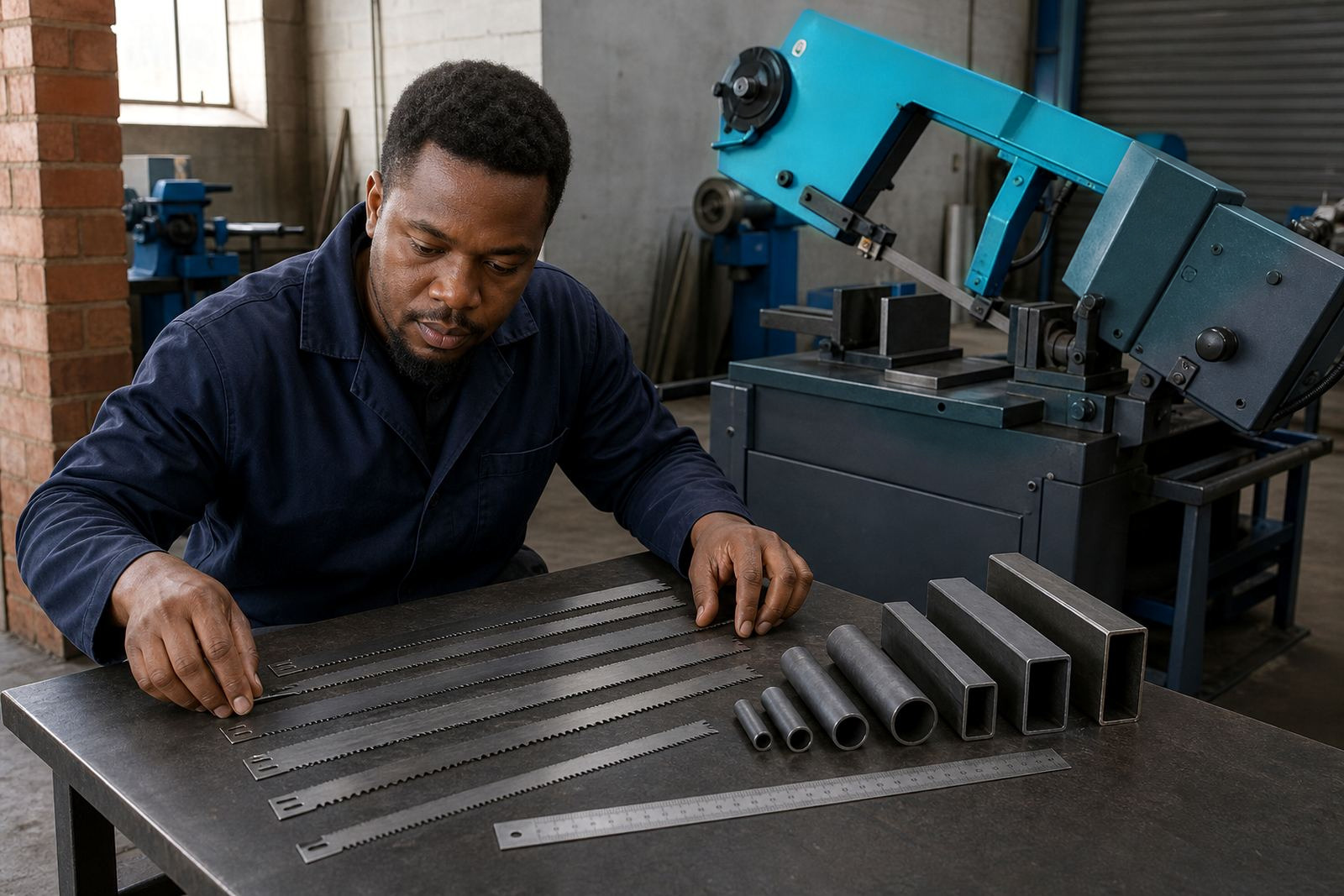
The first check is the material thickness where the teeth enter and leave the work. Thin wall tube, small angle and light flat bar need a finer pitch so enough teeth stay in the cut. Heavy solids and thick wall sections can take a coarser pitch without loading the gullets too tightly.
For metalwork, steady engagement cuts better than the fastest visible bite. If only one or two teeth are working at a time, the blade can snag or chatter. If too many teeth are packed into the cut, the gullets fill with chips and the blade starts to rub.
- Thin wall and small section: finer TPI
- Medium wall and mixed profiles: variable pitch often works well
- Heavy section and solid bar: coarser TPI
- Very small offcuts: keep the tooth form fine enough to avoid tooth loss
Match tooth pitch to section size and the label
A round bar, square tube and wide channel can all be the same thickness, yet they do not behave the same in the cut. A wide section keeps the blade engaged for longer, while a narrow profile may interrupt the cut face. That changes how the teeth clear chips and how stable the blade feels.
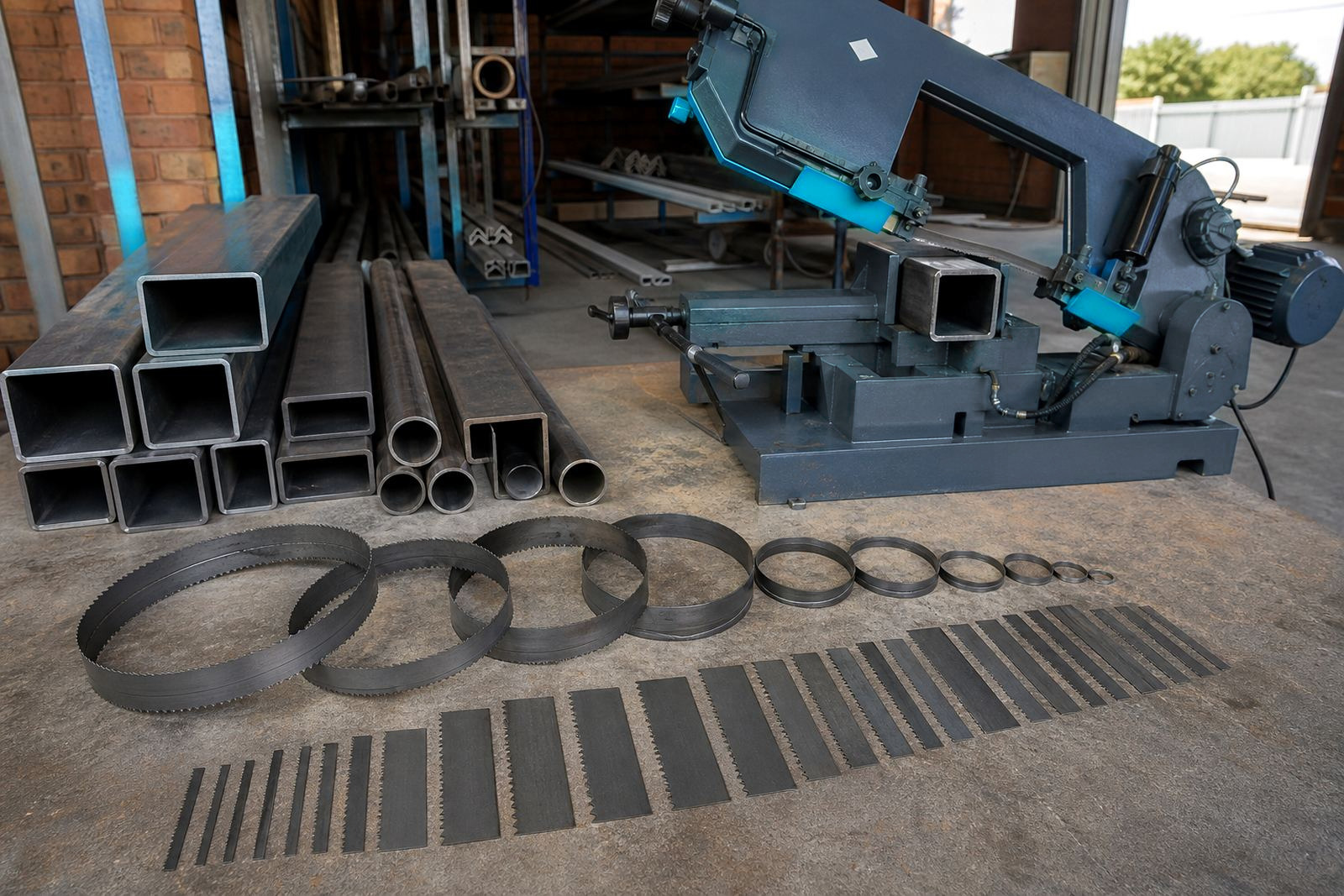
Variable pitch blades help on mixed work because the changing tooth spacing breaks up vibration. They are useful on general fabrication work where a workshop moves between tube, angle, bar and light structural section. Fixed pitch blades still suit regular, repetitive jobs where the material range is narrow.
- Long contact length on wide section: variable pitch can reduce chatter
- Short contact length on small section: finer fixed pitch may feel cleaner
- Mixed bundles: pick a pitch that suits the thinnest piece in the bundle
- Large solids: avoid overly fine pitch that clogs the gullets
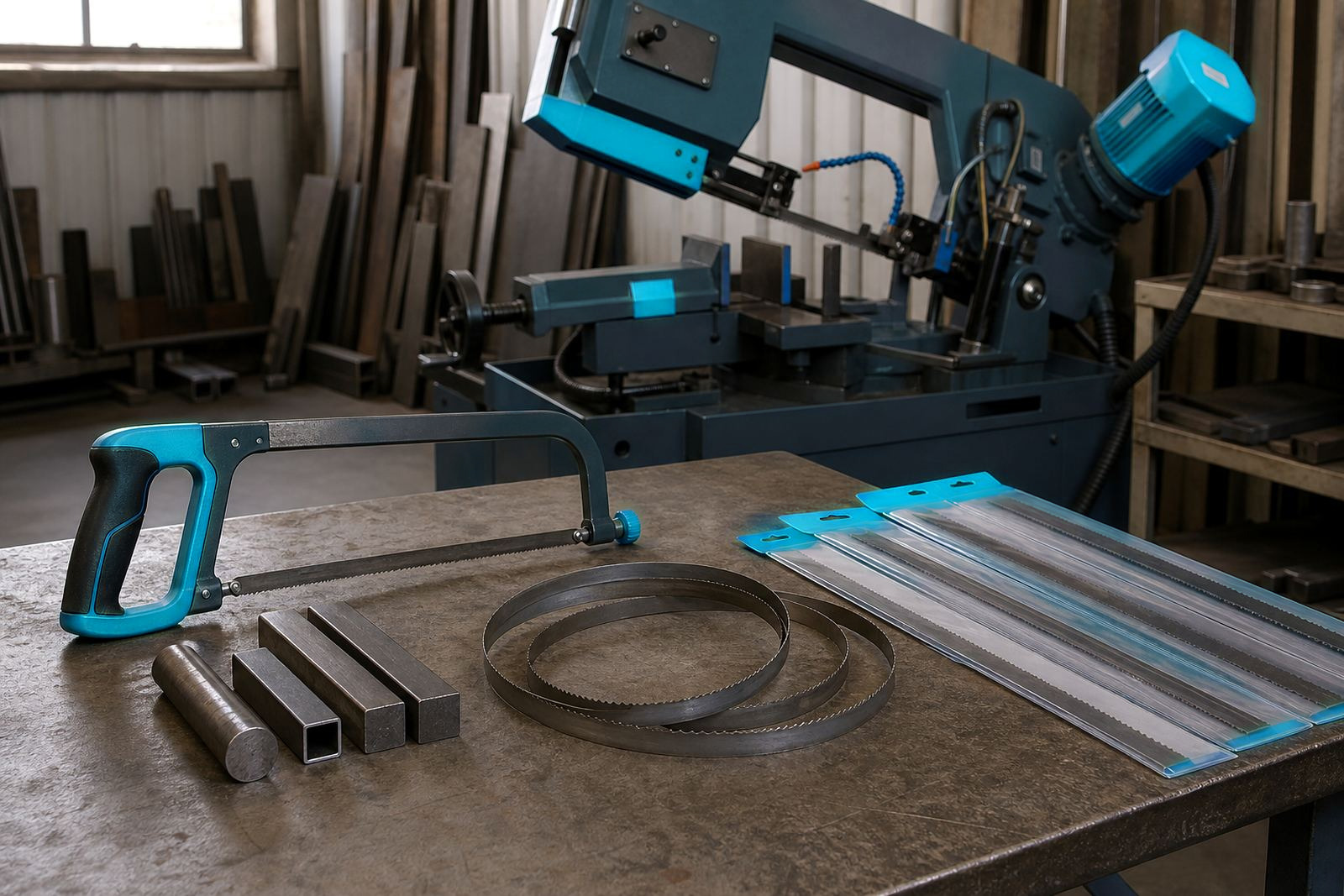
On hacksaw blades, the same thinking applies. A finer blade helps on light wall tube and thinner sheet pack, while a coarser blade suits heavier stock and rougher manual cutting where the operator wants freer chip clearance.
Use blade width and thickness as part of the decision
Tooth pitch is one part of the choice. Blade width affects tracking and curve control, while blade thickness changes stiffness and the way the blade sits in the machine. A wider bandsaw blade is better for straight cutting and heavier frames. A narrower blade is easier to guide where the machine or workholding is less rigid.
A thicker blade resists twist, provided the wheel diameter and guides can take it. If the machine is old or the guides are worn, the cleanest pitch on paper can still cut badly. Pitch selection sits alongside a machine fit check.
- Wider blade: better for straighter cuts and larger machines
- Narrower blade: useful for curve control or smaller wheels
- Thicker blade: steadier in heavier cutting, if the machine can run it
- Blade width and tooth pitch must suit each other
Set the blade up for the first cut
Even the right TPI can fail if the blade goes straight into hard cutting. New blades need a run-in, especially on bi-metal M42 and carbon steel types. The teeth should be eased into work for the first cuts so the edge rounds off properly before full feed is applied.
Set the feed speed along with the pitch. Too much feed overloads the tooth tips and bends the set. Too little feed makes the teeth rub and can harden the work face on some materials. Coolant, where the machine uses it, helps carry heat away and improves chip clearing on longer cuts.
- Start with lighter feed for run-in cuts
- Keep the chip colour and sound under watch
- Use enough coolant for heat and chip control
- Adjust feed before changing the blade pitch
If the cut starts to wander, look at the tooth form, the feed setting and the clamp first. A pitch that seemed fine on one job may be too coarse or too fine on the next job if the section changes.
A quick workshop check before you order a blade
When a workshop is choosing a replacement blade or starter kit, a short check saves confusion. The material list, machine type and usual cut sizes point you toward the right tooth pitch far more reliably than a rough guess. That is also where welded-to-length supply helps, because the blade can be matched to the saw frame and the work pattern.
We look at the job simply: what is being cut, how thick it is, how stable the machine feels and whether the saw does one task or many. That gives a better fit for bandsaw and hacksaw blades across metalwork shops in Alrode, Johannesburg, Pretoria, Vereeniging, Durban and Cape Town.
- List the common materials first
- Measure the thinnest and thickest section
- Note whether the cut is manual or powered
- Check whether the blade needs standard stock or a welded length
When the blade does not suit the cut
A wrong pitch shows up quickly. You may see tooth stripping, a twisted cut face, heavy vibration or chips packed into the gullets. In some cases the blade is too fine for thick material or too coarse for thin wall work.
Blade failure review starts with the marks left on the teeth and the shape of the broken edge. From there, the cause can be traced back to pitch, feed, blade width, guide setting or machine fit. That is the practical way to narrow the issue instead of changing blades at random.
If you need a steadier stock plan, standardising a few pitches across your usual material range helps a busy workshop. It makes reordering simpler and keeps the saws on familiar settings, which is useful where several operators use the same machine.