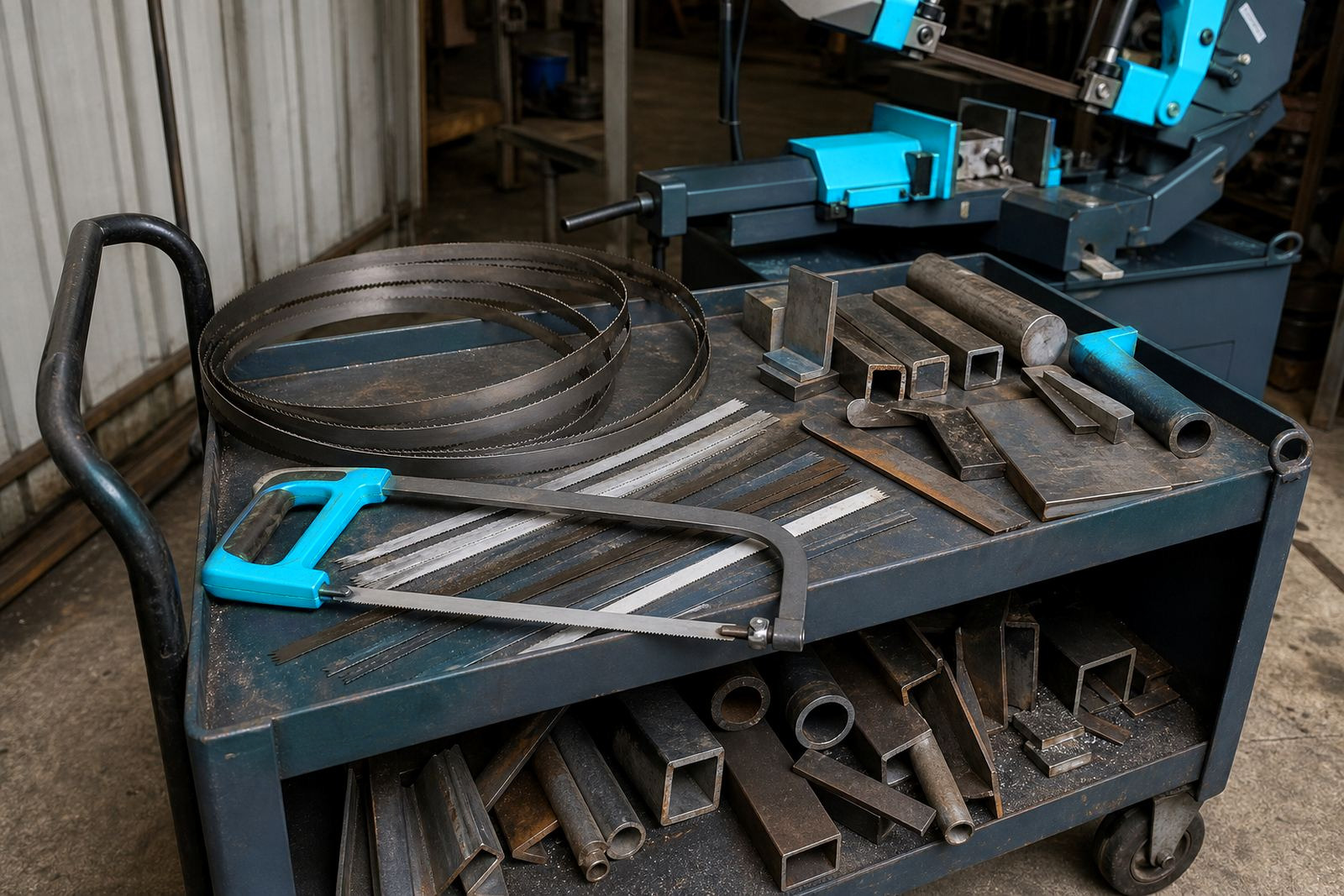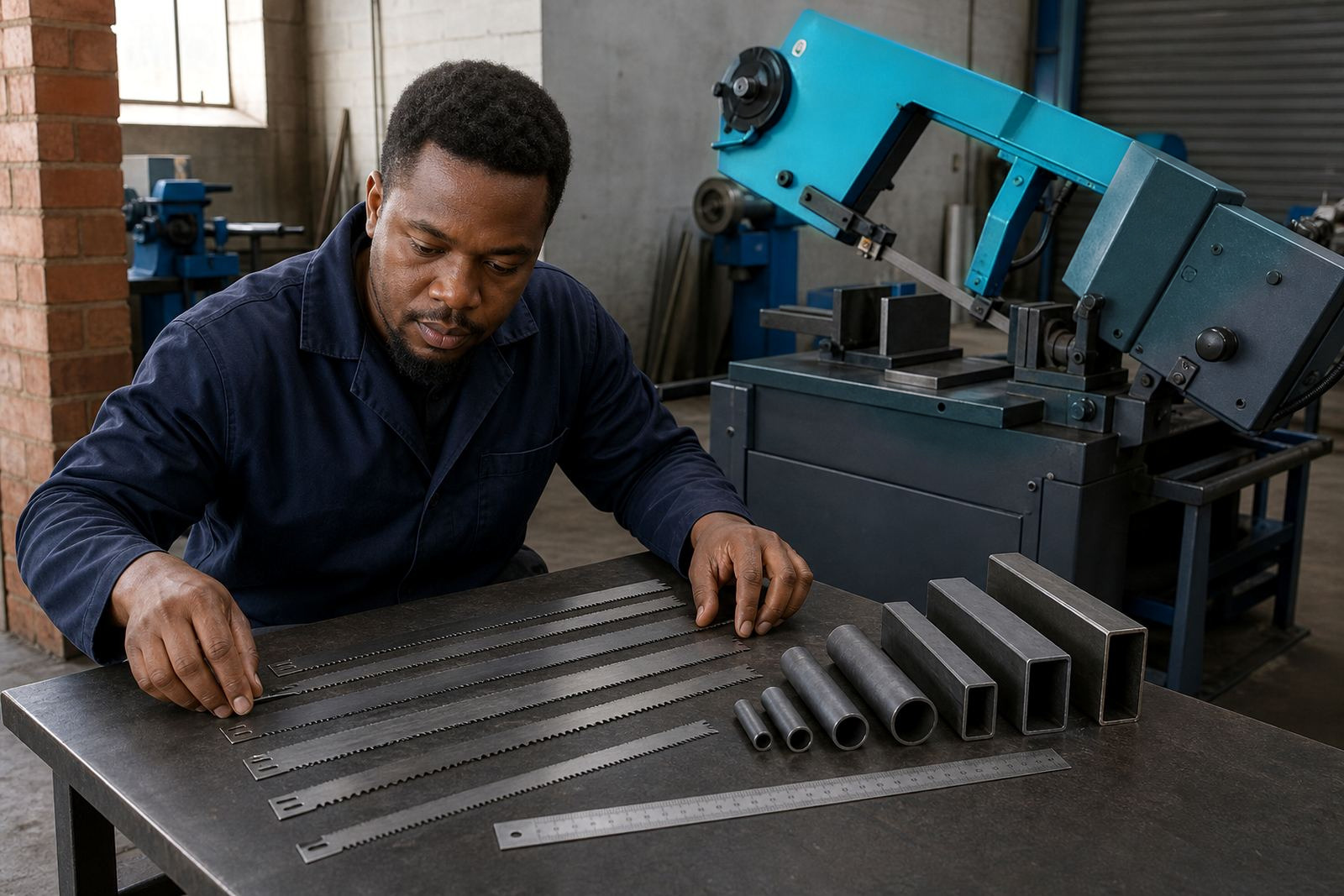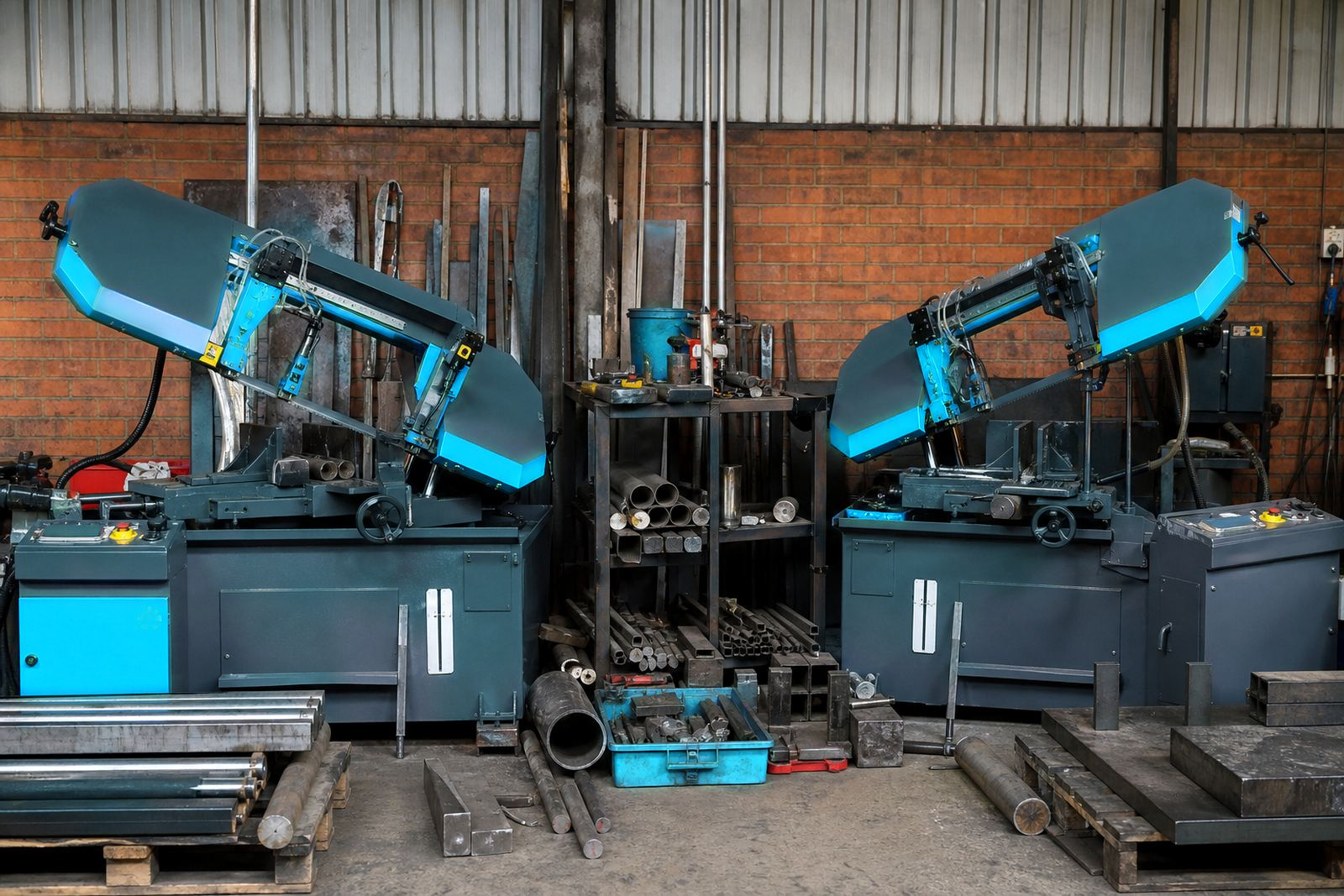

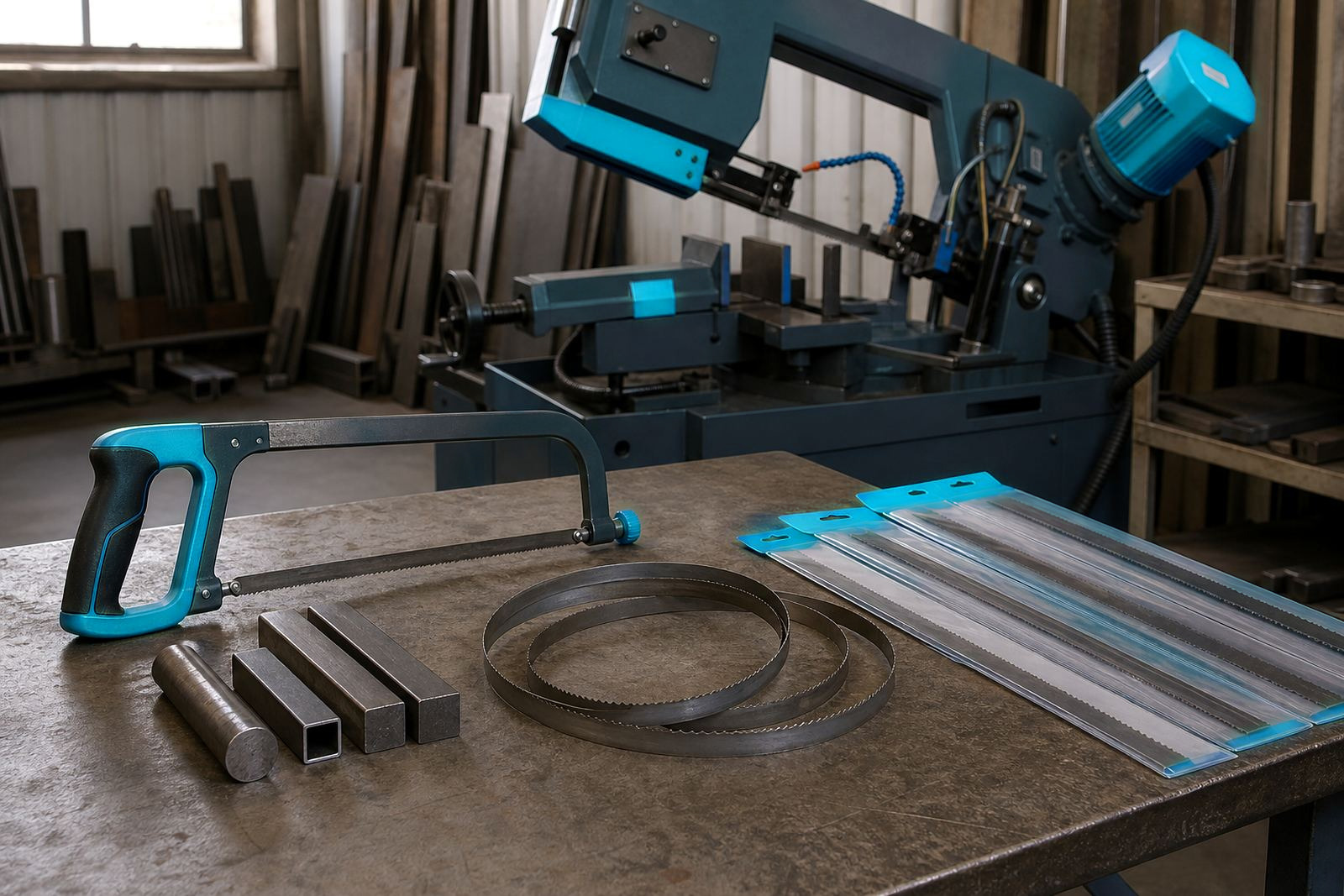
Start with the material in the frame
Soft mild steel, stainless offcuts, thin tube and heavier bar do not all ask for the same blade. A carbon steel blade can suit light hand work on softer material, while bi-metal blades with a hard tooth edge hold up better on mixed workshop cutting and tougher sections.
For thin wall tube or small profiles, the tooth pattern needs enough teeth in contact at any moment. For thicker solids, a coarser blade clears swarf better and keeps the stroke straight, especially when the user is pushing from a bench or vice. In a noisy workshop the wrong match shows up fast as chatter, wandering and a dull cutting line.
Match tooth pitch to the wall thickness
Tooth pitch, shown as TPI, affects the cut more than many operators think. Fine pitch blades, usually higher TPI, bite cleanly into thin material and reduce snagging at the start of the stroke. Coarser blades suit thicker stock where the gullets need room for swarf.
- Thin sheet and light tube usually need a finer pitch.
- Medium wall sections work best with a middle pitch.
- Solid bar and heavier shapes often need a coarser pitch.
- Variable pitch helps reduce vibration on awkward cuts.
If the teeth catch hard on entry, the pitch is likely too coarse. If the blade polishes the surface and feels slow, the pitch may be too fine for the section.
Use blade width and thickness to steady the stroke
Blade width affects tracking. A wider blade is steadier in a straight cut and less likely to twist in the frame, while a narrower one copes better with tight access and small sections. Thickness plays into flex and durability, so a blade that is too light can wander, and one that is too heavy may feel harsh in a small manual saw.
For general workshop cutting, a balanced blade width helps the saw stay in line without forcing the operator to lean on the frame. This helps on repeated work where the cut line must stay square for drilling, welding or fitting.
Run-in, set and the first cuts
A new blade needs a short run-in period. The first cuts should be lighter, with the teeth allowed to settle before full pressure is used. That protects the edge and helps the blade find a clean path through the material.
- Start with controlled pressure on the first few cuts.
- Let the teeth do the cutting, do not force the stroke.
- Check that the frame holds the blade straight and tight.
- Watch for uneven wear, which can point to poor set or bad alignment.
The set on the teeth should be even enough to clear the kerf without rubbing. If the cut starts pinching or the blade heats sharply, the set or pitch may suit the job better.
Feed pressure, stroke rhythm and coolant checks
Hand cutting is easier when the stroke stays smooth and the feed pressure matches the metal. Too much force bends the blade into the cut and can snap teeth off early. Too little pressure makes the blade skate and polish the surface instead of cutting it.
For longer cuts in tougher material, coolant or cutting fluid can improve blade life and reduce heat. Even a manual saw benefits from a light fluid on the cut line when the metal runs hot or gummy. That is useful on stainless, thicker bar and sections that trap heat during a long shift.
- Keep the stroke even, with steady pressure.
- Do not let the blade chatter across the cut face.
- Use fluid where heat build-up is a problem.
- Stop and inspect if the blade starts to wander.
How to spot the wrong blade before it wastes a job
Blade failure usually gives warning. Broken teeth, blueing from heat, curved cuts and heavy burrs all point to a mismatch between blade, material and technique. If the same job keeps chewing through blades, the issue may be pitch, width, frame tension or the way the work is clamped.
For workshop planning, a starter kit can cover the common jobs without stocking random sizes. We also verify length when the blade must fit a hand saw frame properly. We also help with blade failure review, machine fit checks for manual saw setups and stock standardisation where a team wants fewer blade types on the shelf.
- Check the clamp and frame before blaming the blade.
- Match pitch to material thickness.
- Keep a note of the sections that cut well.
- Replace damaged blades before they spoil the next job.