Thickness sits with wheel diameter, not apart from it
Blade thickness is never a separate choice on its own. It has to suit the wheel diameter, wheel face and guide setup on the machine, or the blade can sit poorly and work harder than it should. A thin blade can take a tight wheel better, while a thicker blade can add stiffness when the machine and cutting job support it. The wrong match may show up as wandering cuts, poor tracking or a blade that heats unevenly.
On smaller machines, the blade may need to bend more often around the wheels. Thickness has the biggest effect here. On larger saws with better support, a thicker band can help control straight cuts through solid sections and heavier bundles. We consider the full job and the size of the cut.
- Check wheel diameter before fixing blade thickness.
- Match the blade to the guide pressure and wheel condition.
- Allow enough flex for the blade to run true.
- Use the machine plate and blade chart where available.
A practical thickness check before the blade goes in
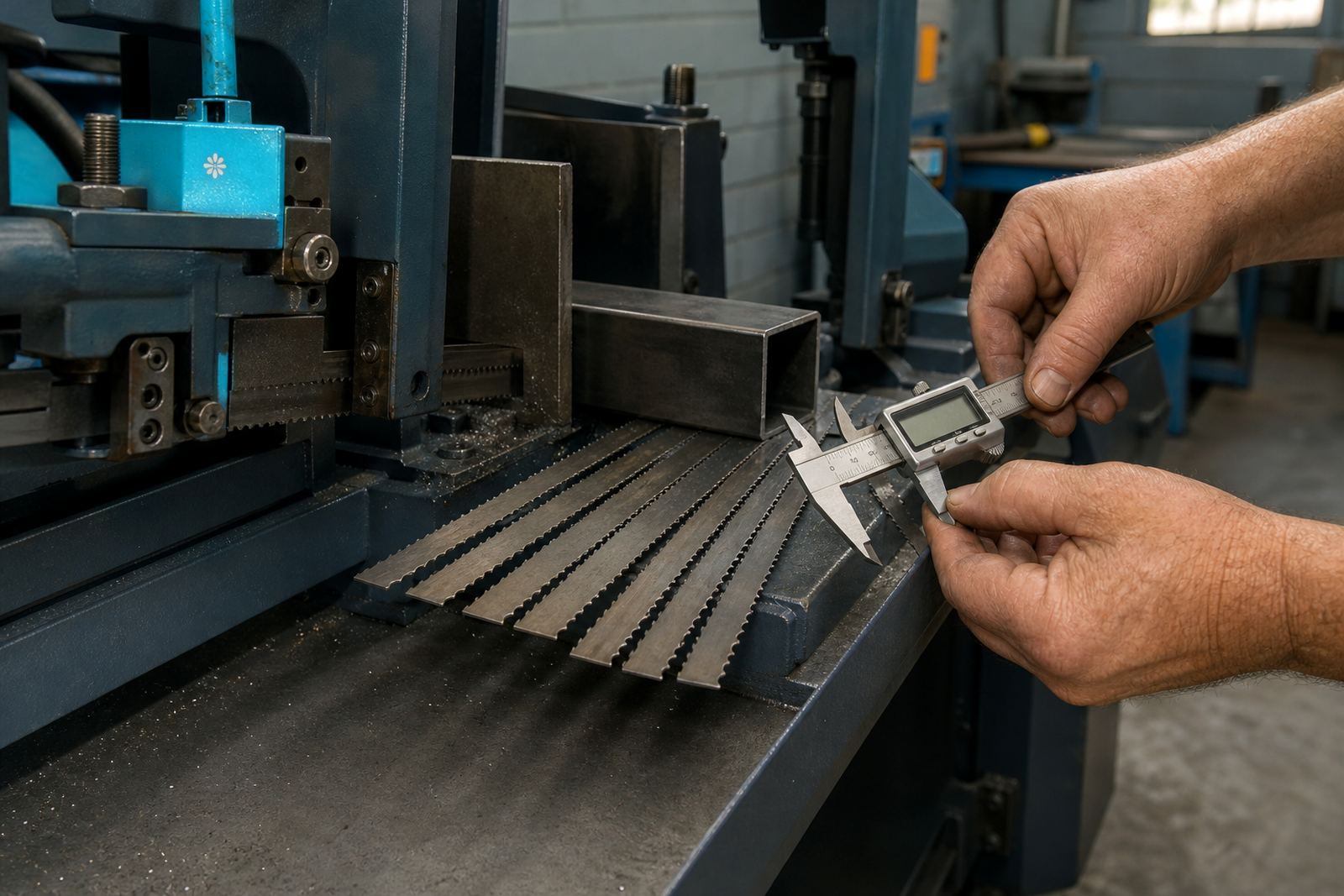
When a workshop asks for blade selection help, we start with the machine and the material. Mild steel, thin wall tube, stainless, solid bar and cast sections do not all ask for the same blade body. A thicker blade can stay straighter in heavier stock, but it also needs the right feed and speed or it will build heat. Thin blades can help on lighter machines and smaller workpieces, yet they need clean guides and careful handling.
A short run-in helps here too. A new blade should not be pushed too hard in the first cuts. A controlled run-in lets the tooth edges settle and helps the body of the blade take its shape around the wheels. If the blade is forced early, the set can suffer and the edge may chip sooner than expected.
- Match thickness to material section and machine capacity.
- Start with lighter feed during run-in.
- Keep coolant flowing where the saw is set up for it.
- Watch for noise, heat and drift during the first cuts.
How thickness works with width, tooth pitch and set
Blade thickness works with width, body stiffness and how the blade takes load. Tooth pitch, including variable pitch and TPI choices, must suit the material thickness so the teeth can clear the chip load properly. A blade with the right thickness but the wrong pitch can still struggle, especially on mixed section work.
The set of the teeth and the body thickness also affect cutting feel. If the set is too aggressive for the material, the saw can leave a rough finish or overload the machine. If the blade is too slim for the job, it may twist under pressure and pull off line. For that reason, we look at the full blade specification before welding to length.
- Choose thicker bodies when straight tracking is most important.
- Keep tooth pitch aligned with wall thickness or section size.
- Pair wide blades with the machine’s guide capacity.
- Balance set, feed and speed so the blade stays stable.
Workshop signs that the thickness is off
Most blade issues become clear in the cut before the label shows them. If the blade starts to snake through the work, struggles to stay on line, or leaves a finish that changes from one side of the cut to the other, thickness may be part of the issue. That is common when the machine is old, the wheels are worn, or the blade is too heavy for the saw body.
We also look at blade failure review notes. A blade that cracks near the weld, twists at the back edge, or shows heat tint along the body may be seeing the wrong load. Sometimes the answer is a different thickness, other times it is a change in feed speed or coolant use. The fix has to suit the machine as well as the metal.
- Check for drift in straight cuts.
- Look for early cracking near the weld area.
- Inspect wheel wear and guide alignment.
- Review feed speed if the blade runs hot.
Thickness choices for bi-metal and carbon blades
Bi-metal blades and carbon steel blades behave differently, so the thickness decision changes with the blade type. Bi-metal M42 blades are usually chosen for longer life and steady cutting across mixed metalwork. They can carry a more demanding cut when the pitch and speed are set correctly. Carbon steel blades can suit lighter work, manual saw support and starter kits where the cutting load is less severe.
For workshops in Johannesburg, Pretoria, Durban, Cape Town and Vereeniging, the machine mix often varies from one bay to another. One saw may handle regular section work, while another does clean-up cuts on smaller stock. Standardising stock and planning starter kits keep our customers on track. A good thickness choice helps keep the blade range practical, not crowded with sizes nobody uses.
We also weld to length for workshops that need a blade fitted to a specific machine. Length verification is part of that process, because a blade that is slightly off length can affect tracking and tension. That detail is small, but it changes how the blade behaves on the wheels.
For the person setting up the saw
Use this check before you fit the blade or place a blade order:
- Confirm machine wheel size and guide type.
- Check whether the saw is manual or powered feed.
- Measure the material section and wall thickness.
- Decide if the job needs straight cutting or flexible handling.
- Choose the tooth pitch first, then confirm blade thickness.
- Ask whether coolant is being used and if flow is steady.
- Set feed and speed for the material as well as the machine plate.
- Inspect the weld area and blade body before first use.
If the cut is critical, bring the machine details and the material list together before the blade is made up. That helps us check blade width, thickness and tooth form as one set of choices instead of separate guesses.
What our team looks at when the job is awkward
Some jobs do not fit neatly inside one blade spec. A workshop may need a starter kit for mixed steel, or a weld-to-length blade service for a saw that gets used on different sections through the week. In those cases we look at the machine fit check, the wheel condition, the likely feed pressure and the coolant setup. That gives a more reliable blade choice than thickness alone.
Sibusiso Dawood and the MoreCut Saws team work from our Alrode, Alberton base with support for clients across South Africa. We deal with blade selection help, width selection, pitch selection, run-in guidance and blade failure review as part of the same process. The aim is a blade that tracks cleanly, cuts steadily and suits the machine the way it is actually used.
When thickness is right, the saw feels calmer and the cut stays more predictable, so check the match before the blade goes out to the floor.