Start with the wall thickness, not the shape
Hollow section looks easy on paper but the wall thickness drives the blade choice. A thin wall square tube needs a finer tooth pitch than heavy wall pipe, and a mixed bundle can punish a blade that was set up for one size only. For light structural tube, a variable pitch blade often cuts smoother because it spreads the tooth contact over a wider range, which helps reduce chatter on long sections.
As a rule, you want several teeth in the cut at all times, but not so many that the gullets pack up with chips. On thin wall material, a coarse blade can snag and leave burrs. On thicker hollow sections, too fine a pitch can rub, heat the edge and shorten blade life. The right pick depends on wall thickness as well as the outside diameter.
- Thin wall tube: finer pitch, controlled feed, lighter pressure
- Medium wall pipe: medium pitch or variable pitch for steadier action
- Heavy wall hollow section: coarser pitch, proper chip clearance
- Mixed packs: choose for the thinnest wall in the bundle
Bandsaw blade choices for tube and pipe
For general metalwork, bi-metal M42 blades suit many hollow section jobs because they hold an edge well on mild steel, structural tube and pipe. Carbon steel blades still have a place on lighter manual saws and smaller batches, especially where the material is soft and the cut volume is modest. Blade width is chosen with tooth pitch. A wider blade tracks straighter on longer cuts, while a narrower blade turns more easily on smaller machines or where the saw guides are less rigid.
Thickness is checked as well. A thicker blade can improve stiffness, but it needs the machine to support it properly. On a saw with weak guides or worn wheels, a heavy blade may not run true. Good cut quality needs the teeth to clear the side wall cleanly and avoid rubbing the cut face. If the blade is wandering, the problem may be pitch, machine alignment, feed pressure, or the steel grade.
- M42 bi-metal: good for regular workshop cutting and longer blade life
- Carbon steel: useful for lighter duty, manual work and smaller runs
- Wider blade: better line control on straighter cuts
- Narrower blade: better on smaller saws and tighter machine limits
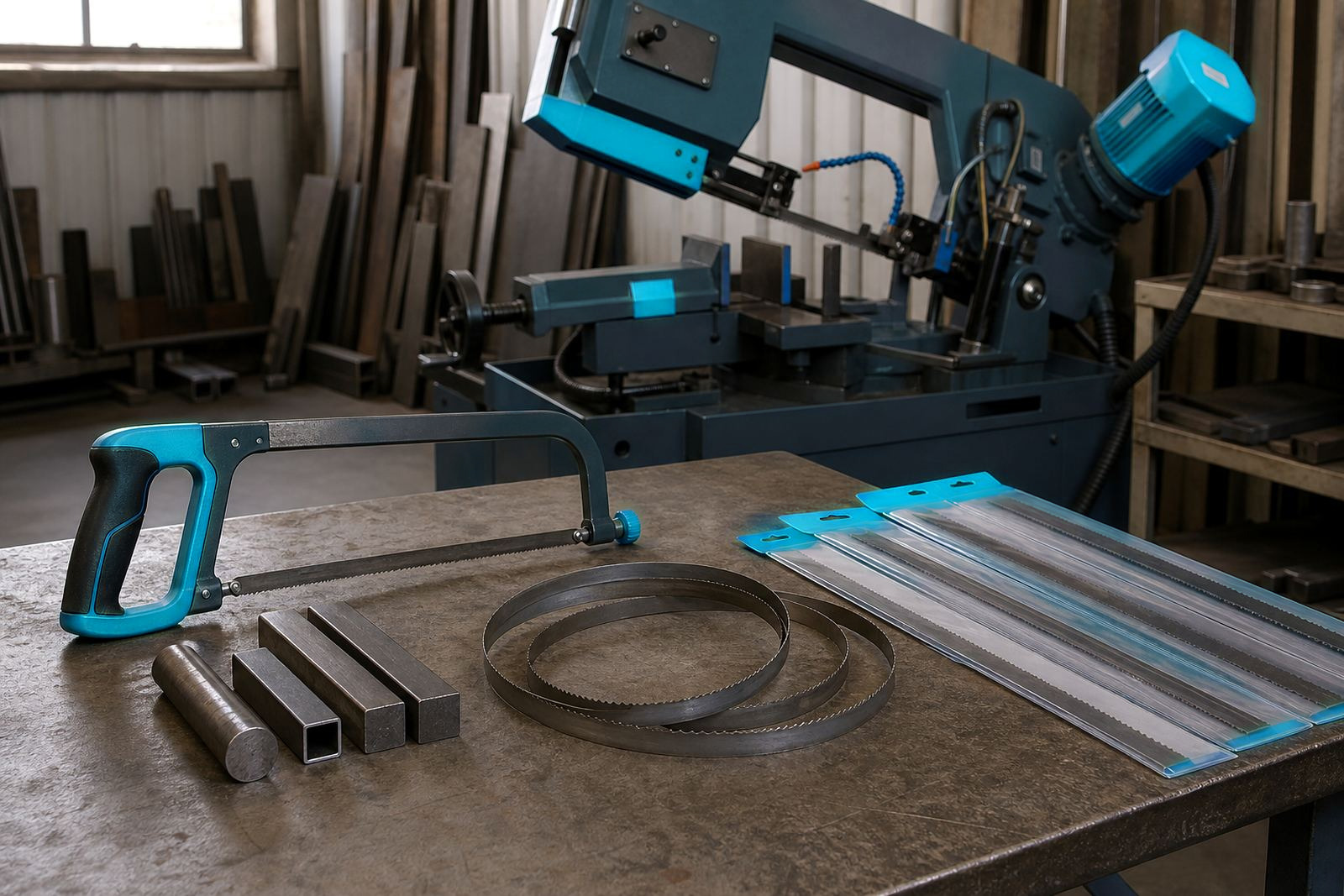
Hacksaw blades still have a job on site
Manual hacksaw work is still common on site when a section needs trimming, marking out, or cutting where a power saw is not handy. For hollow sections, tooth count needs extra care because a coarse blade can catch the far wall as it breaks through. A finer pitch works better on thin wall tube, while medium pitch is more forgiving on mixed maintenance work.
Blade tension should feel firm and even. If the blade flexes under hand pressure, it will wander and leave a rough cut. Keep the stroke long and steady, and let the teeth do the work instead of forcing the frame. For stainless or thin wall galvanised sections, a lighter touch helps prevent tearing at the edge. If the blade gums up, stop and clear the swarf rather than pushing through the heat.
- Use a finer tooth count for light tube and thin wall sections
- Keep tension firm to reduce wandering
- Maintain full strokes to use the whole blade length
- Clear chips before they pack between the teeth
Feed speed, run-in and coolant on hollow sections
Feed speed needs a calmer hand on hollow sections than on solid bar. The blade enters air, then wall, then air again, which changes the load on every revolution. If the feed is too heavy, the teeth can hook the far wall and chip. If it is too light, the blade rubs and hardens the edge by heat. A short run-in period helps a new blade settle in before full production pressure is applied.
Coolant should reach the cut line properly, especially on bi-metal blades and on longer production runs. It keeps the tooth face cooler and helps carry away fine chips from the tube wall. On mild steel hollow section, a steady flow or well-aimed mist is usually enough. If the cut starts to smoke or the chip colour changes too sharply, the blade may be under too much load or the coolant may not be reaching the teeth.
What to check before a blade is welded to length
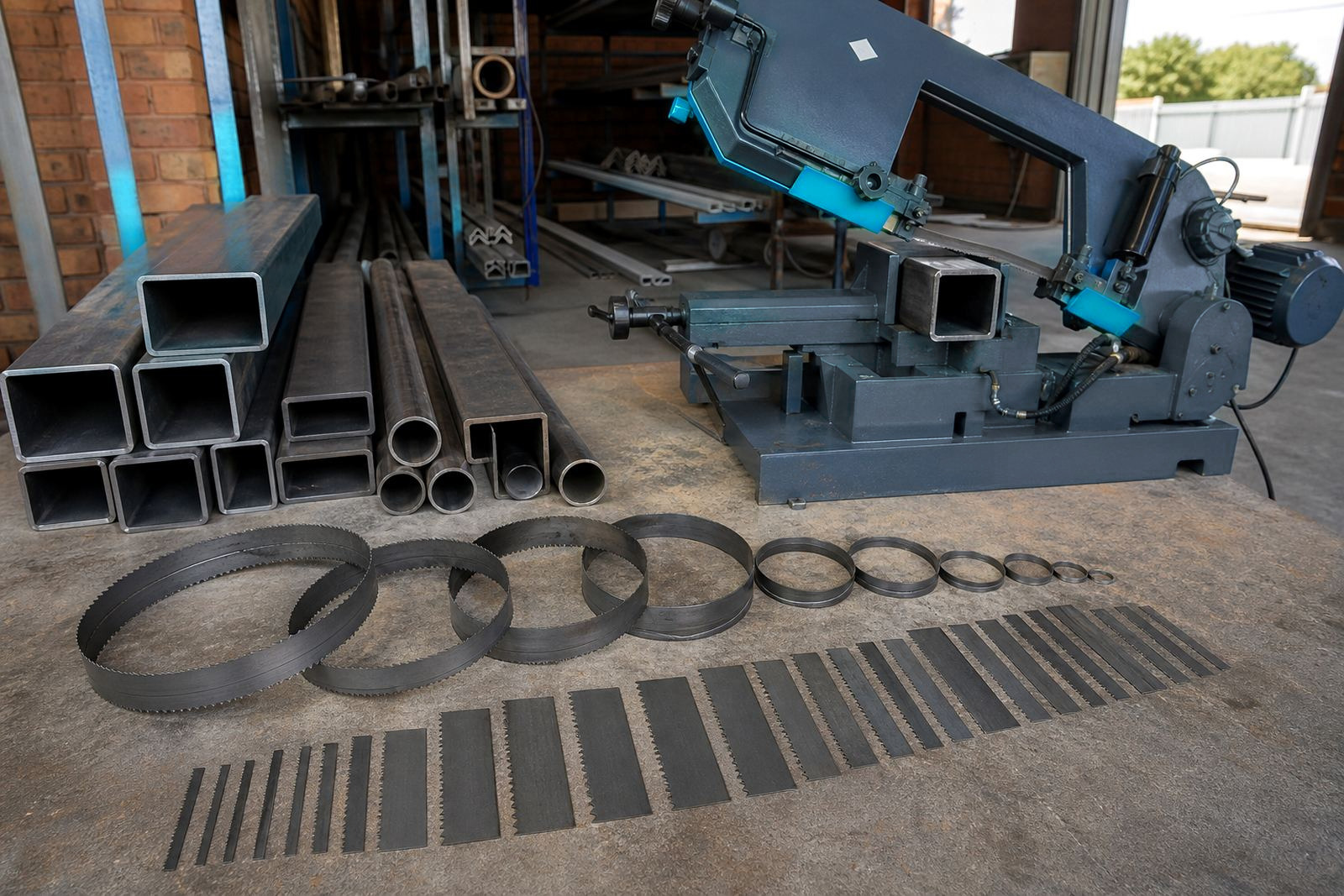
Weld-to-length service is useful when a workshop wants the blade matched to a specific saw, but the machine details must be correct first. Length verification prevents a blade that is too tight or too loose, and a machine fit check catches wheel size, guide spacing and tension limits before the blade is made up. Older saws in Alrode, Germiston and Pretoria often use different frames in daily use, and one wrong length can waste a cut shift.
When ordering for hollow sections, note the material type, wall thickness range, and whether the saw is cutting singles or bundles. A starter kit can help a new workshop standardise blade types across common tube sizes, while stock standardisation keeps the shelf simpler when a team uses the same few pitches and widths all week.
- Measure the saw length accurately
- Confirm wheel diameter and guide clearance
- List the tube sizes and wall thicknesses
- Note whether the saw is manual or powered
A practical cut list for workshop teams
Before a blade is put to work on hollow sections, check the job against the material on hand and the saw that will run it. A good blade can still fail early if the feed is harsh, the machine is out of line, or the pitch does not suit the wall thickness. Blade failure review is useful when cuts start drifting, teeth strip early, or the finish changes without warning.
A clean cut on tube or pipe often starts with a short checklist. Match tooth pitch to the thinnest wall in the batch, keep enough teeth engaged, and adjust coolant before the first long run. If the machine is used for different profiles during the week, manual saw support and blade selection help the team avoid swapping to the wrong blade for the next bundle.
- Check wall thickness and bundle size
- Match pitch to the thinnest section in the job
- Keep the feed steady and not forceful
- Watch the chip form and adjust coolant if needed