Daily repair work asks more from a blade
A maintenance bay rarely sees one material at a time. Mild steel angle, worn shaft stock, thin tube, stainless offcuts and the odd hardened part all land on the saw, and each one puts a different load on the teeth. A maintenance team needs a blade that can cope with mixed work and the clean, repeat order cutting found in production shops.
For that reason, blade choice starts with the hardest item you expect to cut. If the blade must move between thin sections and solid bar, a variable pitch profile can reduce chatter and help the cut stay calmer. For steady cutting of one thickness, a fixed tooth pitch may suit better, but the cut still needs the right feed and speed for the machine.
Match tooth pitch to the job before you buy
Tooth pitch, shown as TPI, controls how many teeth touch the work at once. Fine pitch gives more teeth in contact and suits small diameters and thinner wall section. Coarser pitch clears chips better on larger solids, where too many teeth can load up and rub instead of cut.
- Thin wall tube and small sections usually need a finer pitch.
- Medium wall stock often works well with a mixed or variable pitch blade.
- Large solid bar needs fewer teeth per inch so swarf can clear.
- If the cut sings, chatters or leaves a rough heel, the pitch is often wrong.
When a maintenance team handles both fast fixes and planned shutdown work, it helps to keep two or three pitch ranges on hand. That gives room for a clean blade choice instead of forcing one blade to do everything.
Blade width and thickness decide how the saw behaves
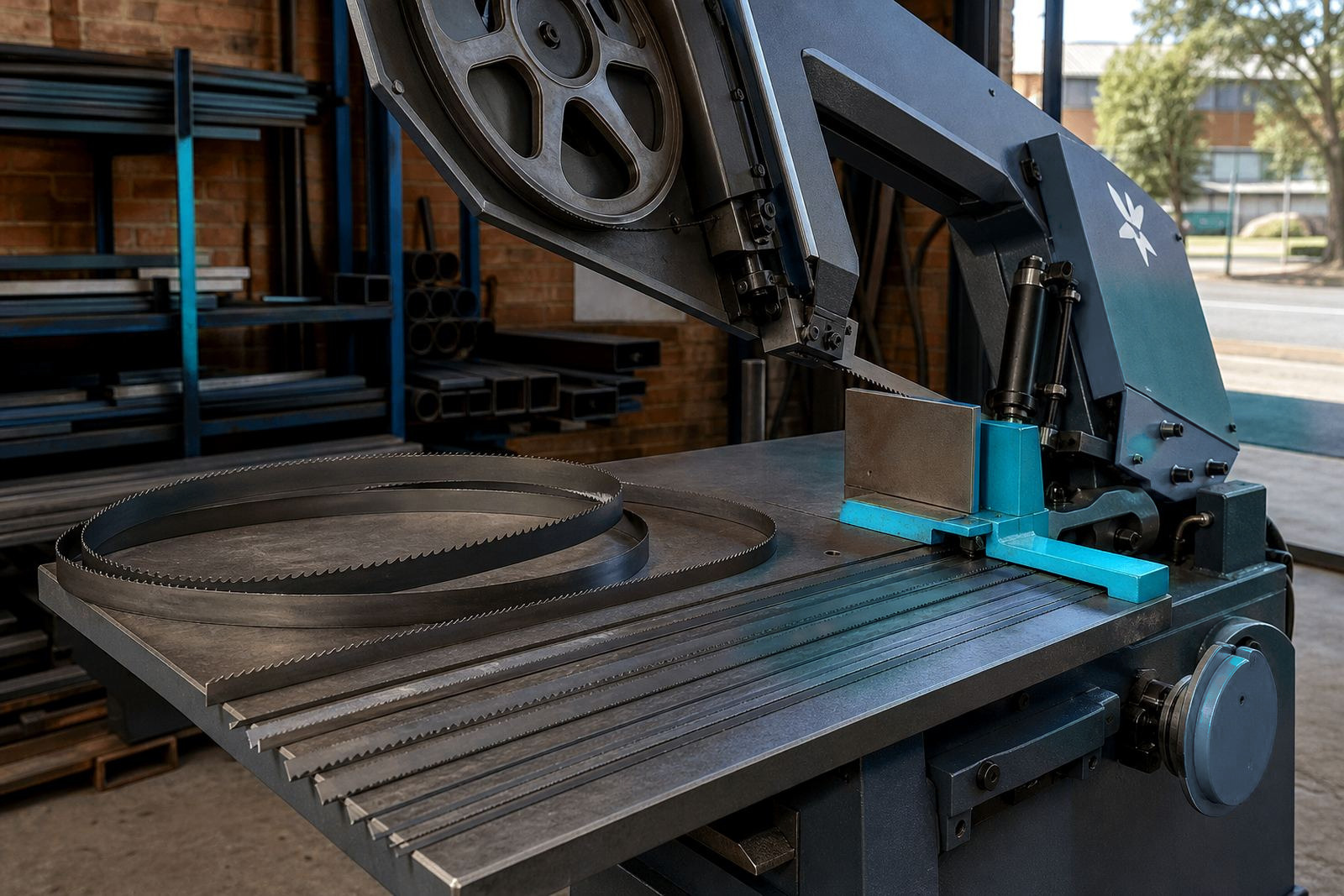
Width affects cut size and how a blade tracks. A wider bandsaw blade tracks straighter on vertical and semi-automatic machines, especially when cutting heavier section. Narrower blades can turn tighter radii and suit more awkward repair shapes, but they are less forgiving if the machine or guides are out of line.
We check thickness too. A thicker blade can carry more body and stay steadier in harder work, yet it may need a sound machine and correct guide setup. For hacksaw blades, the same thinking applies in a smaller format. Tooth count, blade section and material all need to suit the cut, otherwise the blade flexes, grabs or breaks at the back edge.
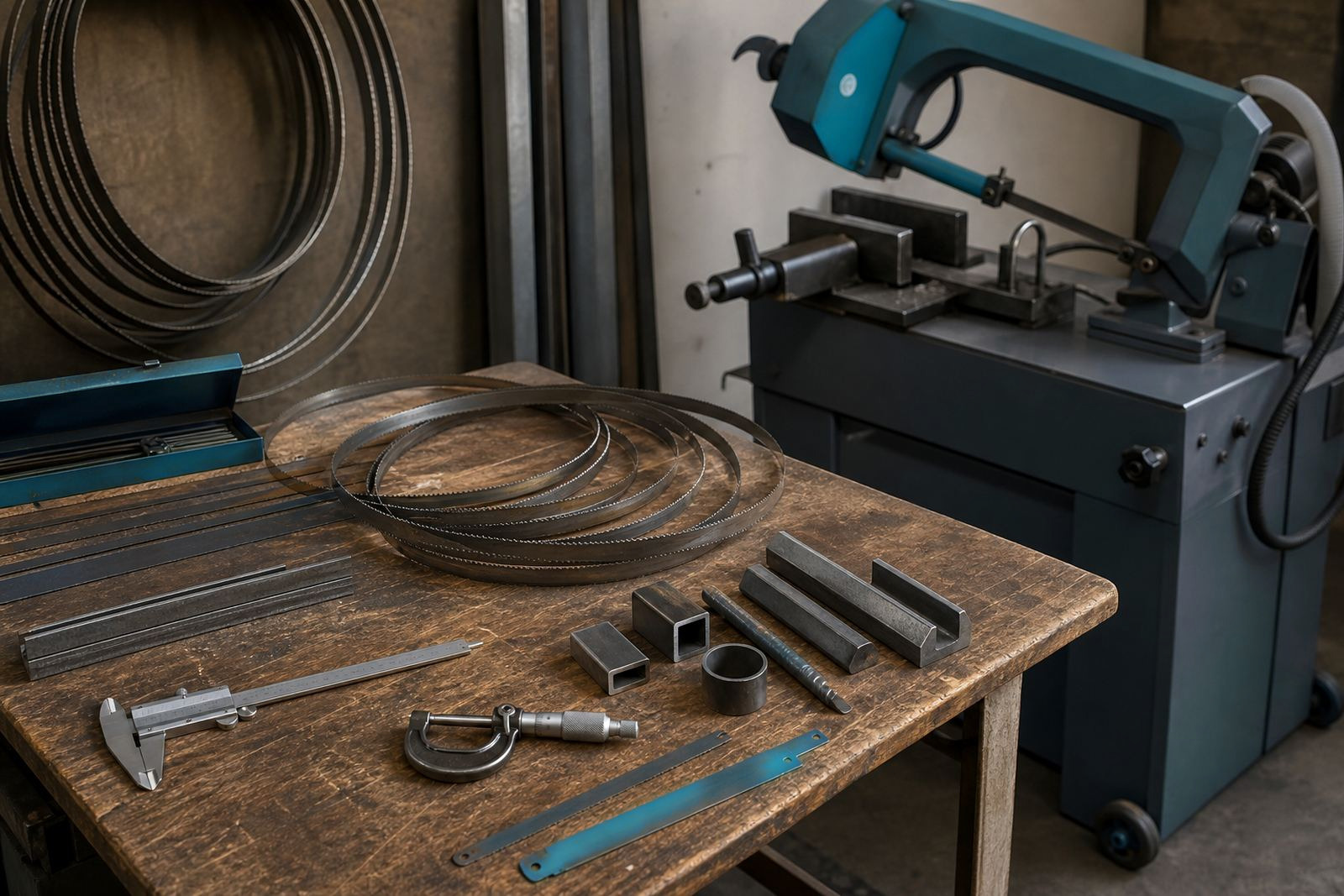
For weld-to-length service, the finished length must suit the saw and the frame or band path exactly. A blade that is even a little off on length can track badly or seat poorly, so length verification is part of the job.
Use the first cut to protect the blade
Bi-metal blades with a hard cutting edge and flexible back can handle a lot of maintenance work, especially where mixed materials and stop-start cutting are common. Carbon steel blades still have a place on lighter manual saws and simpler jobs, provided the feed is gentle and the material is not too hard or abrasive. Blade life depends on more than the steel, though. Run the blade in gently.
New teeth need a lighter first period so the cutting edge wears in evenly. Push too hard at the start and the tips can chip before the blade has settled. Once the blade is seated, the feed can be brought up to normal cutting pressure. Bandsaws need coolant too, because heat weakens the edge and carries swarf back into the cut.
- Feed a new blade gently for the first few cuts.
- Watch chip shape and cut speed. Keep the cut cool and wash chips away.
- Keep the cut cool and wash chips away.
- Back off feed if the saw starts to squeal.
A maintenance stock list that does not sit idle
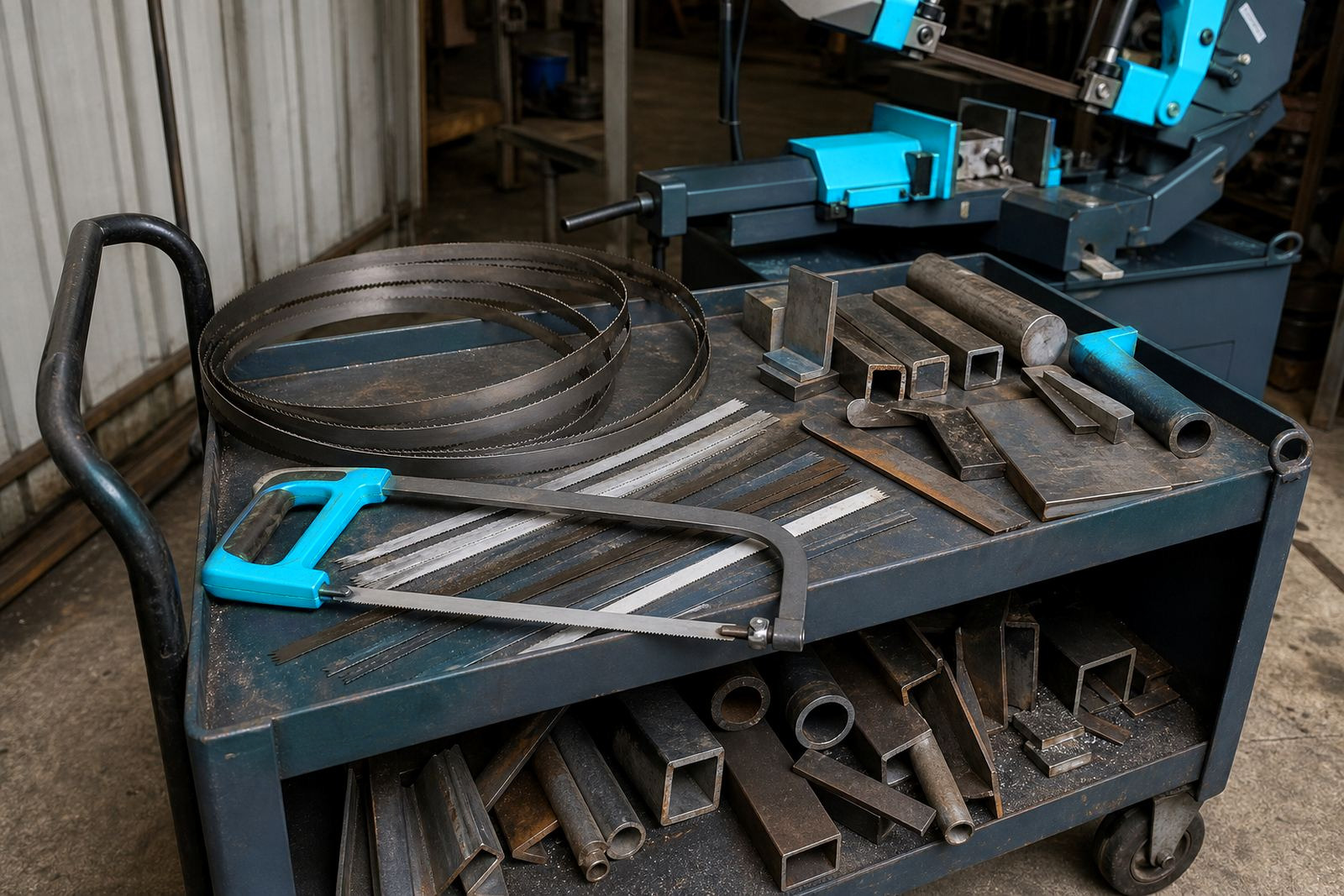
Many maintenance stores carry too many random blades and still miss the one needed for a repair. A tighter stock list works better. Choose a short spread of common pitches, one or two blade widths, and the blade lengths that match the main machines on site. That makes blade issue simpler and cuts down on emergency workarounds with the wrong stock.
Starter kits can help new maintenance teams or newly upgraded workshops, especially where the saws are used by different operators. A good kit should cover the usual thicknesses on site, include the likely pitch range, and leave room for both hacksaw and bandsaw work. If the team sees repeated blade failure, the cause may sit in machine fit, guide setting, coolant, feed, or material mix rather than the blade itself.
Common fault signs worth checking before the next cut
Blade failure review is often more useful than a rushed replacement. A broken tooth line can point to too much feed, poor run-in, or a pitch that is too fine for the section. Premature cracking at the back of the blade may suggest a guide issue, bad tracking, or a wheel problem. Blue teeth usually point to heat.
- Wavy cut face: check guides, feed and blade tension.
- Rounded teeth: the pitch may be wrong for the material.
- Cracked back: look at alignment and wheel condition.
- Heavy sparks or heat tint: slow the cut and check coolant.
For mixed repair work, stock standardisation helps a lot. If all the main machines use related blade sizes and pitches, the store room stays cleaner and the team spends less time hunting for the one odd blade that fits only one saw.
Blade support for workshops from Alrode to the coast
MoreCut Saws works from Alrode, Alberton and supports workshops across Johannesburg, Vereeniging, Pretoria, Durban and Cape Town, with local supply areas including Alberton Supply, Johannesburg Supply, Pretoria Supply, Vereeniging Supply, Durban Supply, Cape Town Supply, Germiston Supply and Boksburg Supply. The team covers blade length, tooth pitch and width, run-in and coolant, and the checks that keep a blade fitted and cutting well on manual or powered saws.
Send the saw type, the materials cut most often, the thickest section on site, and whether the job is mostly manual or powered. That information keeps the blade choice practical and avoids guesswork when the workshop needs a dependable stock pattern.